



Yep, you’ve all seen the clip.
An old man in a bee costume shoves an Insta360 panoramic camera into his mouth and sprints through a field of flowers. The bizarre “bee run” pulled 3.9 million views on TikTok, while a similar clip racked up 11 million.
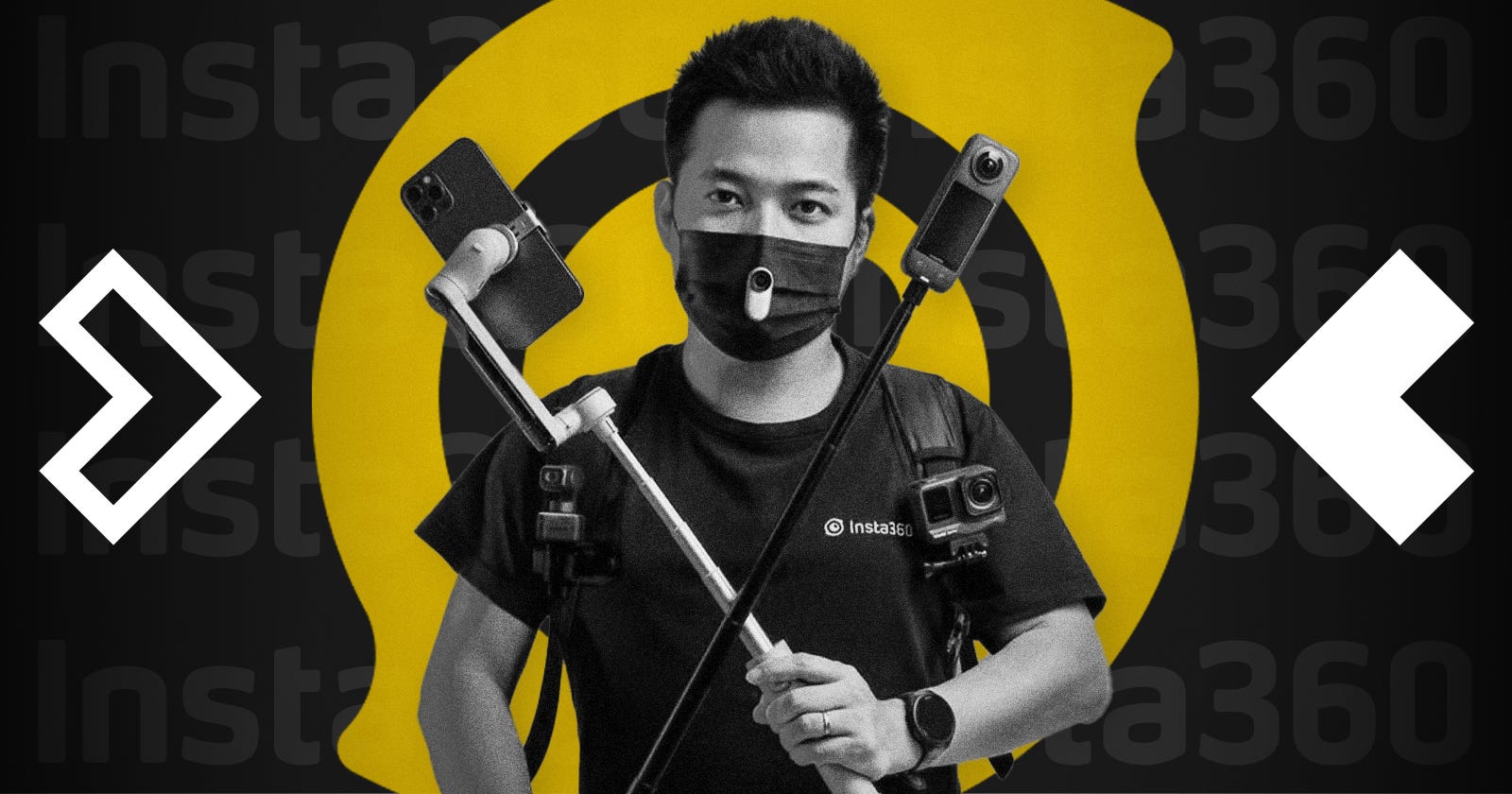
Insta360 is a camera on steroids. From downhill mountain biking to paragliding, it’s always there to capture the action. Many of Red Bull’s top athletes—like Gee Atherton and Matthias Dandois—are dual-sponsored by the brand. If you see a video where the perspective “magically” rotates or the selfie stick disappears, you can bet it’s an Insta360.

Insta360 posted $1.44 billion in revenue in 2025 and now trades at roughly a $10 billion market cap. According to IDC, the company dominated the global 360-degree camera market with a 66% share. Its closest Western rival, GoPro, posted just $652 million in revenue for fiscal 2025 and announced plans to cut 23% of its global workforce by the end of 2026.
However, just a decade ago, nobody had heard of Insta360.
Back in 2016, its founder Liu Jingkang (JK) was still hauling a backpack between factories in Dongguan and Zhongshan, two manufacturing hubs in southern China. At just 25, the founder was clearly punching above his weight. Nobody knew whether his prototype would sell, but he was already demanding high-volume production—a rookie holding cards but no chips.
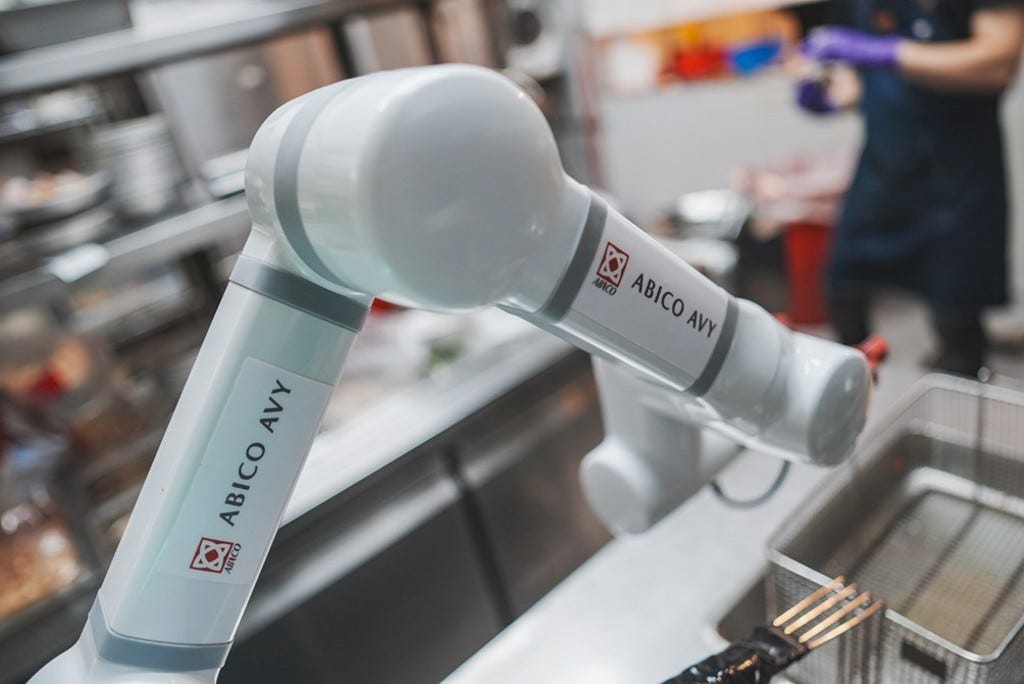
The company that bankrolled him was Dongguan Abico. Despite having 5,000 employees to Insta360’s 40, Abico took the contract—for reasons nothing to do with Liu’s pitch deck. Years earlier, Lei Jun had approached them with an order from a nascent Xiaomi. Abico passed, missing the rise of what would become one of China’s biggest electronics empires. When Liu walked in, the company decided they wouldn’t whiff a second time.
The bet paid off.
Insta360 has successfully overtaken GoPro, yet the story of how they did it remains largely untold beyond the Chinese media. The company prioritizes product marketing over media outreach, opting to maintain a low profile outside of China. We were among the rare few to have secured both direct access to Insta360 and a private interview with Liu, who used the opportunity to lay out a playbook that reads like a roadmap for a new generation of Chinese hardware founders.
Hacker to Founder
Liu, born in 1991, rose to prominence in the Chinese business media during his college years, branded early on as an industry prodigy. Before graduating, he famously decoded 360 CEO Zhou Hongyi’s phone number just by listening to the DTMF tones from a recorded press conference. In 2013, Liu launched V-Live, a livestreaming platform that served as a “Zoom for campus broadcasts.” A year later, he abandoned software for Shenzhen. His goal: build a VR camera. This thrust him into the world of sourcing, a brutal two-sided negotiation where designers crave reliability and suppliers demand volume. All Liu had was a prototype. Persuasion was hard.
Haunted by their earlier miss with Xiaomi, Abico moved to secure the deal. At the time, certain U.S. companies also began circling the startup. They treated the partnership as a venture play rather than a standard contract. The logic was simple, as one supplier put it: “There are plenty of companies like this. If even one of them survives, we win.”
Once Abico took over manufacturing in 2016, the yield on one of Insta360’s SKUs jumped by roughly 20%. By 2017, the two companies were ready to ship the Insta360 ONE X into the consumer market, squaring off directly against GoPro’s Hero 7. The momentum was immediate: monthly sell-through for the ONE X climbed from 3,000 units to more than 8,000, eventually resulting in a total stockout.
Abico hadn’t planned for that level of demand and found itself short on tooling. To compensate, the factory pushed capacity on the Insta360 line to 120% of the original plan, eventually hitting a 150% ceiling. From that point on, every joint product the two companies shipped overran their initial projections by at least 20%.
Software Velocity. Hardware Supply Chain.
Even during shortages, Insta360 stayed picky. The company pushed for a spec sheet that outpaced GoPro and Ricoh—integrating the newest silicon and higher-tier sensors. Then, Liu issued an ultimatum that suppliers deemed impossible: hardware must iterate on a software release cycle.
That philosophy pushed vendors to their limits. “JK is a prodigy,” one supplier said, “but he treats hardware defects as if they were bugs he could patch with a few lines of code. In reality, identifying a defect, resetting the production line, and re-sampling takes weeks.”
The friction wasn’t the suppliers’ fault. Software allows for patches at near-zero marginal cost, but changing a physical mold costs tens of thousands of dollars. Scrapping one is the manufacturing equivalent of totaling a car—the only question is whether it was a Tesla or a Corvette. To avoid a wrecking fest, Liu had to learn exactly how a factory floor operated.
Between 2016 and 2019, according to sources at Abico, Liu spent roughly a month each year on the ground at the Dongguan plant. When the Insta360 ONE R debuted at CES in January 2020 and promptly sold out, instead of spending time with his family during the Lunar New Year, he went down to the factory floor, working alongside the Abico team to ramp up capacity.
Engineers at Luxshare—a major Apple contractor and another key Insta360 supplier—told us that several of Insta360’s senior directors routinely pull overnight shifts on-site with the ODM to debug process issues. They added that Liu personally sits in on production line meetings, a level of involvement they described as uncommon in the industry. “The hardest job at Insta360 is product manager,” one supplier commented. “You have to balance innovation, usability, and yield, all while absorbing whatever the boss decides to change.”
At Insta360, twenty to thirty design iterations per product is standard. With revision cycles leading up to pilot production lasting just over a week, the overall product cadence has shrunk from eighteen months to a single year—and in some cases, a mere eight. That tempo persists even into PVT (Production Validation Testing), the final stage where specifications are traditionally supposed to be locked.
The company has also dispensed with a common supplier-management convention by removing the middle layer entirely. Instead, R&D engineers on both sides communicate directly. Suppliers who have worked with both Insta360 and GoPro say that the latter is far easier to build for; once GoPro’s specs are defined, they rarely change.
This relentless pace extends inside the company’s own walls. High-performing project managers are constantly rotated; a lead fresh off a major camera launch might be moved to an accessory vertical for their next assignment. Liu’s rationale is that this rotation brings to light those tactile details that users feel intuitively but can rarely put into words.
One supply-chain engineer told us that Insta360’s optical specifications dwarf industry norms, underpinned by an exhaustive list of proprietary test standards.
In the world of optics, most factories allow for a margin of error, designing for an ‘80’ while accepting a ‘60’ on the assembly line. Insta360 is different; they relentlessly narrow that gap, ensuring the delivered product actually matches the design.
The Product Isn’t The Camera. The Video Is.
What makes Insta360 most popular is not the camera itself, but the videos shot with it. Almost every two to three months, a new video filmed with it gains tens of millions of views on TikTok or YouTube. Liu and the Insta360 team invest significant efforts in optimizing their products in order to develop new shooting modes and make the cameras easier to use.
As a result, Liu identified two types of user needs: needs that users can clearly articulate, and needs that users experience in their daily use but have not yet felt motivated to change. The latter has always been the primary focus.
Liu once said that they had researched GoPro users. If users wanted to complete editing, they first had to finish recording, then download the footage to their phones, and only then begin editing. Insta360 therefore developed an editing feature that allows users to edit directly without downloading the footage to their phones, saving them a significant amount of time.
They also developed the Invisible Selfie Stick, which uses software algorithms to remove the selfie stick from the footage. Although no one was complaining about selfie sticks, Insta360’s solution removes the visual obstruction, creating a perspective similar to having someone filming alongside the user. It quickly became a popular feature.
Eliminating extra steps and introducing new capabilities has always been one of Insta360’s core goals.
Among the Insta360 employees that X.PIN spoke with, some are specifically responsible for finding videos shot with Insta360 cameras that achieve high view counts or showcase new filming techniques. Insta360 even funds content creators to produce videos—especially those who are good at developing new shooting styles.

In March 2025, Bilibili creator Tao Agou Jun pioneered a new filming style that used extreme angles to make the subject’s head appear oversized while the body looked slim and tapered. This "Bobblehead" effect—captured by shooting from a high top-down perspective—was later championed by Insta360 and became a viral sensation just a month later.
To respond to needs that users actively express, Insta360 has adopted a proactive feedback approach. Liu frequently replies to user suggestions on social media, jokingly referring to users as “BABA (dads in Chinese),” while saying that Insta360’s job is to solve “BABA’s problems.” The company also encourages employees in R&D, product, and marketing roles to learn activities such as skiing, diving, and skydiving so they can become users themselves—with the company reimbursing the cost of instructors and equipment.
The Hunter Theory
In public interviews, Liu repeatedly returns to what he calls the “Hunter Theory” — a framework he developed to identify where Insta360 should compete:
The industry leader must have a gross margin of at least 50 per cent, generating sufficient profit to sustain repeated production cycles
Annual sales should approach 10 billion yuan — large enough to be a real business, but not so large as to attract the interest of major technology conglomerates
The product must be capable of further improvement, such that a new entrant can compete through genuine upgrades rather than a price war
Liu traces this thinking to visits he made in 2019 to Japanese and Taiwanese companies, including Sony. What he observed, he said, were businesses whose core operations shifted every five or six years—but always along related lines that allowed accumulated capabilities to carry forward. Focused, but not fixed.
He describes the mode of entrepreneurship the Hunter Theory demands as “hell mode.” Revenue is insufficient; what matters is profit, because profit is what allows a company to survive. Survivors, he argues, accumulate the technical resources of their industry as ammunition for the next battle. He calls this “earning capabilities.”
A Rising Rivalry: When Insta360 Steps Into DJI’s Territory
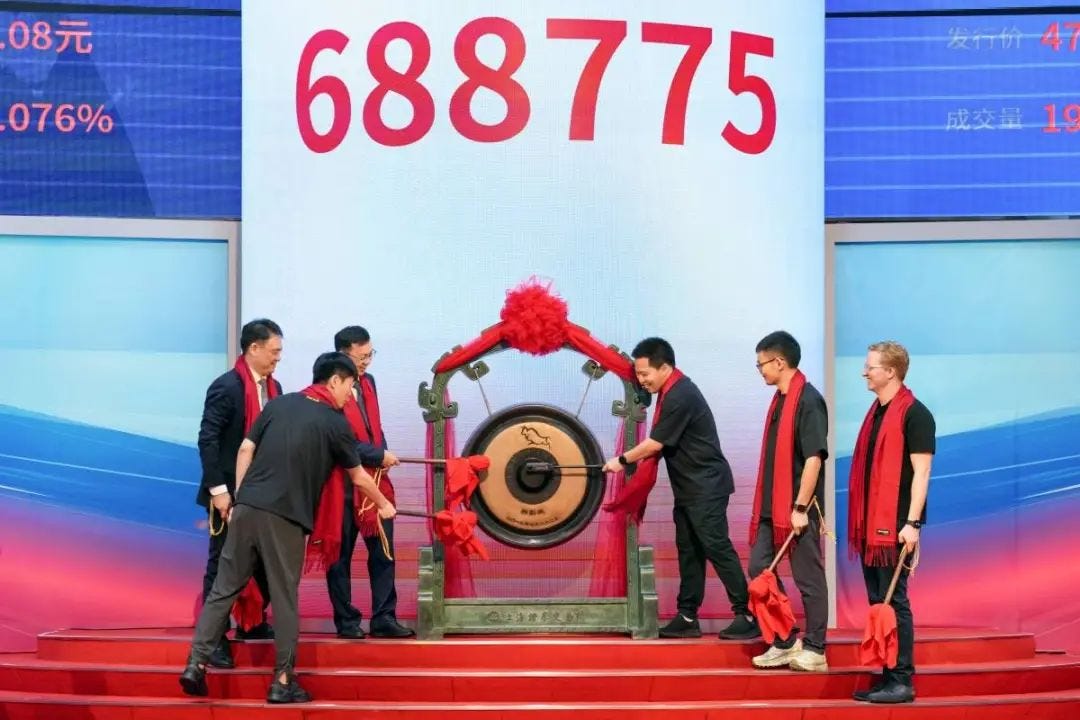
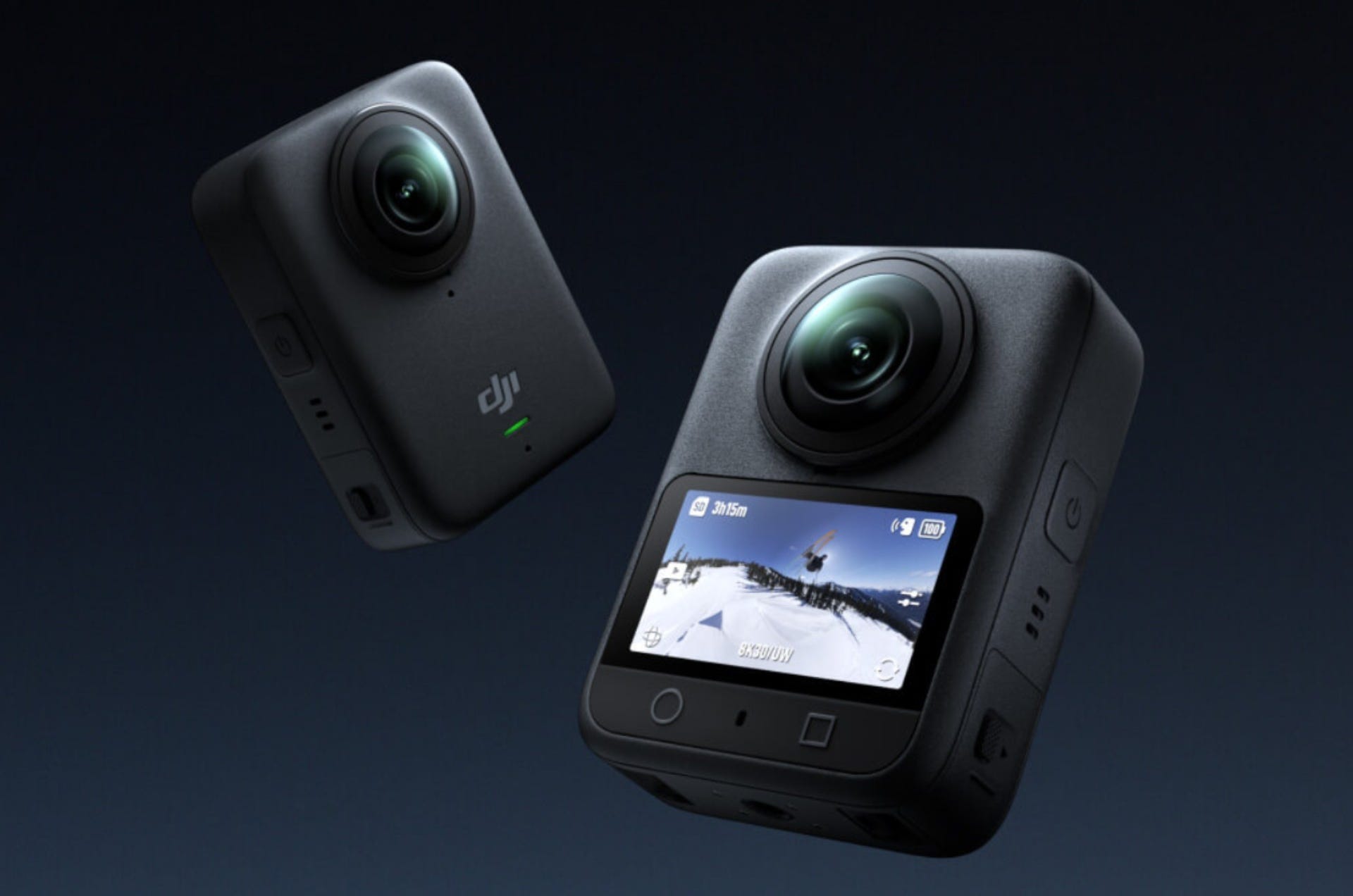
Insta360 has not always held the upper hand. In June 2025, Insta360 went public in Shanghai. One month later, DJI released the DJI Osmo 360—seemingly a “tenth-anniversary gift” for Insta360.
This was not an impulsive move. In 2023, Insta360 launched the Insta360 Ace, entering a competitive space that included the DJI Osmo Action and the GoPro Hero. In 2025, Insta360 also introduced the Antigravity, a drone capable of filming from a 360-degree camera perspective. DJI responded by releasing the DJI Osmo Nano to compete with the Insta360 GO.
Insta360 and DJI operate very differently. Insta360 relies heavily on external suppliers for components, especially its core chips. In 2024, chip procurement accounted for nearly 30% of Insta360’s raw material costs, with major suppliers including Ambarella and Sony. DJI, however, chooses to control the development of most of its components in-house. In drone production, DJI controls around 80% of its technology stack and even integrates algorithms directly into its chips.
The founders tell the story. Liu is the kind of CEO who hands out gold-plated keycaps as company merch and literally throws money—stacks of cash—at employees during year-end celebrations. He posts constantly on social media. He is, in every sense, a showman. Wang Tao, DJI’s founder, is practically his mirror image: press-averse, intensely private, and so particular about his environment that DJI’s corporate cafeteria reportedly serves nothing but vegetarian food. When senior engineers have left DJI to start rival companies, Wang has said nothing. Chinese media tends to portray him as a king in a tower, ruling alone.
The dynamic between their companies plays out in public with a kind of studied politeness that barely conceals the friction underneath. Liu has made a habit of praising DJI in interviews, saying he “respects and understands” his competitors—while namedropping them frequently enough to make the deference feel strategic. DJI responds not by engaging with Insta360 directly, but by working with official media channels to trumpet its own panoramic camera sales and its legal pushback against U.S. bans. Insta360, meanwhile, projects a different image entirely: happy employees, beloved products, strong international demand. It’s a rivalry conducted almost entirely through positioning.
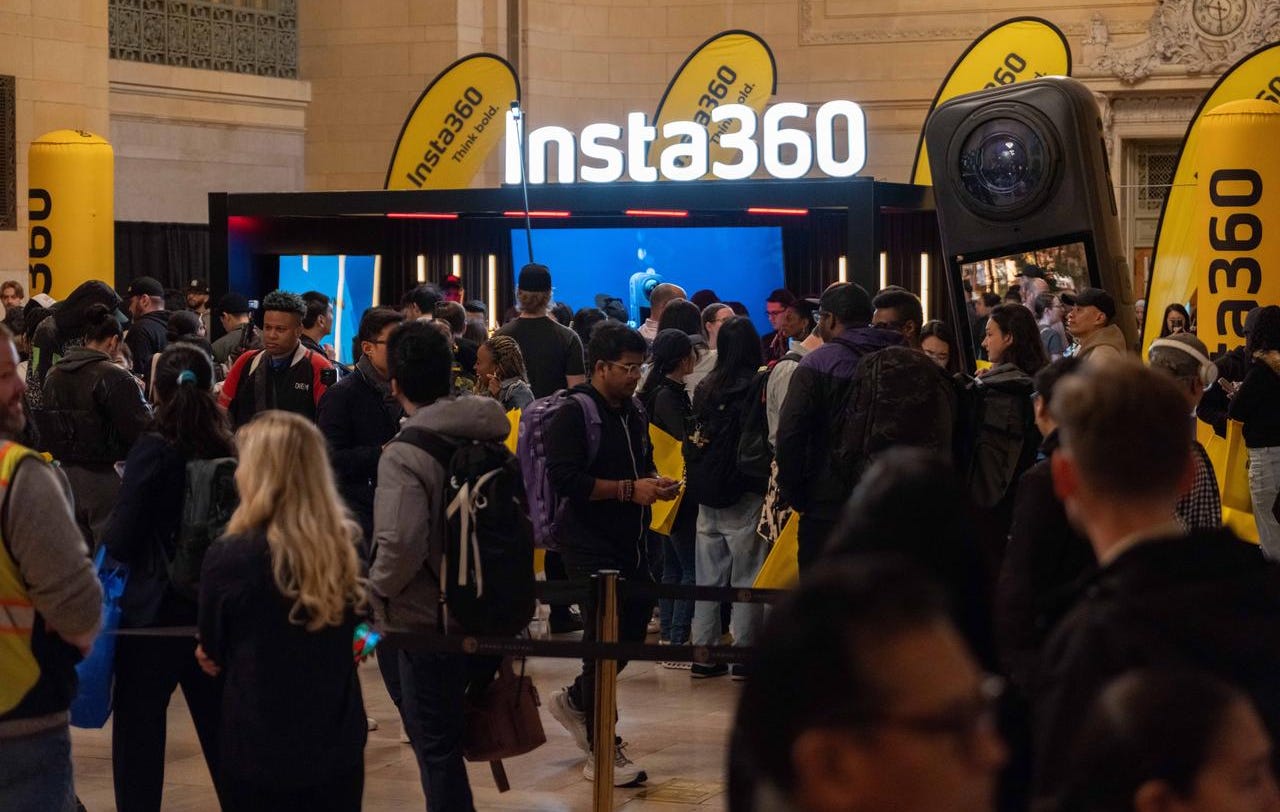
That positioning is becoming increasingly difficult to maintain. Insta360 was never supposed to be a giant; for a decade, it remained disciplined, avoided the growth-at-all-costs trap, and quietly captured over half the global 360-degree camera market—all while maintaining gross margins above 50%. But the “small business” Liu once envisioned now employs over 3,000 people, and its product lines are encroaching on territory held by DJI, a titan with revenue in the tens of billions. With new Chinese drone regulations potentially squeezing DJI’s domestic sales and forcing it to compete more aggressively in adjacent categories, a collision now looks inevitable.
Liu has a theory for situations like this—the “Hunter Theory,” the belief that agility and focus allow a small player to topple a giant. But it’s one thing to hunt a deer, and quite another to take on a bear; whether a hunter can survive a direct confrontation with a grizzly remains to be seen.
He doesn’t seem worried though. “You only live once,” he said in a 2025 interview, “better to spend time taking risks than rot in silence.”
The founder's such a character. Didn't know his story till now. Thank you, it was an interesting read!