

ByteDance's net profit plunged over 70%, spending at least $23B, just for winning Alibaba in AI race.

On April 20, YiCai and 36Kr reported that ByteDance, the Beijing-based parent company of TikTok and Douyin, saw its net profit collapse by more than 70% in 2025, dropping from an estimated $38 billion down to roughly $9 to $10 billion, as the company poured unprecedented sums into artificial intelligence infrastructure and research. Li Liang, the executive in charge of public relations for Douyin, clarified that the drop was calculated under international financial reporting standards, which factors in the cost of stock options for employees, adding that the figure “didn’t reflect the actual operations” and that overall profit and revenue grew when excluding stock option costs. However, X.PIN argues this explanation falls far short of accounting for the full gap, pointing instead to a deliberate and aggressive AI investment strategy as the primary driver.
Despite the profit shock, ByteDance continued growing at a strong pace. Estimated 2025 revenues came in at least $190 billion, with the ideal figure closer to $199 billion, driven heavily by overseas markets that surged nearly 50% and contributed more than 30% of total revenue, largely thanks to TikTok Shop, whose gross merchandise value grew close to 70%. Growth in China, by contrast, was more modest at around 20%, reflecting a maturing domestic market for Douyin. To put this in context, ByteDance has historically maintained a steady net profit margin of roughly 20%, with revenues climbing from $61.7 billion in 2021 to $82.4 billion in 2022, $123 billion in 2023, and $156 billion in 2024, reflecting a consistent annual growth rate of 25 to 30%. In 2024 alone, overseas revenue stood at $39 billion, accounting for 25% of total revenue, with a net profit of $33 billion.

The stock options cost accounted for only a 14.5% rise in the latter half of the year. That means the remaining gap between expected and reported profit, which X.PIN puts at around $28 billion, was driven primarily by AI spending. Through open-source intelligence and financial reasoning drawn from reports by The Information, Bloomberg, and 36Kr, X.PIN estimates ByteDance spent at least $23 billion on AI infrastructure and R&D in 2025, a figure that places it slightly ahead of Alibaba’s $22.5 billion annual average. For additional context, in 2024 ByteDance spent $8 billion on servers alone according to 36Kr, and Orient Securities estimated the company’s 2025 capital expenditure at $21 billion, 50% more than Alibaba.
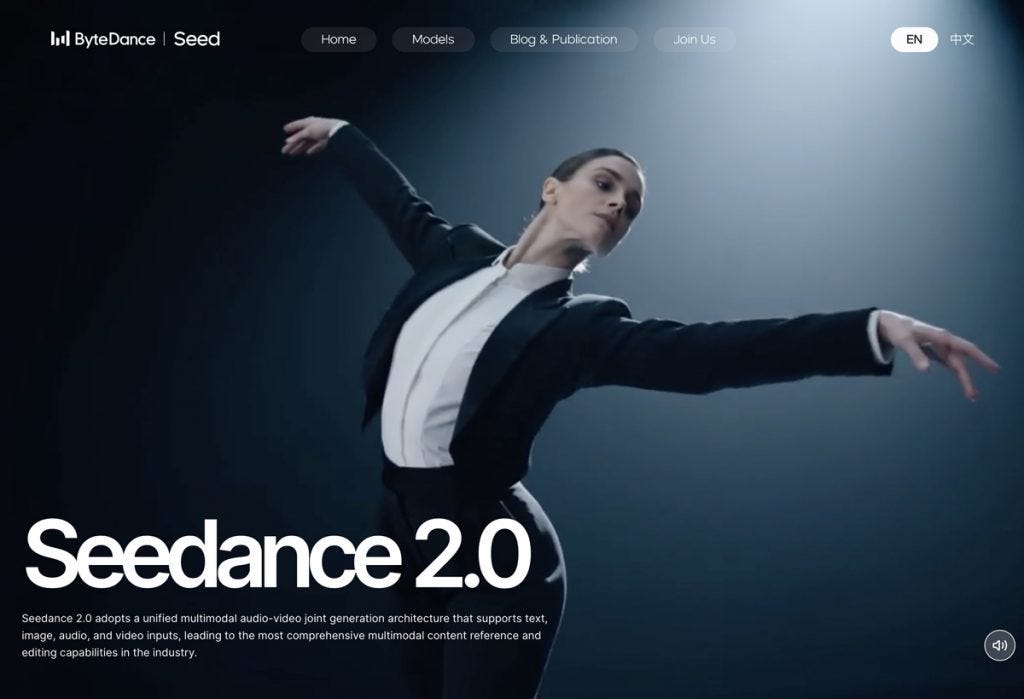
ByteDance’s AI push is vast. It encompasses $14 billion in Nvidia chip purchases this year alone, self-developed Dayu AI liquid-cooled server cabinets capable of supporting between 64 and 128 GPUs each, a MegaScale training cluster designed for stable training of trillion-parameter Mixture-of-Experts models, diversified computing resources through self-developed optical chip technology, and ongoing tests of Huawei’s Ascend 950 chips. On the talent front, Guo Daya, a lead researcher on DeepSeek’s R1 model, reportedly joined ByteDance’s Seed AI development team. Its Seedance 2.0 video model has emerged as one of the most powerful in its category in recent months, though it has yet to launch in the US market amid intellectual property concerns raised by Disney Studios and Paramount Pictures.
ByteDance’s 2026 capital expenditure budget is already set at $23 billion, with more than half earmarked for AI chip purchases, and the company has told its investors that the budget will continue to grow. That figure edges out Alibaba’s three-year budget of $67.5 billion, averaging $22.5 billion annually. ByteDance remains a private company with no public financial disclosures, making the full picture difficult to verify, but the numbers that can be pieced together point overwhelmingly to one conclusion: ByteDance has adopted an all-in mentality on AI, and shows no signs of slowing down.
But a 70% net profit slash still scares investors. So Bytedance needs to ease the audiences. Providing proofs that the company grows strong and 70% decline is over-exaggerated. That number will crush the expectations of its partners. It also affects the employee’s confidence for this company. After all, nobody in the market wants to see Bytedance’s story end with stock prices plummeted.
Still, that fall will make competitors fear: Companies like Alibaba keep high profile about AI expenditures, but a private company has more money to burn and it is trying to up the ante. Bytedance keeps invisible to the capital market but it brings a hard strike.
AI race is in a stalemate. Bytedance doesn’t want to lose.