



Elon Musk and The Wall Street Journal have never been natural allies.
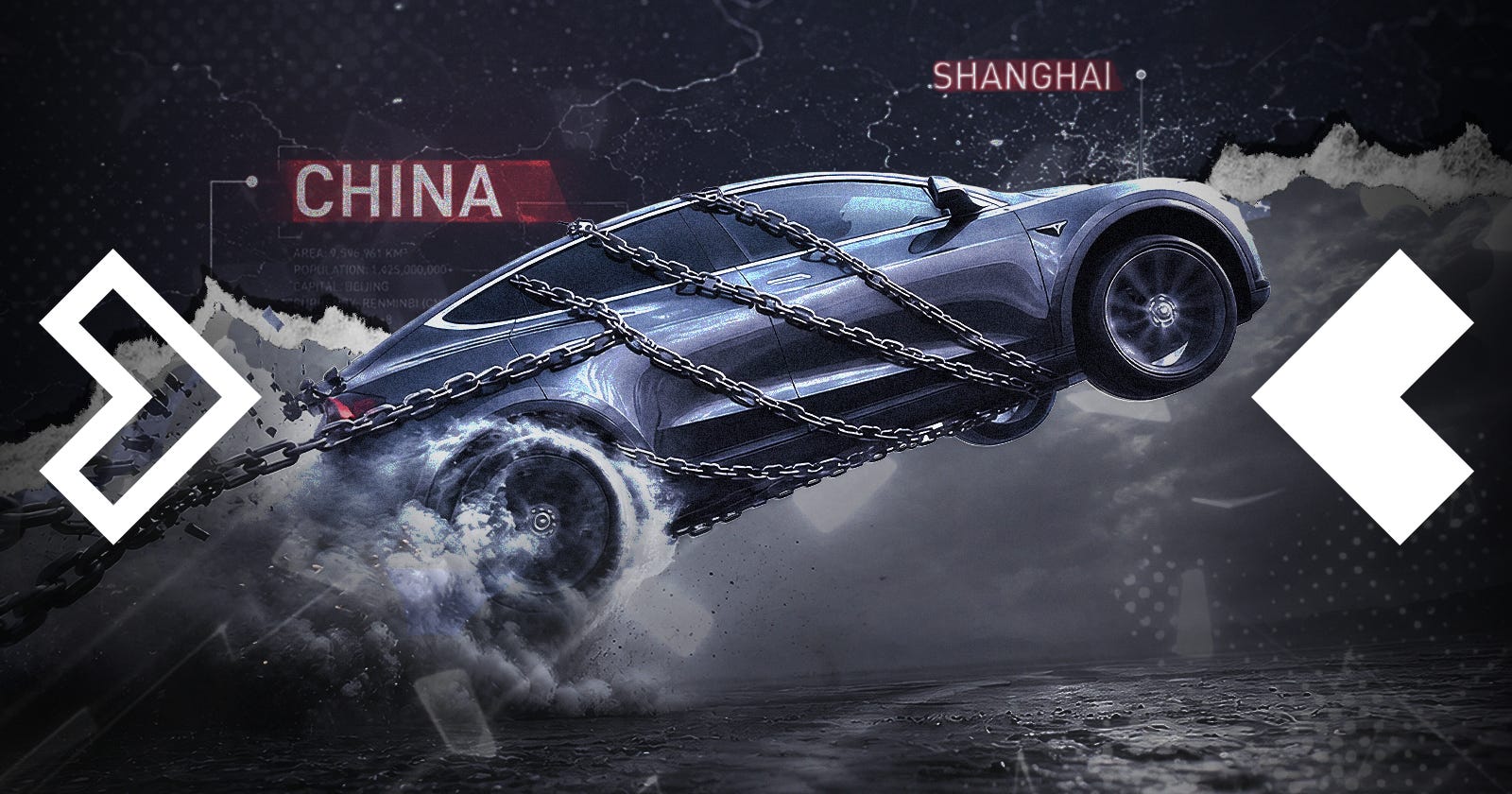
On July 30, the Journal reported that Tesla advisers had discussed ways to separate the company’s China operations, including a spinoff, sale, or closure, in order to reduce the political complications of a possible merger with SpaceX. Musk denied that the subject had ever been discussed and called the report “absurdly fake news.”
The denial was predictable. Tesla’s car business depends on its Shanghai factory, while China remains one of its largest markets. Anyone familiar with the company could see the immediate problem: cutting off Tesla China would not be like selling a distant regional subsidiary. It would mean severing one of the central organs of Tesla’s global manufacturing system.
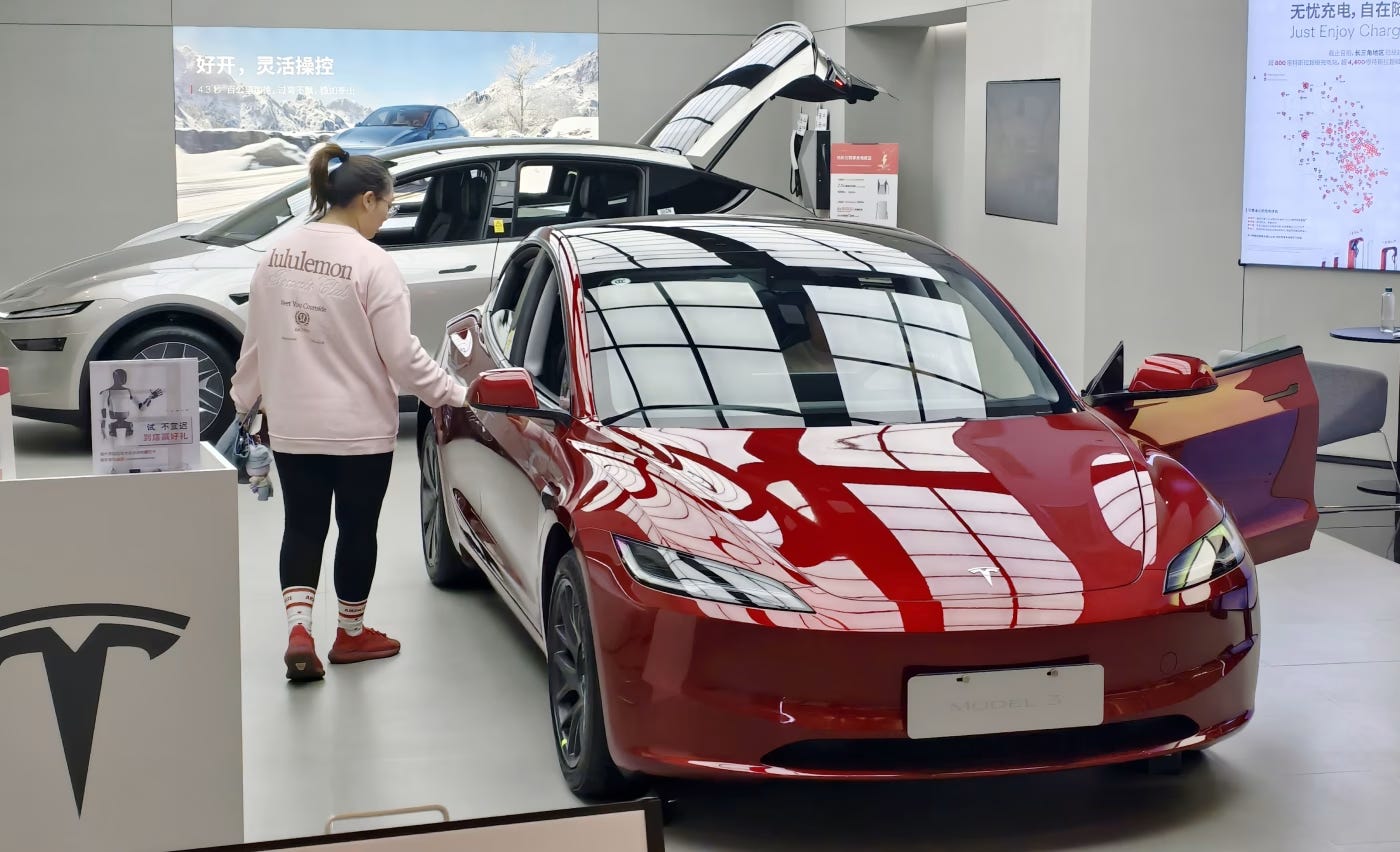
But the report still raises a useful question. Even if no transaction is imminent, can Tesla build a structure that limits China’s influence over the rest of the company?
Put more bluntly: can Tesla ever de-China itself? Can Tesla cleanly unwind everything it owns in Shanghai?
Not only is the answer no — such a separation is practically impossible for now.
What China Means to Tesla
Imagine you are Musk, and some overwhelming geopolitical shock has forced you to separate Tesla’s China business. The first task is simple: measure the damage.
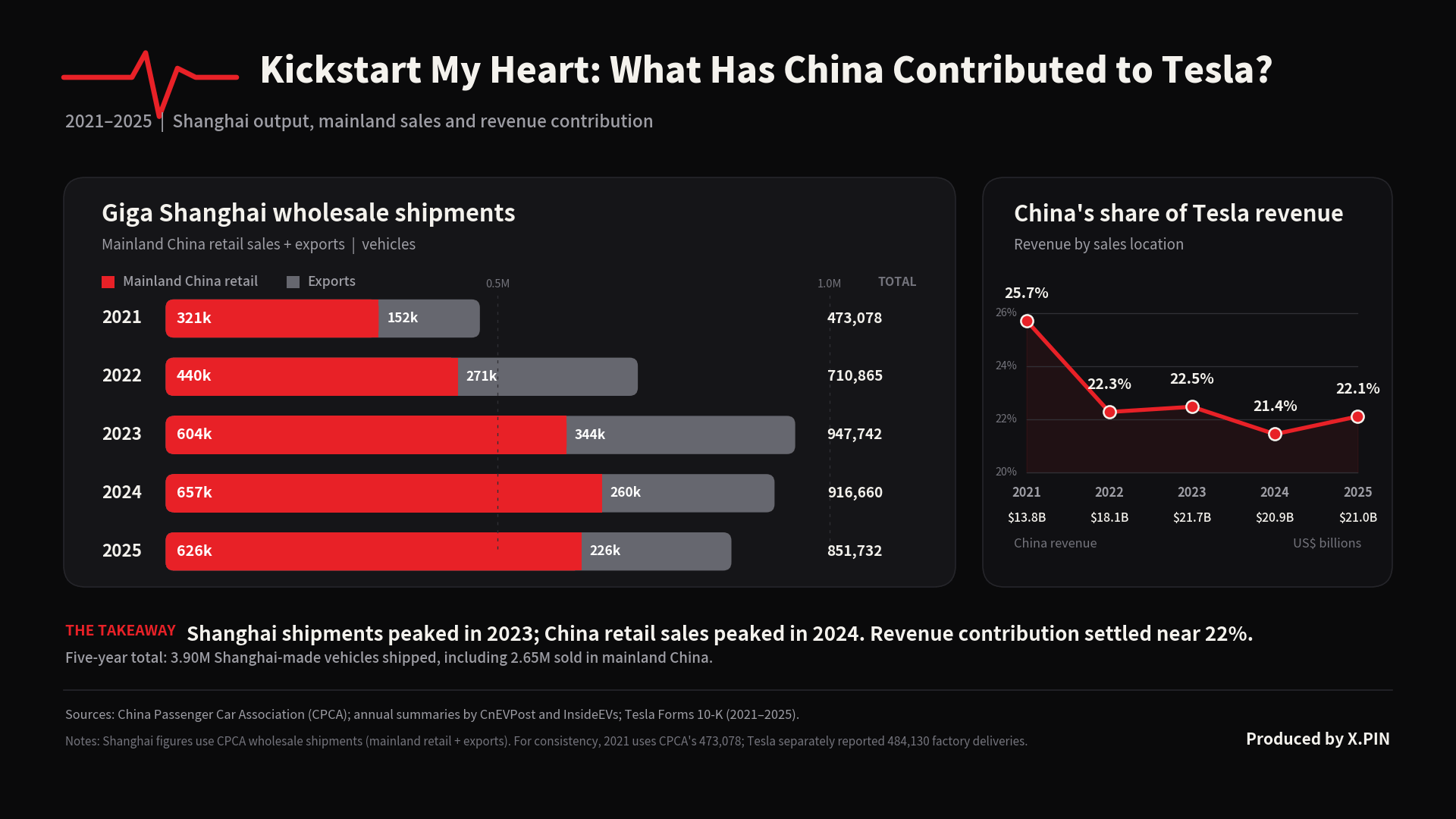
On the market side, the loss might look manageable at first. Tesla generated $20.96 billion in China in 2025, equal to 22.1% of its $94.83 billion in global revenue. China is brutally competitive. Tesla discounts frequently, local automakers release new models at relentless speed, and the company can no longer expect the extraordinary margins it once enjoyed there. A market that no longer delivers excess profits can eventually start to look expendable.
The harder problem is the asset Tesla cannot simply pack into shipping containers: Gigafactory Shanghai.
The plant delivered 851,000 vehicles in 2025, or 52% of Tesla’s worldwide deliveries. It is Tesla’s largest and most productive factory, as well as a major export hub serving Europe, Canada, and the Asia-Pacific region. This is not a Chinese branch that happens to sell cars locally. It is the starting point for roughly half of Tesla’s global vehicle supply.
Removing it would be less like divesting a limb than cutting out the heart of the manufacturing system.
Shanghai has little reason to welcome that outcome either. Tesla’s plant was China’s first wholly foreign-owned automobile factory, a politically risky concession that produced a very visible return. The original investment agreement set a target of RMB2.23 billion, or about $330 million, in annual tax revenue once the plant reached full production. The factory also became the anchor project for Lingang, created thousands of jobs, and gave Shanghai a powerful advertisement for attracting other foreign manufacturers.、
Then there is the balance sheet. At the end of the first quarter of 2026, Tesla had fully drawn a $5.79 billion China working-capital facility carrying interest of just 2.01% to 2.11%. At the same time, the company held $44.74 billion in cash and short-term investments. Cheap local funding is attractive for Tesla, but it would make separation messier. A buyer would need to determine which obligations belonged with the factory, which stayed with Tesla, and whether Chinese lenders would accept the new structure.
Data would be another difficult asset to divide. Information generated by vehicles operating in mainland China is stored on Chinese servers. China’s automotive-data regime allows some cross-border transfers, but sensitive personal, mapping, and vehicle data can require security assessments and other approvals.
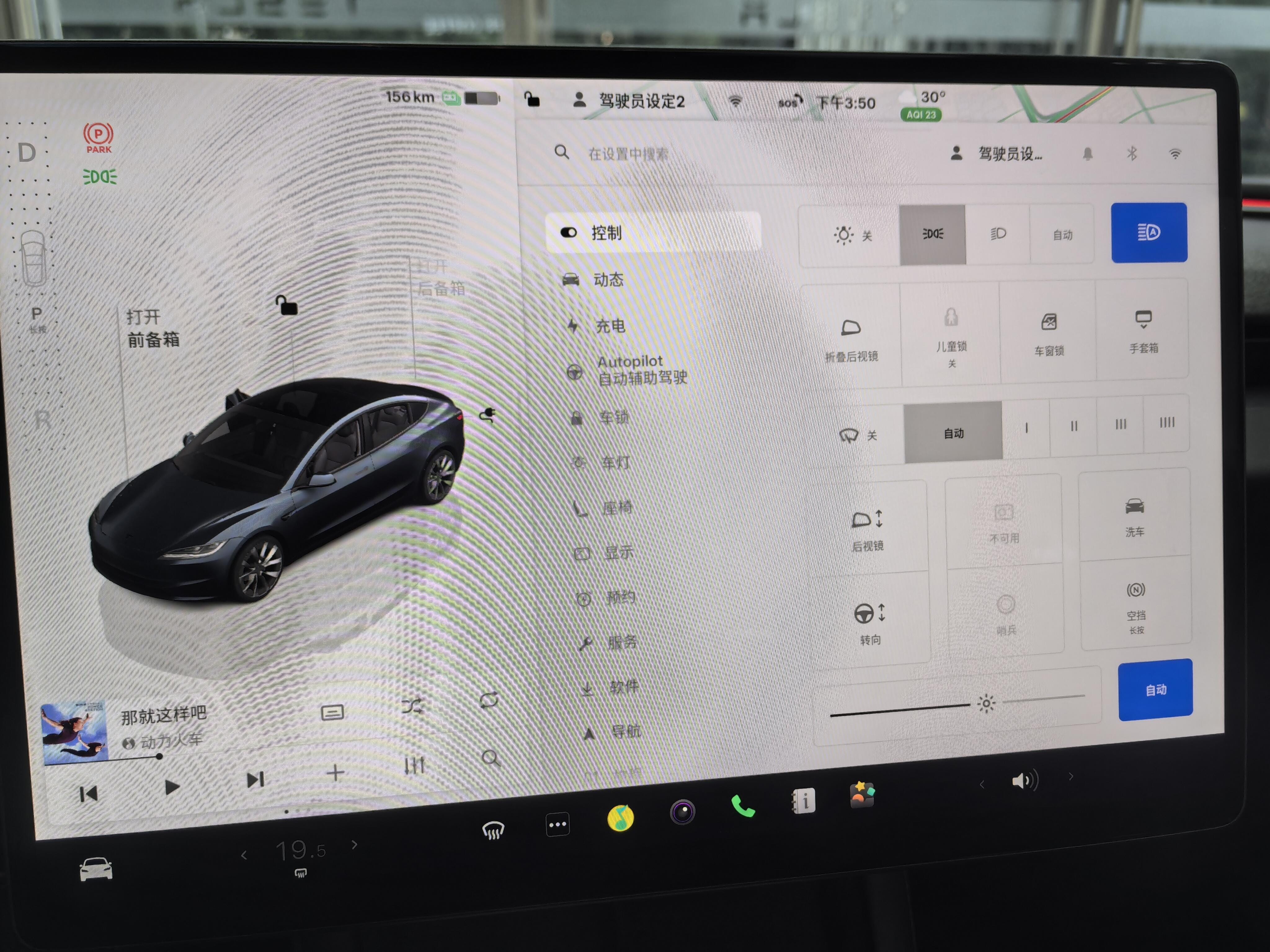
Apple’s solution was to place mainland Chinese iCloud under a locally operated structure run by GCBD, now AIPO Cloud (Guizhou) Technology Co., Ltd. Tesla would need a comparable wall around vehicle, camera, and location data. But cars continuously generate far more operational and geographic information than ordinary consumer cloud accounts.
By this point, the thought experiment reaches its obvious conclusion. A clean separation is close to impossible. That is why even discussing one can hurt Tesla. The headline implies that Musk might sacrifice half his manufacturing base to make a corporate merger easier.
The Journal’s comparison with businesses such as Yum China, or a possible Starbucks China transaction, also has limits. A restaurant chain can draw a geographic boundary around stores, workers, and local suppliers. Food produced in China can largely be consumed in China.
Gigafactory Shanghai is different. It supplies customers across multiple continents. Separating it would effectively create a new global automaker, not merely a Chinese franchise.
Why the Rumor Still Makes Sense
The report nevertheless has an underlying logic: SpaceX.
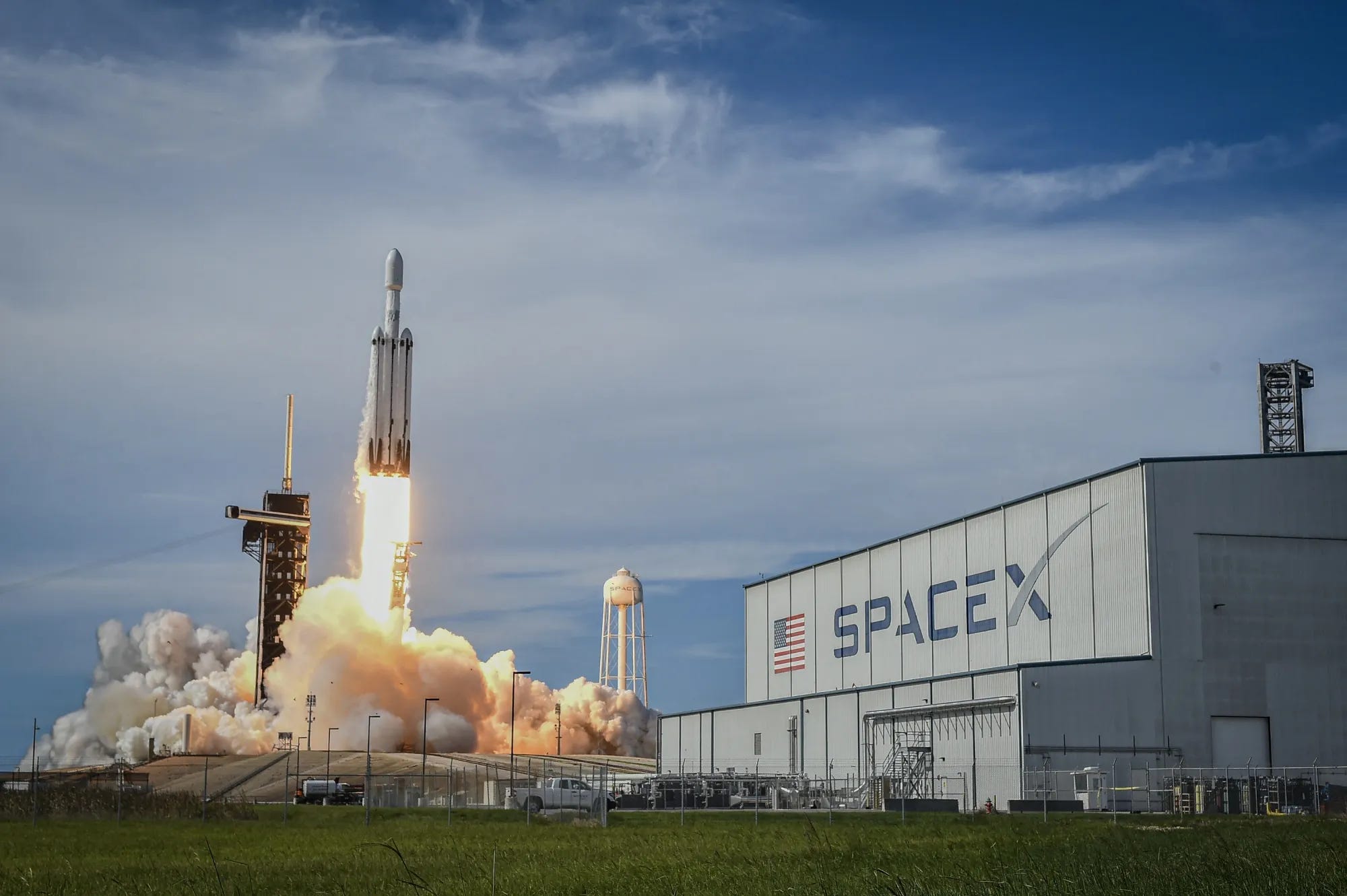
SpaceX is not a normal technology company. It launches classified military satellites, operates communications systems with battlefield uses, and derived roughly one-fifth of its 2025 revenue from the U.S. government. Its defense-related work is subject to strict controls, including the International Traffic in Arms Regulations, or ITAR, which governs access to and transfers of defense articles, services, and technical information.
During its IPO process, SpaceX’s underwriters also excluded investors from mainland China and Hong Kong over regulatory, national-security, and compliance concerns.
Combining SpaceX with Tesla would create an entity that is both a major U.S. defense contractor and the owner of a wholly owned manufacturing operation in China. A corporate chart can separate divisions on paper. Regulators care about what crosses the lines: people, designs, data, purchase orders, software permissions, and money.
Tesla’s Chinese operations are especially hard to isolate because they are not just a factory. They sit at the center of an industrial network. Tesla has more than 400 Tier 1 suppliers in mainland China, more than 60 of which also serve its global supply chain. More than 95% of the components used in its locally made Model 3 and refreshed Model Y are sourced in China.
Some of those suppliers are now moving from cars into robots. Zhejiang Sanhua Intelligent Controls is known for automotive thermal-management systems. Ningbo Tuopu Group has created a robot-actuator division alongside its automotive businesses. Ningbo Xusheng Group now lists robot systems among the markets for its lightweight structural products.
Tesla does not publish a complete Optimus supplier list, so specific assignments remain difficult to verify. But the industrial overlap is real.
After a Tesla-SpaceX merger, this responsive supply chain could begin to look, from a regulator’s perspective, like an impossible-to-audit transfer channel.
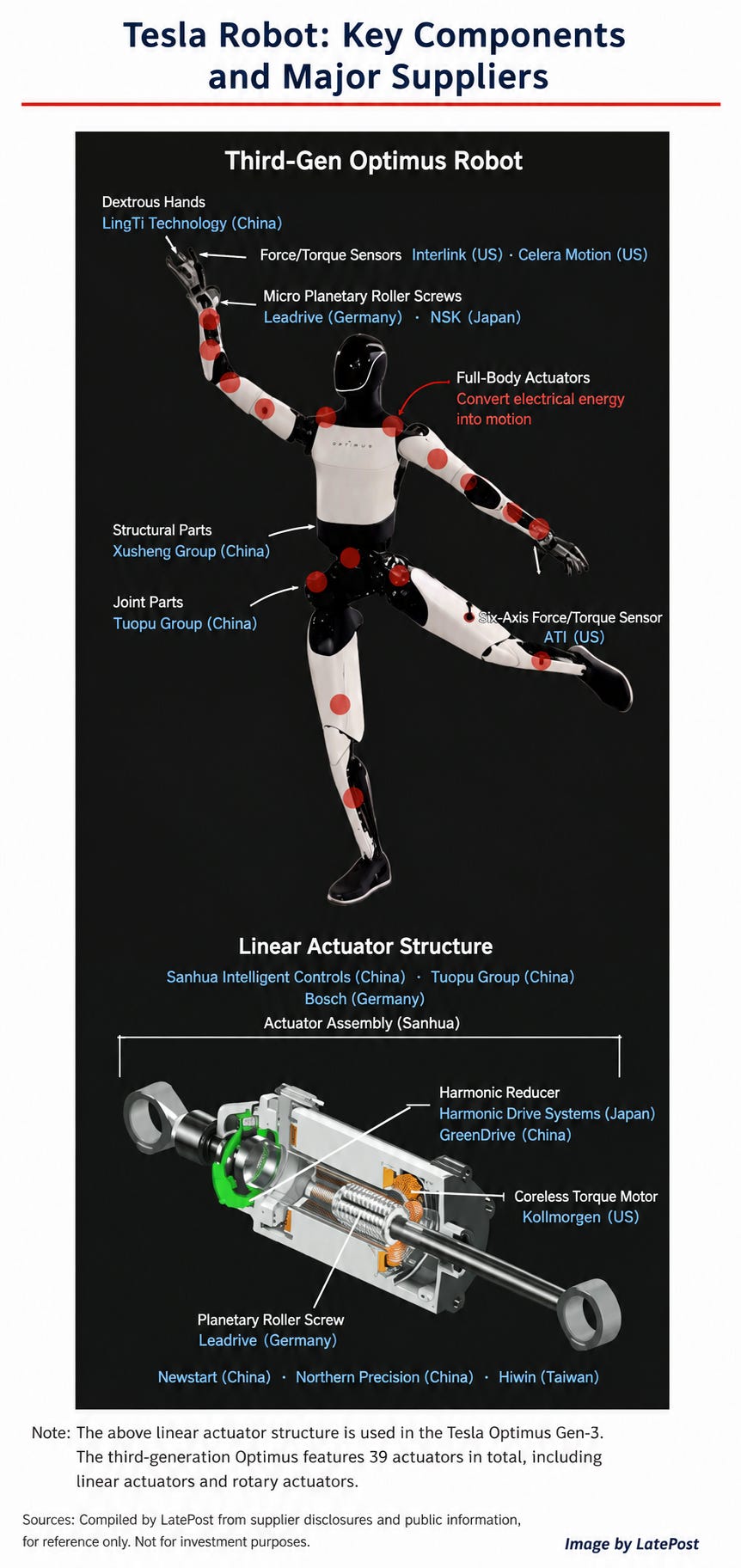
Was a component ordered for a Model 3, an Optimus robot, a data center, or a spacecraft? Could a drawing for a controlled aerospace component be disguised as a robotics design and sent to a Chinese supplier? Even without misconduct, Musk’s habit of moving engineers and resources among companies would invite suspicion.
Rare-earth magnets show why. Musk said in 2025 that Chinese export restrictions had already disrupted Optimus production, and that Tesla needed licenses and assurances showing the magnets would not be used for military purposes.
Put Tesla and SpaceX under one roof, and a Chinese regulator would have a much harder time accepting that a shared procurement system could reliably distinguish between a humanoid robot and a defense-adjacent aerospace project.
Data creates the mirror-image problem. Beijing would worry that camera, mapping, and behavioral data from millions of Chinese Tesla users could flow toward a company deeply embedded in the U.S. defense establishment. Washington would worry that China-based employees might gain access to cross-company engineering systems, procurement orders, or restricted projects.
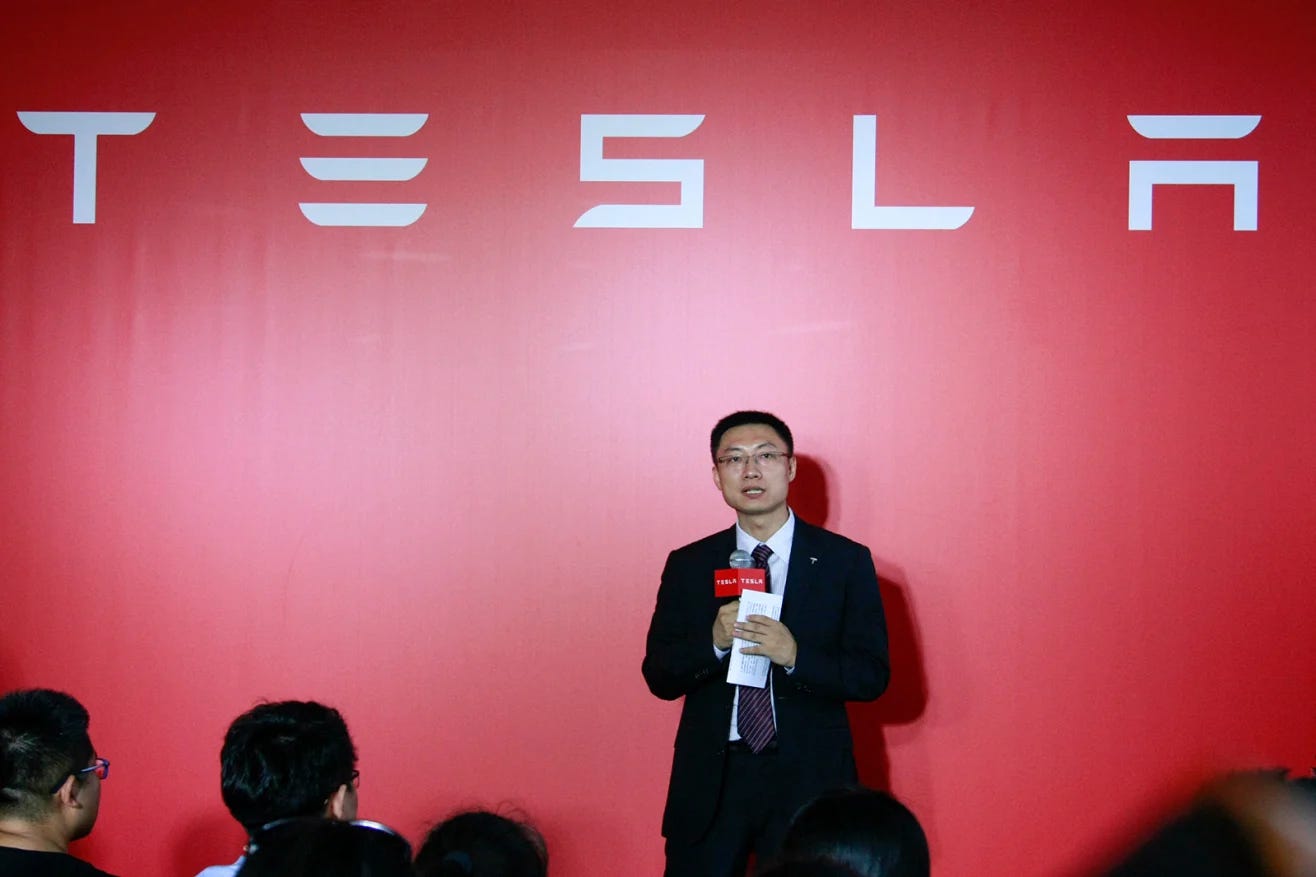
Personnel may be the hardest wall to build. Tom Zhu, Tesla’s senior vice president of automotive, led the construction and operation of Gigafactory Shanghai before taking responsibility for the broader car business. Tesla’s most important manufacturing success outside the United States was built partly by a China-based team whose methods the company later tried to reproduce elsewhere.
A merger would inevitably bring new scrutiny to those employees and their access. Isolating them before Tesla has fully replicated Shanghai’s performance would mean discarding some of the expertise the company most needs.
That is why a merger looks unnecessary from Tesla’s perspective. It would create regulatory problems for the car business without solving an obvious operating problem. It could also damage Optimus, whose production depends on Chinese manufacturing capacity and materials.
What Separation Could Actually Look Like
Still, suppose Tesla began restructuring in 2027. What options would it have?
The fastest approach would be administrative rather than economic: separate data, software access, and sales systems. Tesla could create a China-specific digital architecture resembling Apple’s mainland iCloud arrangement, limit China-based employees’ access to other business units, and establish dedicated compliance teams.
The Journal reported that executives had also discussed a separate sales entity to handle exports from Shanghai. That would not remove geopolitical risk, but it could make the boundaries more legible to regulators.
The next step would be to separate ownership from operation. A Chinese automaker such as SAIC Motor could hypothetically take a stake in, manage, or contract-manufacture at the Shanghai plant. The structure might resemble a joint venture or outsourced factory rather than a complete sale.
That would create its own problem: the product’s identity. Many Chinese customers buy Tesla partly because it remains an American technology brand associated with Musk. Turning the factory into a locally controlled operation could weaken that appeal.
It would also take years to renegotiate supplier contracts, licenses, software rights, employment arrangements, and export approvals. SAIC is large enough to run the physical operation. That does not mean it could inherit Tesla’s brand, code, and global distribution system without disruption.
A separate export-and-sales company may therefore be the least damaging middle course. Shanghai could continue manufacturing cars while a legally distinct entity purchased vehicles from the factory and sold them abroad. China-specific data, personnel, and procurement could remain ring-fenced.
The structure would be inelegant, but compliance often is.
The most radical option, a full sale or shutdown, looks least credible. Tesla would be abandoning a market that generated more than one-fifth of its 2025 revenue and a factory responsible for more than half of its deliveries.
Even an orderly transfer would create months of uncertainty over software updates, service networks, warranties, autonomous-driving features, and replacement parts. No government or buyer could absorb an operation of this scale by simply changing the name on the gate.
Musk will continue to see reasons for his companies to cooperate. Tesla invests heavily in AI chips, autonomous-driving software, robots, and computing infrastructure. Tesla and SpaceX have overlapping needs in energy, data centers, and engineering. Tesla itself invested $2 billion in SpaceX stock in the first quarter of 2026, showing that the financial ties are already deepening even without a merger.
But corporate ambition does not erase borders.
Tesla cannot solve the China problem by drawing a cleaner organizational chart, and it cannot solve it by amputating Shanghai. Its dependence on China is no longer merely a choice made by Musk or a concession granted by Beijing.
It is the accumulated result of years of investment, supplier development, employee expertise, cheap financing, customer data, and manufacturing scale.
Humanity never built the Tower of Babel. Musk is unlikely to succeed by placing a rocket company, an AI business, and a China-dependent automaker inside one corporate tower, then assuming every government will agree on which language is spoken on each floor.