



Just five miles south of El Paso, in Ciudad Juárez, a Geely dealership is selling an all-electric compact for $20,000. A BYD pickup sits charging next door. A Great Wall SUV advertises itself with the slogan “Be More Tank.” None of these cars can legally be sold in the United States. But they can be driven across the border — and increasingly, they are.
The floodgates are creaking open in Canada, too. Ottawa has agreed to admit 49,000 Chinese-made EVs a year at a tariff rate of 6.1%, and Geely, Chery, and BYD are all moving on the Canadian market. In Mexico, BYD’s sales nearly doubled last year, capturing roughly 70% of the EV and PHEV market, according to BloombergNEF. BYD and Geely are now among the finalists bidding for a Nissan–Mercedes-Benz plant in Aguascalientes.
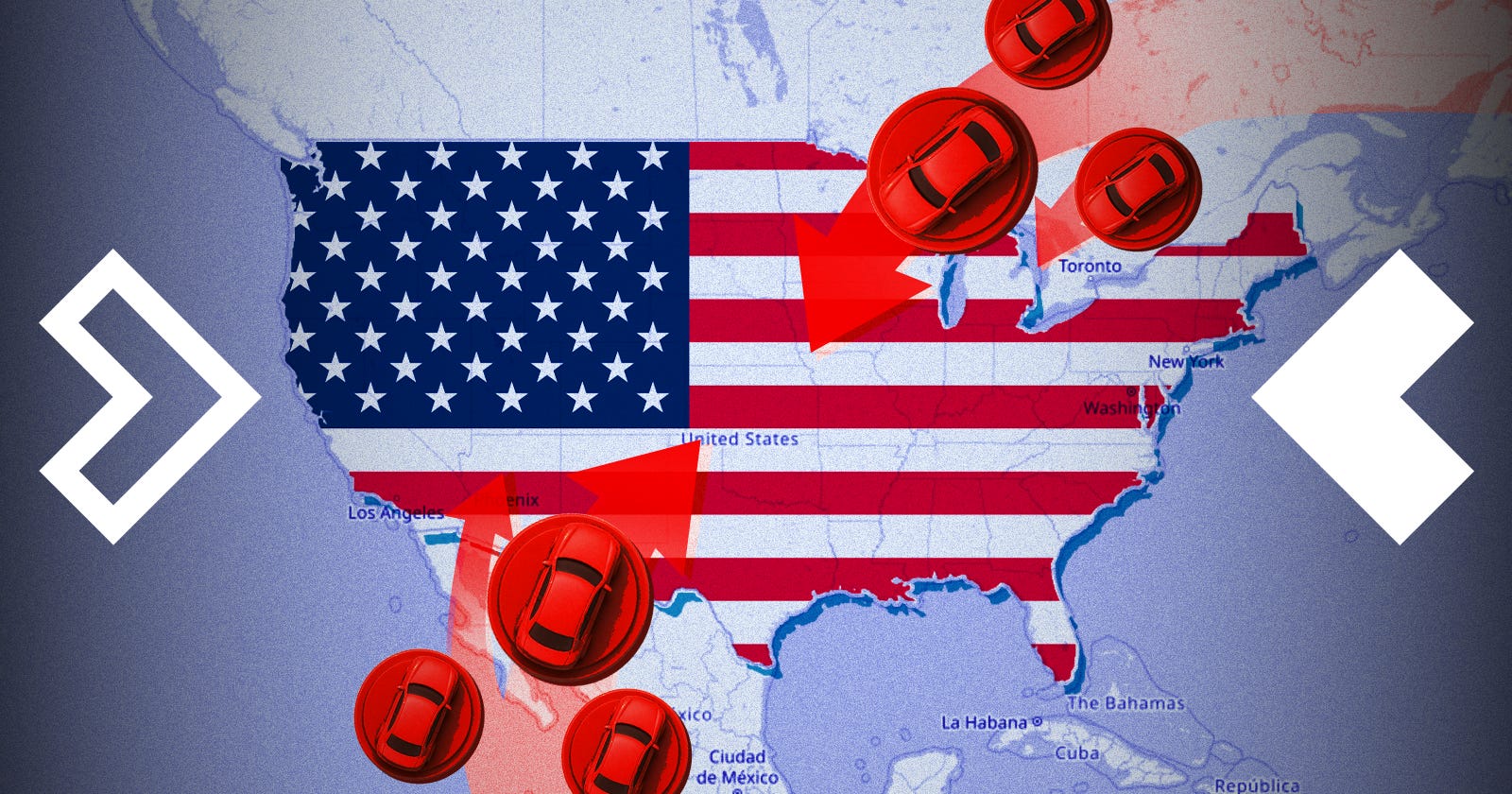
U.S. tariffs and protectionist policies may appear to be holding Chinese automakers at bay. But on both borders, those automakers are quietly gaining ground — inch by inch, positioning themselves to crack the world’s most influential car market.
We are witnessing the automotive industry’s most consequential pincer movement.
Cheap, But How Cheap?
Most coverage of Chinese cars — positive or negative — fixates on price. For Canadians, the more pressing questions are which models will actually arrive, and what they’ll cost.
The signals are mounting. Chery has flown nearly 20 Canadian dealer representatives to Auto China in Beijing. BYD is weighing 20 dealerships across Canada with local partners. And Zeekr, Geely’s premium EV brand, posted seven senior roles in Toronto in late April — spanning sales, legal, marketing, and aftersales — with dealer selection still underway.
What none of this answers is the question that matters most: price.
That’s partly because the specific models headed to Canada remain unclear. Still, EV YouTuber Simply Gregster spotted a Chery Jaecoo J5 crossover, an Omoda 9 PHEV SUV, and a StarEra ES sedan in a Toronto parking lot — brought over for testing and certification, not sale. Enough to make some informed estimates.
BYD is more complicated. The company already exports to Brazil, Thailand, Australia, and Europe, but model names vary by market, making vehicle-to-price matching tricky. Australia turned out to be the closest proxy: a fellow Commonwealth country, a currency that converts cleanly to Canadian dollars, and a lineup that even includes the Shark pickup.
Zeekr offers the fewest data points, with no Canadian dealer network yet in place. The Zeekr 001 and 007 are the most useful references. A luxury SUV export is possible, but given Canada’s 49,000-vehicle quota, that scenario was set aside.
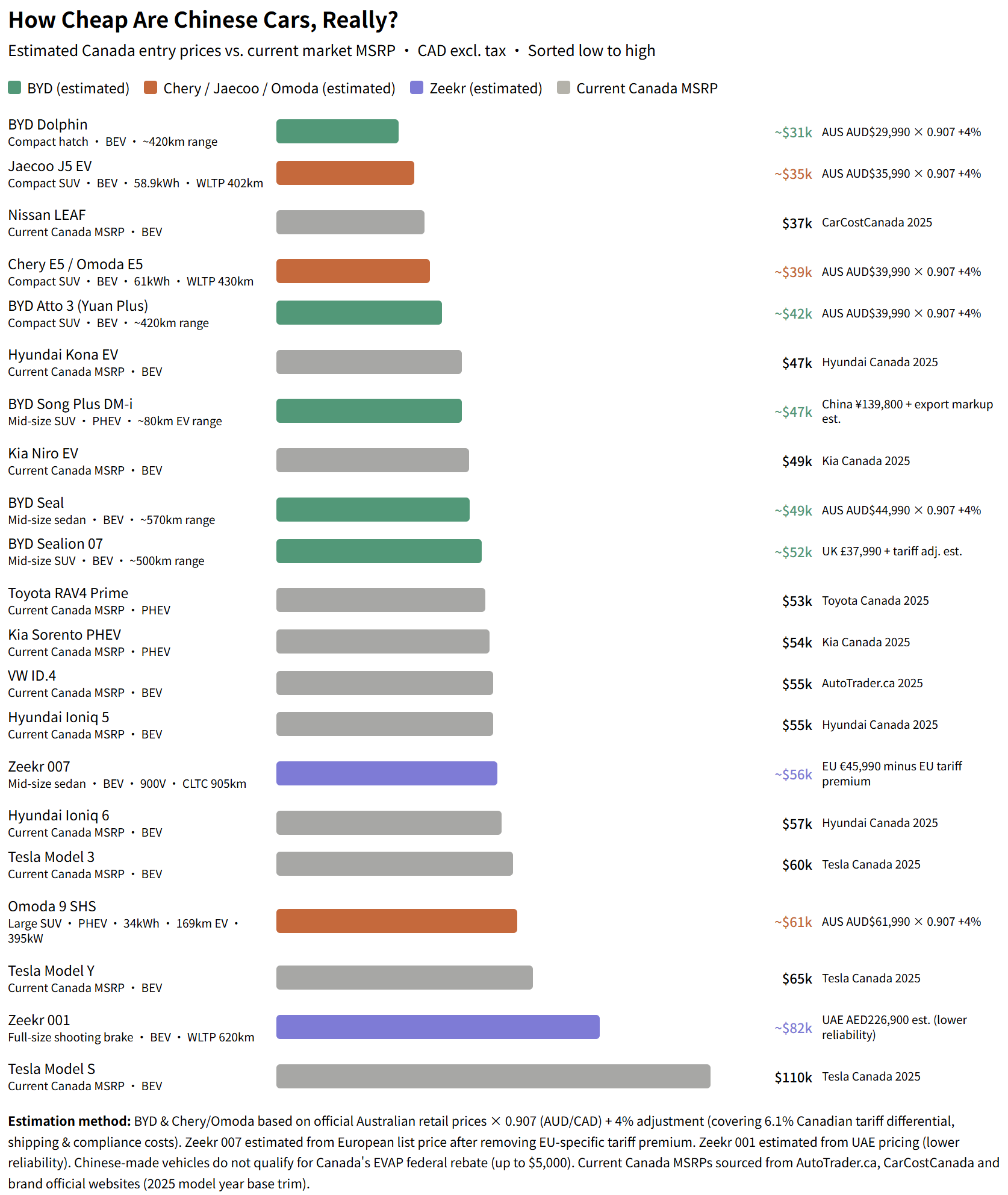
For context, Canada’s best-selling ICE cars — Civic, Corolla, Elantra, RAV4 — start between CA$25,000 and CA$35,000 (roughly US$18,000–26,000). Electrified options like the Camry and Accord hybrid run CA$35,000 to CA$65,000 (US$26,000–47,000), with BEVs at the top and HEVs at the entry point.
Against that backdrop, the comparisons are striking. BYD could field Canada’s cheapest BEV, undercutting the Nissan Leaf by CA$6,000 (US$4,400). The Song Plus DM-i is positioned to poach RAV4 buyers directly. Chery puts quiet but real pressure on Kia. The Zeekr 007 is competitive enough to give Model 3 owners pause. The Model Y, however, looks safe for now.
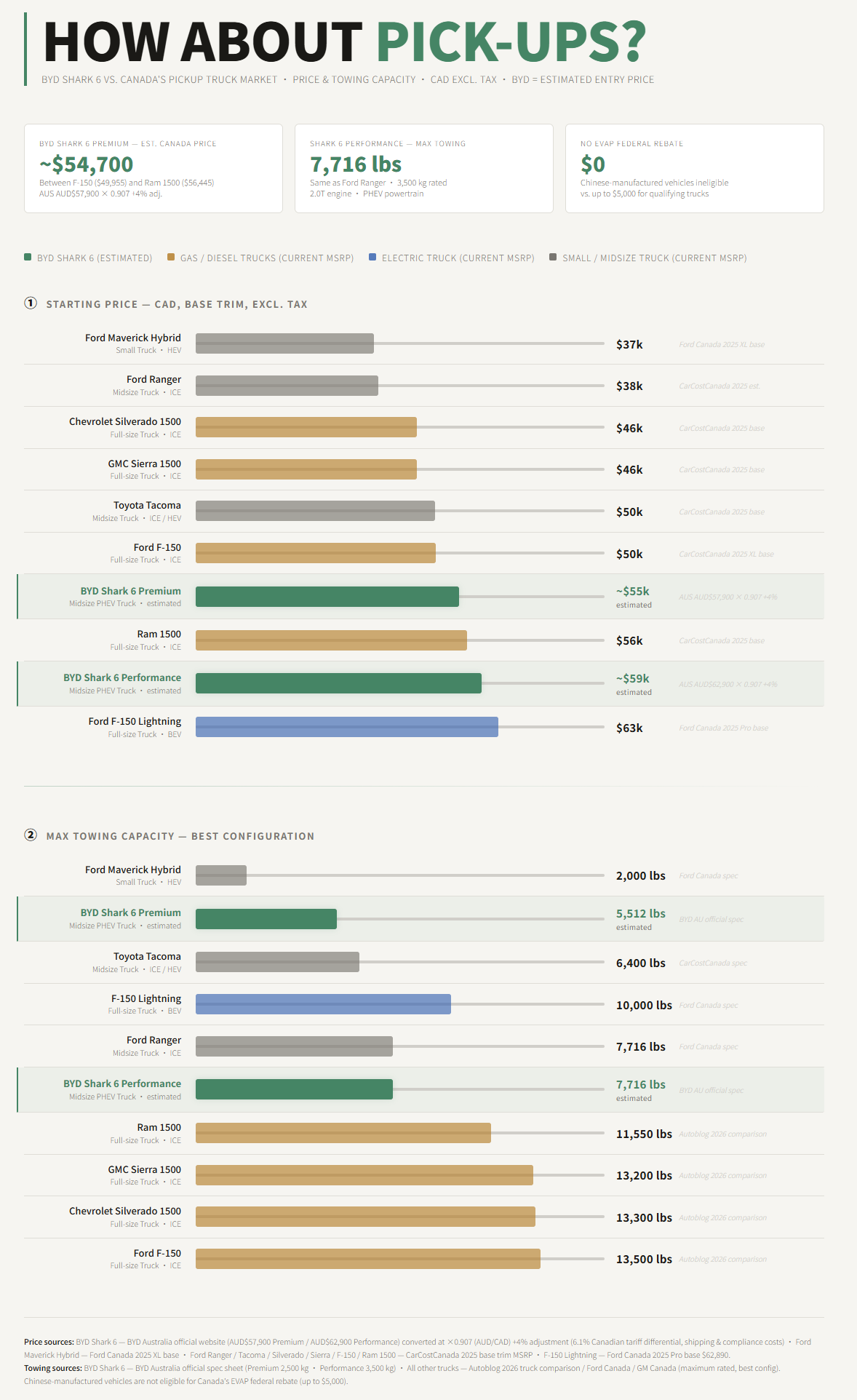
One last comparison: the BYD Shark 6 pickup. The verdict is mixed. It’s a midsize truck with towing capacity 40 to 60 percent below a full-size — a real gap in a country where towing matters. On price, it sits above a gas F-150 but below the F-150 Lightning. It doesn’t look built for backcountry work.
Price isn’t the Whole Story (Cheap is the Easy Part)
So Chinese cars are cheap. Is that the end of the story?
Not quite. For now, what Chinese brands can realistically displace is Japanese and Korean — Tesla’s position looks safe in the near term. In fact, Tesla itself has been working its Shanghai Gigafactory for a pricing edge in Canada. The new Model 3 Premium RWD now starts at CA$39,490 (about US$28,800) — a record low for the model there, made possible by sourcing from Shanghai instead of Fremont, California.
Because Ottawa only stipulated that 49,000 Chinese-made EVs would receive the 6.1% tariff rate, the quota could also absorb China-built vehicles from non-Chinese brands — the Lincoln Nautilus Hybrid, for instance. Others are catching on: Bloomberg reported that Nissan Americas chair Christian Meunier wants to deploy low-cost EVs co-produced with Dongfeng across markets including Brazil, Mexico, and potentially Canada.
But Canada isn’t keen to become a one-way dumping ground. The 49,000-vehicle quota represents less than 3% of Canada’s auto sector overall — yet it corresponds to nearly a quarter of all EVs sold in Canada in 2024 (24.2%).
In April, Industry Minister Mélanie Joly rejected a Stellantis proposal to assemble cars in Canada from Chinese knock-down kits — a process in which most components are built in China and shipped abroad for final assembly. Stellantis owns an assembly plant in Brampton, outside Toronto, originally slated for a new Jeep line. That line was canceled last year and moved to the U.S. after Washington imposed tariffs on cars built abroad.
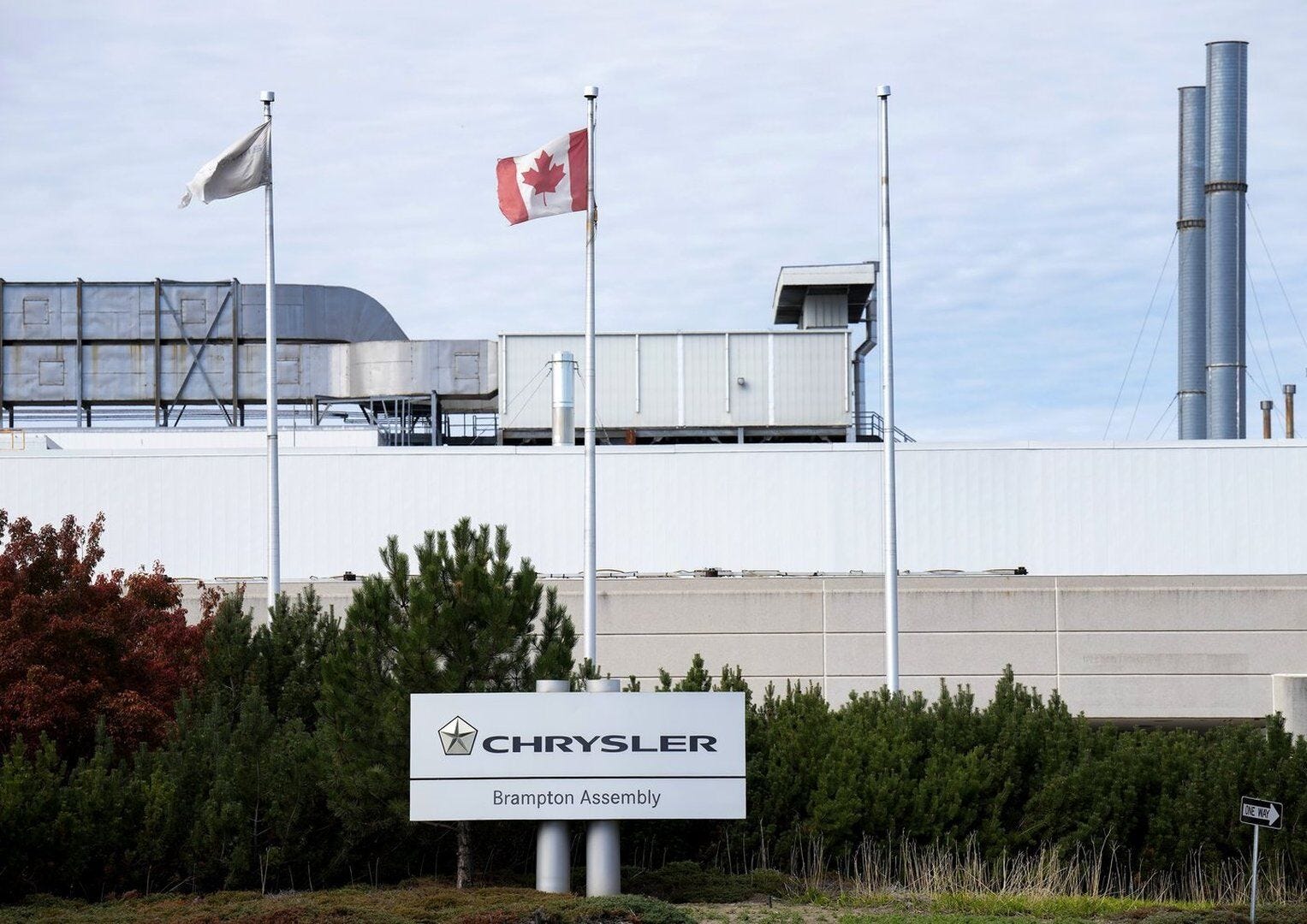
Stellantis had paid roughly €1.5 billion in 2023 for a 21% stake in Leapmotor, and the partnership has since deepened — including Leapmotor production at Stellantis’s Madrid plant. That model won’t transfer to Canada. Joly said she would only back a restart at Brampton with the support of both Ontario’s government and Unifor, the autoworkers’ union, and laid out further conditions for the plant’s future.
“It’s not the same as building a car here,” Joly said, insisting that the plant’s output must support local supply chains.
Chinese automakers, for their part, have considered building or buying their way into Canadian production. In March, BYD Executive Vice President Stella Li told Bloomberg that the company would consider a Canadian plant — but on its own terms.

BYD wants full ownership, not a joint venture. “I don’t think a JV will work,” Li said. BYD also prefers vertical integration, producing its own batteries, motors, power electronics, and semiconductors — a setup that doesn’t sit comfortably alongside a Canadian partner.
The bigger headache, though, may not be factories but parts and chargers. In Australia, BYD has built a reputation for prioritizing sales over service. Threads on r/BYDAU are full of complaints about long aftersales waits — one Canberra owner whose Sealion 07 needed an electronics repair faced a potential two-month wait; a damaged battery module means waiting for shipments from China with no logistics guarantees. Some owners have gone legal. Others just shrug: nice car, lousy maintenance.
Canada’s charging network is another bottleneck. As of February 12, 2026, the country had 14,469 public charging stations and 38,808 ports, including roughly 6,309 DC fast-charging ports. Ontario, Quebec, BC, and Alberta together account for 84% of national demand. A Dunsky-ICCT report for Natural Resources Canada projects Canada will need about 679,000 public chargers by 2040 to support its EV fleet. Current infrastructure may struggle to keep pace.
The Pincer Tightens (America, Surrounded)
Strictly speaking, Americans may be paying closer attention to Chinese cars than Canadians are. With Canada and Mexico now both open for business, the United States has become a Chinese-car-free island on the North American continent.
A January report citing data from Mexico’s statistics agency (INEGI), the EV Association, and the Nuevo León auto cluster (CLAUT) showed that Mexico sold 306,351 China-made light vehicles last year — 19% of total sales. In the first half of this year, Mexico became China’s top export destination for finished vehicles.
BYD is, again, the most conspicuous. In 2022, the company sold around 2,000 cars in Mexico. In 2025, that figure likely cleared 75,000. By mid-2025, BYD operated more than 80 showrooms across the country, and the count has probably crossed 100. In El Paso, just across the southern border, the BYD Shark 6 pickup is likely to slip in via Mexico.
Federal rules allow Mexican residents and dual citizens to drive into the U.S. even in vehicles that don’t meet American standards. The road from Ciudad Juárez to El Paso has effectively become a rolling showroom for Chinese cars. According to The Wall Street Journal, salespeople at El Paso-based dealership Casa Auto Group said prospective buyers have started asking why they can’t offer something as cheap as the Chinese models on sale just miles away.
It’s hard to blame them. Detroit’s Big Three rely heavily on pickups and SUVs; the affordable sedan segment has all but withered. Cox data puts the average new-car price above $50,000, up from roughly $36,000 a decade ago.
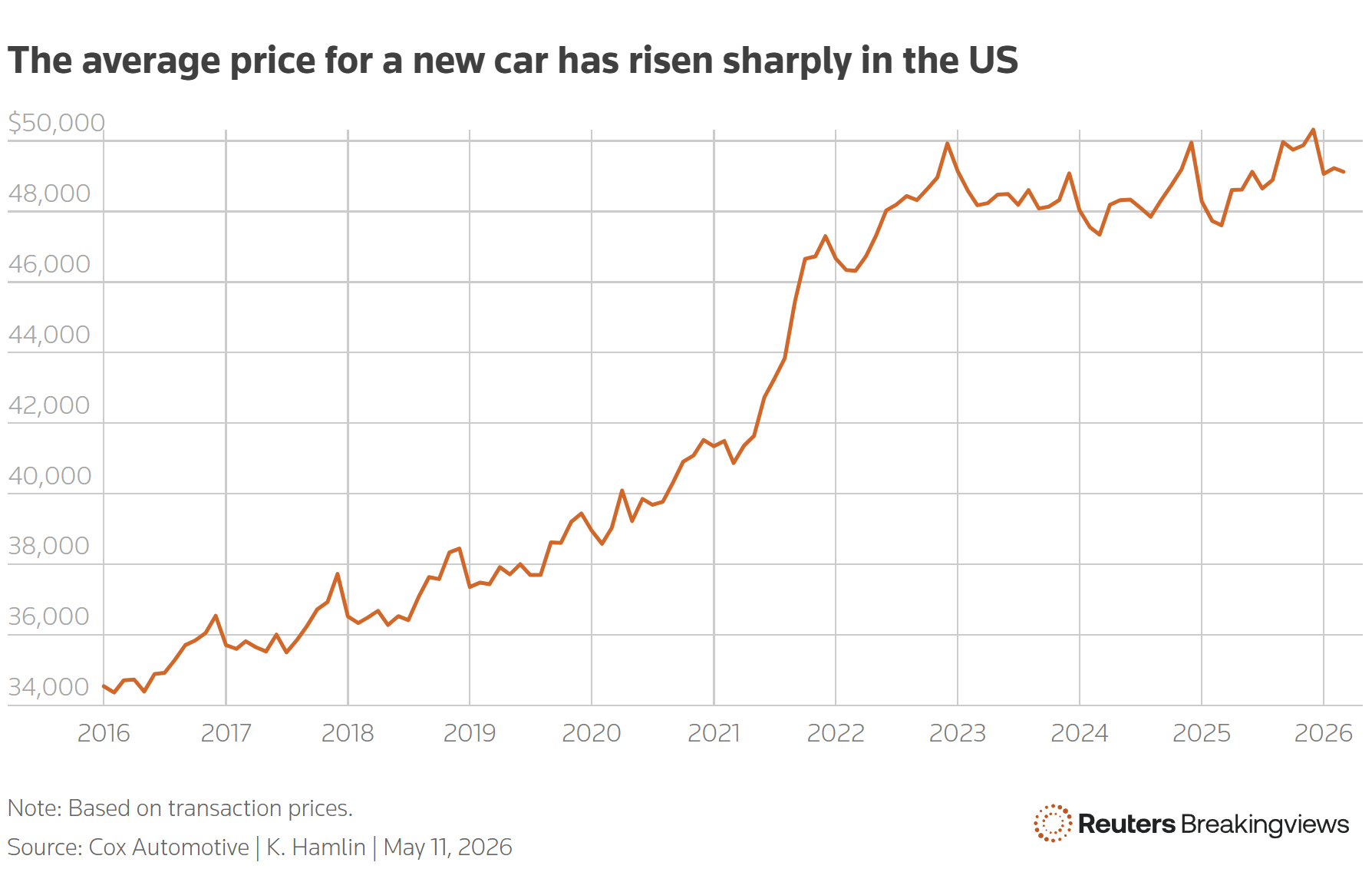
No new car offered in the U.S. today has a sticker price below $20,000. Chinese automakers are ready to fill the gap. In Mexico, BYD already offers financing as low as 7.9%, against a market average of 13%–14%.
BYD has weighed building a factory in Mexico, too — slated for Nuevo León, with a planned annual capacity of 150,000 vehicles and 10,000 jobs. Beijing has yet to approve the project, citing the risk that U.S. policy interference could expose Chinese smart-vehicle technology to American hands.
Locals have their own complaints: not a single part in these “Mexican” cars is actually made in Mexico. Last year, Mexico imposed a 50% tariff on Chinese cars and other goods — widely read as a gesture toward Washington. But the duties have also given Chinese automakers a reason to manufacture locally.
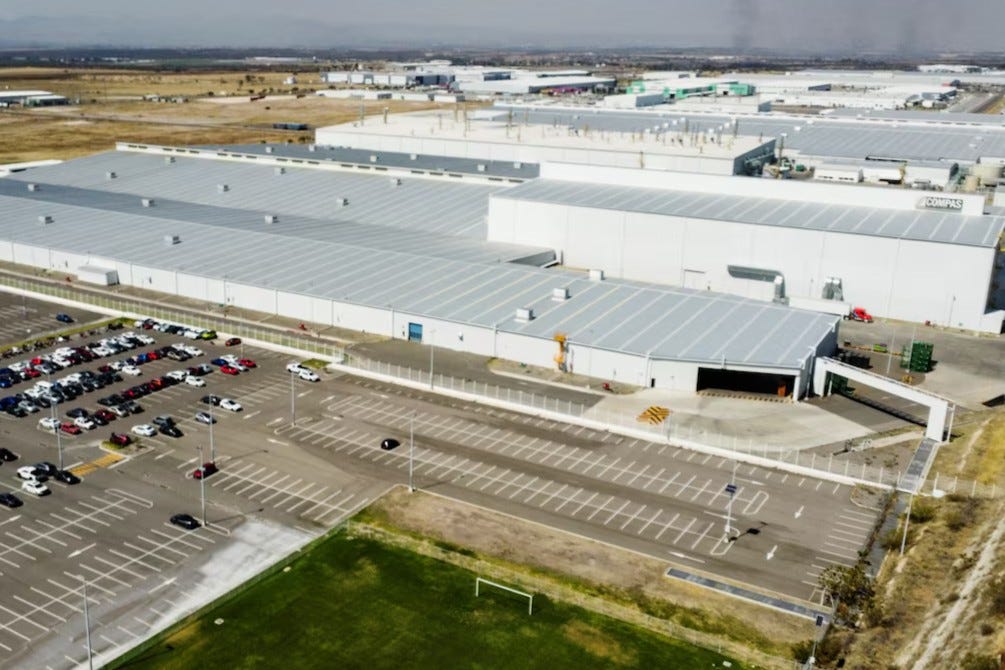
In February, sources said BYD, Geely, Chery, and Great Wall were among the final bidders for a Nissan–Mercedes-Benz plant in Aguascalientes, in central Mexico, that previously built the Mercedes GLB and Infiniti QX50 and QX55.
Since 2024, the U.S. has banned the sale of vehicles containing Chinese connected hardware or software, essentially shutting Chinese automakers out of the market. Industry executives and lawmakers argue that massive Chinese state subsidies and rock-bottom labor costs have created an uneven playing field.
China’s own market is softening. According to the China Passenger Car Association (CPCA), passenger-vehicle retail sales fell to 1.384 million units in April, down 21.5% year-over-year and 16.0% from March. Sales for January through April totaled 5.604 million units, off 18.5%. The CPCA’s Cui Dongshu attributed the slide to a sharp pullback in policy support this year, but noted that exports remain strong and inventories have not piled up.
Even setting BYD aside, others are ready to step in. At Geely’s dealerships in Mexico, the all-electric EX2 — a sleek compact starting at around $20,000 — is on display. Great Wall Motor shows off some beefy gas-powered SUVs, one advertised with the slogan “Be More Tank.” None of these brands sell in the U.S. — but they’re already on America’s doorstep.
Life finds a way. As Reuters’ Katrina Hamlin put it in the headline of her May column: “Chinese cars on US roads is matter of when, not if.”