



At 9:20 p.m., Zhao Xin appears on Douyin, China’s version of TikTok, with the leg of a robot dog sitting in front of him. He begins taking apart the motor inside its knee joint, explaining what may have gone wrong.
His account is one of dozens of Chinese short-video channels devoted to repairing robots.
Depending on how the market is counted, China shipped roughly 15,000 to 20,000 humanoid robots in 2025. Many went not to factories, but to universities, technology companies, shopping malls and event organizers. They danced, performed martial arts, greeted customers and served as expensive research platforms. IDC estimated that around 18,000 humanoids were shipped globally that year, with Chinese manufacturers accounting for most of the market.
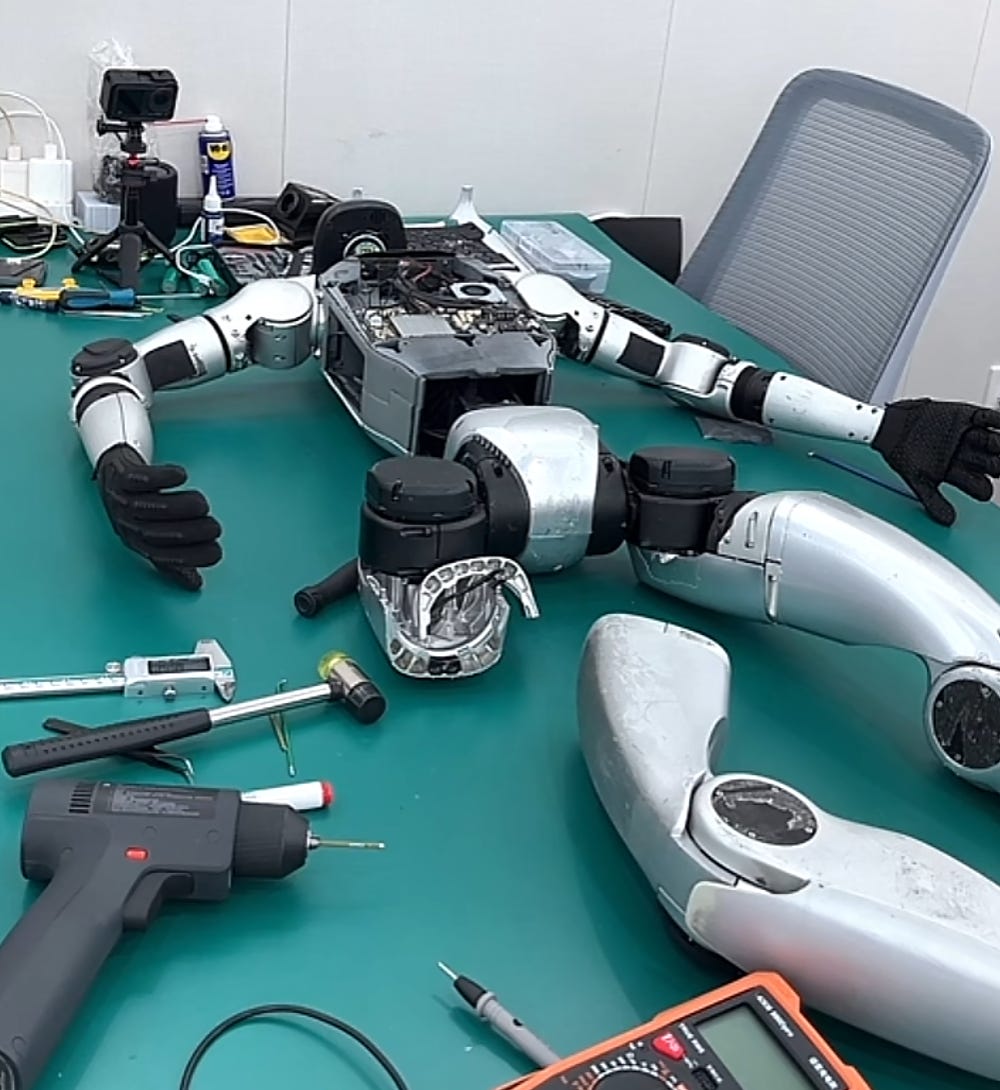
But the industry has spent far more time discussing what robots may eventually do than answering a more immediate question: Who fixes them when they break?
A small group of Chinese technicians thinks it has found an opportunity. They call themselves, half jokingly, “robot doctors.” Their bet is simple. As robot sales rise, so will the number of broken robots. Someone will have to repair them.
China’s humanoids may still be looking for jobs. Their doctors are already waiting for patients.
When the Robot Falls Down
China’s humanoid industry accelerated rapidly after Unitree put its robots onstage at the 2025 Spring Festival Gala. Machines that had mostly lived in laboratories suddenly began appearing at corporate events, shopping malls and commercial performances.
Once robots began performing in front of crowds, however, they also began falling down in public.
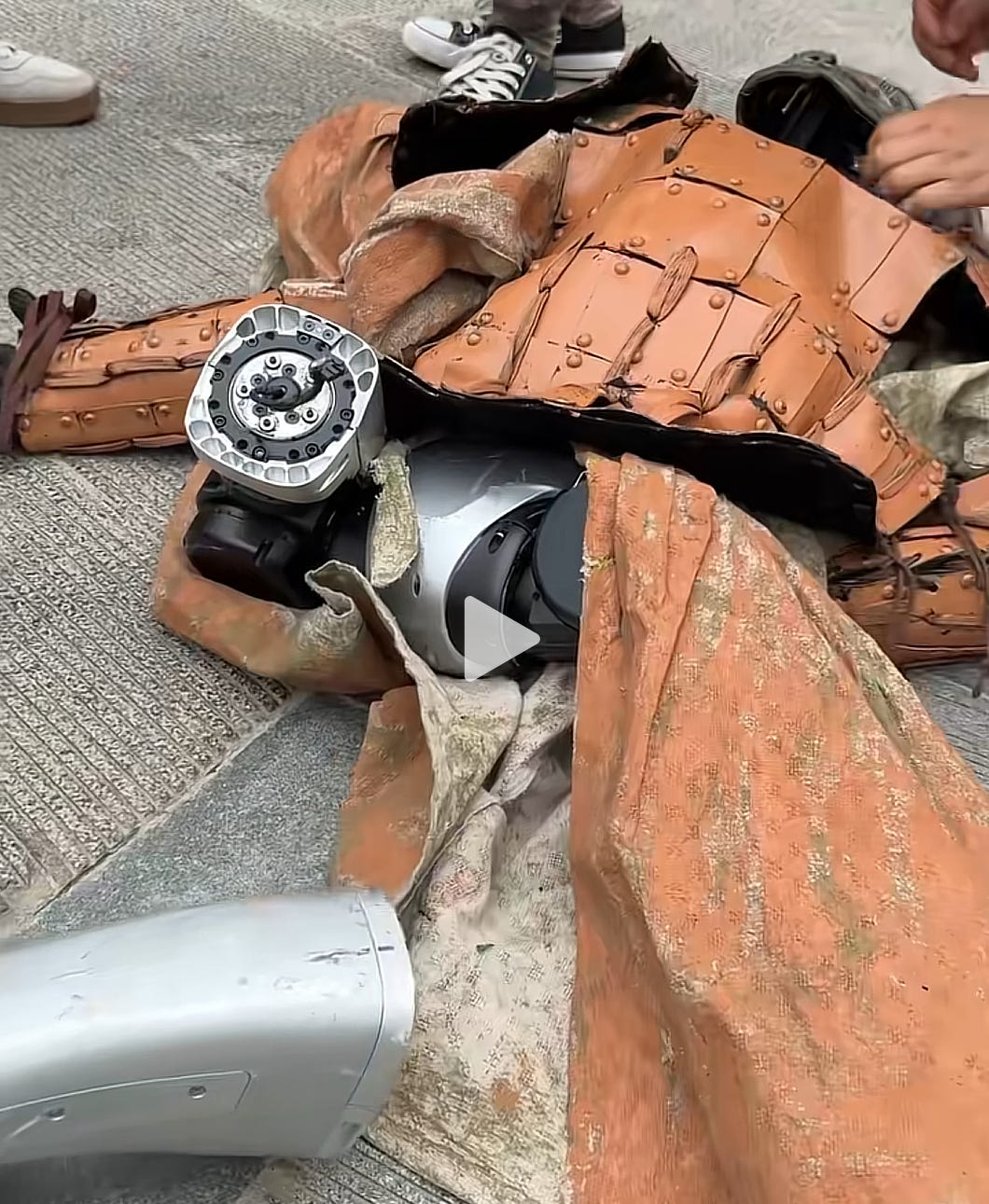
On May 18, a Unitree G1 dressed as an ancient Chinese warrior was performing martial arts when one of its legs separated from its body. The aluminum limb slipped out of the costume and landed on the floor.
On July 16, two T800 robots made by Shenzhen-based ENGINEAI fought each other in a staged match. One kicked the other robot’s head off. The headless machine continued trying to finish its kicking sequence like a mechanical zombie.
It makes for entertaining video. It is less entertaining when you own the robot.
Manufacturers offer warranties, but those warranties come with conditions. Unitree currently provides 8 months of coverage for the basic G1 and 18 months for the EDU version. Damage caused by falls, improper use, unauthorized modification or disassembly may not be covered.
Even when a manufacturer agrees to repair the machine, sending it back can leave the owner without a robot for weeks.
Zhao saw an opening. He works for an organization in Inner Mongolia whose main business includes drone repair, but his Douyin account documents his attempts to dismantle and repair robot dogs and humanoids from scratch.
Born in 1990, Zhao studied civil engineering at a vocational college. He enjoyed taking electronics apart, but had never worked professionally as a repair technician. Almost everything he knows about robots is self-taught.
Six months ago, he opened his first robot dog. After putting it back together, he somehow had ten screws left over.
Later, while dismantling a humanoid, he snapped three screws and two clamps. Some of the threads had been secured with anaerobic adhesive. After heating them with a hot-air gun, Zhao learned that forcing the softened screws was an excellent way to break them.
A few months later, the work had become routine. An error message in the robot’s app usually points him toward the faulty subsystem. He then checks the physical symptoms, locates the damaged component and replaces it.
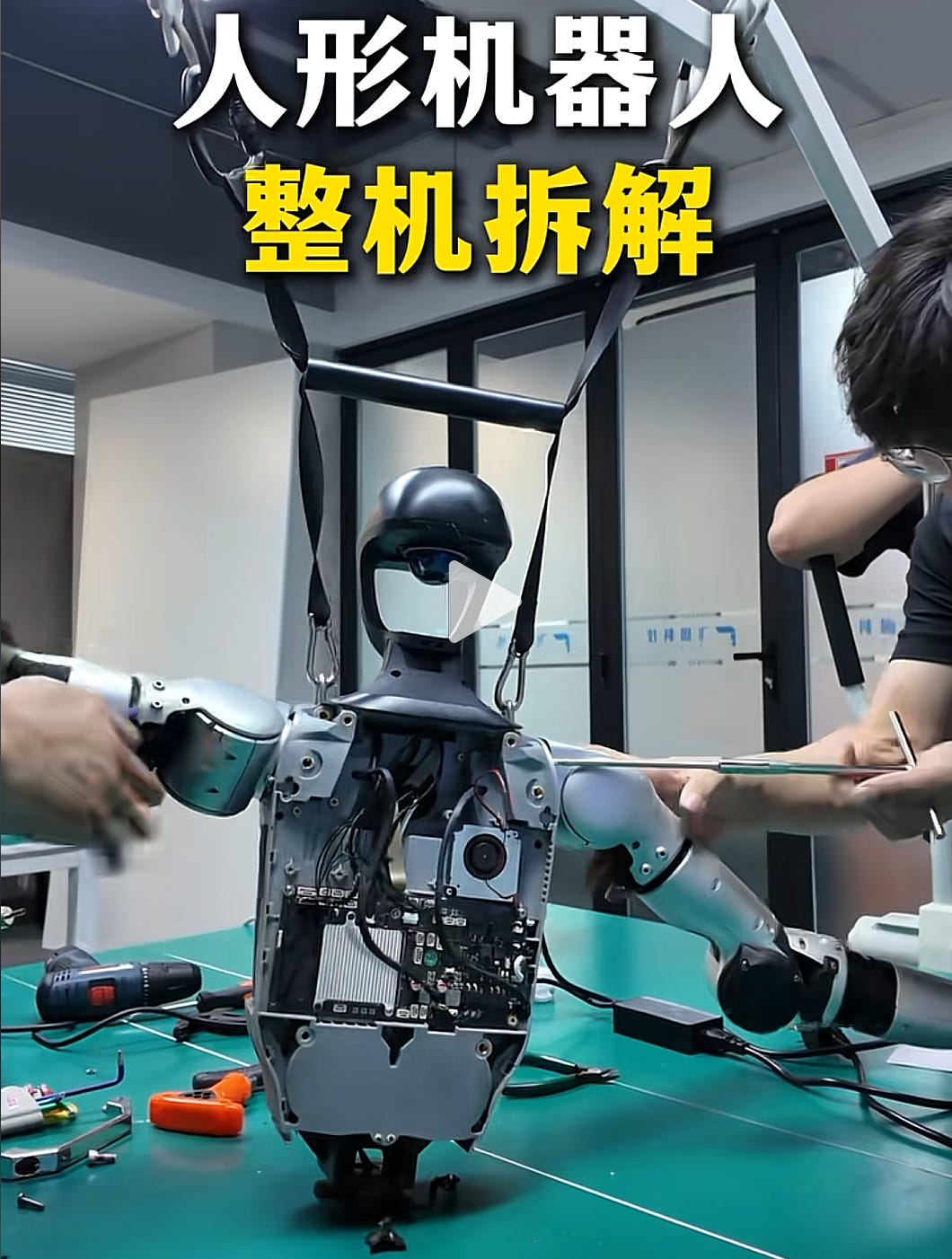
His conclusion is almost disappointing: mechanically, repairing many robot dogs and humanoids is not necessarily more difficult than fixing a drone or robotic vacuum.
Li Gang, a robot-rental operator in Wuhan, reached the same conclusion for a more practical reason.
Li bought 15 Unitree G1s for his rental business. Last June, one fell heavily during a shopping-mall performance and damaged its knee motor. The repair was judged to be outside warranty and would have cost more than $3,000. The robot itself had cost around $22,000.
So Li began taking the machines apart himself.
“It’s a survival skill,” he told me. “When China didn’t have many cars, drivers had to know how to fix their own cars too.”
Other rental operators now send their broken robots to him. Li charges around 60% to 80% of the manufacturer’s repair price. One repair shop in Shenzhen says it can sometimes cut the factory price in half.
More importantly, Li says he can usually return the robot within a week.
Repairing the Robot Is the Easy Part
There is no real textbook for this job.
China already has one of the world’s most sophisticated electronics-repair ecosystems. Walk through Shenzhen’s Huaqiangbei electronics district and technicians can find schematics, identify chips, trace circuits and source replacement parts through enormous informal supplier networks.
Robots are different.
Their circuit diagrams are rarely public. Some manufacturers remove identifying marks from chips. Many components are heavily customized, and parts from one company usually cannot be installed in another company’s machine.
An employee at Booster Robotics told me that authorized dealers are often the only businesses allowed to order certain parts directly from manufacturers. For an independent technician, the most reliable source of a replacement component may be another robot of exactly the same model.
That creates a circular problem.
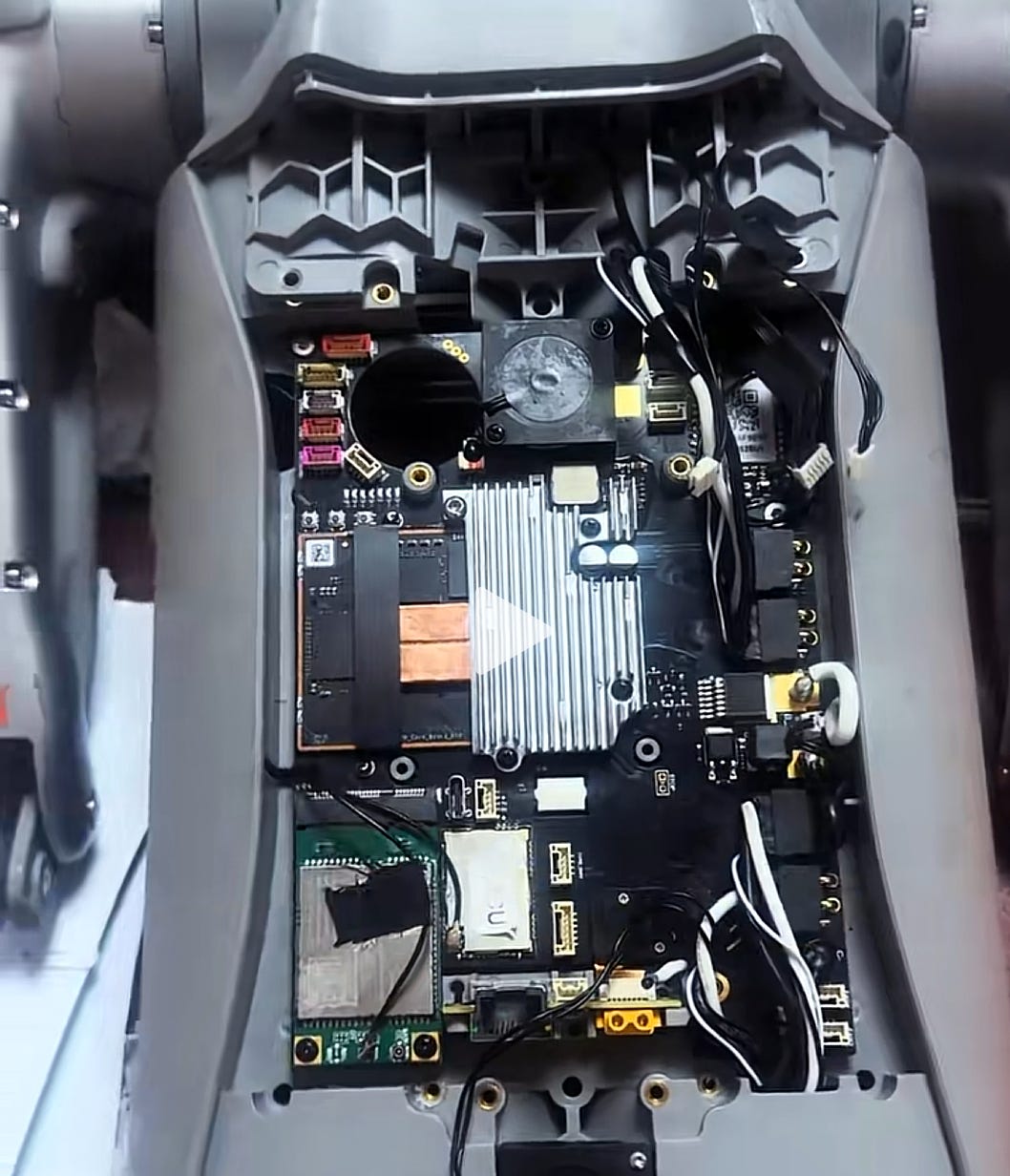
“Every robot company wants to become the leader,” the employee said. “The component design becomes part of the secret. Would you give your secrets to a competitor? Would Unitree?”
“If you don’t know who actually manufactures the motor or the chip, you can’t buy replacement parts in volume. And if you can’t get the parts, you can’t really repair the robot. It’s a dead end.”
This problem partly reflects how China’s robot companies were built.
Early in Unitree’s history, founder Wang Xingxing needed motors that could deliver high torque at relatively low speeds. Existing products were either poorly suited to the task or too expensive. But Unitree was selling only dozens of robot dogs a year, far too few to interest established suppliers.
A former Unitree employee once described the problem to Chinese technology publication 36Kr. Unitree could approach large listed manufacturers such as Wolong or Shanghai MOONS’ Electric, but neither was interested in such a small order.
So Unitree designed its own motors and joints.
That decision became one of the company’s biggest competitive advantages. Motors and joint assemblies account for a large share of a robot’s hardware cost. A motor that costs between $440 and $740 from an outside supplier might be manufactured internally for less than $150.
What is good for Unitree’s margins, however, is bad for the repair business.
Other robot makers reached the same conclusion. Proprietary motors, actuators and joints were often cheaper and performed better. But the more components manufacturers brought in-house, the fewer standardized spare parts became available on the open market.
Even the trivial parts can be expensive.
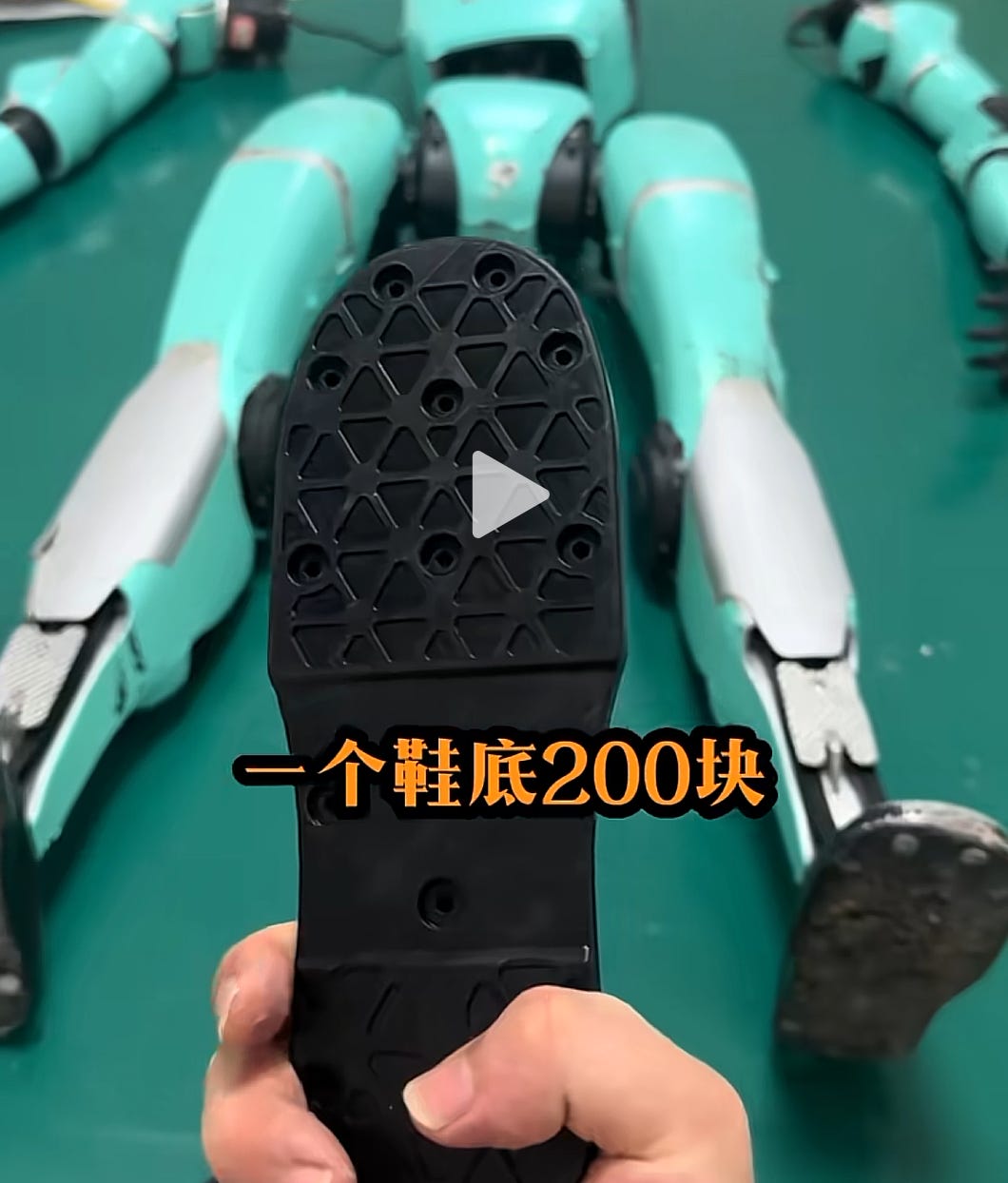
Zhao once discovered that the rubber pads on a robot’s feet had worn out. A replacement pair cost $60. His own shoes cost $9.
A suit for a humanoid performance can cost another $120, because Chinese garment factories have started making clothing and accessories specifically for robots.
Apparently, robots discovered bespoke tailoring before they discovered steady employment.
First, You Need More Broken Robots
Li can repair robots. He is far less certain that repairing robots can make him rich.
“Who actually needs us?” he asked. “Robot-rental companies. Their robots fall over while dancing, and the manufacturer may not cover the damage. But lots of Unitree robots are sold to universities. A university isn’t going to hand us an expensive research robot. If we break it, it’s not easy for them to just buy another one.”
That distinction matters.
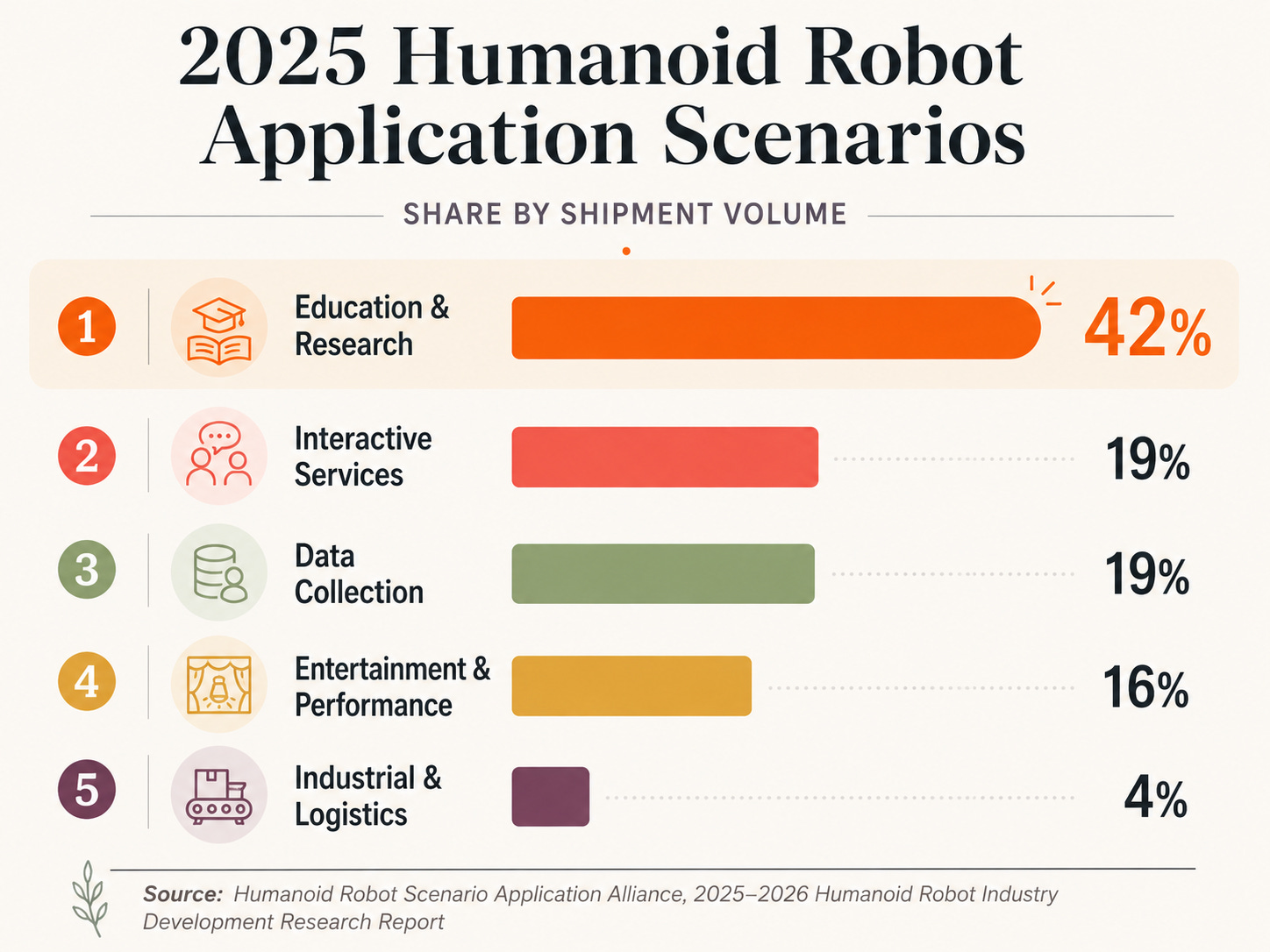
One Chinese industry report cited in the research behind this story estimates that education and research account for 42% of humanoid-robot applications, followed by data collection, services and performances. Researchers generally prefer factory-authorized repairs to taking a chance on an independent shop.
Then there is another inconvenient problem: robots do not break often enough.
Before China’s May Day holiday, new-store openings and commercial events create a rush of robot performances. That also creates a repair season. Summer is quieter. Outdoor events decline in the heat, and repair orders fall with them.
Li says humanoids are also more durable than most people assume. Despite owning and operating an entire fleet, he has personally repaired only three.
Even if 10% of China’s fleet of more than 15,000 robots required repairs in a single year, only a fraction of those jobs would reach independent technicians. Most machines remain under warranty, and many owners will send them back to the manufacturer regardless.
Zhao’s organization receives only one to three humanoid or robot-dog repair orders in an average month.
Another national repair business handles more than 10,000 robotic vacuums and commercial service robots each year. In a typical month, however, it sees only five or six humanoids and slightly more than ten robot dogs.
For now, humanoid repair cannot support most of these companies by itself.
Their real businesses are elsewhere. Zhao’s employer began by offering machinery-operation training for open-pit mines. A Shenzhen shop has years of experience repairing industrial robots. A Beijing operator earns money from robot rentals, education programs and events. Others specialize in drones.
That has pushed many of them toward a more obvious business: teaching other people how to repair robots.
There are no standardized courses and little meaningful competition. Programs charge between $740 and $4,400 for courses lasting eight to 40 days.
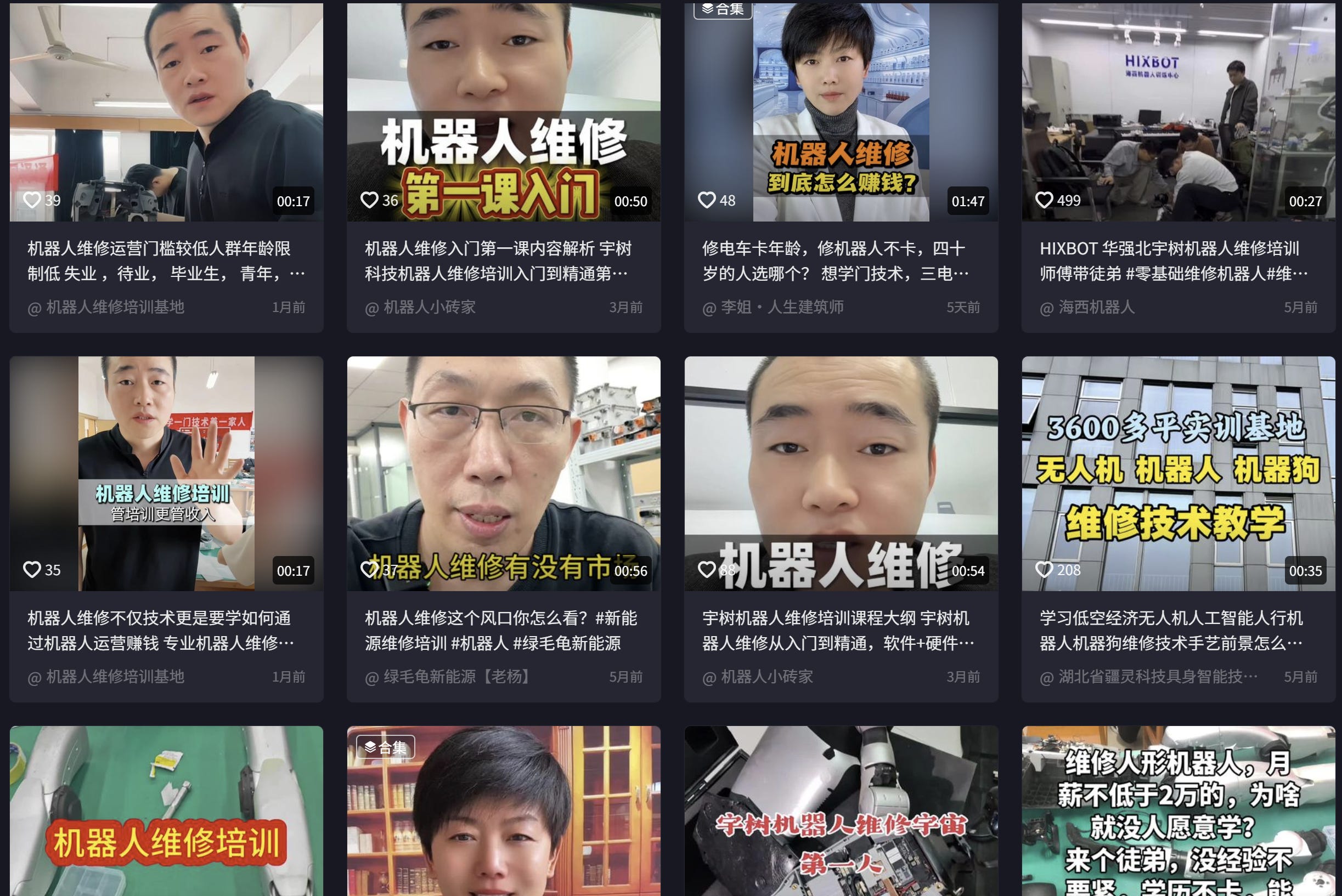
QbitAI reported that one Shenzhen operator trained more than 100 students across six classes beginning this February. Around 70% to 80% eventually found jobs somewhere in the robotics industry, although most became salespeople, operators or maintenance technicians rather than full-time robot doctors.
The barrier to entry is not particularly high. Interviewees said vocational-college graduates can handle routine repairs, and some training companies accept applicants with only a high-school education.
Advanced modification is a different matter. Once the work involves programming, algorithms or secondary development, employers generally want a university degree.
Pay reflects that divide. Beginners typically earn between $890 and $1,180 a month. Experienced technicians can make more than $1,480, depending on the city.
Large companies have noticed the same opportunity. JD.com’s service division said in May that it plans to train 100,000 engineers over the next five years in fields including robot and smart-home repair. It says it already employs thousands of technicians working on robot maintenance and is building what it calls a “cyber medical system” covering diagnostics, repair, refurbishment and recycling.
China’s robot doctors already know how to treat the patients. The problem is that they still need the patients to exist.
Li compares the business to veterinary medicine.
“Pet hospitals make good money, right?” he said. “That’s because there are enough cats and dogs.”
Then he looked at the robots sitting around him.
“You may not see as many robot dogs in your entire life as I have sitting next to me right now.”
Nice coverage!