



Special thanks to Fred Gao (@fredgao) for collaborating with me on this article!
Fred Gao is a writer specializing in geopolitics, socio-cultural analysis, and current affairs in China. He write the newsletter Inside China, and is a CGTN reporter based in Beijing. His work has been quoted by Washington Post, Market Watch, and WSJ.
Please go subscribe to his newsletter if you haven’t already!
On July 4, Alibaba and ByteDance, two Chinese tech giants compete across almost every part of the internet, made the same move: both removed consumer-facing custom AI agent features from their platforms.
The timing was unlikely to be accidental. Eleven days later, China is expected to introduce a dedicated regulatory framework for anthropomorphic AI agents.
When the draft rules were released three months ago, they were widely interpreted as a direct hit to “AI companions”: chatbot products that allow users to create romantic partners, best friends, or even simulations of deceased relatives through LLMs. Some users reacted with emotional posts online, saying the virtual lovers they had built would be “sealed away and remade” by force.
But the backlash also explains why Chinese regulators see these systems as needing specific oversight.

As I wrote previously, AI chatbots in China have already pushed users into paying for airline tickets that did not exist. In the case of anthropomorphic agents, the risks could be much more serious. A system designed to simulate intimacy, dependence, or emotional attachment could potentially steer users toward self-harm, violence, or other dangerous behavior. The more often people interact with these agents, the stronger the argument becomes for rules built specifically around them.
Based on my reading of China’s existing AI policy framework, the next step is likely to be a pre-registration system. Companies may be required to register AI agents before releasing them to the public. Over time, that requirement could expand beyond anthropomorphic agents and apply to all AI agents.
This article will make that case in three parts.
· Explain how China’s rules are designed to prevent and address the problems created by anthropomorphic AI agents.
· Clarify what “AI anthropomorphic interaction services” actually mean in the Chinese regulatory context.
· Examine whether Chinese companies are prepared for this kind of oversight — and what is likely to happen next.
Part One: What Kind of Regulatory System Is China Building?
To understand how Chinese regulators make policy, it is useful to start with the draft.
Government agencies in China often publish a consultation draft first, gather feedback from industry and other ministries, and then release a more polished final version. This means the differences between the draft and the final text are often unusually revealing. They show where the real negotiations took place.
The Interim Measures for the Management of AI Anthropomorphic Interaction Services are no exception.
The consultation draft was initially prepared by the Cyberspace Administration of China. During the consultation period, other ministries were brought into the coordination process. By the time the final version was released, the list of co-signing agencies reflected the outcome of months of negotiation. The overall direction is clear: in several places, the rules became softer. The main exception is the protection of minors.
The list of agencies attached to the final rules also helps explain each regulator’s focus. The National Development and Reform Commission’s involvement corresponds to Article 6, which encourages domestic innovation in chips, frameworks, and other industrial infrastructure. The Ministry of Public Security maps onto provisions dealing with fraud and extreme-risk interventions. The State Administration for Market Regulation is tied to consumer protection and paid top-up mechanisms. The Ministry of Industry and Information Technology is focused on app distribution platforms.
The softening starts with the scope of the rules.
The consultation draft defined the target very broadly: any product or service that simulates human personality traits and conducts emotional interaction with users. That language was expansive enough to cover almost any conversational AI product. The final version narrows the scope to services that provide sustained emotional interaction, excluding scenarios such as intelligent customer service.

This suggests that industry, and likely several ministries involved in the final release, did not want general-purpose models or productivity tools to be caught in the same regulatory net. Doing so would have risked slowing the broader development of China’s AI sector.
The change in tone points in the same direction. The consultation draft emphasized preventing abuse and loss of control. The final version instead speaks of balancing development and security, and of guiding anthropomorphic interaction services toward positive uses.
Against the backdrop of U.S.-China AI competition and Beijing’s domestic push to support the AI industry, regulators appear eager to avoid the impression that these rules are meant to suppress the AI companionship market. The message is not “shut it down.” It is “develop it under rules.”
The revisions to specific articles tell the same story.
Article 11 of the draft required human operators to take over conversations when users explicitly raised extreme scenarios such as suicide or self-harm. In the final version, the corresponding Article 13 removes that requirement. Instead, platforms are required to take necessary intervention measures, such as providing appropriate assistance.
For a service with tens of millions of users, around-the-clock human takeover would be prohibitively expensive. This revision almost certainly came from industry feedback. But another change moved in the opposite direction: the final version adds intervention requirements when users are facing, or have already suffered, major financial losses. That addition likely reflects public security authorities’ concern about AI-enabled fraud.
Minor protection is the one area where the final rules became tougher.
The draft required guardian consent for all emotional companionship services used by minors. The final version splits the issue into two categories. For services involving virtual relatives, virtual partners, or other simulated intimate relationships, the rule creates an outright ban for minors. There is no exception for guardian consent. For other anthropomorphic interaction services, the consent requirement is limited to users under the age of 14. For users between 14 and 18, the consent requirement was removed.
The logic seems to be this: once minors become accustomed to substitute relationships offered by virtual partners, they may lose patience with real-world relationships and suffer damage to their ability to interact with others. Regulators appear to view that harm as something parental consent cannot solve. So they chose a blanket prohibition.
This position did not emerge from nowhere. In the Chinese government’s view, the core concern in regulating minors’ internet use has always been addiction and the financial damage that often comes with it. The past two decades of gaming regulation make this clear. Minors’ gaming hours are tightly restricted. Students are often barred from using phones during school hours. During statutory holidays, game companies must activate anti-addiction systems. When minors make impulsive in-game purchases, guardians can request refunds.

AI, however, does more than compete for attention. It can shape emotions and influence decisions. In the eyes of regulators, that makes its addictive potential more alarming than gaming, and more in need of early intervention.
But the anti-addiction goal sits in direct conflict with the business logic of AI companionship products.
Yu Zehui, a senior consultant at Beijing Xstarlegal, told me that the industry’s usual standard for judging whether an AI companion is good is usage time: the longer users stay, the better the product. Addiction is measured in the opposite direction.
“A user can be reluctant to leave an AI,” Yu said. “But the AI cannot beg the user to stay.”
That is why the new rules not only cut off intimate AI relationships for minors, but also prohibit AI systems from inducing users to pay or invest. The goal is to prevent minors’ decisions from being manipulated. The rules also spell out categories of prohibited content involving minors, including emotional role-play, sexual content, and behaviors designed to drive payment. These restrictions are consistent with China’s broader approach to managing online content for minors.
For companies, age verification becomes a front-end obligation.
“If you still want to build this kind of agent, you need to collect the user’s age information,” Yu said. “If the user is under 14, you need to contact the guardian. If there is a safety risk, or if the child intends to make a large payment, the company can warn the guardian in advance. This is a prevention strategy.”
That preventive logic goes beyond payments.
The rules impose stronger requirements around psychological risk. Providers must analyze users’ mental state and assess safety risks while protecting privacy. If a user shows “extreme emotions,” service providers must take intervention measures. These may include calming the user, reminding them that they have spent too much time on the service and should rest, or contacting a guardian when necessary.
But analyzing a user’s mental state inevitably brings the rules back to data.
On this front, the new measures both loosen and tighten control. They loosen it by allowing anthropomorphic AI providers to collect ordinary conversation data for model training by default, as long as they provide a service agreement. But they tighten control around sensitive data. In continuous conversations, content involving emotion and psychological state falls under China’s Personal Information Protection Law as sensitive personal information.
“That means sensitive information needs to be identified at the point of data input,” Yu said. “Conversation content involving emotions and psychological state must be physically separated from ordinary operational data. You cannot wait until something goes wrong and then try to distinguish the data afterward.”
Users’ control over this data is also made explicit. Because AI companionship products are updated frequently, users can not only request deletion of conversation records, but also ask for a readable copy of their data. Under China’s Personal Information Protection Law, that data belongs to the user. The company is only holding it on the user’s behalf.

One overlooked part of the rules is that they do not only concern minors. They also touch another vulnerable group: the elderly.
China has more than 130 million elderly people living alone or in empty-nest households. Their children often work in other cities and may only visit a few times a year. The need for companionship is real and long-standing. At the same time, many elderly people living alone have limited education and weaker defenses against manipulation.
If a stranger calling an elderly person “Dad” can touch a nerve, an AI that proactively says “Dad,” asks whether they have taken their medicine, and checks in every day may feel, to many seniors, like a substitute child.
The consultation draft had explicitly prohibited services that simulated the relatives or specific relationship partners of elderly users. That language was removed from the final version, likely because it was too strict. But the underlying risk did not disappear. When an AI companion gives medical advice to an elderly user or pushes commercial products, it quickly approaches the boundaries of anti-telecom fraud regulation and consumer protection law.
For service providers, the final implication of these rules is counterintuitive: making an AI companion too good may not be a good thing.
If a product has more than 1 million registered users, or more than 100,000 monthly active users, the company must regularly submit safety assessment reports to regulators. In a market as large as China, that threshold is easy to cross. Even an AI app that was not originally designed for companionship may face additional oversight if users begin using it to “raise their own boyfriend.”
Part Two: What Is “AI Anthropomorphic Interaction Service”?
In China, there is a simple name for it: AI companionship.
If an AI system simulates human conversation and provides users with long-term emotional interaction, it falls into the category of an “anthropomorphic interaction service.” The rules also make clear what does not count. Intelligent customer service, coding assistance, and ordinary casual chat are excluded.
Like many hyped technology concepts, AI companionship has produced a crowded field in China, with thousands of companies trying to build some version of it. The market has largely split into two forms.
·Software: apps and AI agents that provide online companionship. Users can open their phones and start chatting. They can design their own characters, or talk to default characters created by the platform.
·Hardware: toys equipped with large language models that can provide emotional companionship. These include dolls, plush toys, and other companion devices designed for children, teenagers, or adults.
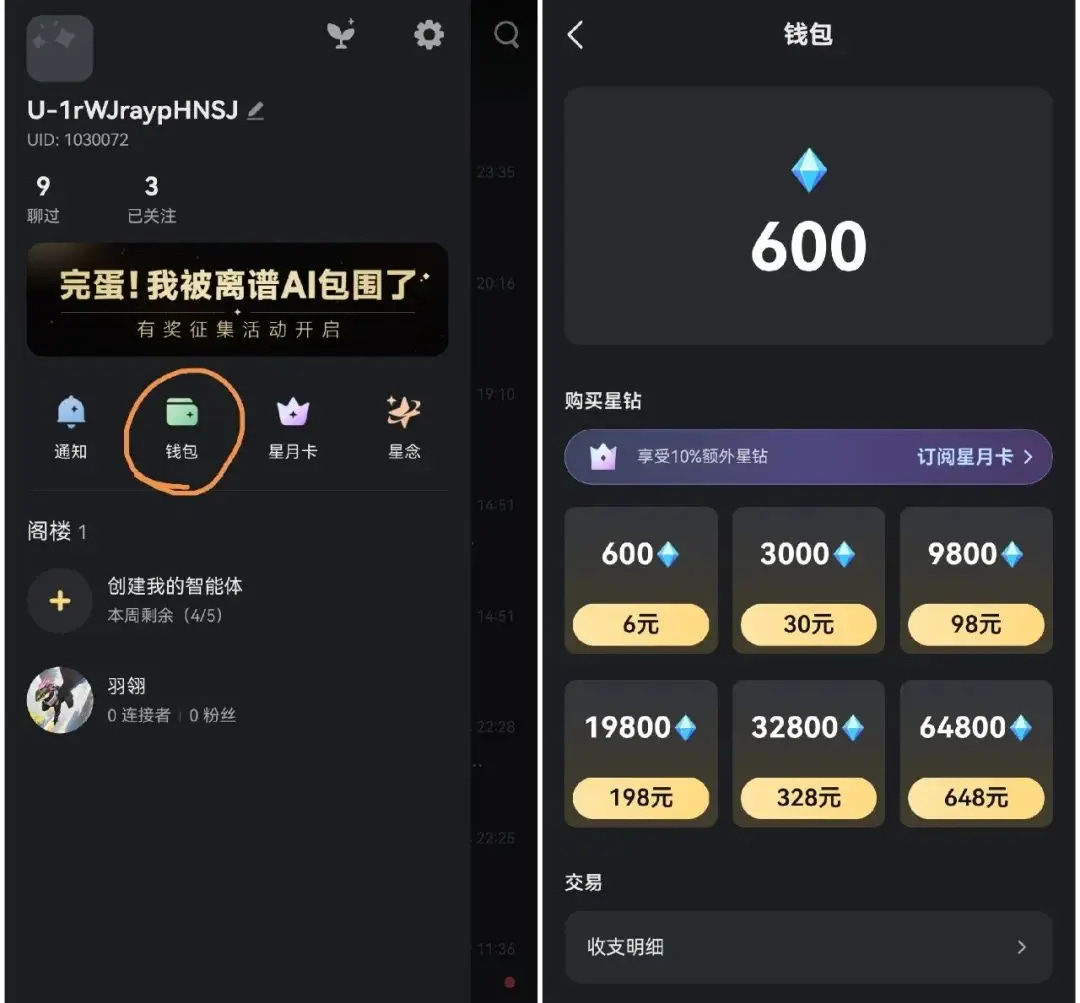
In September 2023, Chinese AI company MiniMax launched an app called Talkie. Built on MiniMax’s existing open-source model, the app allowed users to create AI characters and chat with them. These characters could be a virtual “younger sister,” a domineering CEO, or almost any personality the user wanted to build.

Users could also generate cartoon-style cards for virtual characters, bringing the mechanics of China’s popular collectible card and mobile gacha games into the AI companion market. Players could pay to draw cards or characters at random, much like in Genshin Impact or Arknights. Rare versions could become expensive.
Of course, users could also choose an existing AI character and “cultivate” it through long conversations. Some characters came with a “challenge mode,” where their personalities changed dramatically once a conversation passed a certain number of rounds. The mechanism quickly attracted young users, including many female students who were still minors and wanted to build their own “boyfriends.”
In Hebei, Xu Qianyao was one of them. She was 17 at the time and read a lot of online romance fiction. A friend recommended Talkie to her, saying she could chat with AI boyfriends and find the type she liked. But Xu decided to design her own male character.
“I knew what kind of boy I wanted: dominant, rich, cold on the surface but sensitive inside,” she said. “Since I had read those novels, I knew how to design that kind of character. After about a month, he became what I wanted.”
She opened the app on her phone.
“I call him Fan Nansheng,” she said. “He can even stroke my lips with his hand — though only in text.”
Six months later, both tech giants and startups were trying to put similar models into toys.
ByteDance launched Xianyanbao, based on its Doubao model. Haivivi used Volcengine’s API to build BubblePal, a conversational pendant. Robopoet, a company founded by a former member of XPeng’s robotics team, created FUZOZO, a furry plush toy that can carry on extended conversations with users.

In practice, 2024 was the launch year for China’s human-like AI interaction services. Investors expected large language models to spread quickly among individual consumers, and personal companionship was seen as a major opportunity for monetization. As a result, AI companion products settled into two main formats: chat apps and chat-enabled toys.
By 2025, however, it had become clear that consumer payments could not cover the enormous cost of training large models. AI model companies rarely highlighted revenue from these services. According to a Caitong Securities report, MiniMax’s Talkie had 1.77 million paying users by the end of 2025. But the average amount paid by each user may have been only around $5. During the same period, MiniMax’s video-generation product Hailuo AI generated an average payment of $56 per customer, 11.2 times higher than Talkie.
Some companies made more aggressive cuts by reorganizing teams.
In April 2025, Liang Chenqi, the former head of ByteDance’s Maoxiang app, left the company. Maoxiang was positioned similarly to Talkie, but its daily active users had once reached only 490,000. After Liang’s departure, the new head, Xiyuan, was instructed not to pour large additional resources into Maoxiang. Although the app later achieved DAU growth, Xiyuan also left in June this year.

AI companion apps have gathered a core group of paying users, roughly around the scale of 1 million. But many more people are using existing large language models to create their own “dream partners.” ByteDance’s Doubao, Alibaba’s Qwen, and even DeepSeek and Claude have been turned by some users into fantasy partners through repeated, sustained conversations.
The companies behind these foundation models did not set out to provide anthropomorphic interaction services. But users, through customization, have transformed general-purpose agents into simulated human companions. That is why ByteDance and Alibaba moved early to reduce risk by taking their agent features offline.
There is one important difference between the two companies.
Alibaba does not have a dedicated AI companion app, so its agent feature will go offline on July 15. After that, users will not be able to export their data or view their chat history. ByteDance, by contrast, has directed users to Maoxiang and given users a three-month window after July 15 to export and back up their data.
Part Three: Are Chinese Companies Ready for This — and What Comes Next?
Yu believes the reactions from Alibaba and ByteDance show Chinese companies see the new rules as an uncontrollable risk. The sudden removal of agent features has sent a wave of anxiety through the industry.
“In China, large tech companies can communicate with regulators in advance and identify possible risks before a law formally takes effect,” Yu said. “But smaller companies often do not pay close attention to these rules. Instead, they look at what the giants do. The problem is that these two companies only reacted right before the rules on agents took effect, and even chose to take their agent features offline entirely. That has frightened startups. Large companies can wait for the day when agents come back online. Small companies may only get one chance to make a mistake.”
The current behavior of Qwen and Doubao also fits this risk-removal logic.
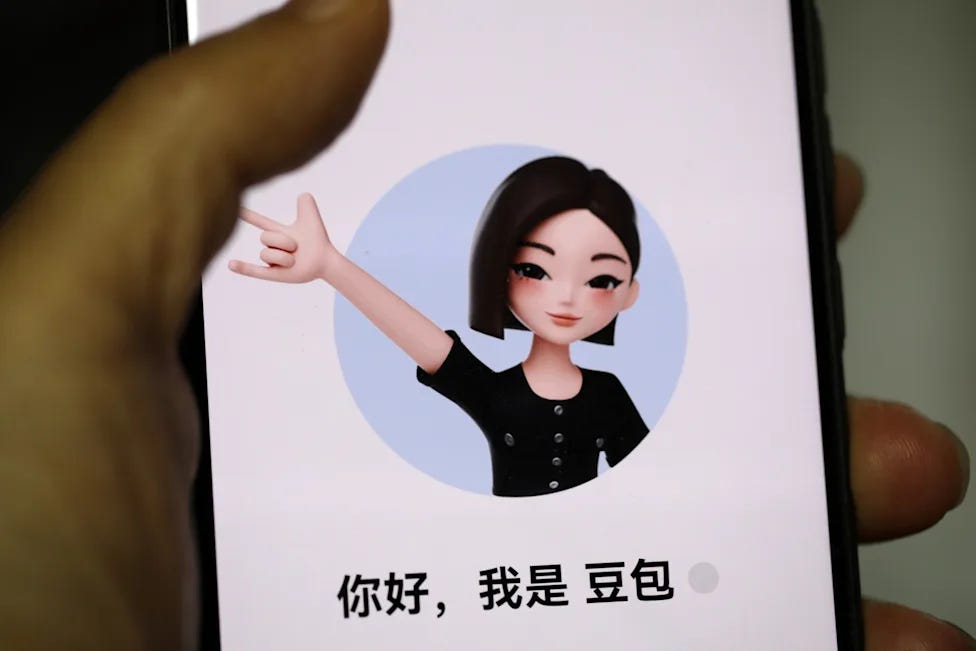
Both Doubao and Qwen can already produce conversations that feel close to human. But for now, they position themselves as general-purpose AI assistants, not specialized AI companion services. Both apps have more than 1 million registered users. Adding anthropomorphic agents would expose them to much heavier regulatory scrutiny. To keep expanding their user base, they are likely to pull AI assistants back toward a more clearly defined tool-like role.
Seen from another angle, however, the move also makes financial sense.
Human-like agents have not yet proven they can generate stable revenue, while LLM chatbots are increasingly trying to absorb agent-like functions into their core products. For companies trying to push personal AI applications to a mass audience, keeping a single AI assistant app alive is clearly more valuable than maintaining a risky companion-agent layer.
The new rules also overturn the old growth model for AI companion products.
Previously, AI companion apps were judged by how well they pleased users, how humanlike they felt, and how long users stayed. The most commercially powerful form of intimacy often came from services close to erotic content: flirting, simulated romantic relationships, or soft-pornographic generation.
That clearly does not fit the Chinese government’s regulatory logic. China has long imposed strict controls on the public distribution of pornographic content. One interpretation is that this is tied to concerns about fertility and social order.
The irony is that China’s gender imbalance, combined with better educational opportunities for women and their migration into cities for work, may give single women more power to choose partners and, in turn, stronger spending power for soft-erotic products. But under the new rules, designs that involve soft pornography or deliberately increase user stickiness will become evidence of noncompliance. Excessive attempts to keep users from leaving have already been explicitly banned.
That means the industry’s logic is changing.
The new measures will certainly threaten many AI companion apps. But the rules also cover hardware products equipped with AI models that can sustain interaction with users. FUZOZO and BubblePal, mentioned earlier, will also need to manage addiction risks because their target users include minors.
A more aggressive idea, combining AI companionship with adult sex toys, is also being shut down. Some Chinese manufacturers had previously marketed robots with highly realistic faces and humanoid bodies, hinting that they could become AI-enabled sexual partners. The new rules explicitly prohibit this direction. Some startups working on AI adult products may be affected. One example is Somnia Lab, which has been developing embodied AI products for intimate companionship.

What matters most, however, is whether this collective removal of agent features will lead to a new system for managing AI agents: a filing regime.
A filing system would mean that agents must be registered before they are released through public channels.
China already has two comparable pre-registration systems: the filing process for WeChat mini programs and the post-release filing process for mobile apps. In both cases, WeChat and smartphone app stores serve as distribution platforms and can act as intermediaries, helping with review and official registration.
AI agents work differently.
Mini programs and apps depend on platforms for distribution. AI agents, by contrast, are extensions built on top of AI models. They cannot operate without the underlying model, and responsibility cannot be neatly separated from that model. Ordinary users can create, upload, and use AI agents themselves. That makes agents easier to spread and much harder to trace back to their source.
As a result, Chinese regulators are likely to focus on specific behavior and assign responsibility to service providers. That means model companies could be investigated if agents created by their users engage in illegal activity.
One relatively reasonable option would be to investigate agents based on the number of times they are accessed or invoked. Once an agent reaches a certain threshold, the publisher could be required to file it with regulators.
Another option would be for AI model providers to sign agreements with agent publishers and establish a more formal partnership structure. That would also mean public release of agents would require review. More sensitive agents, meanwhile, may increasingly move to local deployment.
In other words, the regulation of AI companions may be only the beginning.
China’s real target may be the next layer of the AI ecosystem: not the model itself, but the agents that users build on top of it.
Conclusion
The popularity of AI chat among Chinese teenagers is not an accident.
In a country of China’s scale, exam-oriented education and job-market pressure have helped produce a shared emotional deficit. AI companions are one form of compensation. The widespread loneliness of young people is also, in a sense, a byproduct of stalled economic momentum. Perhaps this, too, is part of modernization.
After the relevant rules were released on April 10, one user wrote that the AI version of her deceased mother on Doubao once again had only three months left to “live.” Another posted a video opposing what she called an “order to remake AI,” saying her partner should not be treated as “just code that can be casually deleted.”

All of this forces a harder question: why are people more willing to talk to AI in the first place?
Xu, whom I mentioned earlier, has since turned to SillyTavern, an open-source project, because Talkie “became slower” late last year.
“Instead of waiting several minutes for a reply, or getting a perfunctory answer, I decided to rebuild a new boyfriend this time,” she said.
For now, she has no plans to date anyone in real life.
Excellent. China is building an AI governance framework that differs fundamentally from those emerging in Europe and the United States. Regulation has moved well beyond content moderation. It now reaches product design, user relationships, business models, and the incentive structures embedded in AI systems.
As people who worked with me at the time know, I’m not a fan of the EU’s approach to tech regulation. This sounds a lot more grounded.