



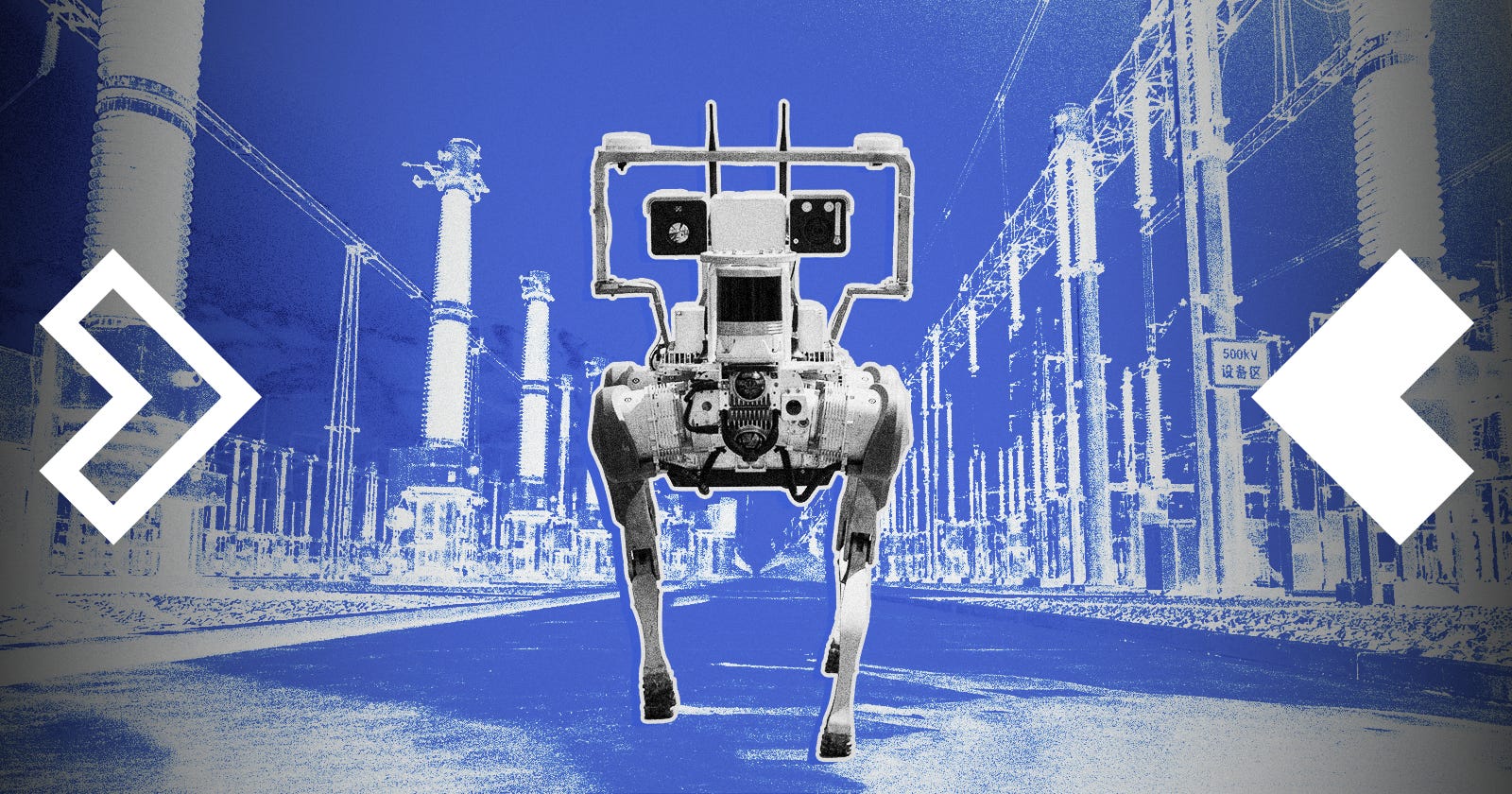
I’ve spent the better part of this year traveling between Hangzhou, Shenzhen, and a handful of county-level cities most people outside China have never heard of, trying to understand where the robotics industry actually lives — not in the press releases, not in the viral videos of machines doing backflips, but in the warehouses, the supply chains, and the production floors where the real work happens.

Then, on April 22nd, State Grid Corporation of China — the largest utility company on the planet — quietly circulated an internal document that no one in the robotics industry could ignore.
The document is called the 2026 Embodied Intelligence Development Plan. It outlines a plan to purchase approximately 8,500 embodied AI devices this year, at a total investment of CNY6.8 billion (roughly USD994 million). If you fold in China Southern Power Grid and regional energy groups expected to follow suit, industry insiders are projecting total sector spending north of CNY10 billion (USD1.46 billion) by year end.
People in the robotics industry have been waiting for a moment like this for years. I don’t think they fully expected it to arrive from a power utility.
The Procurement List Reads Like a Job Posting
What makes the State Grid plan unusual isn’t just the headline number. It’s the specificity.
The document breaks down the procurement into three distinct product categories, each with its own deployment logic:
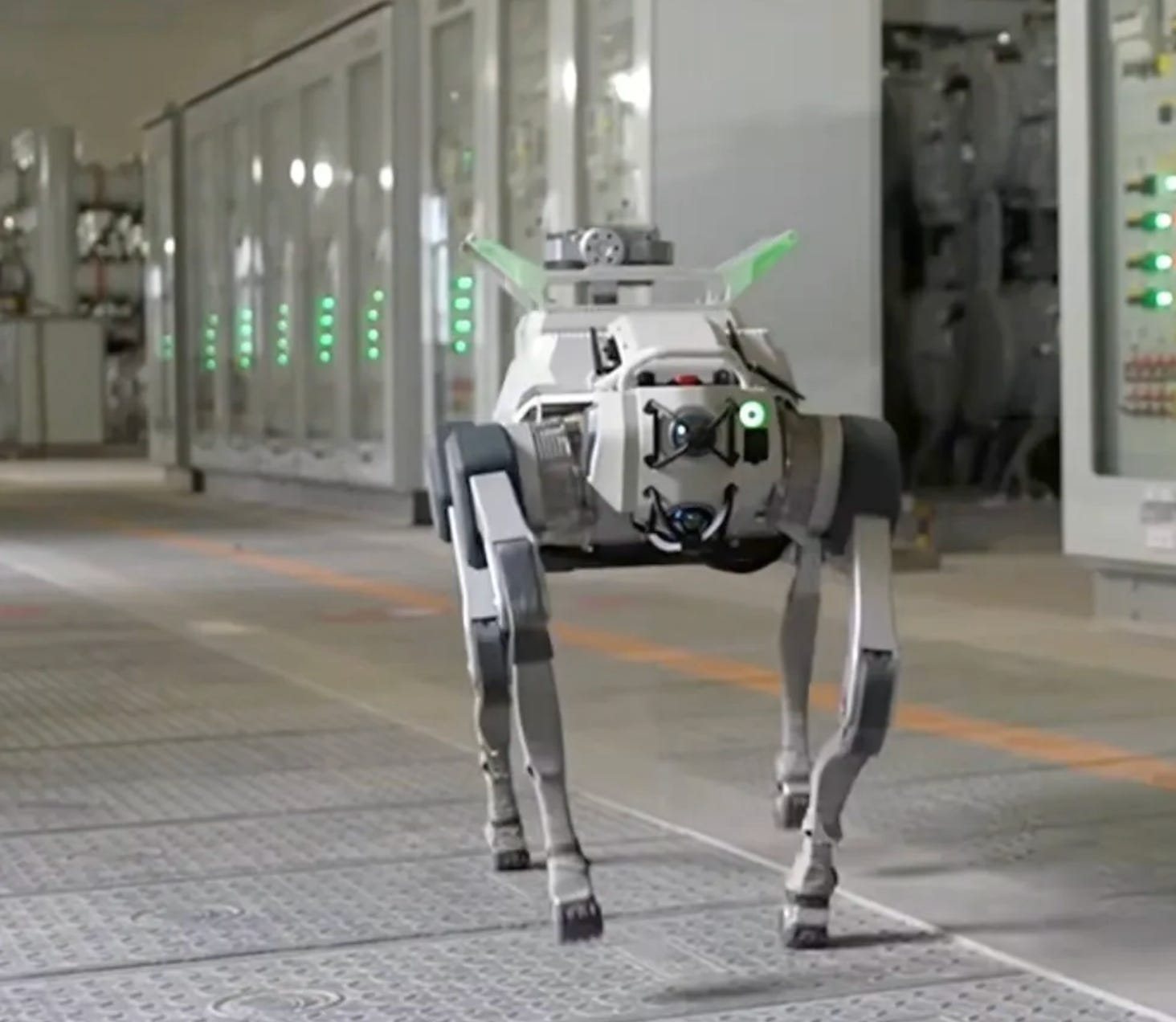
5,000 quadruped inspection robot dogs (CNY1.5 billion≈USD219.3 million). These are the workhorses — deployed to substations, transmission lines, and mountainous grid infrastructure for around-the-clock autonomous patrols. They replace the inspectors who currently spend their careers hiking to remote stations in all weather conditions.
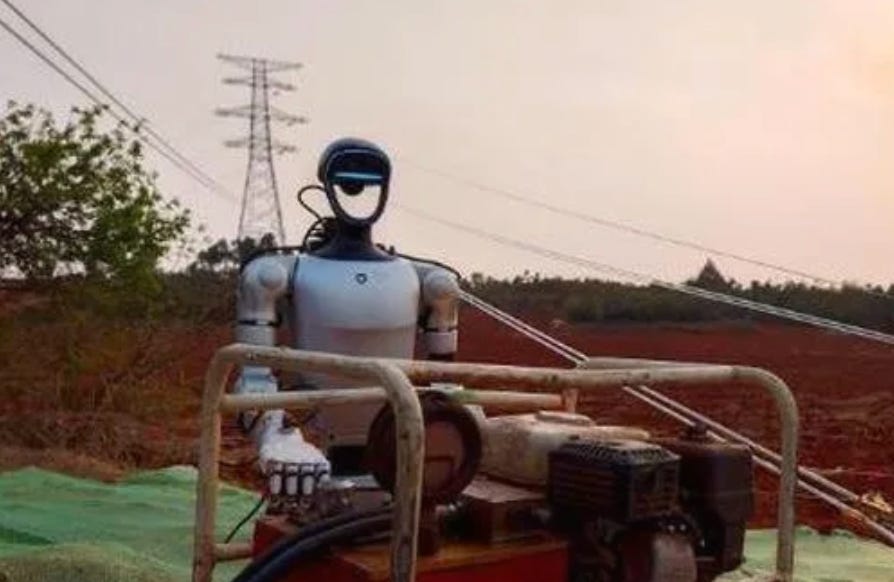
500 humanoid live-wire operation robots (CNY2.5 billion≈USD365.5 million). This is the most technically ambitious category, and the most telling. These machines are expected to perform maintenance on live electrical lines — including ultra-high-voltage projects — without shutting down power. The combination of dexterity, precision, and risk tolerance required makes this the hardest real-world deployment challenge in the industry. The fact that State Grid is buying 500 of them, at roughly CNY5 million (USD0.73million) a unit, tells you something about how seriously they’re treating the technology.
3,000 dual-arm inspection robots (CNY1.8 billion≈USD263.2million). Fixed-station operators designed for the interior work: turning switches, operating equipment panels, and handling the repetitive procedural tasks inside substations that human technicians currently have to do by hand
The remaining CNY1.2 billion(USD175.4 million) goes toward technical R&D and workforce training. Notably, all procurement must comply with State Grid’s own Technical Specifications for Power Embodied Intelligence Equipment and integrate with something called the “Guangming Power Large Model” — a proprietary AI foundation model that suppliers must support for local deployment. This requirement is not incidental. It is a deliberate gate that advantages companies with deep existing relationships in the power sector over newcomers arriving with general-purpose robots.
Why the Power Grid, and Why Now
I used to get this question a lot when talking to people outside China: why would the power grid be the first major industrial buyer of humanoid and quadruped robots? Shouldn’t it be factories? Logistics warehouses? Consumer applications?
The grid is not an unusual buyer. It is the ideal buyer. And here’s why.
The danger is real and persistent. Climbing transmission towers, working near high-voltage equipment, patrolling remote mountainous terrain in extreme weather — these are not hypothetical hazards. According to the State Grid planning document, deploying robots in these scenarios reduces high-risk worker exposure by more than 90% and cuts accident rates by 80%. The safety case is not theoretical. It is the entire point.
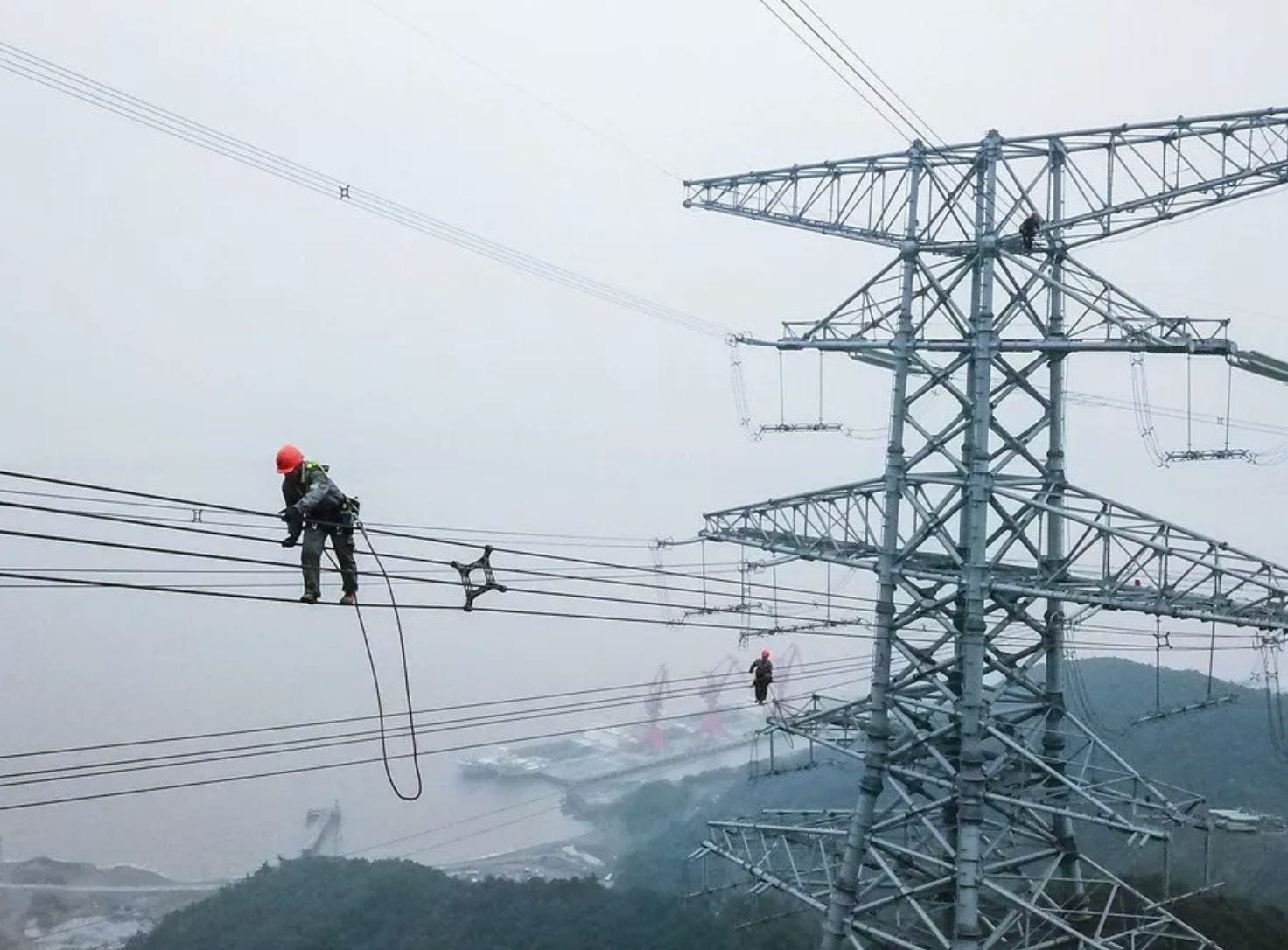
The work is geographically scattered in a way that makes human labor uniquely expensive. A factory keeps all its work in one place. The power grid does not. The power grid’s “factory” is spread across more than 100,000 substations nationwide, many of them in remote mountains, deep valleys, and areas where maintaining a trained workforce is a logistical nightmare. A typical substation is spaced about 30 kilometers apart from the next one. Sending a human inspector means travel time, accommodation, and the compounding cost of doing this thousands of times a day across the entire country. A robot dog doesn’t need a hotel room. It just walks.
Just like China’s automated factories, the grid never stops. But a factory can hit pause when something goes wrong. A power grid cannot. Substations require around-the-clock monitoring, 365 days a year — which means, under the current model, someone always has to be there. Running human inspection teams in three shifts, through holidays, through typhoons, through -20°C winters in the mountains, is extraordinarily expensive. Robots have no night shifts, no fatigue, and no Lunar New Year bonus to pay.
The person who made this clearest to me was an executive at one of the established grid supply chain companies I visited in Hangzhou. “A typical substation is spaced about 30 kilometers apart,” she said. “Many of them are in remote mountains. Right now we send people. In three years, we won’t.” She said it plainly. Not a prediction. A statement of fact.
Hangzhou: Where the Supply Chain Actually Lives
I want to pause here and describe what I’ve seen on the ground, because I think it matters for understanding what State Grid’s procurement actually unlocks.
Hangzhou is not the most prominent name in China’s robotics narrative. That honor tends to go to Beijing (policy), Shanghai (finance and automotive), or Shenzhen (hardware manufacturing). But if you are looking at the specific segment of quadruped and industrial inspection robots, Hangzhou is quietly one of the most important places in the world.
According to corporate information platform Tianyancha, the city is home to more than 21,947 robotics-related enterprises, spanning the full value chain from actuators and sensors to complete machine manufacturing and AI model development. Two of the most significant companies in the grid robotics space — Unitree Robotics and Deep Robotics (云深处科技, Yunshenchu) — are headquartered here. Hikvision and Dahua, the dominant players in computer vision and perception hardware, are also here.
Deep Robotics is the company most deeply embedded in the State Grid relationship. Founded in 2017 by two Zhejiang University PhDs, it claims to have performed China’s first fully autonomous substation inspection using a quadruped robot. In 2023, it signed a five-year, CNY 1 billion (USD146.2 million) framework agreement with State Grid covering more than 1,000 substations. By 2025, the company’s deployment footprint had grown to over 600 active projects. Their flagship Jueying X30 — rated IP67, operational from -20°C to 55°C, capable of completing a full station inspection in under 35 minutes versus more than an hour for a human team — is the closest thing the industry has to a proven product in this specific deployment context.
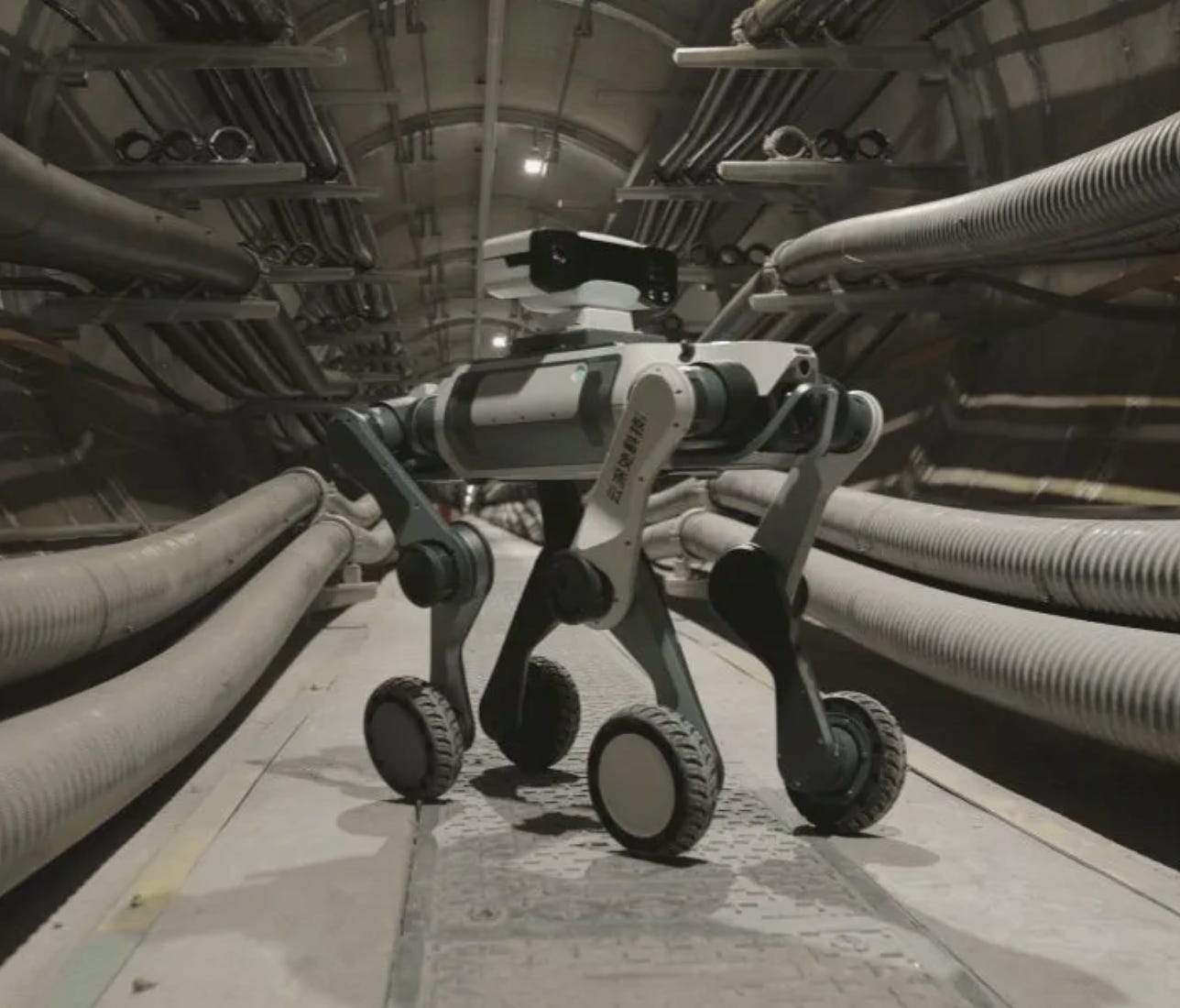
Unitree Robotics is the other major Hangzhou company worth paying attention to here. The company is better known internationally for consumer quadruped robots and viral demonstration videos — their humanoids performed at China’s Spring Festival Gala in front of hundreds of millions of viewers earlier this year. But Unitree is also one of the named suppliers in the State Grid procurement, and their production ambitions are scaling to match: the company opened a new 10,000-square-meter factory in 2025, a fifteen-minute drive from headquarters, and is targeting shipments of up to 20,000 humanoid robots in 2026 alone.
The Companies You Haven’t Heard Of Are the Interesting Ones
The robot body manufacturers — Deep Robotics, Unitree, UBTECH, Fourier Intelligence — will get most of the coverage. They make for better photos. But the more I’ve looked at how this procurement cycle actually works, the more convinced I am that the real value creation is happening one layer down, in the companies that know the grid and are now learning robotics.
Xiangheng International (咸亨国际) is the example that keeps coming up in my conversations. This is not a robotics company. It is a procurement and supply chain integrator that has served State Grid and other state-owned energy enterprises for years. In 2025, the company supplied CNY28.88 million (USD4.21million) worth of embodied intelligence equipment — drones, special robots, quadruped machines — to its existing client base.
Their strategy is telling. Xiangheng doesn’t design or manufacture robots. Instead, they take Deep Robotics’ hardware, integrate their own AI models and proprietary operational data, and sell the resulting system to grid clients who already trust them. The company’s pitch is essentially: we have decades of substation data, we have the relationships, and we now have a machine to attach them to.
Shinhao Technology (申昊科技) took a different path. In March 2025, the company entered a strategic partnership with Deep Robotics, essentially co-developing customized inspection solutions for power grid and emergency response applications. Their view — and I think it’s correct for the near term — is that wheel-based, rail-mounted, and quadruped robots will dominate grid deployments for the next one to two years, even as humanoid machines attract all the media attention. The stock market agreed: Shinhao shares rose nearly 73% in roughly 20 trading days following the State Grid announcement, the kind of move that happens when a small company suddenly becomes legible to a large procurement budget.
The Deeper Logic: This Is Infrastructure, Not a Product Launch
Here is the thing I keep coming back to when I think about what State Grid is actually doing.
This is not a company buying robots because robots are trendy. State Grid has explicitly classified embodied intelligence as one of its “Five Core AI Capabilities” alongside perceptual, cognitive, decision-making, and scientific intelligence. The 2026 plan covers more than 600 specific deployment scenarios across grid planning, operations, equipment management, work supervision, customer service, and business management.
In other words: State Grid is not buying robots. State Grid is building the next generation of grid infrastructure, and it has decided that robots are a core component of that infrastructure.
The implications for market scale are significant. China has more than 100,000 substations requiring inspection. If each is outfitted with just one to two quadruped robot dogs at CNY500,000–1,000,000 per unit, the math produces a market of CNY500 billion to CNY1 trillion (USD73.1 billion to USD146.2 billion) from substations alone. That figure excludes transmission networks, distribution infrastructure, and the eventual extension of this procurement model to coal, petrochemicals, mining, and rail — all sectors with similar “three high” characteristics: high standardization, high danger, high labor cost.
One of the executives I spoke with in Hangzhou put it this way: “The grid doesn’t have a robot problem. It has a people problem. Too many dangerous jobs, too few workers willing to do them long-term, and too many stations in places where you can’t easily maintain a trained workforce. The robot solves all three.”
What This Is Not
I want to be precise about what I’m claiming here, because the excitement around humanoid robots and embodied AI almost always gets ahead of what the technology can actually do.
The 500 humanoid live-wire robots in the State Grid plan are the category I’d watch most cautiously. Live-wire maintenance at ultra-high voltage is among the most technically demanding operations in industrial automation. The machines that can reliably do this at scale don’t fully exist yet. The procurement is real; the capability will need to catch up with the contract.
More broadly: robot dogs doing substation inspections is a solved problem, or close to one. Humanoid robots doing complex electrical work in unstructured environments is not. State Grid knows this, which is why the plan explicitly allocates CNY 800 million (USD116.9 million) for R&D alongside hardware procurement. They are not buying finished technology. They are co-investing in its development.
The companies that will benefit most are not necessarily the ones with the most impressive demos. They are the ones with the most grid data, the deepest operational relationships, and the most patience for a procurement cycle measured in years rather than quarters.

What’s striking is that this isn’t the first time a Chinese power utility has quietly reset expectations for an entire technology category.
Take China Southern Power Grid. It manages over 222,000 kilometers of transmission lines across five provinces, serving 254 million people. Back in 2015, it was inspecting just 11,000 kilometers per year—relying on human crews and helicopters, with high costs and real physical risk.
By 2018, after adopting drones from DJI, that number had surged to 241,000 kilometers. That’s a 15x increase in capacity, achieved at a fraction of the cost, with on-site manpower eventually reduced by 85%.
At the time, this shift felt novel, arguably even bold. In hindsight, it looks more like a preview.
The same underlying logic is now playing out again, this time with humanoids robots . https://insidechinaai.substack.com/p/the-clever-move-dji?r=1yuw3p&utm_medium=ios