

China's AI Shovel Sellers: Inside the Most Extreme Fund Pile-On in Market History
Chinese optical transceiver makers now sit at the centre of the global AI boom — and China's funds have gone all in. The earnings are extraordinary. The warning signs are quietly piling up too.

The global AI boom has turned Chinese optical transceiver makers into some of the most aggressively owned stocks in Asia, with valuations and fund concentration reaching historic extremes. These tiny yet critical hardware components powering AI data centre expansion sit at the heart of the AI infrastructure shift, intensifying a debate that has haunted Chinese markets before: is this a bubble, or the real thing?

By most measures, the concentration is extreme. Chinese firms now account for roughly seven of the global top ten optical module suppliers, and InnoLight alone has risen to global No.1 in revenue scale, surpassing legacy players like Coherent and Lumentum in the U.S, according to LightCounting. Yet despite this dominance, valuation metrics remain far from historical bubble territory.
At the center of this trade are three companies — InnoLight Technology Corporation, Eoptolink Technology Inc., Ltd., and Suzhou TFC Optical Communication Co., Ltd. — collectively nicknamed the “optical module trio” in China’s A-share market. Their rise reflects a deeper structural shift: AI compute is no longer limited by chips alone, but increasingly by the high-speed optical “nervous system” connecting massive GPU clusters.
Why optical modules?
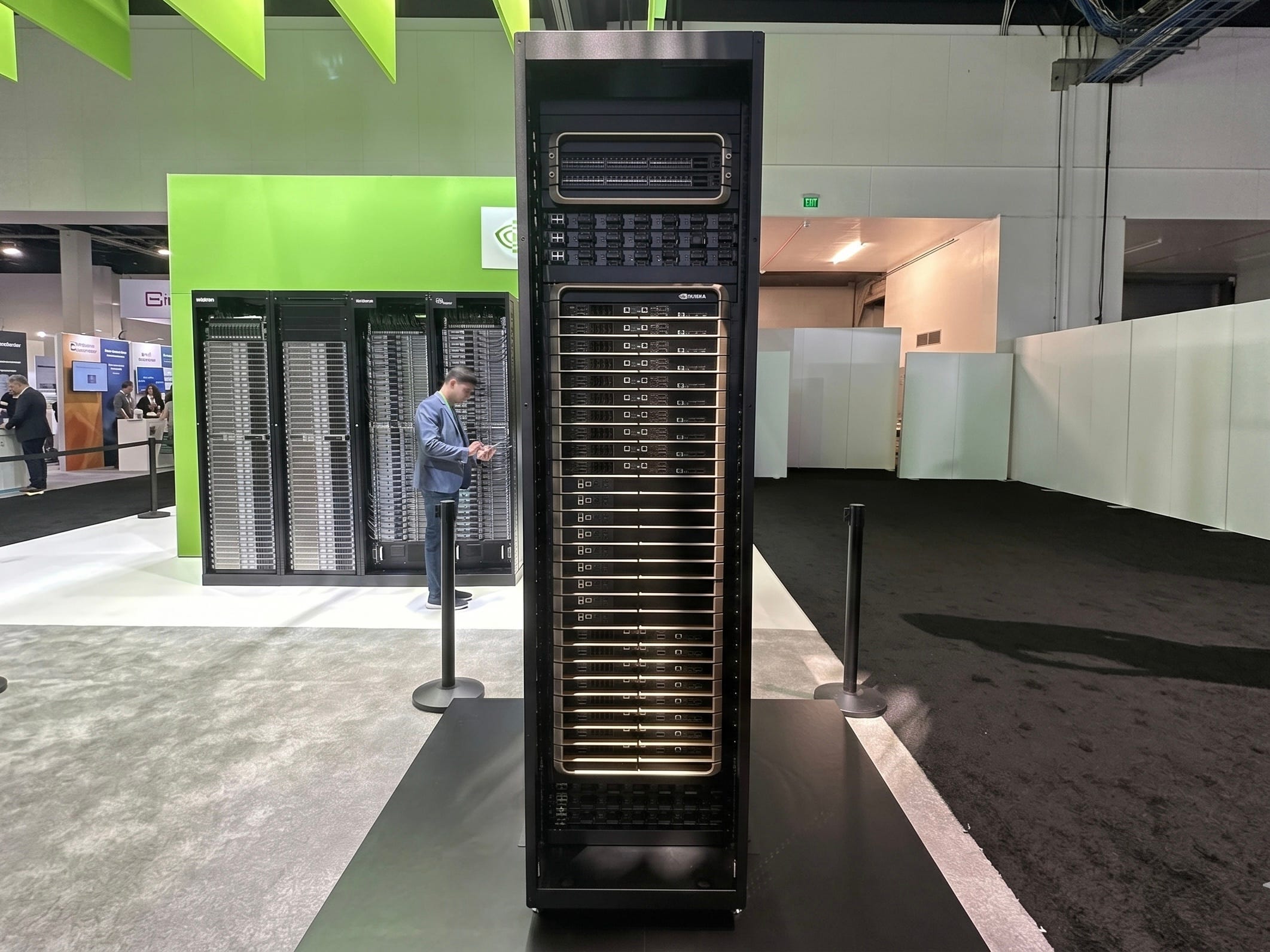
The AI revolution is fundamentally a networking problem disguised as a compute problem. Large-scale training clusters built by hyperscalers such as NVIDIA, Google, Amazon Web Services, and Meta Platforms require massive interconnection bandwidth to link GPUs across racks, rows, and even data centers.
Building a powerful AI system is not just about having fast chips — it is about connecting thousands of them together so they can work as one. The bigger the AI cluster, the more data needs to travel between chips, between servers, and between buildings. On a certain scale, copper wires simply cannot move data fast enough. That is where optical modules come in — and that is why demand for them is exploding.
An optical transceiver module — roughly the size of a USB flash drive — converts electrical signals into light pulses, letting data travel at up to 1.6 terabit per second across fibre cables that span entire data centre campuses. Every major AI data centre needs thousands of them. As AI clusters scale from hundreds to tens of thousands of GPUs, the volume of data moving between chips, servers, and buildings has exploded — and optical modules are the only technology that can handle it.
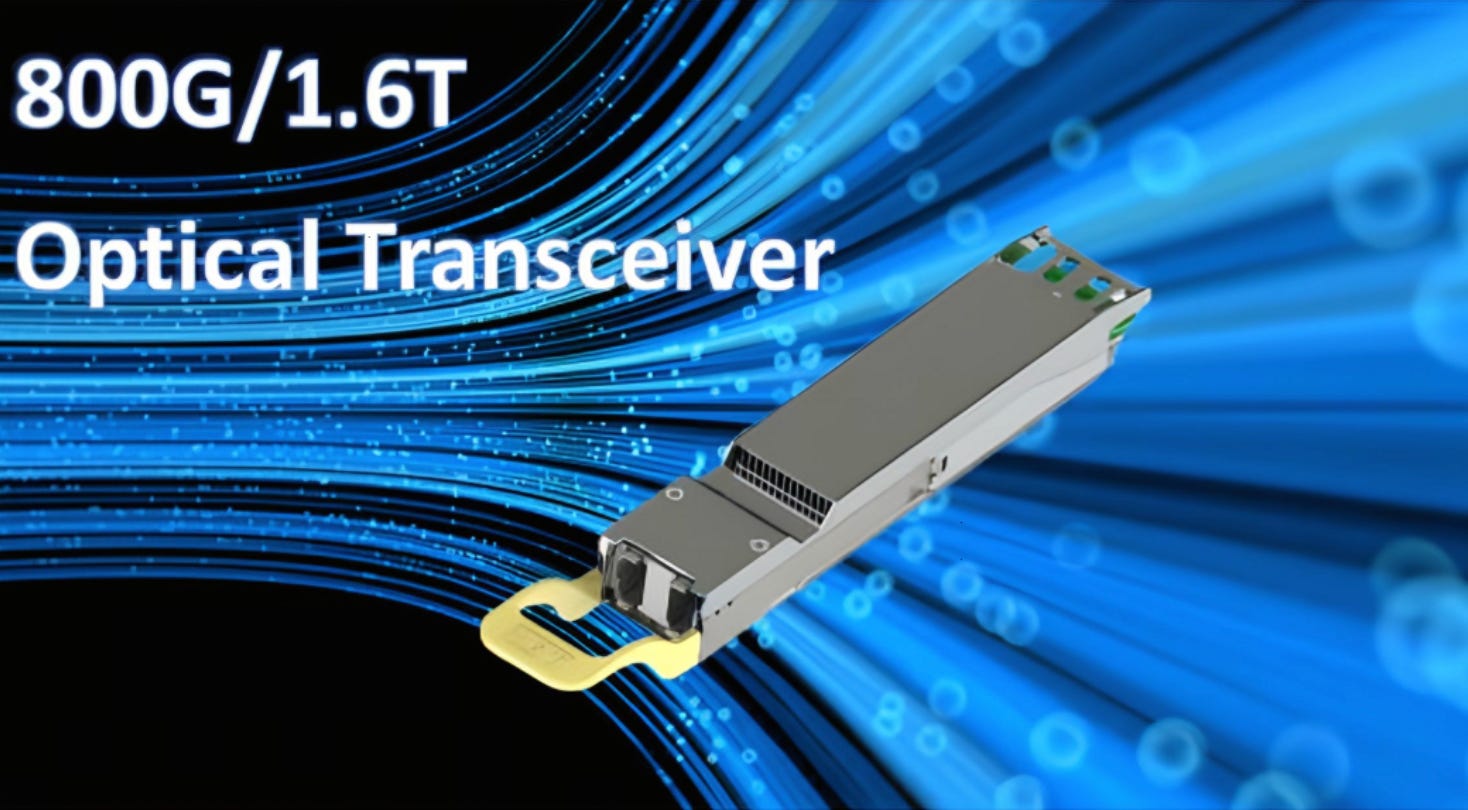
TrendForce projects that shipments of high-speed 800G and above modules will jump from 24 million units in 2025 to 63 million in 2026 — a 2.6-fold increase in a single year. Nvidia, Google, Amazon, and Meta are all ordering at the same time.
This is what investors mean when they call optical module companies the “shovel sellers” of the AI gold rush. The gold may or may not materialise. The shovels are already selling.
On the surface, China appears to dominate the industry. According to a November 11, 2025 blog post on ip-fiber.com, the website of a Shanghai-based fiber optic equipment manufacturer (Shanghai Baudcom Communication Device Co., Ltd.) InnoLight and Eoptolink are estimated to supply around 60% of NVIDIA’s 800G module demand, positioning them at the center of the AI data pipeline.
But beneath this dominance lies a more complex reality: value capture remains concentrated upstream.
While Chinese firms lead in module assembly and scale manufacturing, critical components such as DSP chips and EML lasers are still controlled by companies like Broadcom Inc., Marvell Technology, Lumentum Holdings, and Coherent Corp.. These upstream suppliers capture a large share of excess profitability, while module makers operate in a structurally competitive segment.
Companies stories: three different paths to the same boom
InnoLight’s rise has been defined by timing and execution. Its ancestor was a washing machine motor factory founded in Shandong in 1987. In 2017, the company paid 2.8 billion yuan(USD409.8 million) to acquire Suzhou Innolight — a startup that had quietly become Google’s first-ever investment in China and had been supplying Google with optical modules since 2011. The legacy motor business was sold off completely in 2021. What remained was a pure-play optical communications company that proceeded to deliver 800G modules in 2020, 1.6T in 2023, and volume shipments of 1.6T beginning in mid-2025 — consistently ahead of the global market. In 2025, Innolight posted net profit of 107.97 billion yuan(USD15.8 billion), up 108% year-on-year. In the first quarter of 2026, net profit grew a further 262%. Its overseas revenue — predominantly from North America — now accounts for more than 86% of total sales.
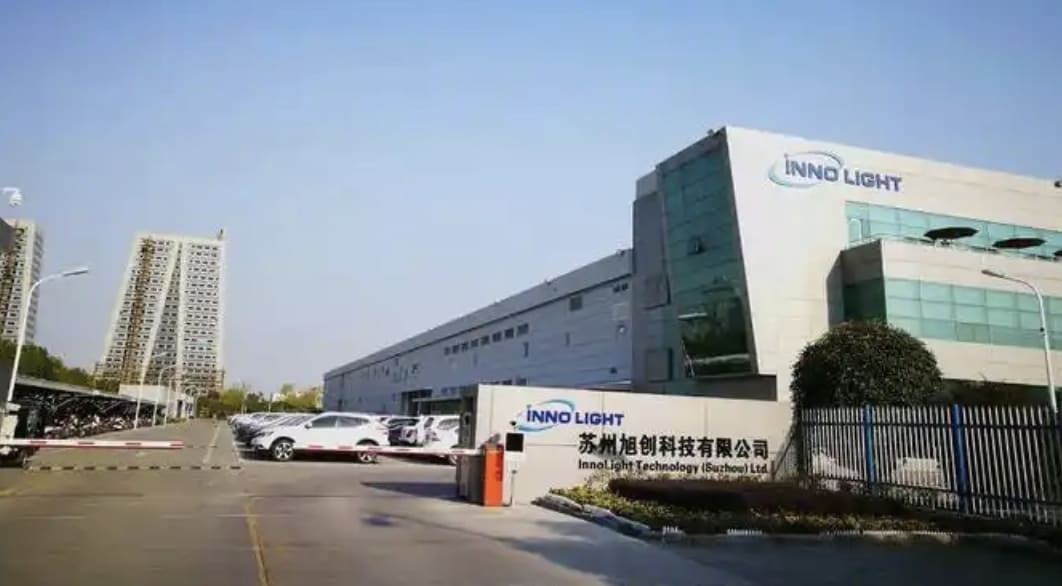
On the technology side, Innolight is the most diversified of the three. It currently makes most of its money from mainstream pluggable modules, but has already started shipping 1.6T products built on silicon photonics — a key building block for future CPO (co-packaged optics). It is also actively developing NPO (near-packaged optics) and CPO solutions, and has even branched into OCS (optical circuit switching), a completely different next-generation technology. Think of Innolight as the company placing the most bets simultaneously.
Eoptolink Technology Inc., Ltd. painted a different stories — a high-growth challenger that repositioned itself early toward data center markets. Initially weaker in scale compared to InnoLight, it accelerated its transformation by prioritizing 100G and 400G modules ahead of the cloud cycle.
Its exposure to hyperscalers such as AWS has made it one of the most leveraged beneficiaries of cloud infrastructure expansion. More recently, it has moved aggressively into 800G and 1.6T development, adopting multiple technical pathways including silicon photonics, VCSEL, and EML designs to hedge technological risk.
Despite being smaller in scale, its earnings growth has once outpaced peers, reflecting both operational leverage and rapid product cycle transitions.
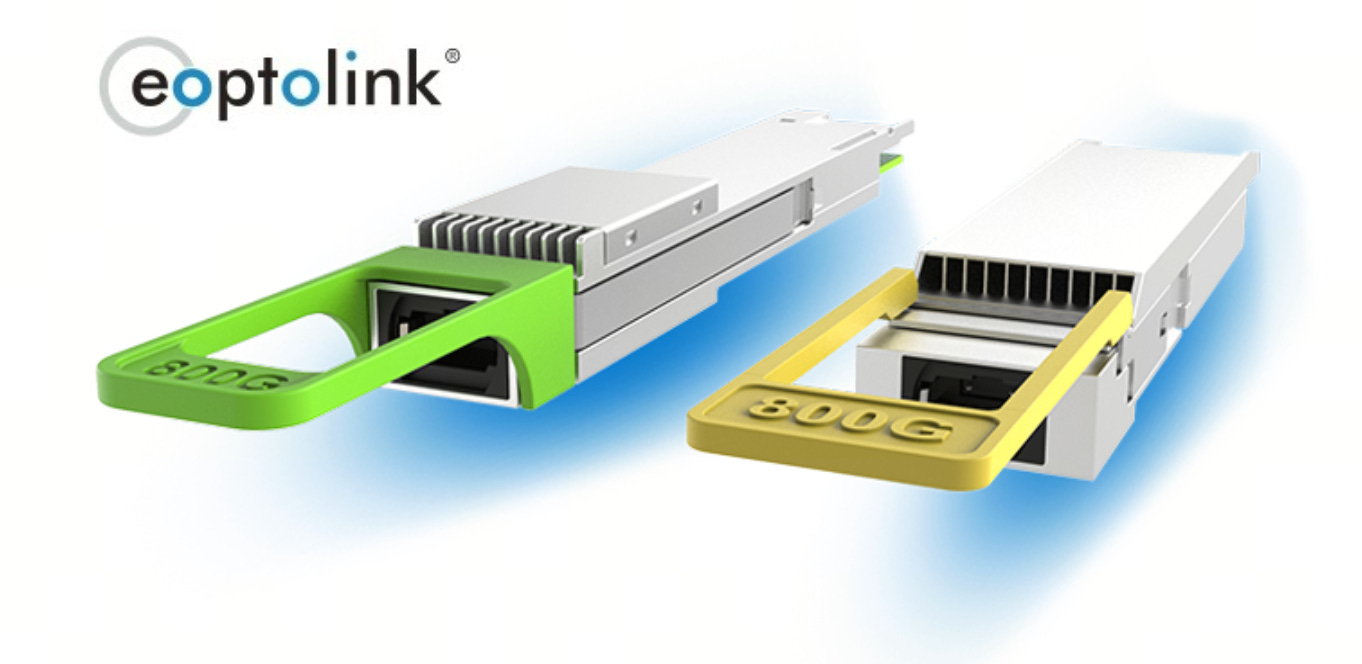
Eoptolink is the most interesting technology story of the three. It is the only company covering all three laser technology routes for its 1.6T modules at the same time, and it is also a leader in LPO(linear-drive pluggable optics) — today’s more energy-efficient pluggable solution. For future CPO, it started laying the groundwork back in 2017 through an early investment in silicon photonics. Think of Eoptolink as the company that deliberately refuses to put all its eggs in one basket.
TFC Optical is the smallest of the three by revenue but the most profitable by margin, with gross margins consistently above 55%. The reason is structural: while Innolight and Eoptolink are sophisticated assemblers, TFC makes the optical components and connectors that go inside those modules — ceramic ferrules, fibre array units, optical engines. It sits one step closer to the genuinely scarce, high-barrier part of the supply chain. Its 1.6T optical engine holds more than 60% global market share. It supplies Nvidia directly on CPO development. Its net margin approaches 40%. Founded in 2005 by an engineer who set out to break Japan’s monopoly on cereamic optical components, It took years of failure before TFC finally cracked the process. That kind of expertise is exactly what investors are paying a premium for right now.
While Innolight and Eoptolink are busy betting on which technology will win, TFC just makes the essential parts that every technology needs. Whether the future belongs to LPO, NPO, or CPO, someone will need to buy TFC’s optical engines and connectors. It already supplies Nvidia directly on CPO development. Think of it this way: if the other two companies are horses in the race, TFC is the one selling horseshoes to all of them.
Is this a bubble? The numbers tell a mixed story
To answer honestly, it helps to look at what previous A-share bubbles actually looked like at their peak. During the Chinese liquor stock frenzy of 2012, sector PE ratios hit 70 to 80 times earnings. During the 2015 internet boom, they exceeded 120 times. During the new energy peak of 2022, leading companies traded at 80 to 100 times. All three eventually crashed badly.
By those standards, the optical module sector looks different. Based on 2026 consensus earnings forecasts, Innolight trades at roughly 20 times forward earnings, Eoptolink at 25 times, and TFC Optical at 30 times. For companies delivering 50% to 200% annual earnings growth, these multiples are not obviously excessive. Historically, A-share pile-ons only collapse when three things happen at once: stocks become wildly overpriced, the underlying business starts deteriorating, and big institutions start heading for the exit. Right now, none of those three conditions are in place.
But the picture is more complicated than the bull case suggests.
Over the past 12 months, Eoptolink’s stock rose 949%. Innolight’s rose 936%. TFC Optical’s rose 757%. Even accounting for extraordinary earnings growth, share prices have run dramatically ahead of business performance. For investors buying in today, everything now depends on these companies continuing to grow at an extraordinary pace — and that is a lot to ask.

The world’s two most influential investment banks are on opposite sides. Goldman Sachs remains bullish, citing durable AI infrastructure demand and strong supply chain barriers. Morgan Stanley has downgraded both Eoptolink and TFC Optical to underperform, arguing that the good news is fully priced in. When Goldman and Morgan Stanley disagree this sharply about the same stocks, the easy trade is probably over.
The insiders are quietly selling. Innolight’s controlling shareholder sold shares worth approximately 2.87 billion yuan (USD420 million) between late 2025 and early 2026. The company’s Vice President cashed out a further 294 million yuan (USD43million). The controlling shareholder’s stake has since fallen to 10.93%. Insiders selling at scale while the public story stays bullish has historically not been a positive sign.
The technology is also moving fast, and not necessarily in a straight line. Three different technical approaches-LPO(linear-drive pluggable optics), NPO (near-packaged optics), CPO (co-packaged optics) are competing to become the industry standard — and if the most advanced one, CPO, takes off sooner than expected, the modules these companies are selling today could become yesterday’s product faster than anyone is pricing in. There is also a less-discussed problem behind every Chinese optical module: 96% of the high-end chips that make them work are still bought from foreign suppliers. No matter how good Chinese companies get at putting these modules together, they do not yet control the most critical parts that go inside them.