



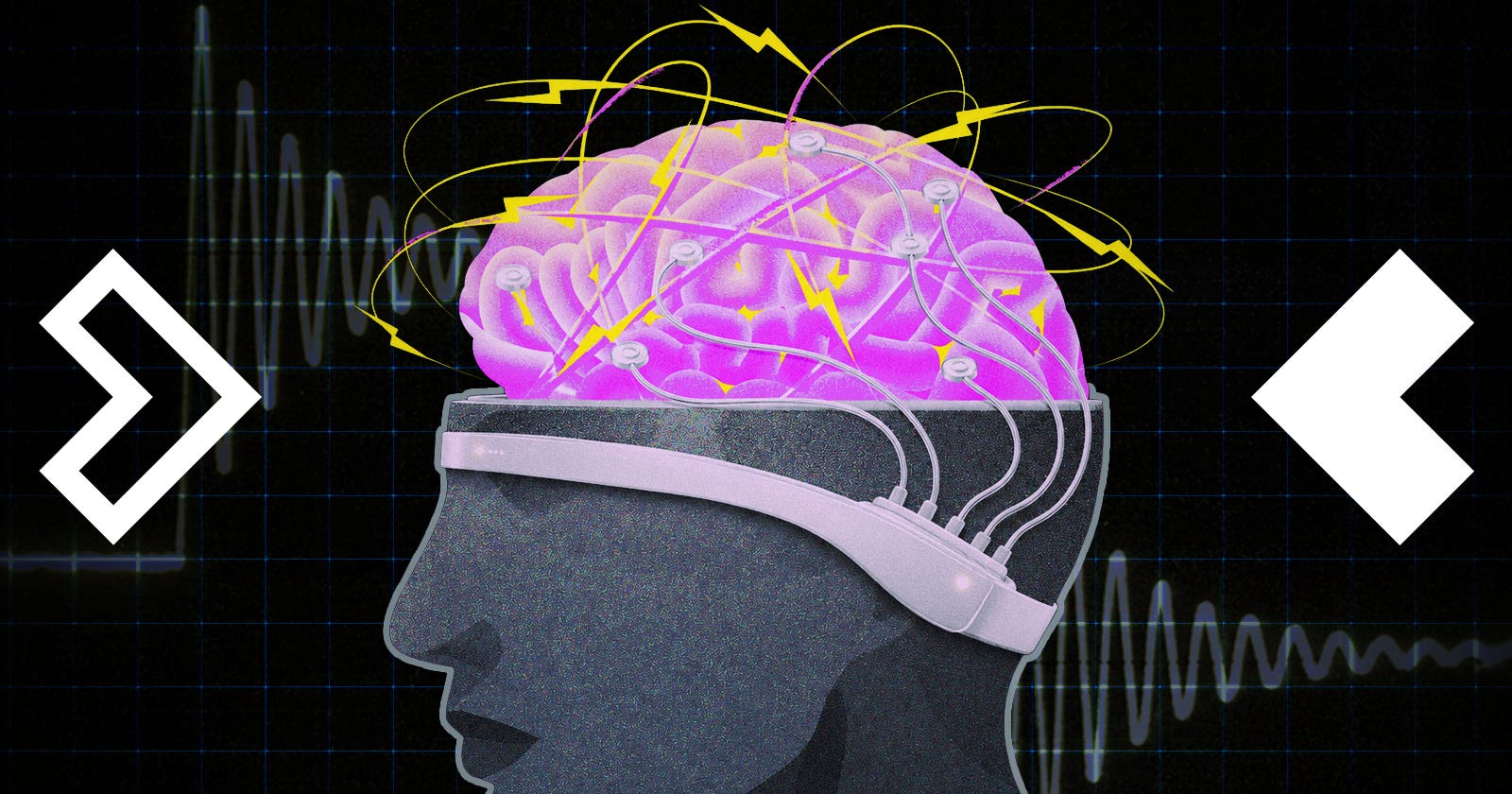
On March 13, 2026, China’s medical device regulator, the National Medical Products Administration, approved a brain implant called NEO for commercial sale. Four months later, on July 13, a hospital in Shanghai wrote the first prescription and completed the world’s first commercial implant under that approval.
NEO is now the first semi-invasive implantable brain-computer interface(BCI) ever cleared for commercial use by a national regulator, anywhere, a category China’s own regulatory system classifies as “invasive.” Neuralink, which has implanted its own device in roughly 20 patients over the past two years, still doesn’t have the FDA clearance it needs to sell anything.
Look past the headline, though, and this isn’t really about who built the better chip. It’s about who built the faster approval pipeline, and that’s a different race with a different scoreboard.
The Asterisk on “World’s First”
NEO was built by Neuracle (博睿康), a Tsinghua University spinout founded in Shanghai in 2011. The device is a coin-sized implant placed epidurally: under the skull, on top of the dura mater, the tough membrane that wraps the brain. Eight electrodes sit there, reading signals through that membrane rather than from inside the tissue itself, and translating a patient’s intent to grasp into commands for a robotic glove. Nothing pierces the brain, which is exactly why China’s regulators can classify it as “invasive” while it still clears trials and review far faster than a fully intracortical device would.
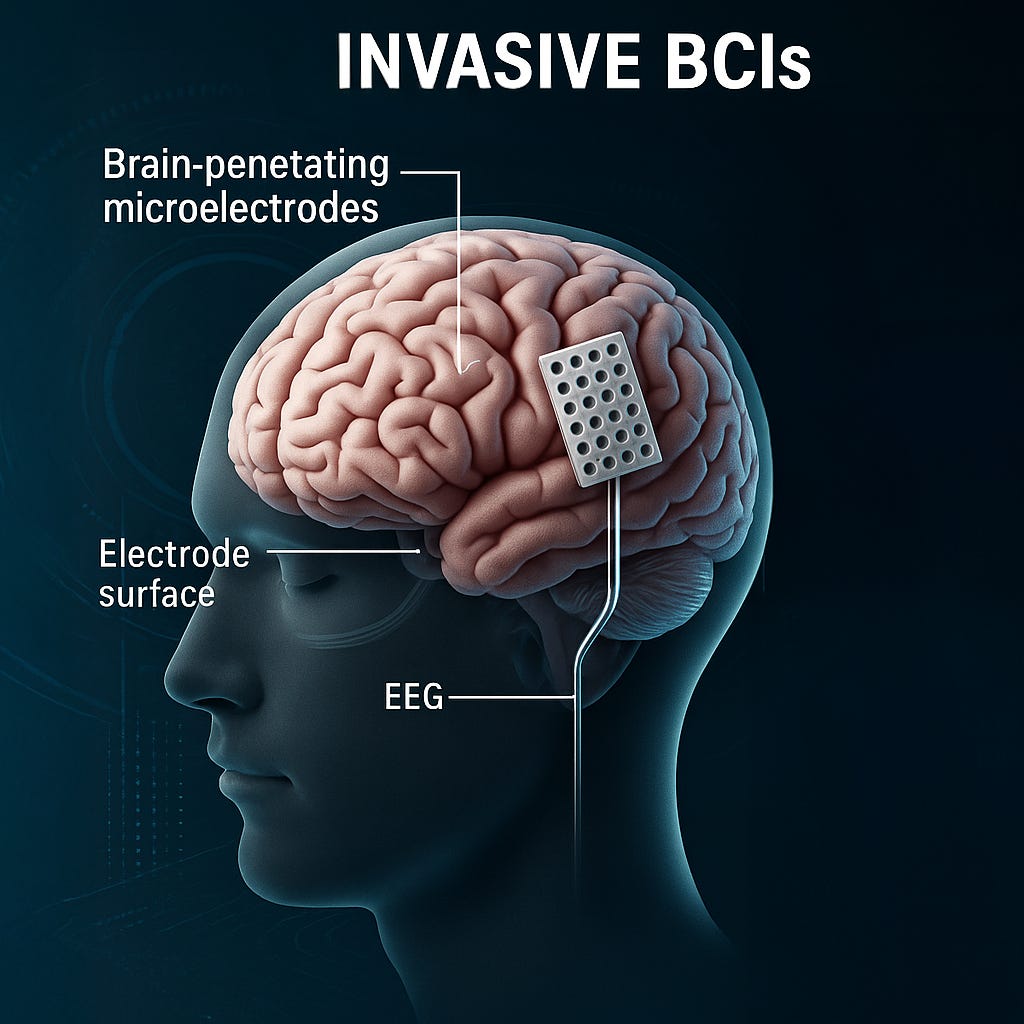
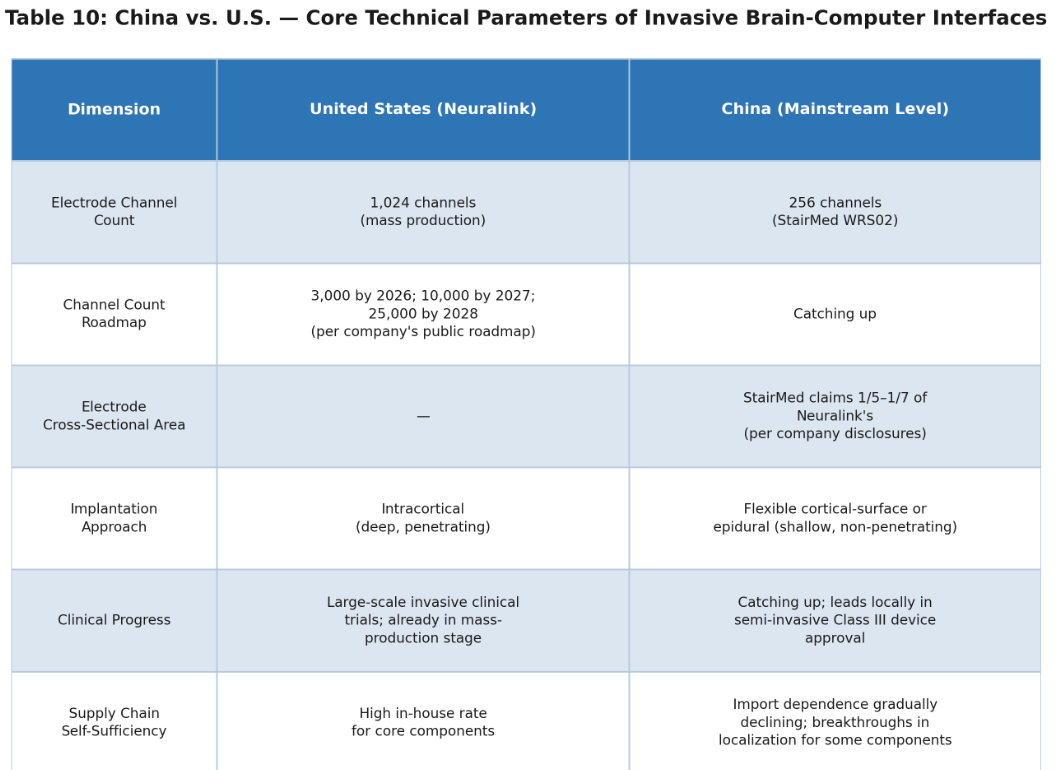
Neuralink’s N1 chip works differently. It threads 1,024 flexible electrode contacts directly into the cortex. NEO uses eight electrodes; Neuralink’s N1 uses 1,024. That’s not a small gap, and it isn’t a clean apples-to-apples comparison either: eight epidural contacts and 1,024 intracortical ones are built for different jobs, at very different levels of surgical risk. That classification is also part of why NEO’s approval moved so fast: one BCI researcher told MIT Technology Review that its comparatively conservative design was likely a key reason regulators cleared it so quickly. Even Paradrowmics, an American brain-computer interface (BCI) company with obvious competitive reasons to push back on a “China leapfrogs the US” narrative, published its own explainer this spring making a similar point: the two countries’ BCI industries are optimizing for different things, not running the same race at different speeds.
By June, Neuracle had completed 36 implant procedures across its early feasibility trial and a larger multicenter study, with more than 14,000 cumulative implant-days recorded and no serious device-related adverse events. Its application to list on Shanghai’s STAR Market, the exchange’s board for hard-tech companies, was accepted on June 11.
So: two different bets. Neuralink is betting on bandwidth, more electrodes, deeper access, higher-resolution signal, aimed at problems like restoring speech or vision that need to decode a lot of information at once.
China didn’t necessarily build a better neural interface. It built a faster path from neural interface to regulated medical device to reimbursed procedure to scalable industry. That’s the real story, and it’s a more interesting one than a chip comparison.
Name It, Fast-Track It, Standardize It, Insure It, Fund It
Here’s what actually happened between Neuracle’s device entering formal review and a patient in Shanghai receiving it on a paid prescription, and it should look familiar to anyone who has watched China build an industry before.
Step one: designate it, and start early. The institutional push here predates the commercial approval by more than half a year. In August 2025, seven Chinese government ministries jointly issued implementation guidance for the brain-computer interface (BCI) industry, setting targets for major technical breakthroughs by 2027 and a more mature industrial system by 2030. China’s 15th Five-Year Plan, unveiled in early 2026, then formally elevated brain-computer interfaces into its list of strategic future industries, alongside items like embodied intelligence and next-generation energy. It’s the same kind of top-down signal that, a decade earlier, told every provincial government and state bank that electric vehicles were now a national priority.
Step two: build a fast lane. Neuracle entered the NMPA’s Special Review Program for Innovative Medical Devices in August 2024 and received full commercial approval nineteen months later, in March 2026. That program front-loads regulatory involvement into the R&D process itself: regulators start engaging while a device is still being developed, instead of waiting for a finished product to land on their desk cold. Nineteen months is a fraction of the multi-year timeline a Class III device, the same risk category as an implantable pacemaker, would normally take. On June 30, 2026, the NMPA followed with formal classification rules placing all invasive and implantable BCIs uniformly into that top-tier category, giving the industry, for the first time, a clear regulatory address.
Step three: standardize the plumbing. On August 1, 2026, two national standards took effect, one defining a reference system architecture and the other a multimodal data format. Standards alone don’t create interoperability; companies still have to choose to build to them. But the goal is to reduce one of the industry’s biggest sources of friction: custom integration across hardware, data formats, and decoding algorithms, the kind of mismatch that has historically made it hard for one lab’s recordings to run on another lab’s software.
Step four: get someone to pay for it. In May, the 2026 edition of Shanghai’s Hu Hui Bao, a low-cost, city-run supplemental health plan, became the first city-wide insurance scheme in China to add coverage for BCI surgery: it reimburses 30 percent of a patient’s out-of-pocket surgical materials cost, up to a cap of 150,000 yuan (about $21,000). It’s a narrow crack, not a fully open door: there’s still no line item for BCI implants in China’s core medical fee schedule, so most hospitals have no compliant way to bill for one outside this and a handful of similar city plans. But it’s the first real one.
Step five: let capital do the rest. With the regulatory and reimbursement scaffolding in place, money followed. Chinese industry tallies put first-half 2026 funding for BCI startups at roughly 7.25 billion yuan (about $1 billion) across 64 deals, already more than all of 2025 combined. On August 3, Chinese financial media reported that Zhudong Technology (主动科技), founded barely six months earlier with no clinical data yet to show, raised a 330 million yuan angel round, reportedly a record for the sector at that stage. A round that size is less a verdict on proven clinical efficacy than a bet on the category’s future, one more sign that markets think the earlier four steps actually removed the biggest risks.
The sequence will sound familiar to anyone who watched China build its electric vehicle industry: policy first, infrastructure second, scale third. BCI is now running a compressed version of the same play.
Multiple Bets, Not One Horse
The biggest mistake in reading this story is assuming China’s BCI strategy is just a Chinese version of Neuralink. It isn’t. By June 2026, 134 BCI clinical trials had been registered in China, plus another 26 investigator-initiated studies, and just five BCI-related products had actually won NMPA approval. Roughly 79 percent of those registered trials involve non-invasive technology, not implants at all. China is running several different technical bets in parallel, each chasing a different piece of the market.
StairMed (阶梯医疗) is chasing signal density: a 256-channel wireless implant using ultra-flexible electrodes, placed with the help of a purpose-built surgical robot. In 2025, working with Shanghai’s Huashan Hospital, StairMed completed China’s first long-term, first-in-human implant trial, with a patient using the system to control both a wheelchair and a robotic dog. Backed by roughly 1.1 billion yuan raised over the past year, including a March 2026 round led by Alibaba with Tencent and other existing investors following on, StairMed is aiming to enroll around 40 patients by the end of 2026. If it hits that target, it would put the company’s number of implanted patients in the same ballpark as Neuralink’s current cohort of roughly 20.
NeuroXess (脑虎科技) is chasing manufacturability. Its flexible, cortical-surface electrode strip has already been tested in more than 50 patients, and the company is building a factory in Jiangxi province designed, eventually, to support production on the order of tens of thousands of implants a year, expected to come online in the second half of 2026. That moves the technology toward industrial scale well ahead of the long-term clinical evidence base. NeuroXess has also struck a partnership with Xiaomi to let patients control smart-home devices directly through the implant, and Bloomberg profiled one of its patients, a man paralyzed from the neck down after an accident eight years earlier, using the system to drive his wheelchair with his mind.
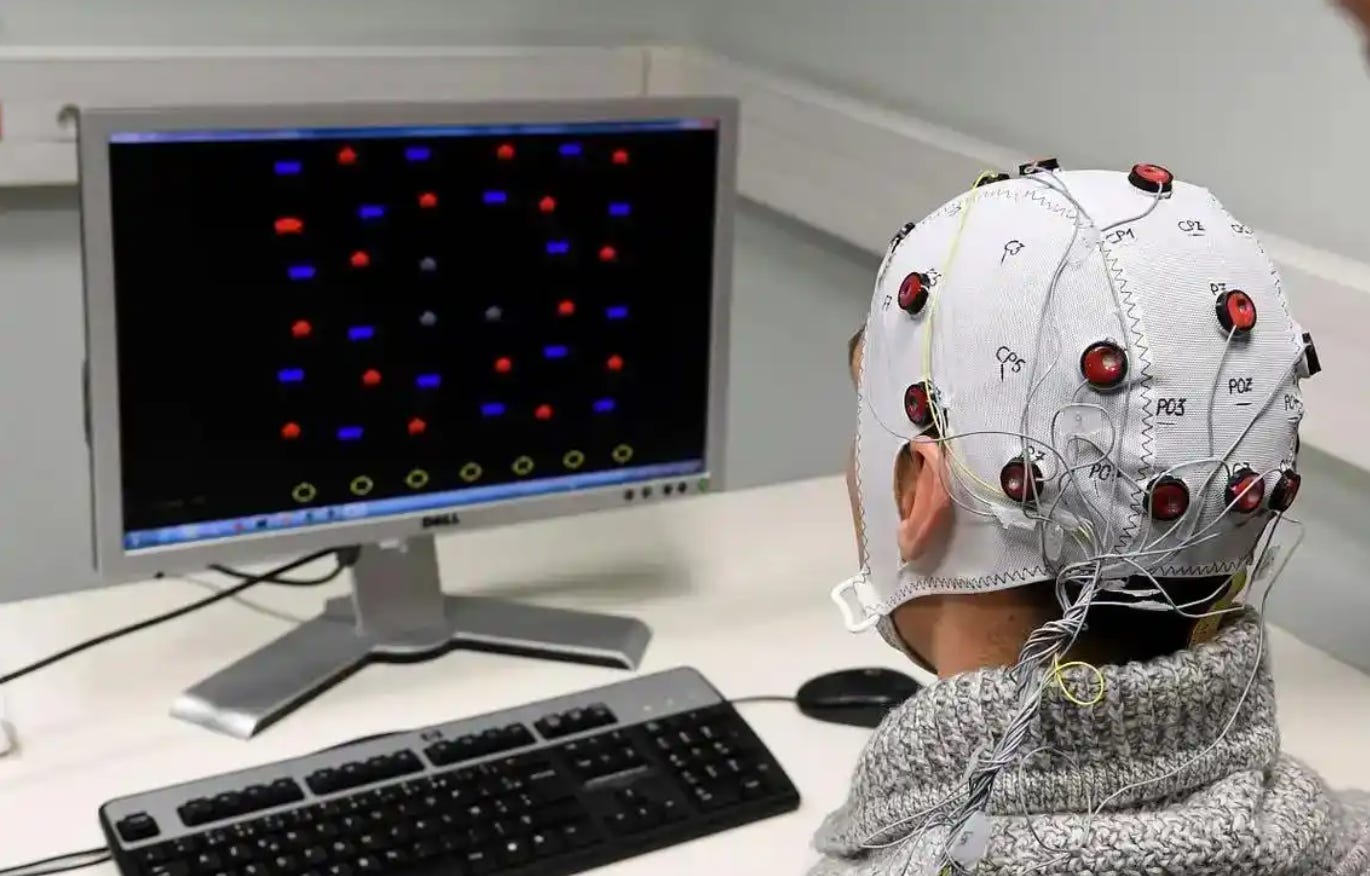
BrainCo (强脑科技), by contrast, has largely avoided implantation altogether. Its bionic hand reads neural and muscular electrical signals through the skin rather than through any implant, and it already has FDA clearance and is a commercial product in the US. The company says it turned profitable in 2025 and has raised roughly 2 billion yuan in its most recent funding round; it now sells more of its five-fingered hands to humanoid-robot makers than to amputees. It’s the closest thing China’s BCI sector has to a company running a real, profitable business today rather than a clinical program burning cash toward one.
Layer on a fully implantable, 512-channel wireless system out of Beijing still in large-animal trials, and a picture emerges that has little to do with a single race against Neuralink. China is ahead in some corners of this field, catching up quickly in others, and still behind in a few, especially the high-bandwidth, deep-cortical route Neuralink is pursuing. That’s a very different claim than “China is ahead of Neuralink.”
What the Paperwork Doesn’t Fix
None of this means the hard problems are solved. Two, in particular, are still wide open.
Who pays, long-term? Hu Hui Bao coverage is a genuine first step, but there’s still no line item for BCI implants in China’s standard medical fee schedule, so most hospitals have no compliant way to bill for one outside a handful of city-level plans. Getting into China’s core medical insurance system requires formal health-technology assessment and cost-effectiveness evidence that’s still being accumulated in real time. And nobody has settled who eventually absorbs the cost of years of follow-up visits, maintenance, and eventual device replacement: the hospital, the manufacturer, or a commercial insurer.
Does it hold up over years, not months? NeuroXess’s push toward industrial-scale manufacturing is a genuine achievement, but it’s racing ahead of the long-term safety data. Neuracle’s longest continuously implanted patient has been living with NEO for roughly two and a half years. That’s a meaningful track record for a brand-new device category. It is not yet proof that these devices are safe on the multi-decade timescale a device implanted in someone’s skull actually needs to survive.
There’s a broader question hovering just outside the industry story, too. As BCIs move from rare clinical trials toward something more commercially routine, questions about who owns and can access a person’s neural data, and what happens as this technology’s dual-use military applications (both the US and China are already funding some) get more attention, stop being hypothetical. That’s a separate essay. But the commercial “moment” and the harder ethical questions are advancing on the same timeline, not sequential ones.
The electric vehicle comparison is worth finishing, because of how that story ended, not just how it started. The five-year-plan designation, the fast lane, the standards, the subsidies got Chinese EV makers to the starting line quickly. It still took fifteen to twenty years of iteration, cost-curve improvement, and infrastructure build-out after that starting gun before China actually came to dominate the global EV market. The policy scaffolding was necessary. It was nowhere near sufficient on its own.
BCI’s version of that scaffolding went up faster than anyone expected: a designated industry, a fast-track approval process, a unified data standard, a first crack in the payment wall, and now a wave of capital, all inside about two years. What it hasn’t done, because no policy can, is manufacture a decade of safety data, or settle who pays for a lifetime of follow-up care, or prove that a factory built to produce implants at industrial scale is still producing implants that work a decade from now. China got the world’s first approved brain implant. Whether that becomes a durable industry will be written in the years of implant logs and insurance claims that come after it.