



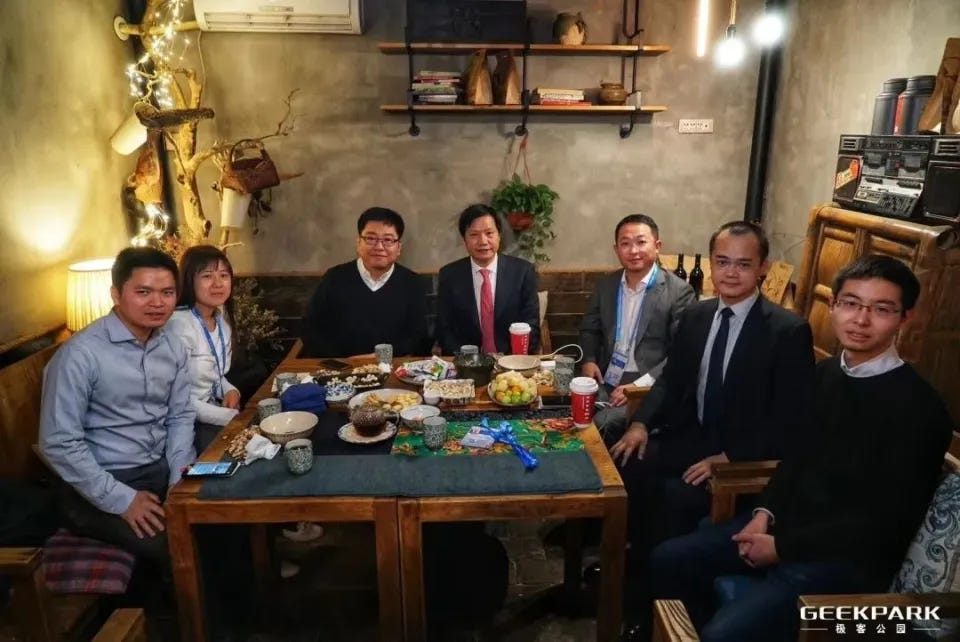
Late 2017. The World Internet Conference is underway in Wuzhen, a canal town in Zhejiang province. Wang Xingxing—founder of a small Hangzhou robotics outfit called Unitree—doesn’t have a badge to get in. So he sets up outside the doors and demos his company’s first product: an early Laikago, a quadruped robot named for the Soviet space dog that flew on Sputnik 2.
His audience: Lei Jun, CEO of Xiaomi, and Wang Xing, CEO of Meituan. Two of the most powerful tech founders in China.
Then the robot crashed. Wang had to reboot it right there on the doorstep. By all accounts, it was a deeply awkward few minutes.
He was convinced it would work anyway. Nine years later—on the day I was finishing this piece—Unitree’s IPO cleared the Shanghai Stock Exchange’s listing committee, targeting a raise of about 4.2 billion yuan, roughly $610 million. It’s set to become the first dedicated humanoid robotics company to list on China’s A-share market.
Around the same time, Nvidia CEO Jensen Huang announced that the company’s Isaac GR00T reference design would integrate Unitree’s H2 Plus humanoid, paired with Nvidia’s Jetson Thor and the GR00T workflow. The H2 Plus is expected to ship by year’s end.
If you’ve read about Unitree in the English-language press, you’ve probably gotten the broad-strokes version. How did the company actually go global? What is Wang Xingxing like? And how, in an industry where everyone is hemorrhaging cash, did Unitree start making money?
I’ve been lucky enough to interview Wang in person more than once. What follows draws on his IPO prospectus, the company’s reply letter to the exchange, and several off-the-record conversations—an attempt at some real answers.
A $5,600 Robot With a 40% Margin
For the rest of the robotics industry, Unitree’s prospectus is a problem.
The field has made enormous technical strides in the last few years, but most companies run on venture money. Losing money is the baseline. Unitree posted a net profit of 77.5 million yuan (about $11 million) in 2024, and by 2025 that had climbed to roughly 600 million yuan ($84 million)—a net margin around 35 percent.
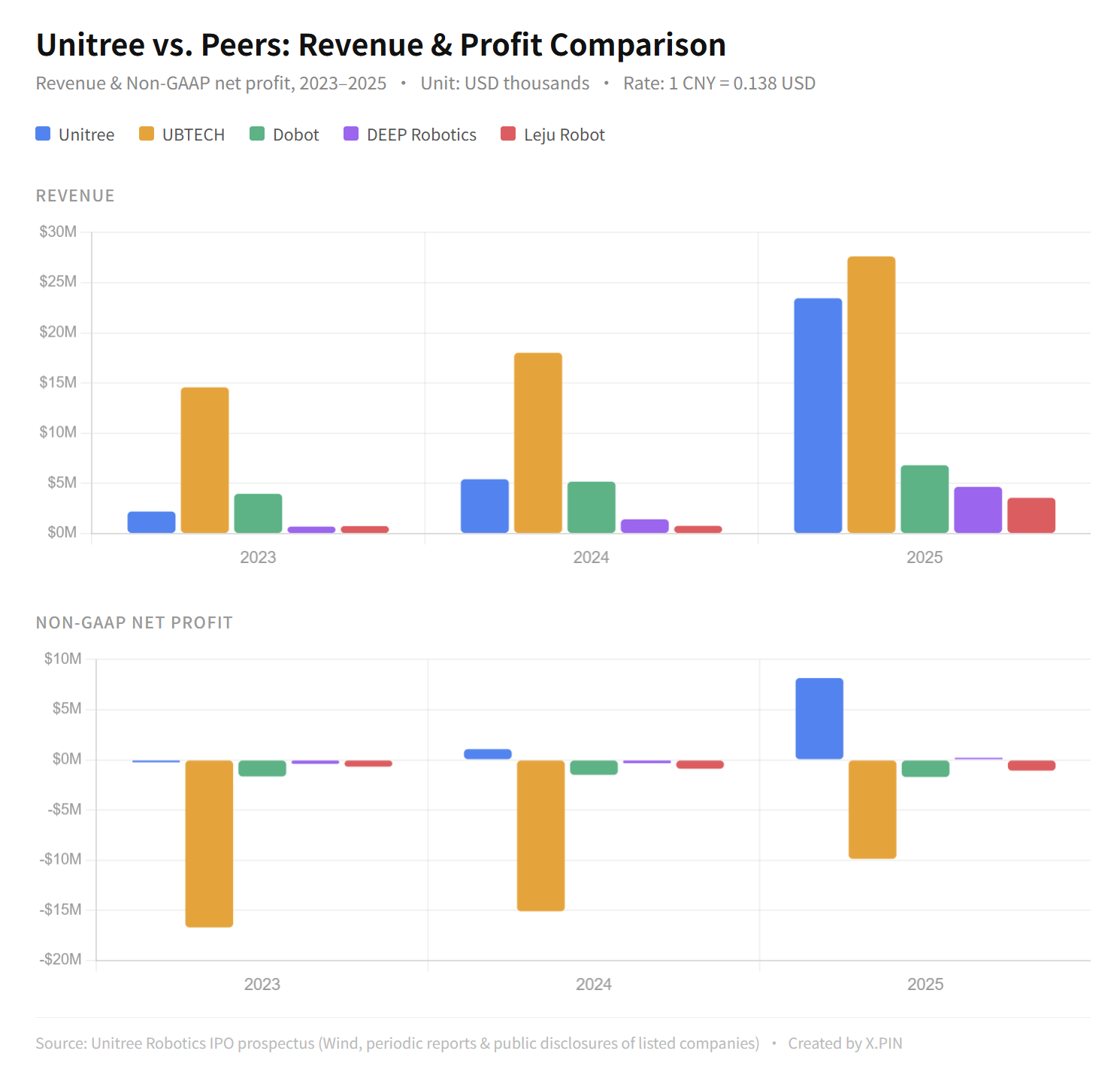
That isn’t supposed to be possible right now. Humanoids still aren’t shipping in real volume. Most makers count it a win just to keep build quality consistent. Training data is scarce, so the robots can’t do much that’s useful in the real world. And security is an afterthought—even basic backdoor protection is spotty.
Wang isn’t chasing any of those frontiers. Spend time with him and you realize he’s fixated on one question: how do you ship a product that works, at a cost you can actually control? His robots may not be the most advanced on the market. But they’re reliable enough—and once you factor in the price, “reliable enough” starts to look like a steal.
He’s been obsessed with cost since long before Unitree existed. As a student, he tried to build a bipedal robot for 200 yuan—about 28 bucks. He tinkered constantly; one experiment, electrolyzing tap water, accidentally released chlorine gas.
In 2015, finishing his master’s at Shanghai University, he built a quadruped called XDog out of hobby-grade motors meant for model airplanes. All in, it cost under 20,000 yuan—about $2,800. Boston Dynamics’ Spot, for comparison, rented for more than $70,000.
Where Boston Dynamics used hydraulic joints, Wang went electric—and not with industrial motors, but cheap brushless ones. His robot dogs used as few parts as he could get away with. He’s said he started the company with just 2 million yuan—around $280,000—and every yuan had to pull its weight.
That same discipline shows up in the humanoids. This March, the Chinese brokerage China Post Securities took apart a base-model G1 (after-tax price: 85,000 yuan, about $12,000) to estimate what it cost to build.
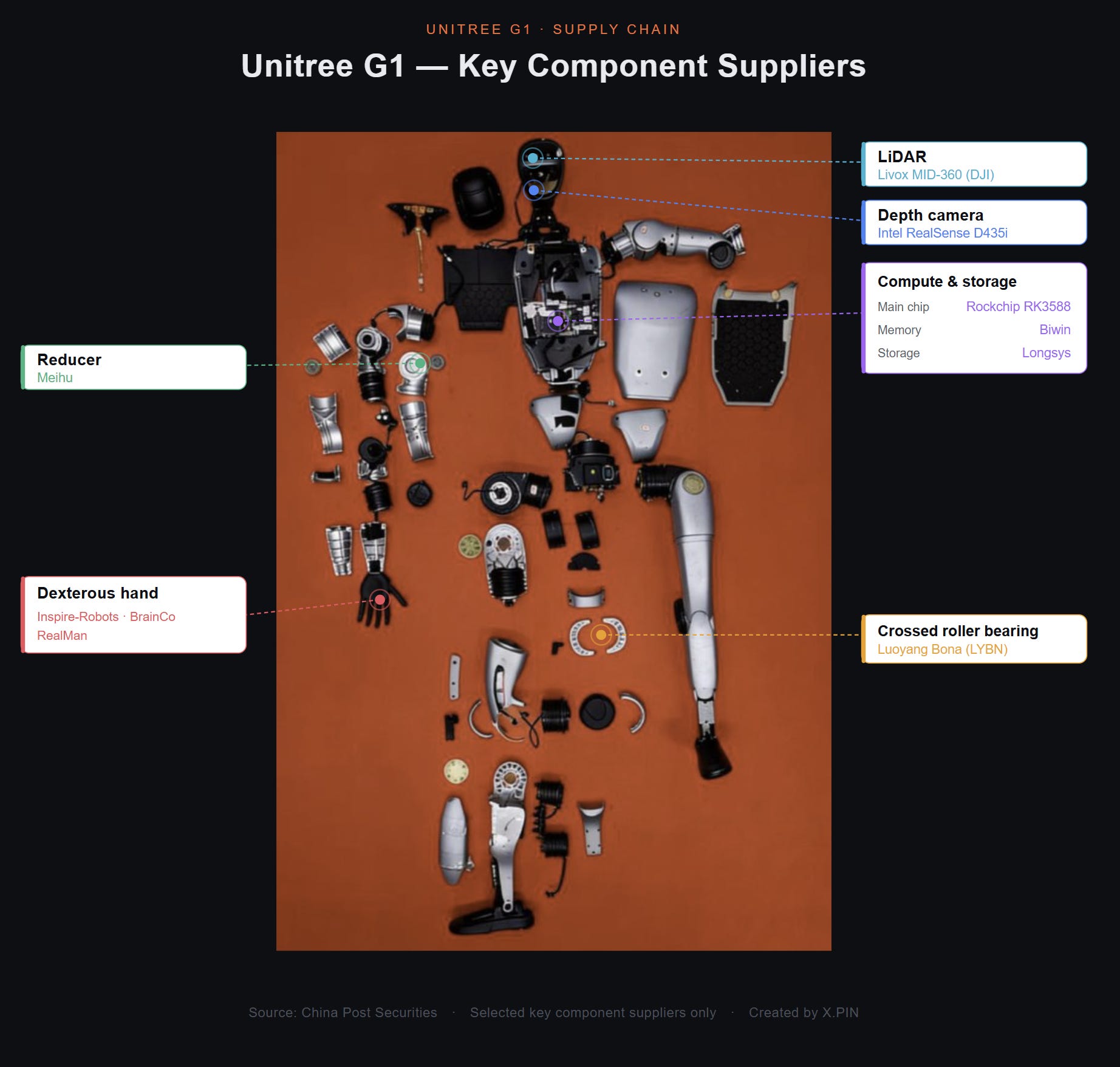
The motors, driver boards, and gearboxes—a humanoid’s most critical components—came out with no manufacturer logos at all, which usually means one of two things: Unitree makes them itself, or the supplier is staying very quiet. The memory and storage came from Biwin and Longsys, both Chinese. The main processor was a Rockchip RK3588 (there’s also a Qualcomm-based version, the G1Q). The default lidar came from DJI, with RoboSense or Hesai as options.
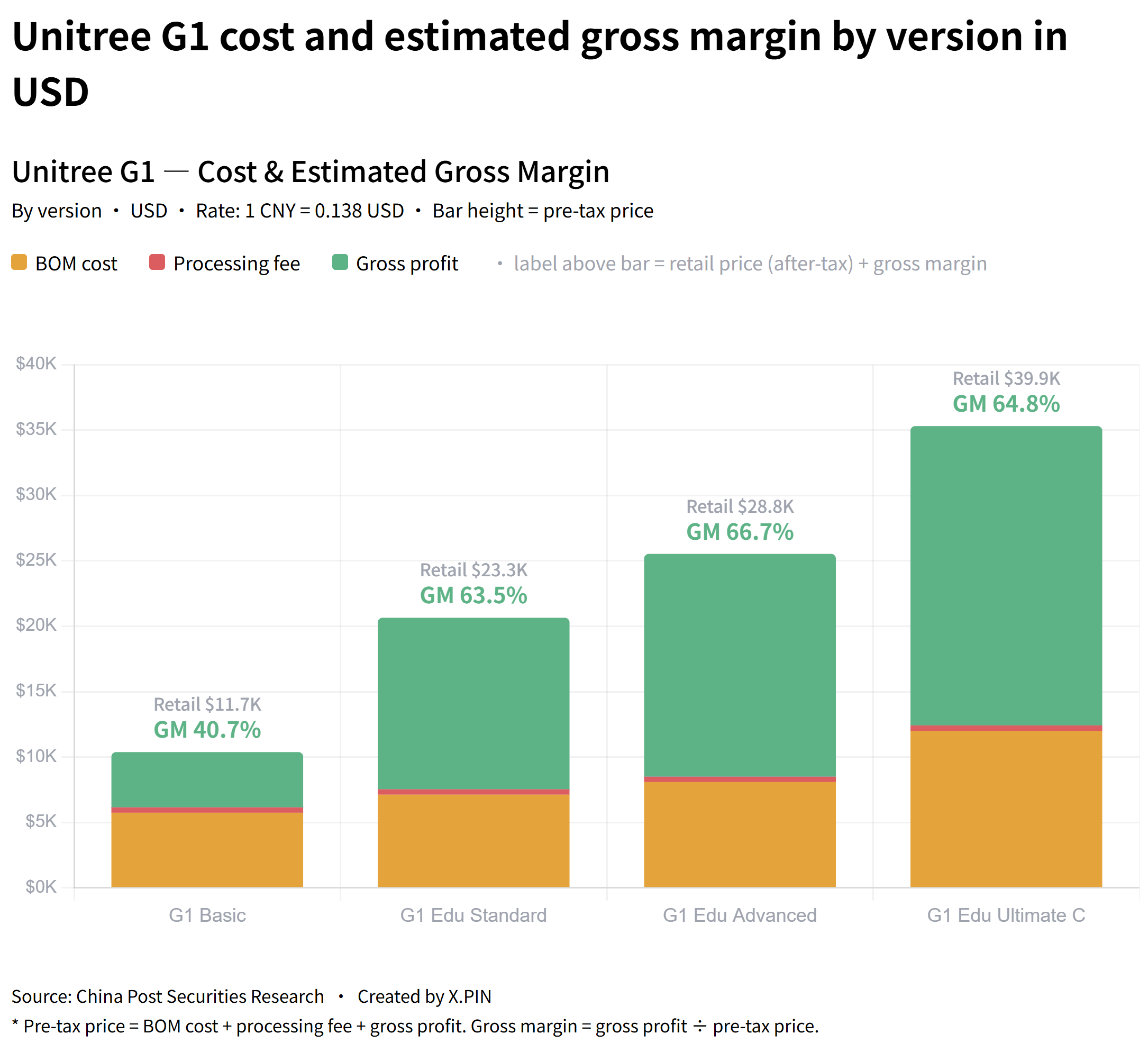
Mixing in-house parts with cheap commodity components, the teardown pegged the base G1’s bill of materials at around 40,000 yuan (roughly $5,600)—a gross margin north of 40 percent. Upgrade the unit, and that margin sails past 60. This is the engine behind Unitree’s climbing margins: most humanoid buyers are universities and labs, and they tend to splurge on the pricier, modifiable EDU version. The more they buy, the better the math gets.
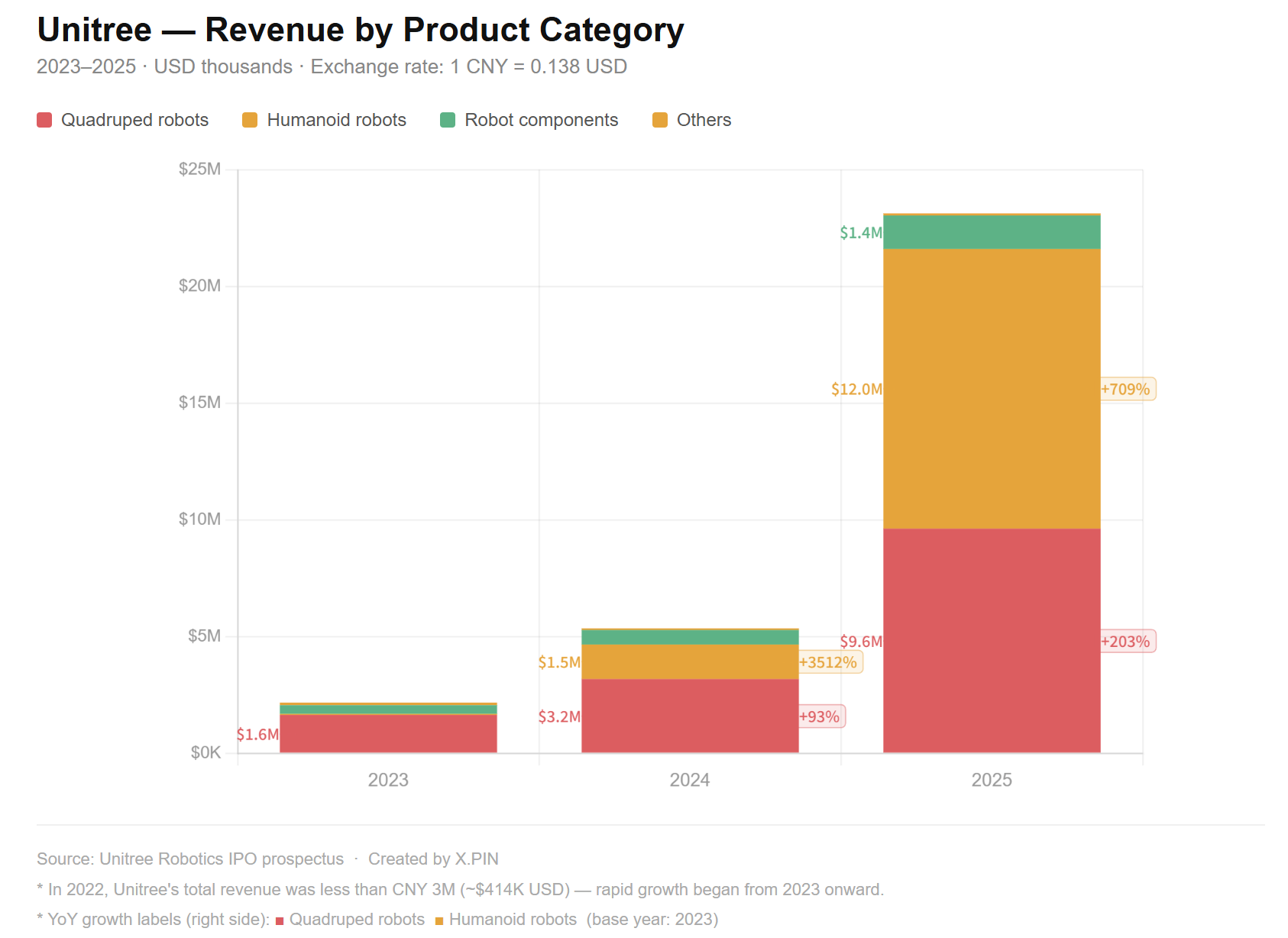
Back in 2024, I interviewed a Unitree salesperson at a trade show. He told me, flatly, that the humanoid business could realistically clear a billion yuan—about $140 million—a year. He wasn’t wrong—2025 revenue came in around 1.71 billion yuan, roughly $240 million. (He later blocked me. Unitree, I gather, keeps its people on a short leash when it comes to reporters.)
So Why Did the Money Show Up All at Once?
The real puzzle in the prospectus isn’t the early losses. It’s how fast the profits arrived in 2025. Humanoid revenue jumped from 107 million yuan (about $15 million) in 2024 to 869 million ($122 million) in 2025—outearning, for the first time, the robot dogs that built the company.
The Western press tends to credit one moment: the dancing robots on China’s CCTV Spring Festival Gala in early 2025, which kicked off a national humanoid craze. That’s not wrong, but it’s not the whole story. Having covered this beat from 2023 to 2025, I can tell you the fascination was building in China well before that broadcast.
Unitree’s early H1, back when it could only shuffle, was already pulling millions of views on Douyin. Once a later H1 could fold itself up and walk like a person, Chinese social media lost it. Every product teaser Unitree dropped, ordinary users would re-cut into clips that racked up millions of views overnight—I was one of them, for a while. Other startups noticed and tried to copy the formula. None of it landed the way Unitree’s did.
At the 2025 World Robot Conference in Beijing, I asked Wang whether he’d set out to build humanoids on purpose. His answer caught me off guard:
“For a long time I was actually against making humanoids. I’d built a bipedal one back in 2009, and the business case was brutal. But by 2022, customers were placing orders—some were paying deposits before we even had a product. So we built one.”
That’s it. No vision, no AGI, no sweeping story about automation. Customers wanted one, so he made one. The humanoid frenzy has, in a strange way, almost nothing to do with him—he’s watching it from the sidelines. My honest guess is that the 2025 revenue spike is just the 2023 and 2024 orders finally being fulfilled.
This is what separates Wang from most humanoid founders: he’s more conservative. Zhang Peng, founder of the tech-media brand GeekPark and an early Unitree backer, has described him as the rare founder who’ll tell you plainly which problems are hard and how long each will really take. Worth remembering: when Wang was saying these things, he’d just left a three-month stint at DJI.
Because he never learned to sell a vision, his path to profit was almost comically simple: build the thing, and the labs will buy it. So labs and universities became his market. Unitree’s gear performed roughly on par with Boston Dynamics’ at about 30 percent of the cost, sometimes less. The electric drivetrain was easy to hack on—grad students could tinker, publish papers, and spread the word at conferences. Marketing, in the usual sense, was a line item he could mostly skip.
The Unitree social accounts everyone knows now? They didn’t roll out until 2021. The in-house video team didn’t exist until 2022. Wang barely posts. The prospectus puts Unitree’s 2025 ad spend at 60.53 million yuan—about $8.5 million — not much, for a brand this recognizable.
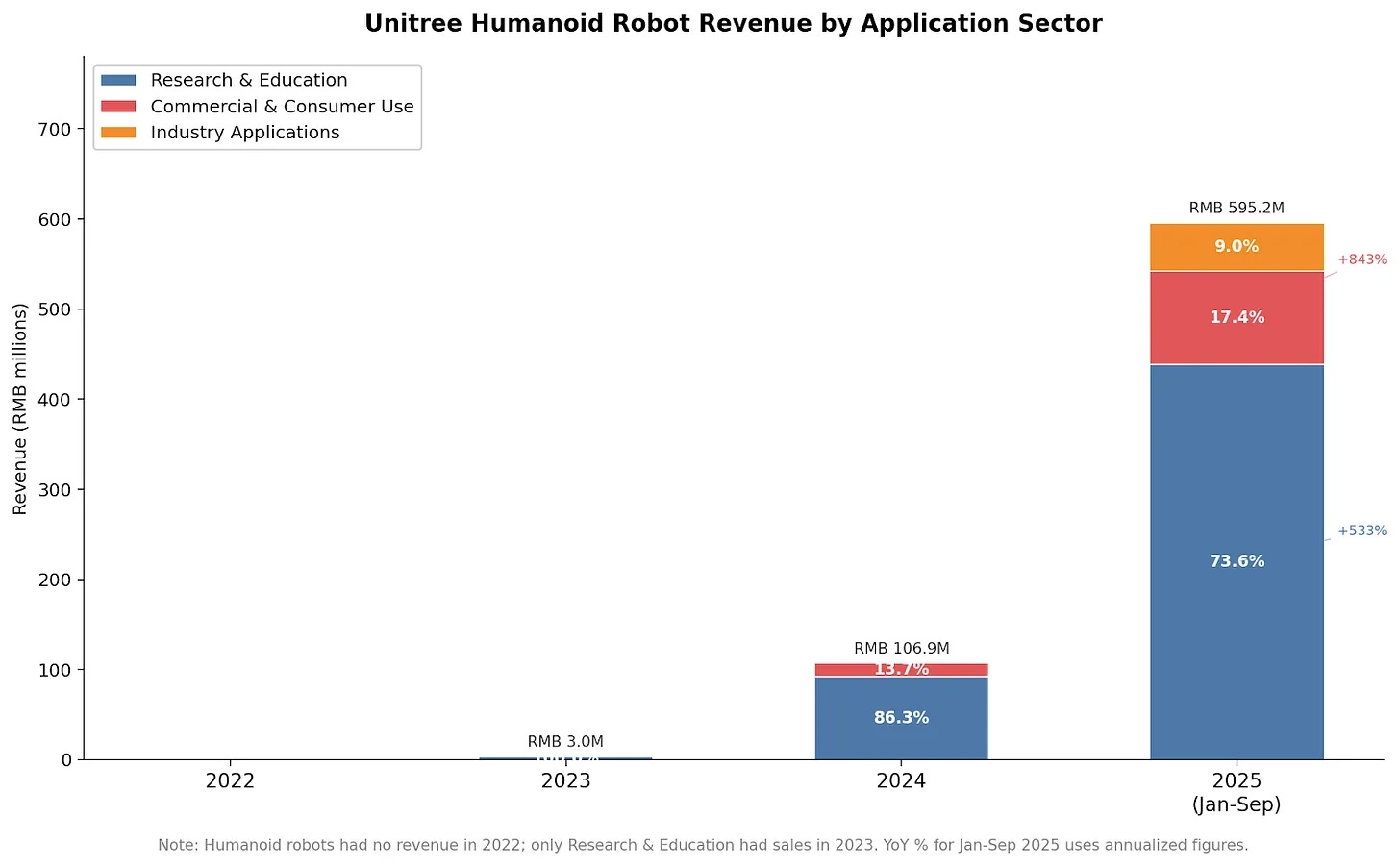
The numbers bear out this no-talk approach. “Research and education” now makes up over 70 percent of humanoid sales. And 2025 was the first year Unitree’s domestic revenue beat its overseas revenue—meaning that until last year, it was mostly selling to foreign universities and labs.
The four-legged business runs under the banner of “intelligent inspection”: patrolling power grids and subway tunnels. Fire departments buy the dogs for disaster zones. There’s a B2B rental market too—Unitree’s robots doing kung fu and dance routines at supermarkets, tourist sites, and stage shows. Some people just buy one as a very expensive toy.
Back in Beijing, Wang told me humanoids still can’t work a factory floor or do your chores. “Optimistically, they’ll be able to do real work by 2030—but in practice it’ll take longer. If that day comes, we’re going to have to tax the robots.”
Great Numbers, Shrinking Profits
Unitree’s numbers are great—maybe a little too great. Which raises the question the prospectus can’t answer: how long can the humanoid hype actually last?
It’s not a rhetorical worry. You can’t build a company on the assumption that the Spring Festival Gala will move your product every year. Sooner or later, people tire of watching robots dance. To keep growing, Unitree has to spend real money on sales channels—and that’s already hitting the books.
In its latest prospectus, Unitree disclosed Q1 2026 numbers: revenue of 422 million yuan (about $59 million), up 68 percent year over year, but net profit of just 50 million yuan ($7 million)—down nearly 48 percent.
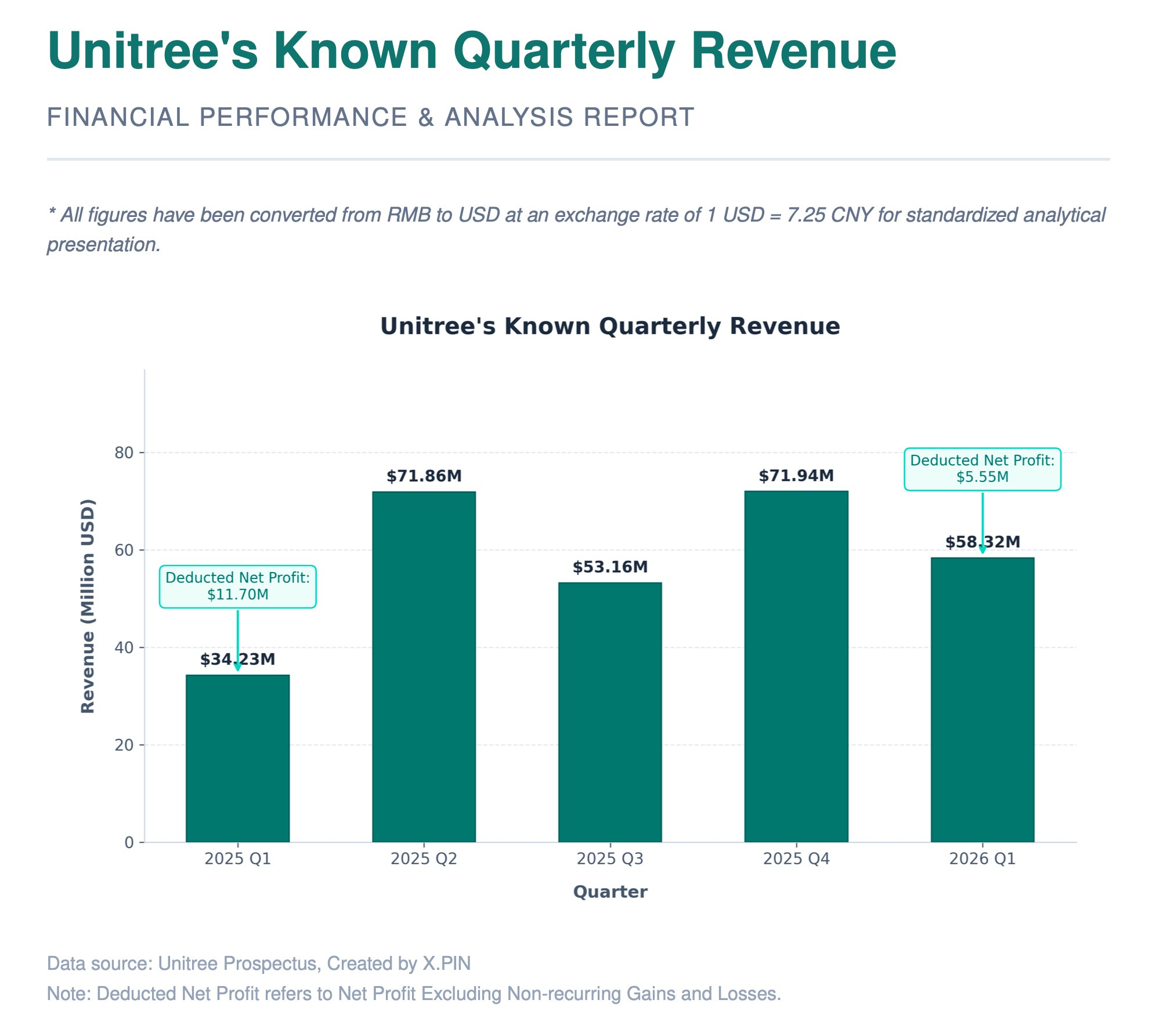
Unitree blamed the drop on a spike in R&D and sales costs, calling out one line in particular: brand promotion via “platforms such as the 2026 CCTV Spring Festival Gala” had pushed sales expenses sharply higher.
There’s a backstory. Late last year, word went around the industry that CCTV was charging humanoid makers to sponsor Gala performances—reportedly around 100 million yuan, some $14 million, a slot. I heard that AgiBot, one of Unitree’s main rivals, was rumored to be in those talks. In the end, AgiBot skipped the broadcast and threw its own show, “Robot Wonder Night.”
Cash flow took a hit too, down 86 percent—the prospectus cites cash going out for inventory and expenses far outpacing what came in from sales. With memory and chip prices rising and the rental market sliding into a price war, growth is only going to slow.
The shipment math frames the stakes. Unitree shipped more than 5,200 humanoids in 2025. Wang figures it’ll ship somewhere between 10,000 and 20,000 this year. But the back half of 2026 is about to get crowded: Noetix Robotics, Booster Robotics, DEEP Robotics, AgiBot—plus EV makers like Xpeng, expected to start mass-producing its own humanoid by year’s end.
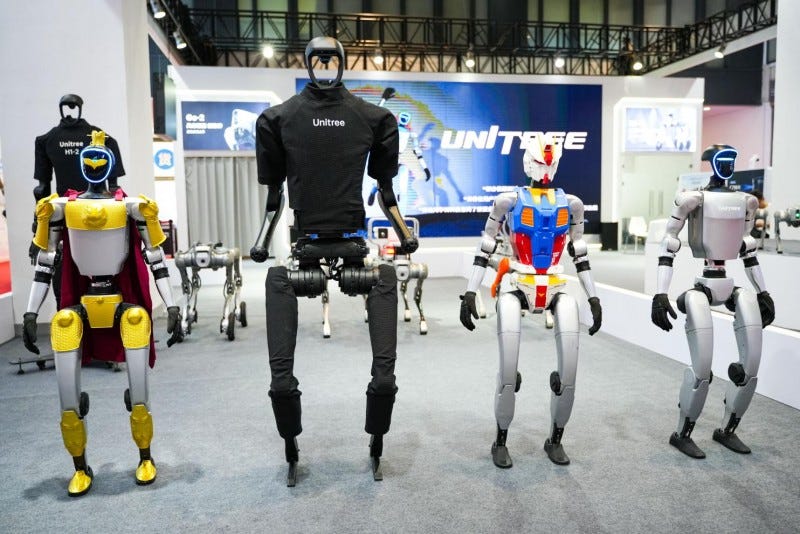
So Unitree is placing a bet. Roughly half the IPO proceeds—about $300 million—will go toward AI foundation models. Wang has called large models a powerful technology, adding that “I didn’t expect them to be this strong.” The company didn’t get serious about the robot “brain” until 2024. In January 2026, it released a general-purpose VLA model, UnifoLM-VLA-0, plus an industrial-scale embodied model it’s testing in its own factory.
The standard line in robotics is that the U.S. leads on software and China leads on hardware. To close the software gap, most Chinese firms have leaned hard into collecting or buying huge volumes of training data—some, like AgiBot, even sell it. Beijing has encouraged the practice: buy a robot, generate data, turn it into revenue.
Wang disagrees. The bottleneck, he argues, isn’t the data—it’s the model. “We collect data so we can use it, right? But what if the data isn’t usable? A lot of the time people fixate on data and pay too little attention to the models.”
He’s skeptical of VLA—Vision-Language-Action—the architecture everyone’s chasing right now. “I have my doubts. Here’s a simple idea: what if you put AI training in front of the VLA model? The cost still has to come down. So we’re experimenting with AI-generated video—training the robot on the motions inside those videos. That might be closer to a world model.”
Unitree says it’ll fund its new headquarters and global expansion from cash on hand. The current HQ is too small—the daily stream of visiting delegations doesn’t fit anymore. It’s also building a pilot production base in Hangzhou’s Binjiang district, which means making robots in its own factory, and potentially a lot more of them.
Epilogue
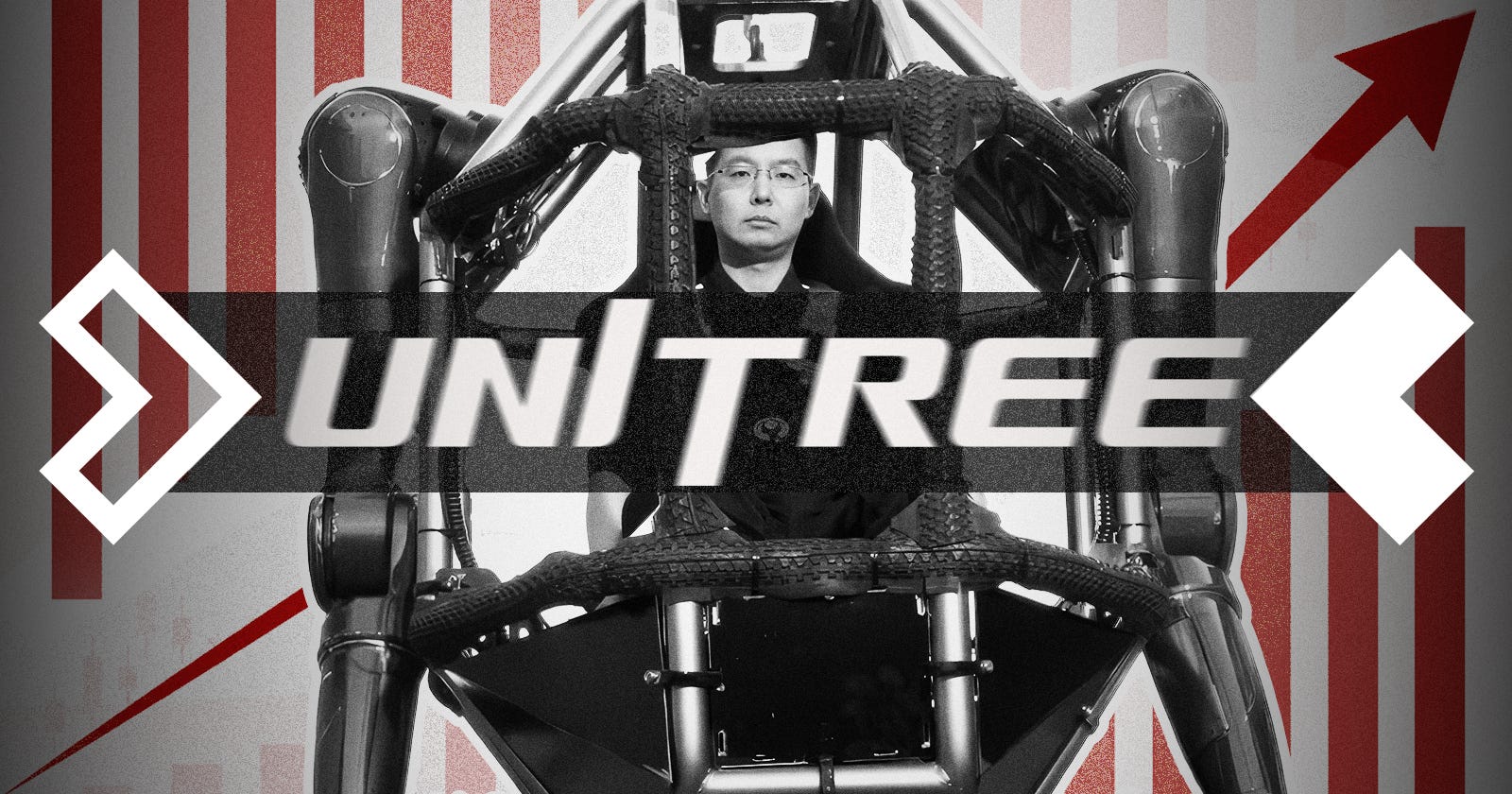
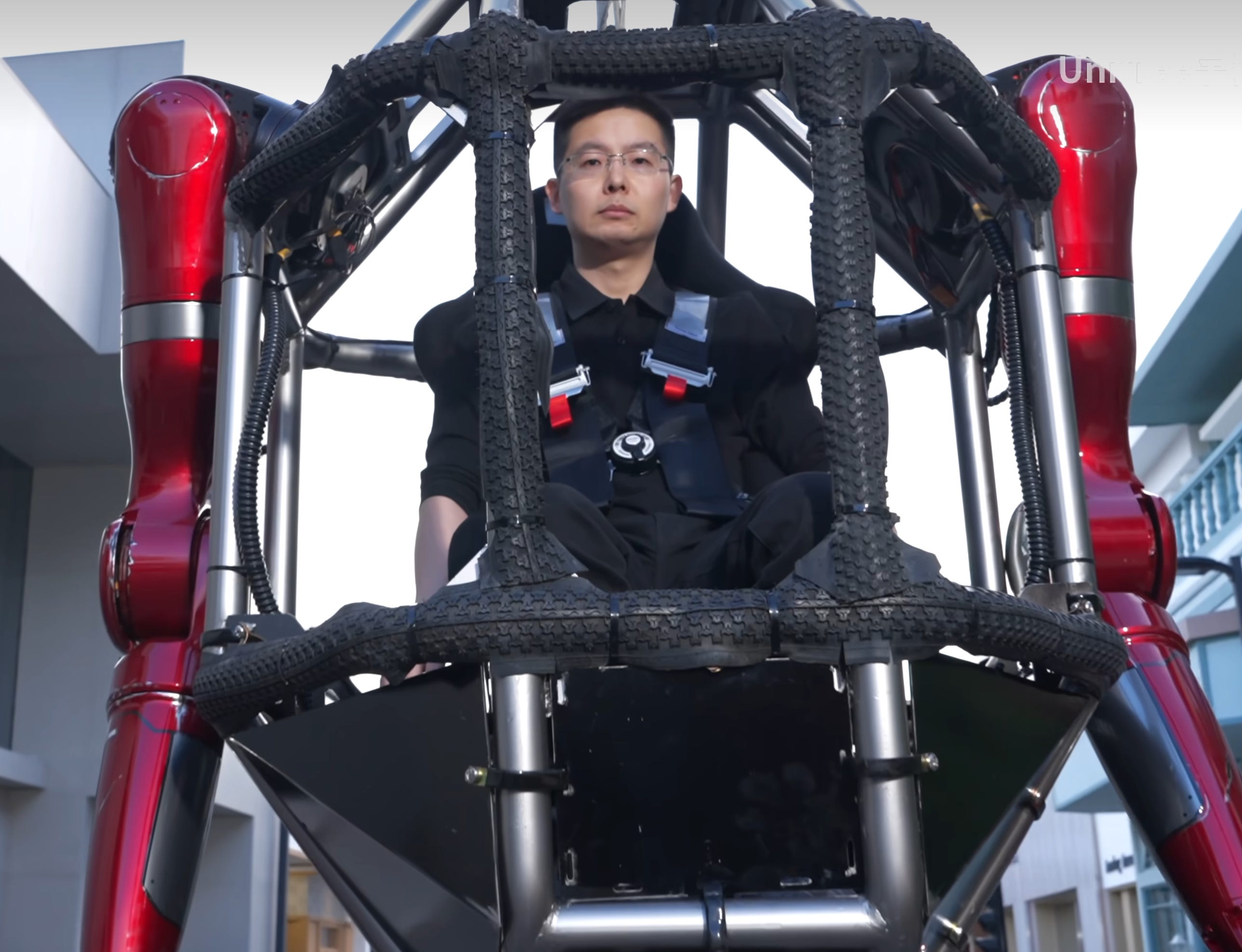
Wang Xingxing is not a “successful founder” in the usual mold. No Tsinghua, no MIT. No foreign co-founder. He isn’t even a marquee defector from a big tech company—his entire DJI tenure lasted three months. But there’s something of John Wick in him: focused, immovable, running on a will that’s hard to explain. The man doesn’t smile even when he’s sitting in the cockpit of GD-01, the giant mech he’s built himself. That intensity is what made him such an unlikely success — no name, no resources, nothing to lose, just a flat refusal to do anything but win.
That same trait is also the risk. Wang keeps an iron grip on Unitree. Plenty of employees have quit because they couldn’t keep up with his all-nighters. Rivals have been poaching staff aggressively enough that the company now encourages employees to report colleagues who jump ship. That kind of force-of-personality leadership makes it hard to land the “AI superstars” Unitree needs to build its own models. The field isn’t short on strong-willed experts—the question is whether Wang can stomach hiring someone who might challenge his control.
Then there’s the outside pressure. Unitree’s overseas revenue has long run above 40 percent of the total. In 2025, the U.S. House Select Committee on China called for Unitree to be labeled a “Chinese military company” and added to the Entity List. Earlier that year, two security researchers found backdoors in Unitree’s robots—though it’s unclear whether they were deliberate or just sloppy code. Unitree closed them in later updates.
But Unitree has survived a lot of uncertainty already. Nobody thought robot dogs would find an industrial market. Nobody thought people would want to watch robots dance. Nobody thought Unitree would still be standing ten years in.
What Wang Xingxing has to worry about isn’t the long arc of robotics history. It’s just making sure Unitree makes it to tomorrow.
What stood out most was not the robotics itself but the emphasis on cost discipline and operational execution. In an industry where growth is often measured by funding rounds, Unitree’s ability to generate profits and manage scaling economics offers an interesting perspective on building a sustainable business.