



To most of the world, Liang Wenfeng is the founder who made Silicon Valley nervous: the reclusive engineer behind DeepSeek, the open-source AI lab that trained a frontier-class model for a fraction of what American labs spend. In China, however, the story is far more complicated. The same man celebrated abroad as proof of China’s technological rise is also viewed by many retail investors at home as a symbol of a financial system they believe has worked against them.
This is not really a story about whether quant trading is good or bad. It is a story about something more interesting: how the same person can represent technological progress to one group and financial frustration to another.
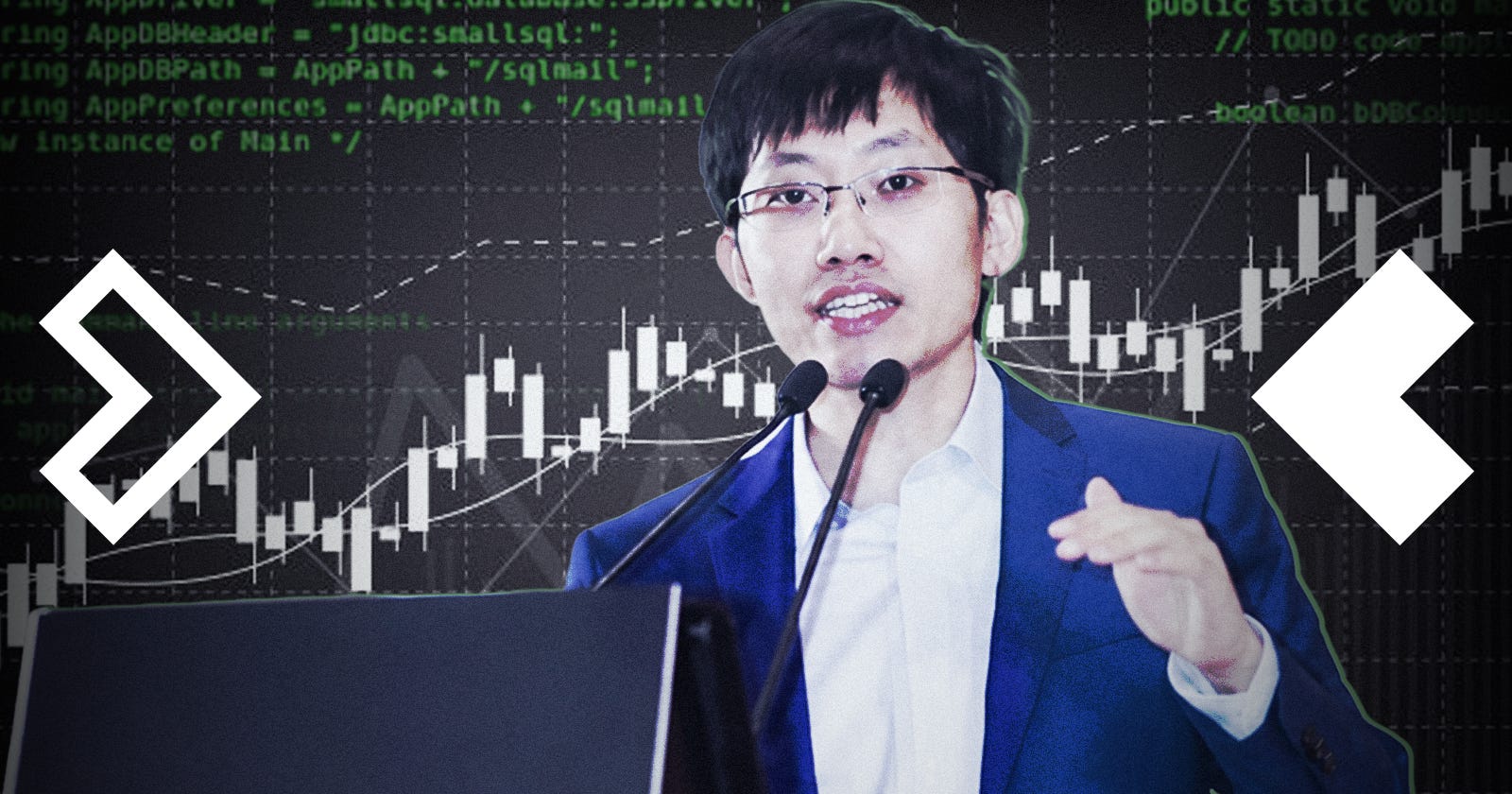
The Founder Who Built Two Different Machines
DeepSeek isn’t Liang’s first company. It’s the second thing he built with the profits from the first.
In 2015, Liang founded High-Flyer, a quantitative trading firm, after several years running his own quant operation. It grew into one of China’s “four giants” of quant investing, with assets under management reportedly exceeding ¥100 billion by 2021. According to a report by the Securities Times in January 2026, citing data from private equity ranking platform Paimaiwang, High-Flyer achieved remarkable returns: an average annualized return of around 85% over the three years ending in 2025 and over 100% over the five years ending in 2025, with positive returns recorded in each of those years. (Notably, High-Flyer experienced drawdowns in late 2021 and during 2022–2023, though these were mitigated by subsequent strong performance
Then, in 2023, Liang used that cash flow to spin up something that operated under a very different set of incentives: DeepSeek, a general-purpose AI research lab built on a strict rule of no outside fundraising, no roadshows, no rush to commercialize; all of it funded, for years, entirely out of High-Flyer’s trading profits. When DeepSeek’s R1 model launched in January 2025 at a training cost far below its Western rivals, it briefly wiped billions off Nvidia’s market cap and forced Silicon Valley to take Chinese open-source AI seriously.
That’s the story most Western coverage tells: quiet genius, minimal funding, maximum impact. What’s missing from it is where the money actually came from: a trading operation that a large number of Chinese retail investors believe has spent years profiting at their direct expense.
Why China’s Retail Investors See Him Differently
Start with the plainest version of the belief: Chinese retail investors do not necessarily see quant funds as a symbol of innovation. Many retail investors have come to see them as a machine that extracts money from ordinary traders. In 2025, China’s major quant funds were reportedly all profitable, with High-Flyer’s return coming in above 55%, while retail investors, on average, reportedly lost money. The exact figures here are contested, and I want to be careful not to overstate them as settled fact. What isn’t contested is the belief they’ve produced.
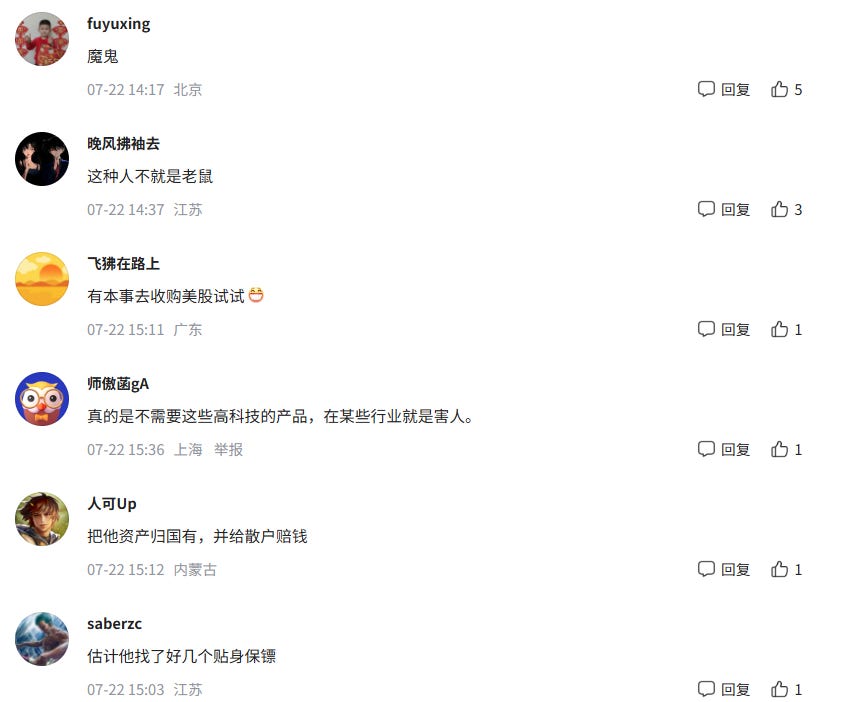
In Chinese financial commentary, two mechanisms come up constantly: the idea that algorithms detect and exploit predictable retail behavior (buying into a stock’s apparent breakout, then exiting and leaving latecomers holding the position), and the broader claim that pricing itself becomes disconnected from fundamentals, with financially healthy companies aggressively shorted and weaker ones pumped on narrative. Whether or not one accepts this framing, it explains a very specific fear: that price is no longer set by earnings or innovation, but by whether an algorithm judges a stock’s retail base to be exploitable.
That resentment hardened in 2025, when two compliance scandals involving people connected to High-Flyer emerged within months of each other. High-Flyer said both cases involved individual misconduct, not company policy. Legally, that distinction matters. But for investors already skeptical of quant trading, the scandals felt less like isolated incidents than confirmation of a system they already distrusted.
But the anger toward quant funds was never only about the traders themselves. It was also about the market structure that allowed them to flourish.
The Market That Made Liang Rich
That distrust doesn’t exist in a vacuum: it’s tied to a specific era of market reform, and to the officials who built it. Fang Xinghai spent nine years, until 2024, as vice chairman of the China Securities Regulatory Commission, and became one of the most visible champions of the market reforms: expanded short-selling tools, refinancing mechanisms that let restricted shares be lent out for shorting, and steady-state IPO issuance. Quant trading, as an industry, grew up inside the regulatory environment he helped build.
On July 24, 2026, Fang was announced to be under investigation for suspected serious violations of Party discipline and the law. No charges have been filed and no findings announced; this is the opening stage of a disciplinary process, not a verdict. He’s not the first CSRC official to fall in recent years, but he is the most senior markets-policy figure caught up in the wave, and the online reaction was instant: commentary framed his fall as long-overdue accountability for the architecture quant trading runs on, with one listed-company executive publicly asking online what the point of fundamental research was if algorithms could out-trade it regardless. Regulators had already been tightening the rules on high-frequency trading since mid-2025; Fang’s investigation, whether or not it’s formally connected, landed on top of that arc and read, to a lot of retail investors, as confirmation that the people who built the system were finally being scrutinized too.
It’s the same financial ecosystem that helped create the conditions for Liang’s rise and the resentment surrounding it. In June 2026, DeepSeek raised its first outside funding at a $50 billion valuation, with Liang himself as the single largest investor in the round: a structure that let him keep firm control even as outside capital came in, unusual by Silicon Valley standards, where founders typically cede far more ground. The details of that round matter less here than what it represents: the same self-funded independence that made DeepSeek a source of national pride also made Liang, almost overnight, the wealthiest individual founder among the world’s frontier AI labs, off the back of an industry a great many of his countrymen believe has been quietly taking their money for years.
The AI Hero and the Quant Villain
None of this resolves into a clean verdict, and that’s rather the point. High-Flyer’s defenders would say its returns are disclosed, regulated, and earned within rules it didn’t write, and that DeepSeek’s technical achievements are real regardless of how they were financed. Its critics would say legality and fairness are not the same thing, and that a system can feel unfair to ordinary investors even when it operates within the rules.
Liang Wenfeng sits at the intersection of both arguments without being fully claimed by either. In one register, he’s exactly the kind of technical self-sufficiency China’s AI ambitions are built around. In another sense, one that is entirely legible inside Chinese retail-trading forums, he’s the public face of an industry many ordinary investors believe has put them at a disadvantage for years. And now, just as the regulatory figures associated with that era are coming under scrutiny, the same founder has become extraordinarily wealthy again through China’s AI boom.
That’s not a contradiction that needs to be resolved for the story to make sense. It’s the story. Technology creates winners, but every technological revolution also creates people who feel they paid the price for it. Liang Wenfeng’s dual life as, in the language circulating online, both a “quant harvester” and an “AI idealist,” is one of the clearest windows available right now into what technological transformation feels like to the people who believe they were asked to pay for someone else’s progress.

Excellent piece!
brilliant insightful article