



For nearly two months, Meta’s vice president of robotics, Li-Chen Miller, worked out of a factory in Shanghai. The factory belongs to Fourier, a Chinese company helping Meta build a robot prototype called Max that can already use five-fingered hands to pick up small bottles and toys, according to The Information. By working with the Chinese robot maker, Meta aims to pull off a grand plan to power physical machines with its Muse AI model.
Still, this golden window for working together may not last long. U.S. policy limits, along with the pressure on Chinese companies to start making money, could soon get in the way.
Inside the Meta-Fourier Deal
According to The Information, Meta robotics VP Li-Chen Miller spent nearly two months at Fourier’s Shanghai factory helping build Max. The prototype took just three months to make. Meta showed it to some employees at an internal meeting in late August, and the team is already working on a second version.
However, industry sources gave Phoenix Tech a more modest view. They said Fourier works with both Meta and AWS, but mainly acts as an ODM, or contract manufacturer, supplying just a few custom test units. These projects are not big orders or long-term joint research deals. Fourier has put significant money into them, yet it is hard to get steady income in return.
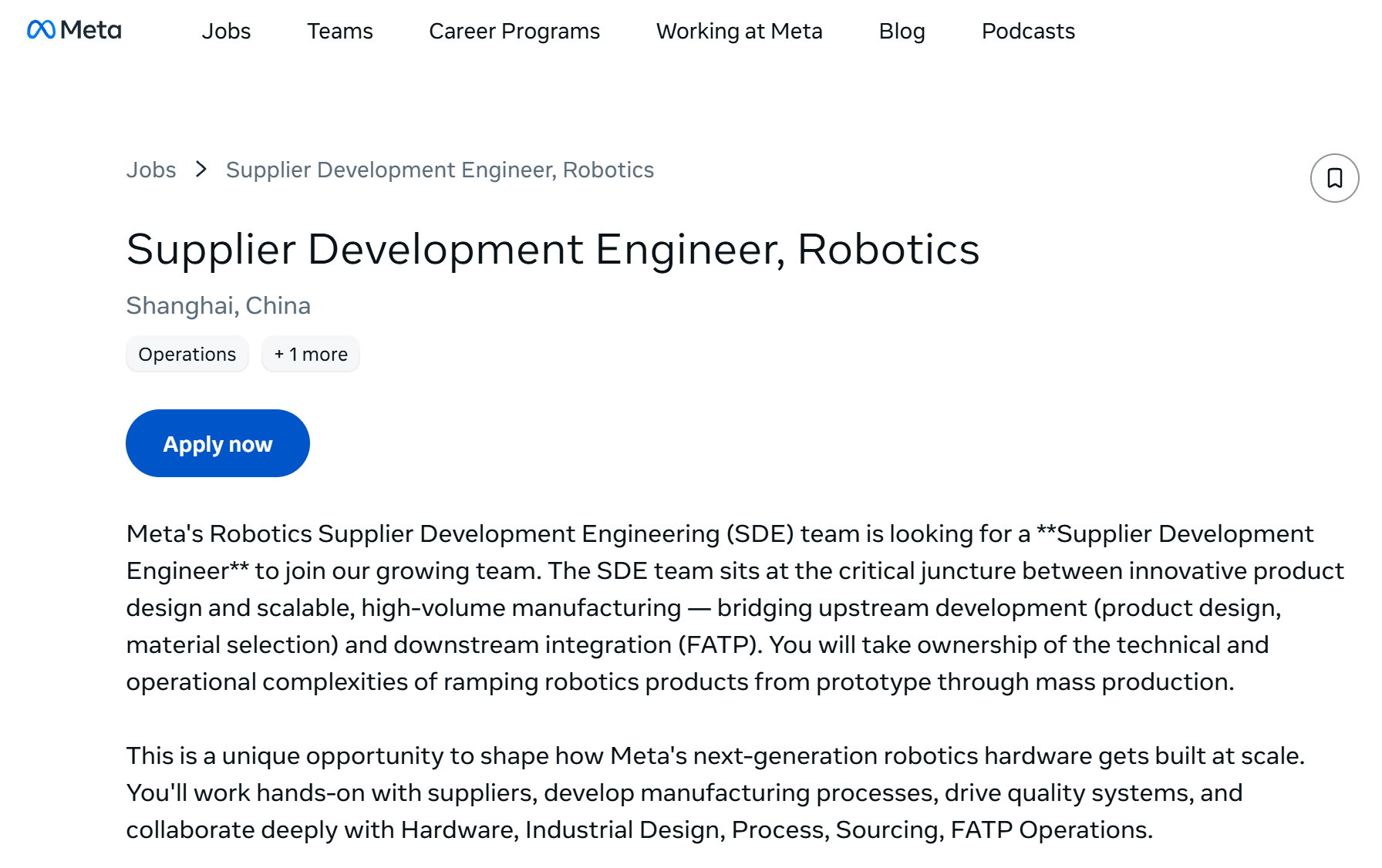
Putting both accounts together, Meta came to Fourier to build a deeply customized robot for its own specs. Meta is also hiring engineers in Shanghai to track progress and help suppliers move from prototypes to mass production. In Shenzhen, Meta Robotics Studio is looking for project managers to handle robot planning and mass production as well.
As early as February 2025, Meta CTO Andrew Bosworth wrote in an internal memo that the robotics team would build consumer humanoid robots to make full use of its Llama AI platform.
So why did Meta turn to a Chinese maker?
Eight-Hour Shipping and Five Factories a Day
For Meta, finding a company that can build a robot is not hard. The hard part is building the exact robot it wants at a fair cost and on a tight schedule.
U.S. import limits on Chinese robots have not made the local U.S. supply chain any cheaper or more complete. Since Meta needs a research prototype it can change again and again, the low prices, fast delivery, and on-site support of Chinese suppliers matter even more.
A Meta spokesperson told The Information that the company, like its peers, has to buy parts that are hard to find inside the U.S. Still, the spokesperson stressed that the work with Fourier is only for internal research and testing, with no plans to sell these products right now.
Just three months ago, The Information reported on how U.S. startups buy robot parts in China. Employees at K-Scale Labs flew back and forth to China several times to bring dozens of actuators back to the U.S. These parts are key to making a robot move.
Another edge of China’s supply chain is speed. An engineer at Chinese robotics startup Booster Robotics told me his team uses express shipping firms like Kuayue Express to cut delivery times to under eight hours. That lets them get the latest custom parts as fast as possible. Getting those same parts in the U.S. could take months.
Picking parts in person also speeds up research. An employee at ARX Technology told me that in Zhuhai and Shenzhen, their team can visit five suppliers in a single day and lock in the models they need within days. And that is just a small startup of a dozen college students. Since many suppliers lack U.S. offices, going straight to China is often the better choice.
This explains why Meta is willing to send engineers to China. Still, building a fast prototype in China is a long way from selling robots to U.S. consumers.
A Good Story for an IPO, Not Yet a Business
What does Fourier get out of this?
Fourier started out over a decade ago making medical rehab equipment. Now it wants its humanoid robots to care for older people and patients. That is a tough jump. Taking care of people takes close contact and steady hands, almost like a real nurse. Fourier still has to prove its robots can actually do this job and make money.
After the robotics boom in 2025, investors are getting cautious. Chinese outlets 36Kr and Cailian Press recently reported that some investors have paused funding for robotics startups. Meanwhile, existing companies are looking to go public so early backers can cash out.
According to Phoenix Tech, Fourier has restructured its shares to prepare for an IPO, though it has not filed a prospectus or started the official tutoring process yet. People familiar with the matter told the outlet that Fourier is short on cash and its investors are waiting for an exit.
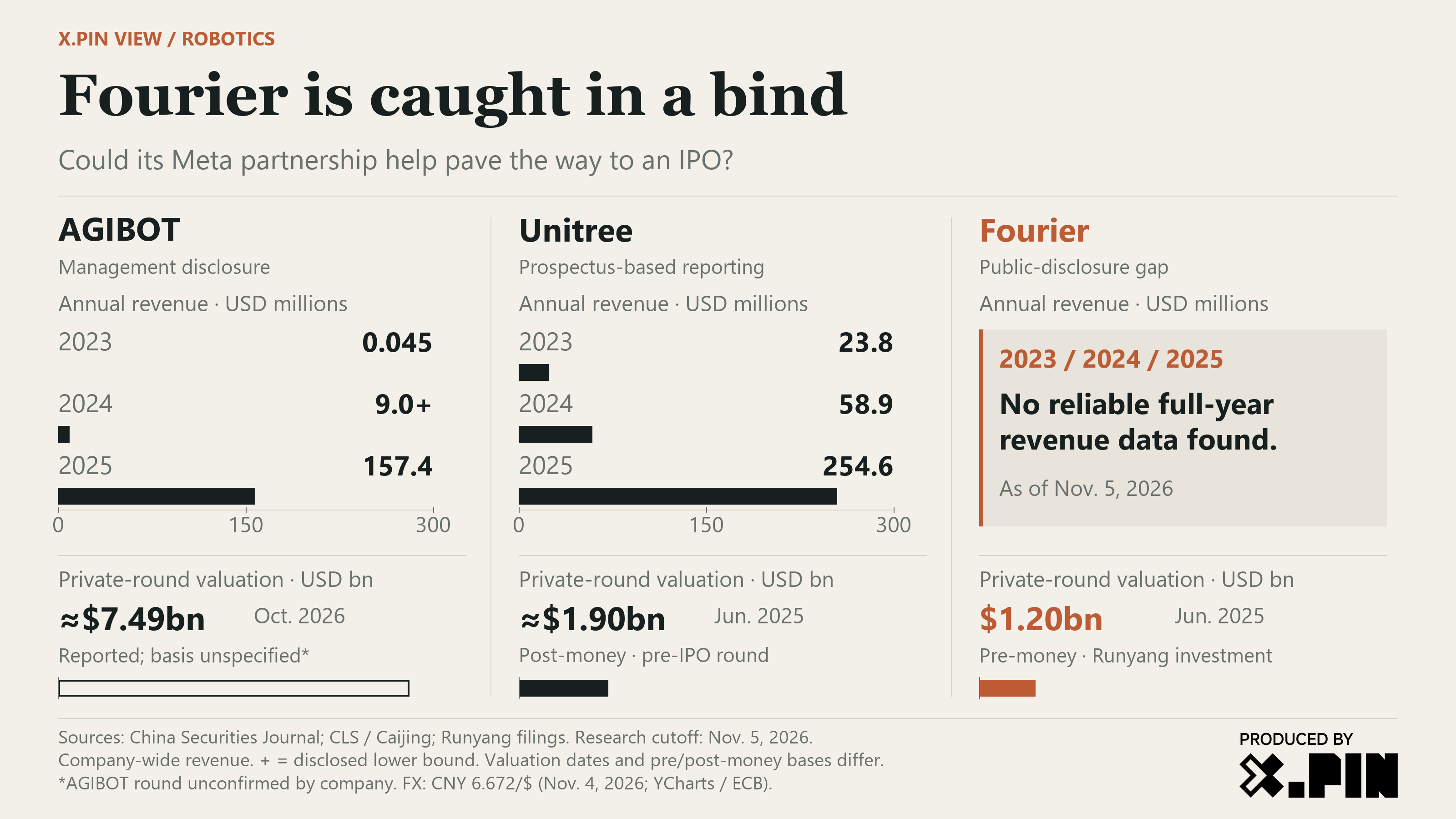
Working with Meta at least gives Fourier a fresh story to tell investors. It shows a major tech giant trusts its hardware and custom engineering skills, which could help Fourier gain experience and win other clients. Still, it is unclear how much money a few test units will bring in, or if bigger orders will follow.
Industry insiders say training data for hand movements would be a valuable asset for Fourier. The company could also use similar engineering skills in projects for clients like AWS. However, what data Fourier actually gets and how it can use it depend on the exact terms of the deal.
For China’s robotics industry, the bigger hope is that smarter U.S. AI models can finally help their machines do real work. At a public talk in 2026, Unitree founder Wang Xingxing said he was stunned by how well GPT-6 ran in robot tests. He noted that with just basic training, a Unitree robot using GPT-6 could finish the jobs given to it.
Max gives the industry another chance to test that idea. If Meta’s Muse model can help robots handle more everyday tasks, this deal could bring AI software and physical hardware a step closer together.
Two Different Clocks
Right now, Meta and Fourier are running on very different clocks. Meta can afford to take its time testing what a robot can do, while Fourier needs this research to turn into real orders soon.
U.S. policy makes the path ahead even harder. A prototype built for lab tests faces very different rules than a product sold to U.S. consumers. If Washington tightens import limits further, Meta will have to rethink both its testing and its supply chain. Chinese suppliers helped Meta build a prototype faster, but they cannot help it get the robot into the U.S. market.
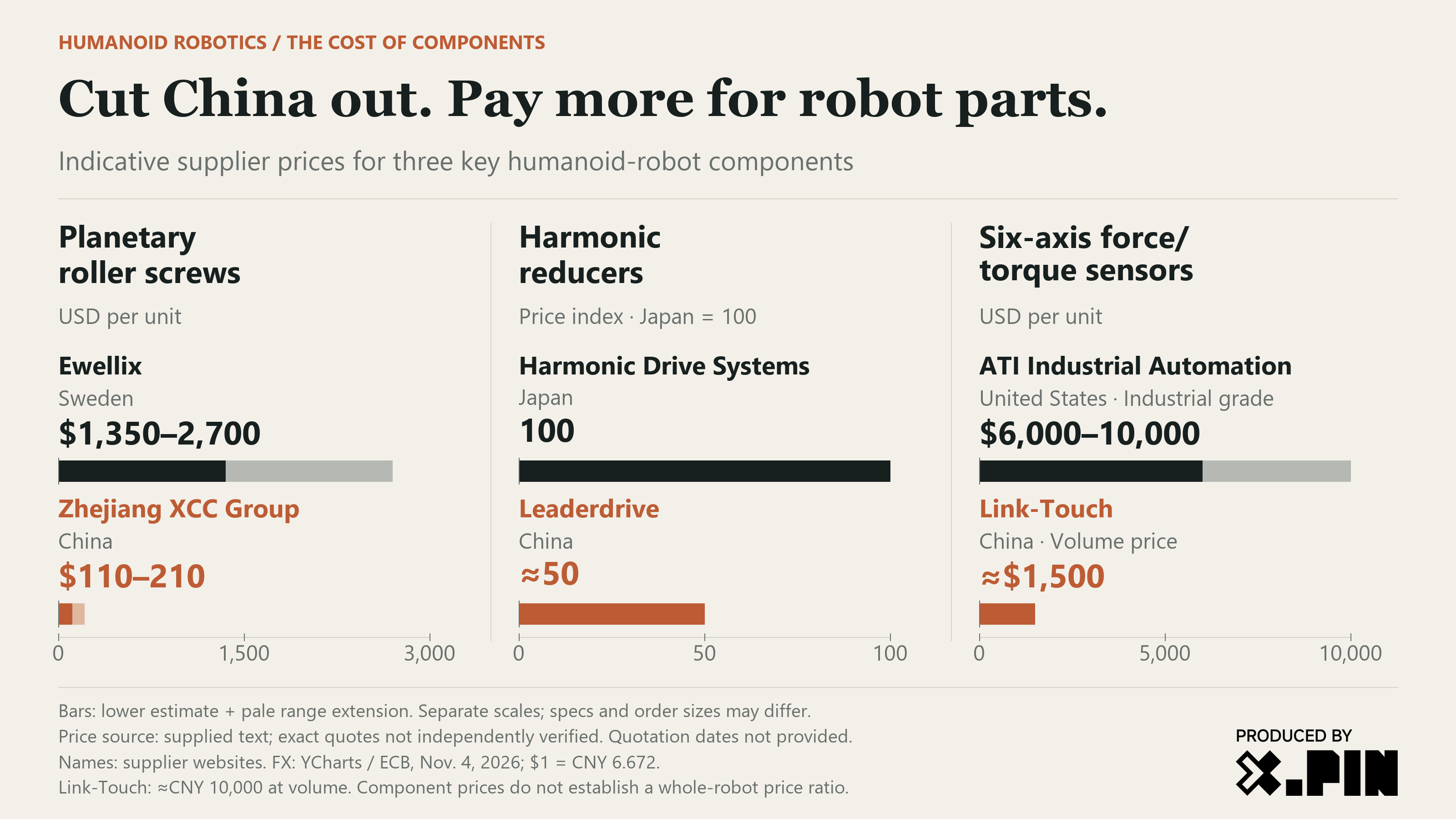
Even if Meta wants to shift its supply chain, high costs make it hard to walk away from China. According to Morgan Stanley’s report The Humanoid 100, the parts for a single Tesla Optimus Gen 2 cost about $46,000 with Chinese suppliers. Without Chinese parts, that bill jumps to $131,000.
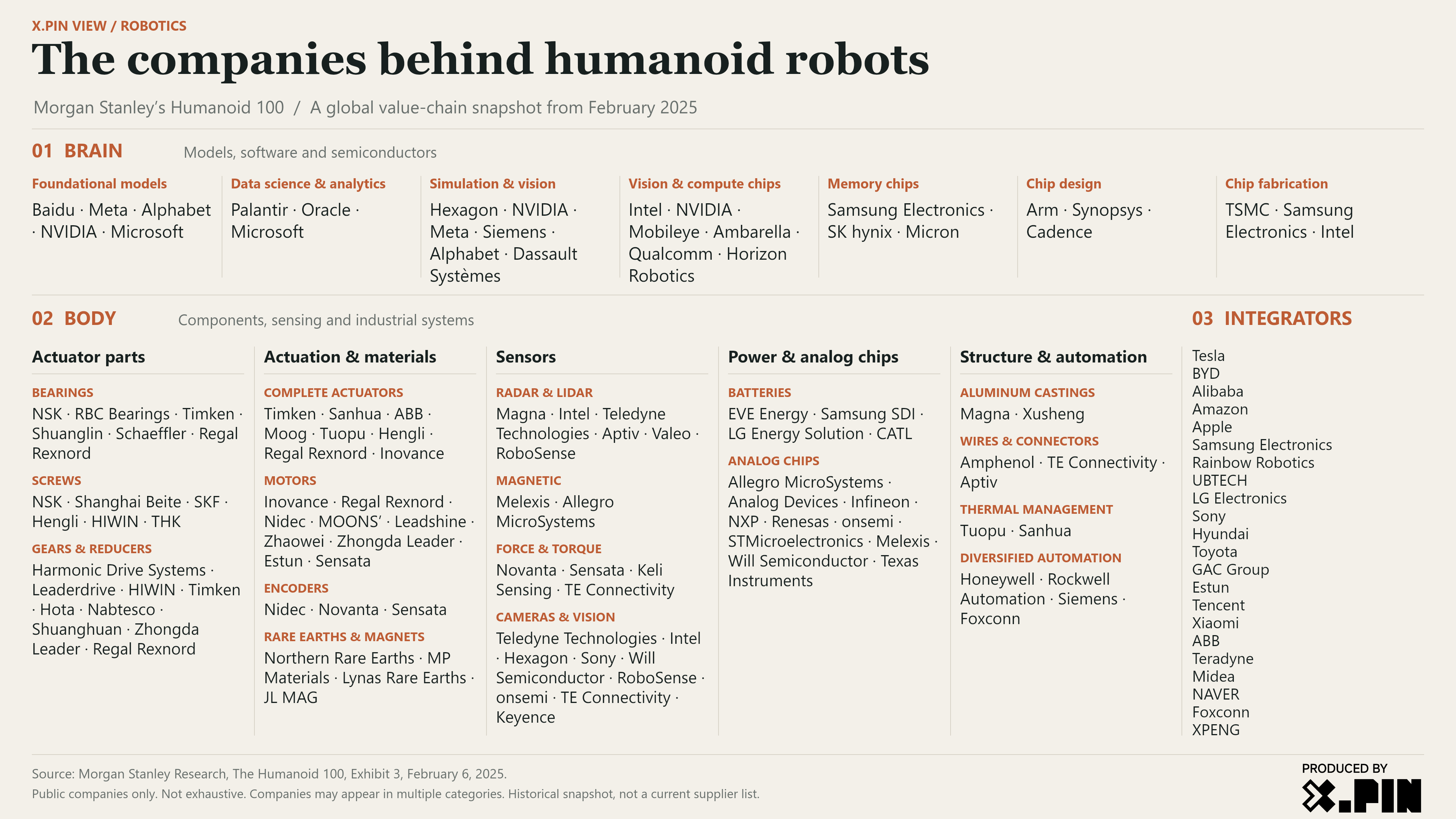
Meanwhile, U.S. rivals are moving fast. Tesla plans to start mass-producing its Optimus humanoid robot in the U.S. in the third quarter of 2027, and Figure is already testing its robots in homes. Even if Max makes real progress, Meta still has to decide what product to sell, how to price it, and whether to stick with Fourier’s design.
Fourier cannot wait on that schedule. As it waits in a long line for an IPO, the company is entering a brutal Chinese-style shakeout that could last more than a year. Startups that fail to prove they can make money will simply go bankrupt. Even for robotics makers that are already public, investors will question their earnings and long-term growth until robot AI models make a real breakthrough. With funding drying up, building a few test units shows off Fourier’s engineering skills, but it does not keep the lights on.
Meta and Fourier clearly need each other today. But Meta is still looking for a robot worth selling, while Fourier already needs a business that can pay the bills. Can Fourier survive long enough to see Meta figure it out?