



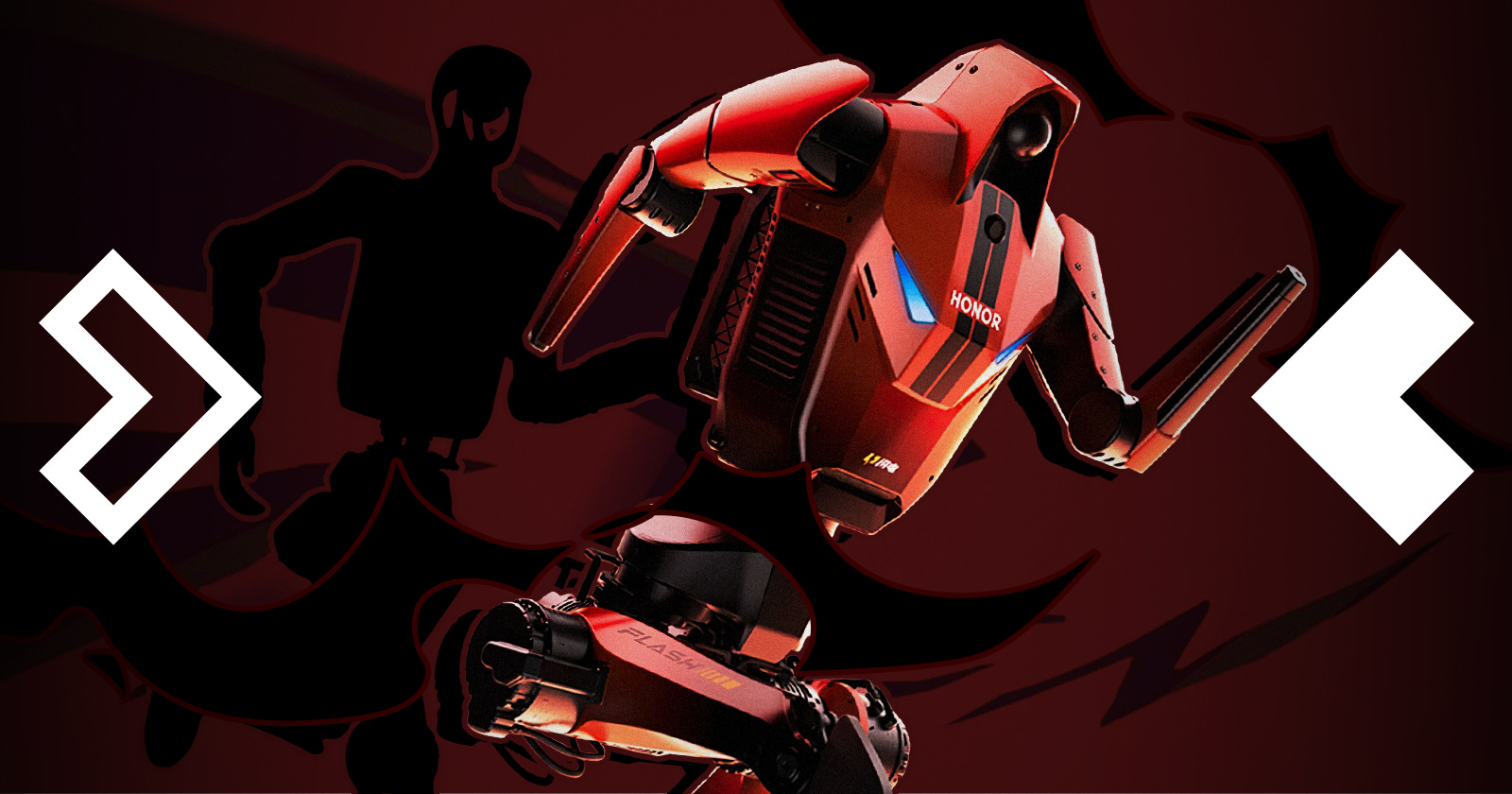
China is really pushing robot to the limit. Last weekend in China, a bright-red Chinese humanoid named “Lightning” smoking its competition in a half-marathon pitting humans against robots. This bipedal humanoid developed by Honor, a Chinese smartphone maker, sprint past 21 killometers in just 50 minutes, 26 seconds, almost 17 minutes ahead of 12,000 human competitors. That even beats the human world record for a half-marathon, set by Ugandan long-distance runner Jacob Kiplimo in Lisbon last month, by nearly seven minutes. The fastest robot last year was Tiangong, developed by UBTECH, took 2 hours and 40 minutes to complete the race in remote mode.
The race means more than that. There are 2 hidden details which foreign media lack concentration: Comparing to last year’s inaugural race, robots’ performance are significantly imporved. However, this update wasn’t achieved by a robotic startup, which was a cautious sign. Besides, robots really need cooling for 2 hours of running. The specialized cooling system for “Lightning” shows the problem: Maybe robots are too hot to work under sun right now. Though these details won’t catch the eyeballs, they show that Chinese companies are really trying to make humanoids practical. Yes, “Push it to the limit”.
On Chinese social media, netizens started to question why Unitree didn’t attend this race last year. Two sources told the X.PIN the opposite truth: Unitree didn’t know the race. They told X.PIN robots need to adapt the field. “We need enough time to test. By the time we knew, it was too late to prepare. “This time, Unitree attended the race, showing their testing video with 10m/s speed in a 100 meter course. Unfortunately it didn’t make the podium. The robot teetered for a moment, then toppled over. Course marshals jumped in and hauled it off on a stretcher.
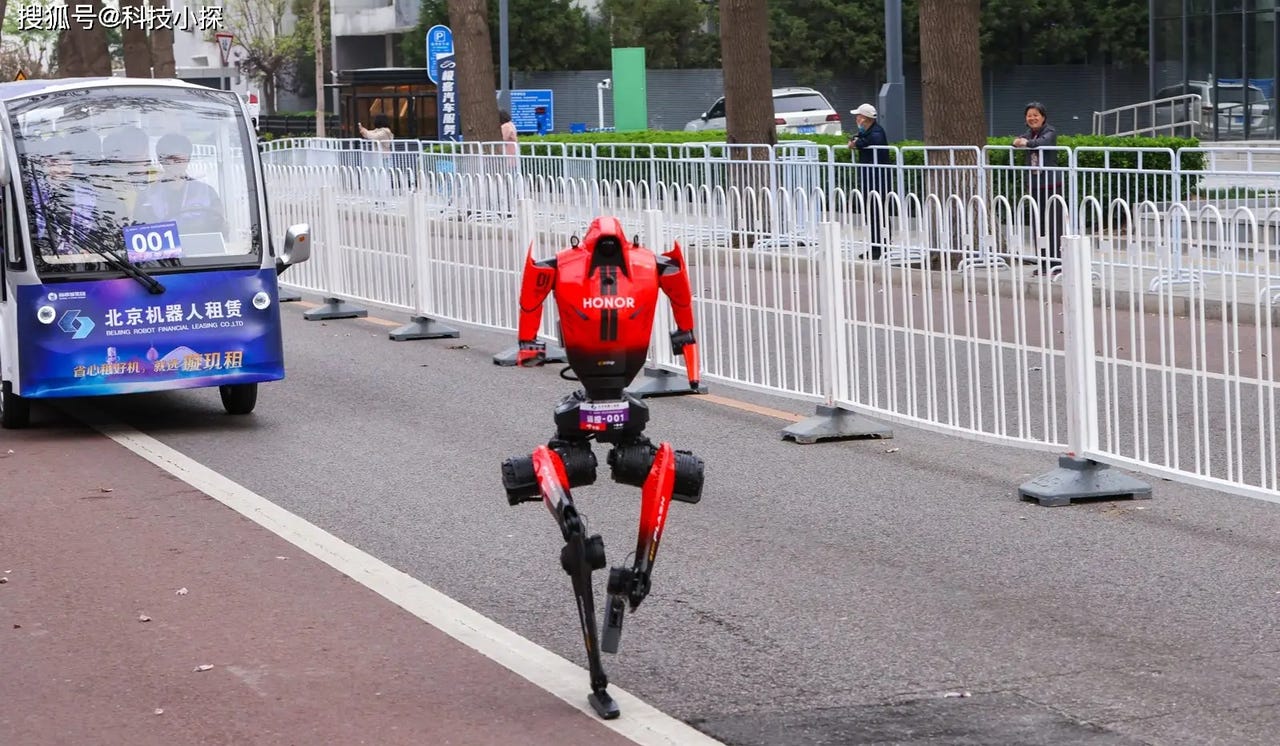
Because new challengers keep showing up — and Honor’s robot “Lightning” just won the whole thing. The company swept the podium too, grabbing second through sixth place, with half the finishers running autonomously. The real fight, though, is happening off the course. Honor rolled out its “Alpha Strategy” and AI roadmap in 2025, and the smartphone maker is clearly itching to spotlight its so-called “emerging business.” Its backed teams showed up with custom liquid cooling loops to dodge thermal throttling, plus oversized hip joints built just for running.
That’s rough news if you’re a startup. Chinese tech outlet Embodied AI Club says Honor has basically shrunk the runway for homegrown robotics startups to prove themselves. “Companies in this space want to prove they’re irreplaceable. Hyping up their robots to catch investors’ eyes — that game might be over,” editor Sandra Lv told X.PIN. “Sure, Honor is a phone company, but they’re bringing serious manufacturing chops to these robots. They’ve got more production experience than anyone else out there. Big players can just buy the parts and figure it out later. Startups don’t get that kind of grace period from investors.”
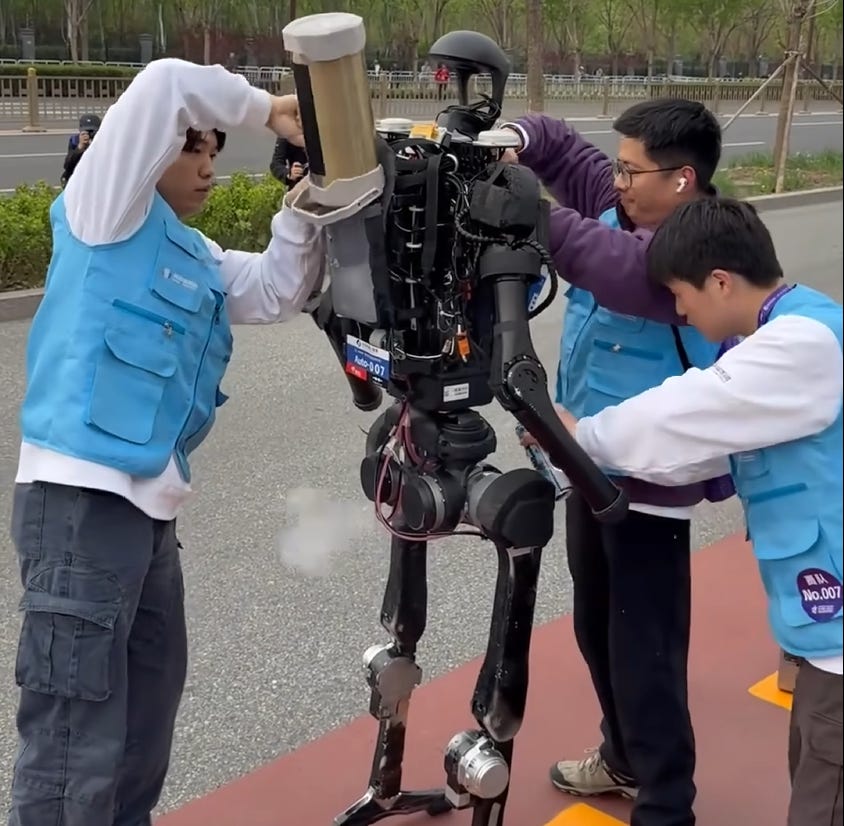
The half-marathon also put the robots’ overheating problem front and center. In one viral clip, a support crew strapped an ice backpack onto a Unitree H1 and blasted its joints with coolant spray. And this is April in Beijing — only around 72°F (22°C) — which tells you how much heat a humanoid dumps out while sprinting nonstop. Overheating during long runs isn’t exactly a surprise to developers, but now the public wants these things to last longer. Some teams in the race had already moved to liquid cooling.
If robots want to get their jobs, they still have a long way to go. Humanoid robots like Unitree G1 and H1 have internal fans for chips and batteries, which brings noise if they need to work close to humans. Liquid cooling systems will be a better solution, which will be harder to maintain in comsumer market. After all, these are designed for labs at first. Xingxing Wang, Unitree’s founder has told X.PIN. The ideal time for humanoids to work is in 2030s. “Maybe we can tax robot labor, but for now, they only have brawn, not the brain to work. So we need AI models to fill in the gap.” Unitree just registered a pilot production base in HangZhou september 2025.
Even so, the half-marathon has become the Chinese version of DARPA Grand Challenge. In America, the competition the Pentagon launched in 2004 for autonomous vehicles dangling cash prizes to draw engineers and hackers. In 2005, the first autonomous vehicles successfully finished the desert course, which that year was 132 miles long. DARPA Grand Challenge spawned companies like Waymo, inspiring Chinese Robotaxi companies like Pony.ai. It is the Holy Grail story for Chinese AI startups.
But in China, stories are shorter than expected. In 2025, Noetix Robotics attended the half-marathon with their little buddy N2, winning in the second place. According to its founder ZheYuan Jiang, it was “a blast”. After the race, Noetix bounced back from the brink of bankruptcy and got a $143 million B funding round. Jiang is preparing Noetix’s latest product, Bumi, for a $1462 price.”The marathon was a turning point.” He said.
