




When people talk about the AI race between China and the United States, the conversation usually starts with model performance: whose large language model is faster, cheaper, smarter, or closer to Fable.
Much less attention is paid to a more practical question: can China build Agentic AI applications that ordinary people actually use? More specifically, does China have its own Cursor or Codex, not just a strong model, but a product that puts AI into real work?
ByteDance has tried. It launched Seedance for video creators and Trae for developers. But Seedance serves a narrow creator market, and Trae has not yet built enough user momentum.
Then last month, a report from the Chinese research firm Analysys showed something more interesting: Tencent’s office-agent platform WorkBuddy had become the country’s largest product in its category, with 8.85 million monthly active users.
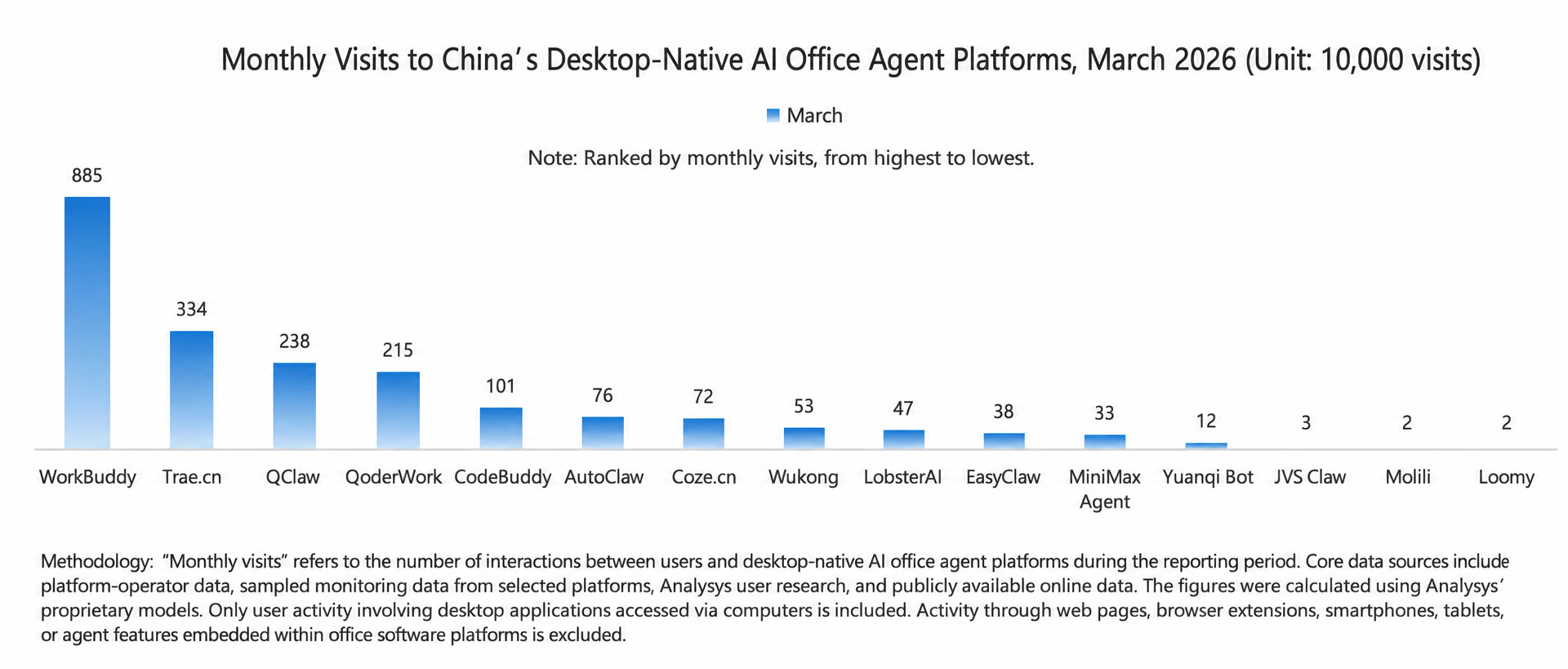
Tencent appears to have caught a trend that OpenAI is also trying to define. This month, OpenAI emphasized that the combined weekly active users of Codex and ChatGPT Work had surpassed 8 million. In China, a similar Codex-style growth story may already be taking shape.
Across the AI industry, companies seem to have reached the same conclusion: the next important AI application may not be a coding tool for programmers. It may be a Codex-like office product for everyone else.
That raises a bigger question. Tencent has long seemed cautious, even conservative, in China’s AI race. Could WorkBuddy be the product that helps it regain the initiative?
What Makes WorkBuddy Useful?
WorkBuddy is an AI agent workspace built by Tencent Cloud for office work. Its target users are not programmers. They are ordinary workers who need documents edited, PDFs read, slides generated, spreadsheets processed, and workflows automated.
A user only needs to describe a task in one sentence. WorkBuddy then plans and executes it like a colleague, delivering a result that can be reviewed.
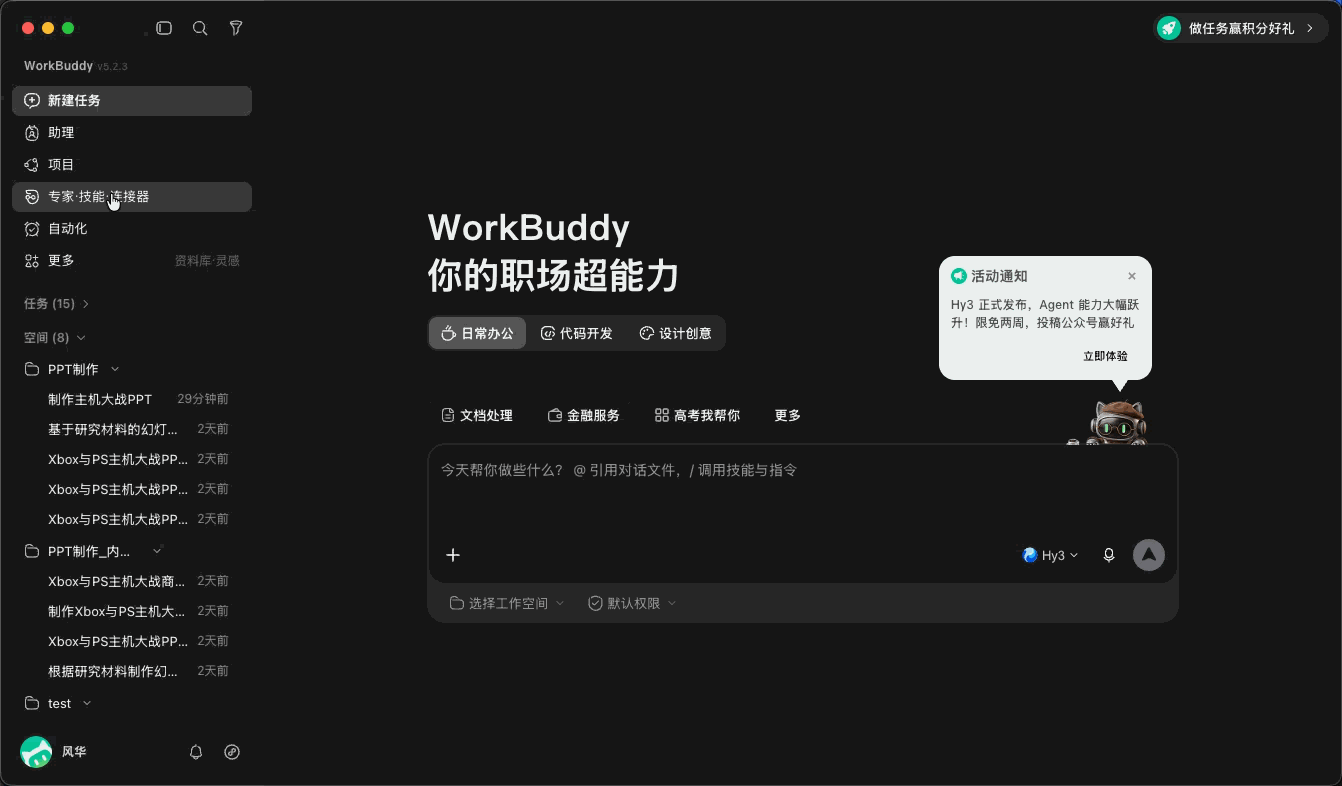
That makes it sound a lot like OpenClaw. After OpenClaw appeared, Tencent quickly saw its value. In March, Tencent engineers set up booths in the plaza beneath their office building, almost like vendors at a village market, offering to install OpenClaw, nicknamed “Lobster,” for users free of charge.
They built similar products around the same logic. QClaw, based on the open-source OpenClaw framework, is designed as a personal AI assistant for PCs. Marvis can autonomously run EXE files, allowing users to send instructions from a phone and have the system manage the computer. WorkBuddy is the office-focused version: less about controlling the machine, more about finishing work.
These products are very Tencent: practical, derivative, low on charisma. At first, they looked like clone troopers walking into a field of Jedi knights such as Codex and Claude Code.
The twist is that WorkBuddy is more useful than expected.
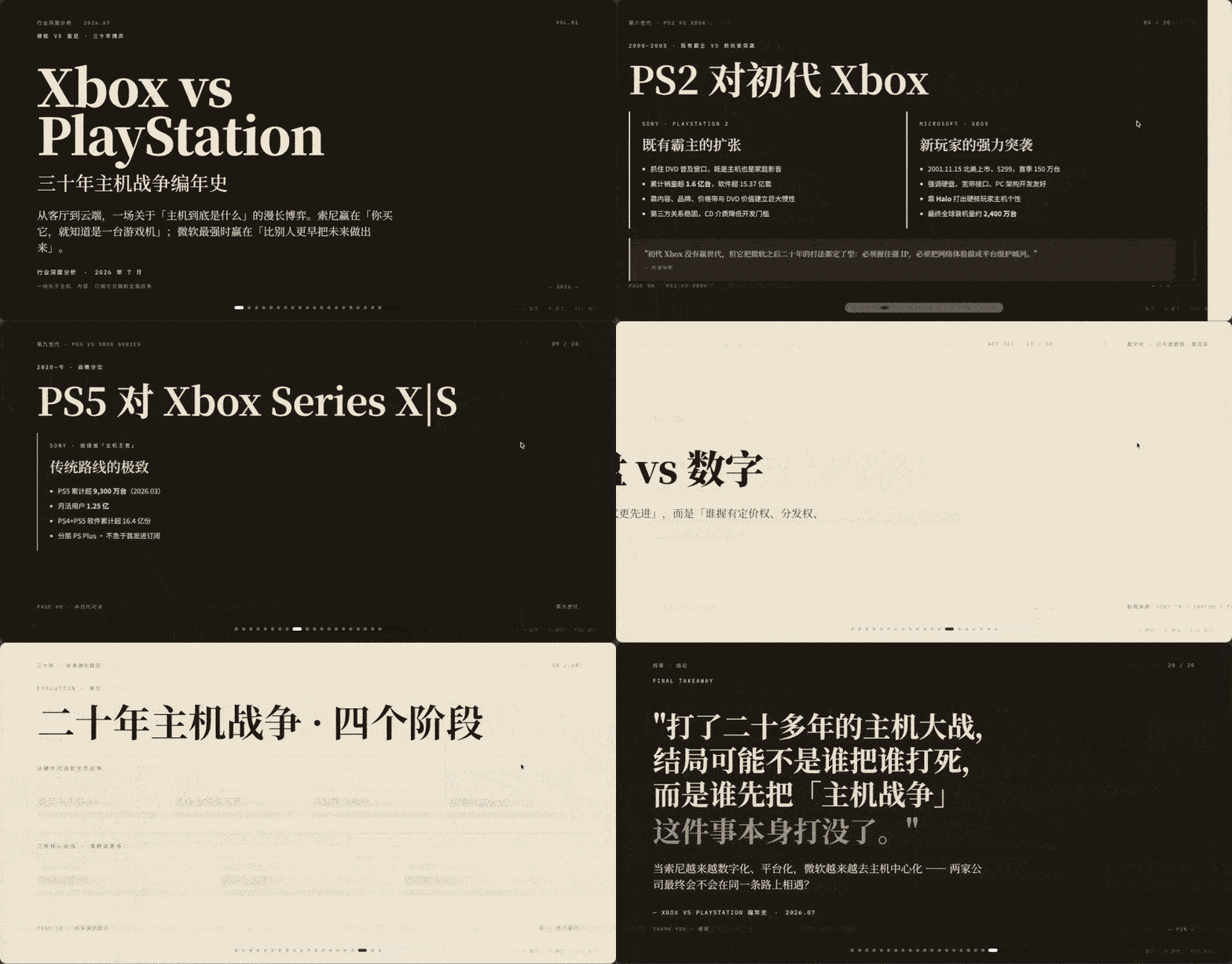
Its most important advantage is that it comes with many preset workflows. Users do not have to design their own templates from scratch. They can simply call an existing one. Claude Code and Codex are still products for people who know how software works. Their setup process alone creates friction for most non-technical users.
WorkBuddy is different. By offering preset workflows, it gives ordinary users something they can use immediately. They do not need to understand agents, prompts or tool configuration. They just need to click into a task that already looks familiar. That may be why WorkBuddy has a real chance to spread quickly in China.
Tencent seems to have taken lessons from OpenClaw. Since OpenClaw was not the form it ultimately wanted, the company tested the market with both Marvis and WorkBuddy. WorkBuddy, however, looks like the more convincing product: its logic is much clearer, and its fit with real workflows is stronger.
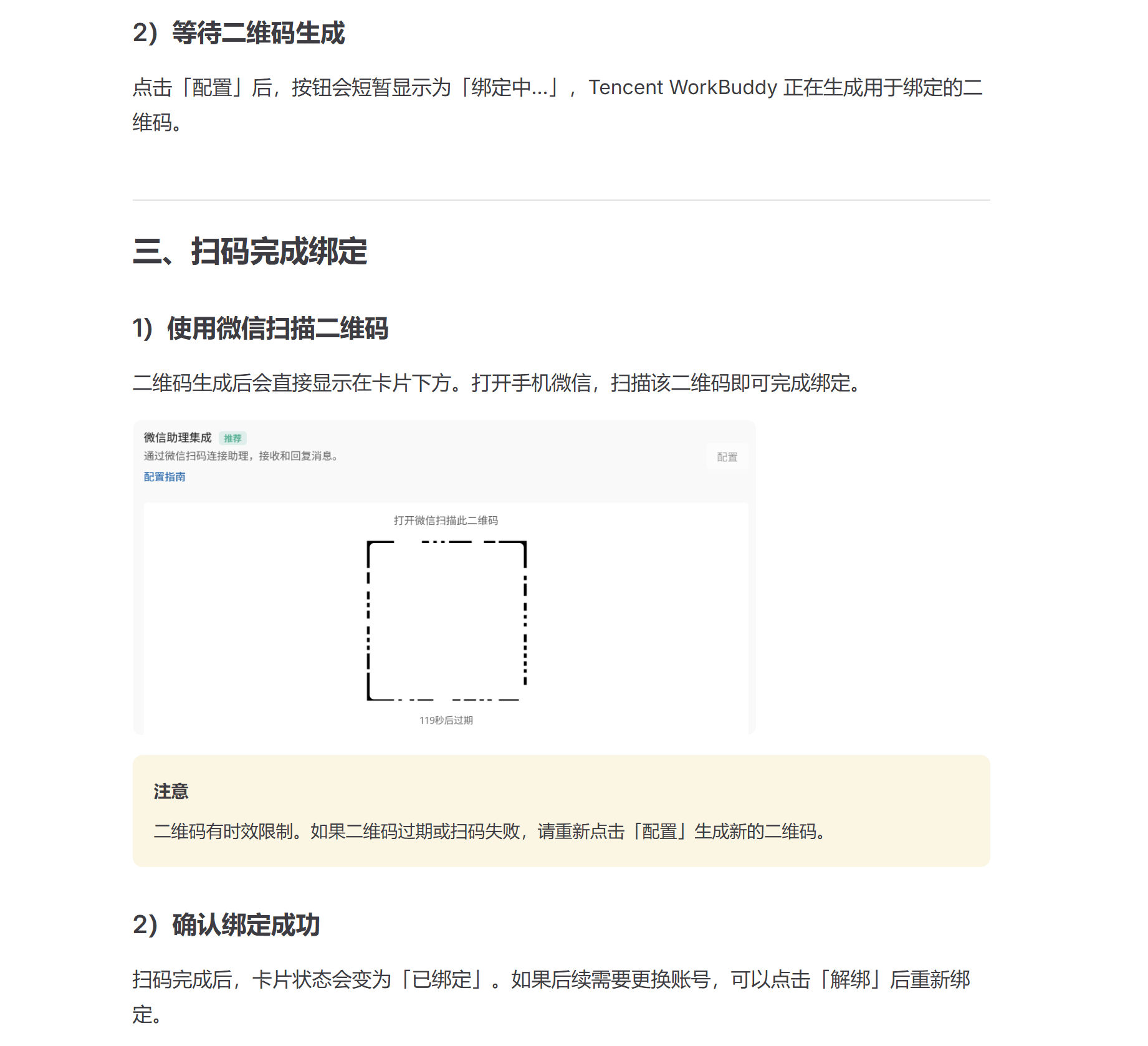
WorkBuddy can connect to WeChat, Tencent’s super app, and to Tencent’s office products, including Tencent Meeting, Tencent Docs, QQ Mail, and WeCom. In practice, this means a user can trigger many office tasks with a single message. WorkBuddy also supports Alibaba’s DingTalk and ByteDance’s Lark, making it less like a closed internal tool and more like a layer across office software.
The positive user response comes from this integration. WorkBuddy combines many functions that used to be scattered across AI office tools: copy editing, PDF reading, PowerPoint generation, Excel processing, and lightweight automation. Not everyone is a programmer. But almost everyone in an office has to deal with spreadsheets and documents. WorkBuddy has found a real position, even if it is not irreplaceable.
Citing a Citi research note, Chinese financial media outlet Gelonghui reported that if usage inside other Tencent applications is included, WorkBuddy’s daily active users have reportedly exceeded 13 million, with around 20 million monthly active users. Its DAU-to-MAU ratio is roughly 65% to 75%, a level of stickiness most chatbot products can only dream of.
The Real Potential: Collaboration and Hunyuan
As a Codex alternative, WorkBuddy is not unique. ByteDance has Trae. Alibaba has QoderWork. But neither has generated the same heat.
The real question is whether WorkBuddy’s momentum can last.
The reason for doubt is simple: good software cannot only serve isolated users. It has to be shared, embedded, or used collectively. TikTok works because people create, share, and react to videos. Uber works because it connects passengers and drivers. Most AI applications, however, are still shaped like chatbots. A one-on-one conversation with a chatbot cuts off almost every form of interaction between users.
A standalone user rarely develops deep loyalty to an AI product. A ChatGPT user is not truly loyal. They can switch to Claude at any time, assuming the account has not been banned.
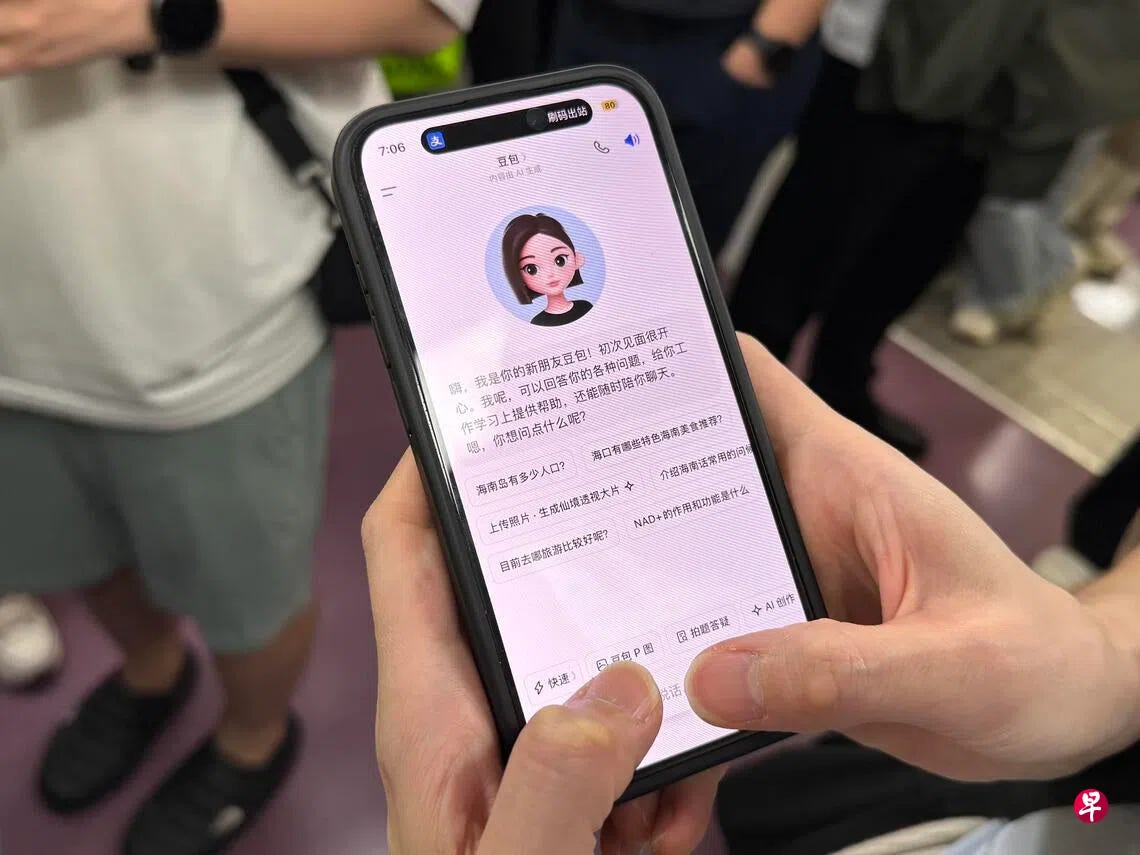
This is why AI companies are rushing toward agents and office workflows. Retention depends less on how many people try the product and more on how deeply it sits inside the user’s work. This is what made Cursor and Claude Code powerful: they solve real development needs and can turn professional users into repeat users.
WorkBuddy follows the same logic, but removes code from the equation. Programming is still too difficult for ordinary office workers. WorkBuddy’s active user retention rate is above 60%, and paid-user retention is above 80%. Average token consumption per user has reportedly grown more than tenfold in three months. That suggests users are not merely experimenting. They are actually working inside the product.
The bigger bet behind WorkBuddy is workflow interconnection. Tencent is not simply giving each user an AI assistant; it is trying to link those assistants into a collaborative work layer.
WorkBuddy 5.0 introduced a Teams feature that allows team members to bring their own AI into synchronized online collaboration. Imagine a product manager trying to launch a project. Without WorkBuddy, much of the early work is spent aligning people, translating intentions, and moving information between documents, chats, and meetings. With WorkBuddy, the AI can align workflows automatically and remove much of that information transfer. Everyone can work on their own part in parallel. A few days of coordination can become a few hours.
That is not a fantasy. Tencent’s rival ByteDance already proved the value of collaboration with Lark. In its early days, Lark’s strength was that it allowed multiple users to edit documents together online, saving enormous time that would otherwise be spent aligning information.
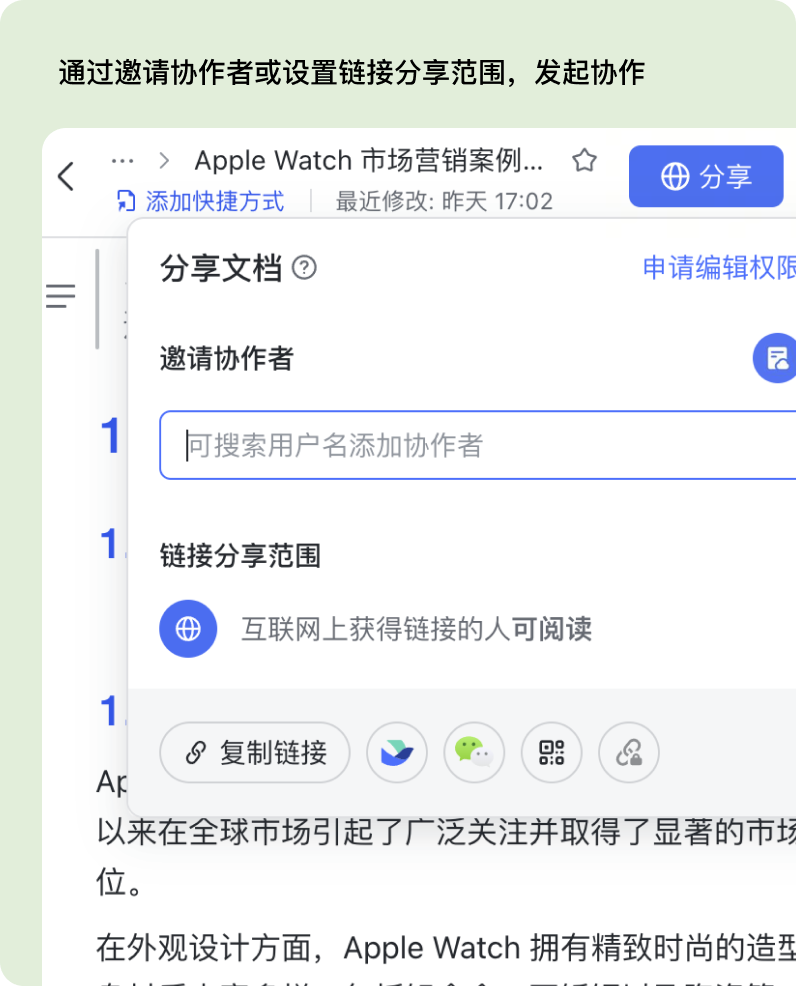
As someone who has used WeCom, Lark, and DingTalk, the differences are obvious. Using WeCom feels like bothering other people. Using DingTalk feels like being monitored by your boss. Lark makes you feel immersed in work, with less of the extra atmosphere that gets in the way. That is because Lark emphasized collaboration itself. WorkBuddy is trying to bring that collaborative logic into AI work.
The second issue is the model.
Tencent has lagged in China’s AI race partly because it did not produce a sufficiently competitive model early enough. Even Tencent’s AI assistant Yuanbao chose to integrate DeepSeek’s model. But the situation is changing. After Yao Shunyu joined Tencent from OpenAI, the capabilities of Tencent’s Hunyuan model improved. According to early testers, Hy3 feels far more capable of taking on daily work tasks than earlier versions. Tencent has also reorganized the Hunyuan team.
Yao has emphasized that models and products should be developed through co-design. The model and application should be tied together from the beginning. Accoring to Latepost, before a new Hunyuan model goes online, the team adapts it to WorkBuddy’s main structure, so users get a better product experience. WorkBuddy’s user feedback, in turn, gives the model team a continuous source of optimization signals.
If WorkBuddy can sustain its early momentum, it could also bring more users to Hy3. Tencent is expected to integrate Hy3 more deeply into WorkBuddy, lowering the cost of using the model. It may also offer discounts to WorkBuddy users who choose Hy3, which would be a clear win for Tencent’s own model business.
More importantly, WorkBuddy points to a broader shift. For the past few years, people assumed model capability mattered more than product form. But as the industry moves into an era where cost and efficiency matter just as much as raw performance, product design deserves a much more serious discussion.
Is WorkBuddy Tencent’s Wild Card?
WorkBuddy’s spread in the enterprise market will eventually hit a ceiling. No one becomes addicted to an office assistant the way they become addicted to a social feed. But WorkBuddy has one asset almost no other Chinese AI office product has: WeChat, the country’s largest messaging app.
The data and agents inside WeChat may be the only thing that allows WorkBuddy to move beyond being a Codex-like tool.
In China, WeChat’s enterprise version, WeCom, is often used for sales and customer service. Companies use WeCom to add consumers’ personal WeChat accounts while keeping internal work inside the corporate system. But WeCom is weaker as a true collaboration tool. If data could flow more smoothly between WeChat and WeCom, office efficiency would improve dramatically. Salespeople and customer service staff would no longer need to move information manually. WorkBuddy could turn WeCom into a platform capable of collaborative tasks that were previously difficult to execute independently.
The ideal workflow might look like this: your boss sends a message on WeChat. Tencent’s agent Xiaowei recognizes it as a task and passes it to WorkBuddy. WorkBuddy finds the relevant WeCom documents and generates a PowerPoint. Xiaowei sends you a message in WeChat: “It’s ready. Should I send it?” You review it, say “send,” and the task is done. From beginning to end, your only real job was approval.
But this is where Tencent’s internal structure becomes a problem.
WeChat is testing its own agent, Xiaowei. For WorkBuddy to evolve into a true cross-platform work agent, it would need to share data and task progress with Xiaowei. Yet WeChat uses its own WeLM model, and Xiaowei has emphasized that it does not use Hunyuan. That is not a good sign.
Tencent’s business groups have deep internal barriers. WeChat belongs to the WXG group, which has long maintained a high degree of independence. Inside Tencent, WXG can sometimes look less like a department and more like a warlord. If WXG refuses to work closely with Yao and the Hunyuan team, WorkBuddy will lack the most important resource it needs.
Tencent’s success therefore depends on five pieces coming together: WorkBuddy, Xiaowei, Hunyuan, WeChat and WeCom, and Tencent Cloud.
Right now, only part of that system is in place. WorkBuddy is relatively strong, but it has not yet fully created AI-driven collaborative work. WeCom has enough users. Hunyuan 3 has only just caught up with Qwen and still lacks image-recognition capability. Tencent Cloud lags behind Alibaba Cloud and Volcengine in market share. Xiaowei is still in gray-scale testing. The integration of consumer-side and enterprise-side data remains mostly theoretical.
There are several things still worth watching. Can Tencent make Hunyuan truly multimodel? Can WorkBuddy Teams attract enough collaborative users? Can Tencent keep WorkBuddy cheap enough while model costs fall?
Part of WorkBuddy’s current popularity comes from free credits and the perception that it is inexpensive. Tencent has also been actively reducing model costs. The company probably has about half a year to assemble the remaining pieces. Internally, the Hunyuan team has claimed that HY4 will reach the first tier by 2027.
In China, investors are beginning to form a new consensus. The hype around AI hardware is close to saturation. The next wave of market attention will shift toward the combination of AI models and software, and toward new AI applications. As two of the best app builders of China’s internet era, Tencent and Alibaba are now the companies investors are watching most closely in AI applications.
At the time of writing, Alibaba’s Qwen has already become the foundation model for Apple’s AI assistant in mainland China. Through the iPhone, Alibaba has gained a hardware-level distribution channel for its model.
Tencent needs a more distinctive strategy to achieve something similar.
WorkBuddy could become its wild card. But by itself, it is not enough.