



Editor’s Note
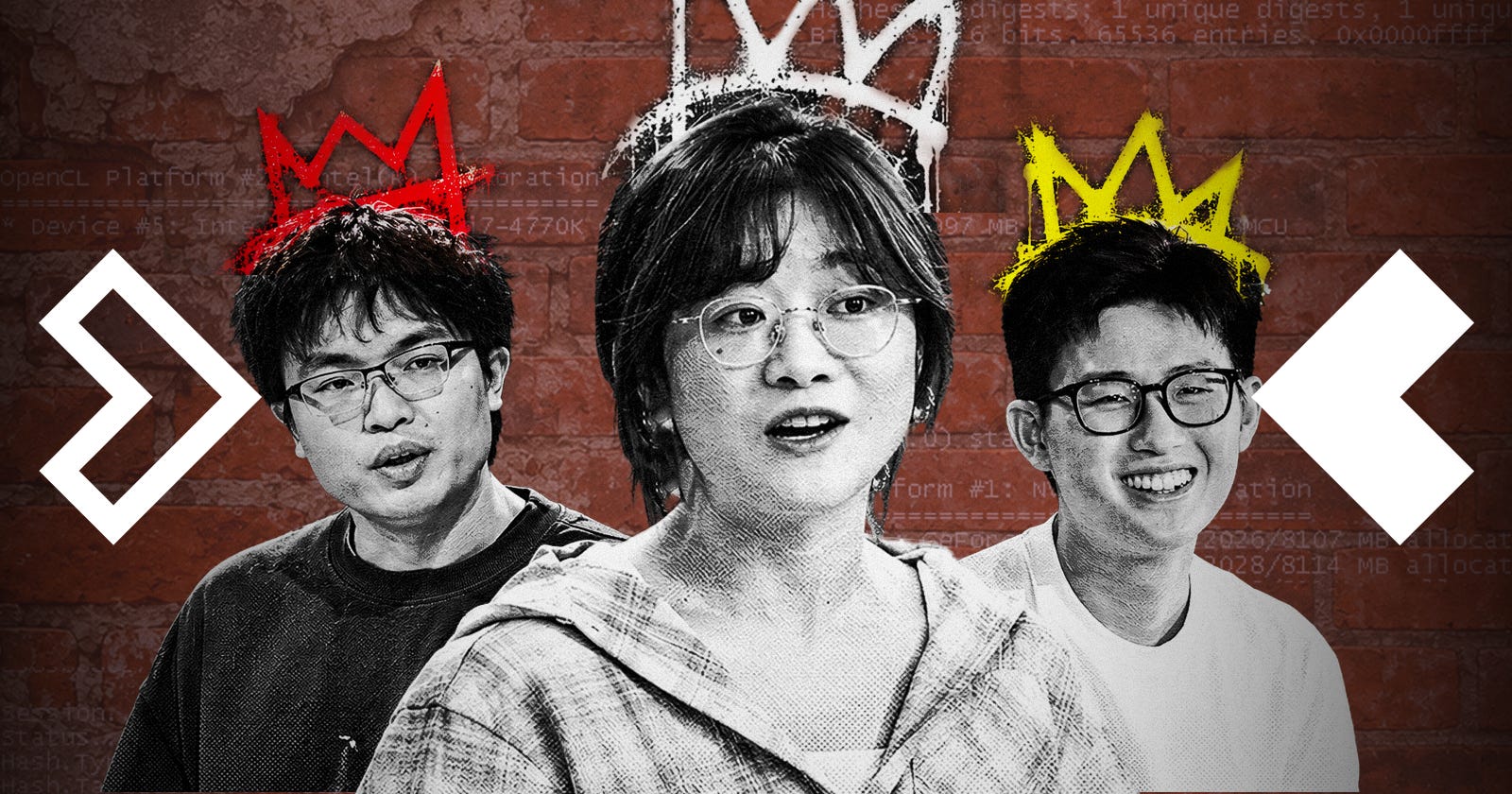
On October 19, Chinese business outlet LatePost published a feature, China AI’s Young Power Brokers, on how a generation of high-profile AI researchers is gaining influence inside their companies. The companies include AI labs Zhipu AI and Kimi, as well as Chinese technology giants Xiaomi, Alibaba and Tencent.
The report was edited by LatePost founder Song Wei. Cheng Manqi, the outlet’s technology coverage lead, also contributed reporting.
The original English translation ran to roughly 5,500 words. This version has been selectively condensed and lightly adapted to make it more accessible to English-language readers.
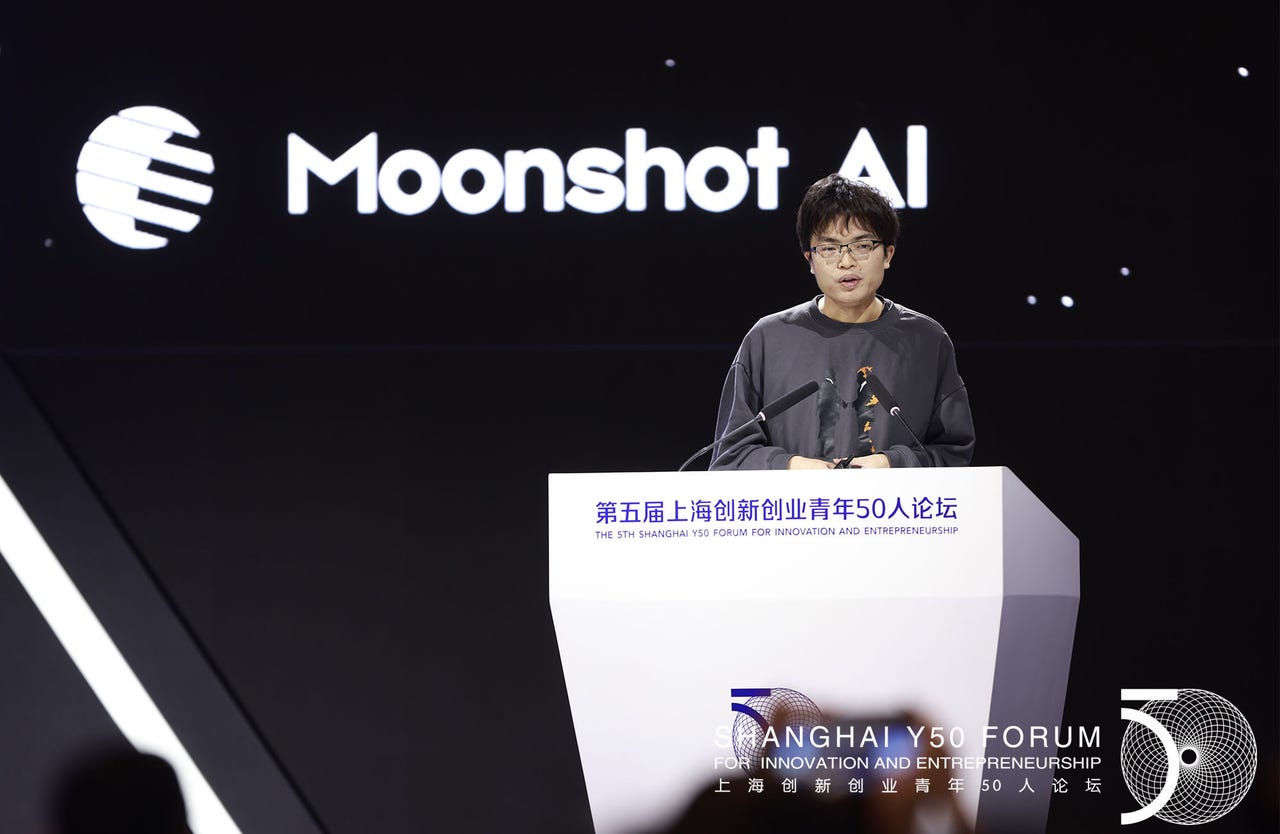
Four months before Kimi planned to release K3, its flagship model, young researchers asked Moonshot’s CEO Yang Zhilin to change its architecture. The change could improve training efficiency but delay training and the launch. With thousands of GPUs about to run, Yang had to decide whether the potential gains were worth the risk.
For two decades, power at China’s internet companies followed commercial success: Build a hit product, win a market, make more money—and gain more influence. Now technologists in their late 20s and early 30s are taking control of R&D decisions before their products have proved commercially successful.
Yang, 33, has made Alibaba and Tencent both rivals and investors in Moonshot AI. At Xiaomi, 31-year-old Luo Fuli leads a team of dozens training a trillion-parameter model. At Tencent, 28-year-old Yao Shunyu joined the office of the president and took over Hunyuan.
Their choices direct hundreds of researchers and enormous computing resources. In September, Luo showed Xiaomi’s training dashboards for two models; the displayed rates put their combined cost at $30,800 an hour.
These leaders are building teams with fewer management layers and more freedom to test ideas. As one tech lead at an AI model company told us: “Hire talented people and give them GPUs.” Their power rests not only on technical skill, but on the ability to spot promising ideas, direct scarce resources and persuade an organization to take a bet. How they do so will help shape China’s increasingly expensive AI race.
China’s Young AI Leaders Decide How Its Top Labs Deploy Their Most Valuable Resources
At Kimi, Yang Zhilin Chooses to Wait
In March 2026, several young researchers at Kimi wanted the company to alter the plan for K3, its next flagship model, just four months before its expected release. Their proposal, Attention Residuals, could improve the model’s training efficiency. But changing the architecture so late could delay training and the launch. Before thousands of GPUs began running, they needed CEO Yang Zhilin’s approval.
The idea came from Su Jianlin, a Kimi researcher known to peers as “God Su(苏神).” He lives in Guangzhou and works remotely with Kimi’s Beijing team. For years, he had written about mathematics and model research on his blog, attracting readers who later became his colleagues.
Around the Lunar New Year, Su read a DeepSeek paper on ways to improve how a large language model moves information between its layers. His idea was simple: apply Attention—a technique models use to determine which parts of an input matter most—not just to text tokens but across layers. That would let each layer choose which information to draw from earlier ones.
Su quickly built a prototype. Zhang Yu, a young doctoral researcher, and Chen Guangyu, then a 17-year-old high school student, joined him to test it on bigger models. Zhang had studied efficient model designs during his Ph.D. at Soochow University and later became the first author of Kimi’s Linear paper. Chen, despite still being in high school, had also spent years on the same problem. More complicated versions mostly performed worse than the first, simpler one.
The problem was cost. The full design required the model to retain information from every layer and move it between devices. The inference team thought it could be optimized, but the training team concluded Kimi did not have enough computing resources. “Put simply, we couldn’t afford it,” Su later wrote.
Kimi’s traffic was also growing quickly, putting pressure on the company to reduce both response times and inference costs. Its infrastructure team asked for a design that would keep related data closer together, reducing the information that had to move between devices. Zhang and Chen came up with a block-based version in a single night. Rather than retain every layer’s information, it grouped layers and applied Attention between the groups. It added no more than 5% in overhead, according to the paper and the team’s review data, while improving training efficiency by about 20%.
The work was possible because Kimi’s algorithm and infrastructure teams trusted each other’s constraints. Yaoyu Wang, an AI infrastructure engineer, later described an internal meme: infrastructure engineers say a mathematically sound design should be buildable; algorithm researchers reply that if it is not, the algorithm has not been thought through.
Once Kimi’s training, inference and infrastructure teams agreed the design could work, the company pushed to add it to K3. Yet K3 was about to begin training, and the new architecture still needed testing. Yang agreed to delay the start of training, giving the team time to validate it.
Kimi published the research on March 16, naming Su, Zhang and Chen co-first authors. Four months later, it released K3, a 2.8-trillion-parameter model that used Attention Residuals as a key part of its design. The model performed well in several independent benchmarks.
The story shows how a remote researcher’s idea, a teenage student’s work and collaboration across algorithm, training and infrastructure teams can reshape a company’s most important model. More important, it shows how young AI leaders gain power: not only through their own technical skill, but by recognizing others’ ideas and making the institutional bet to pursue them.
At Zhipu, Gen Z Researchers Push the Company to Bet on Coding
In early 2025, Zhipu needed a breakthrough. DeepSeek’s R1 had raised the bar for Chinese AI companies, while a price war was squeezing the industry. Tang Jie later wrote in an internal letter that Zhipu’s own models were not meeting expectations.
Around the Lunar New Year, Tang called together a small group of young technical leaders to decide where the company should put its people and computing power. The meetings had no regular schedule. One person at Zhipu said Tang convened them whenever he was unsure which way the company should go.
Zeng Aohan, born after 2000 and still working toward his Ph.D., argued that Zhipu should focus on coding. Zheng Qinkai and other researchers agreed. They believed the company should make models better at writing and working with code.
The proposal was far from a consensus. After OpenAI released o1-preview and DeepSeek followed with R1, mathematics, logic and complex reasoning had become the main focus for much of the industry. Some researchers, including Hou Zhenyu, wanted Zhipu to keep pursuing that path. At the time, coding was not a priority for many Chinese AI companies.

Inside the company, people described the choice as a contrast between the “scientist” approach associated with OpenAI and the “engineer” approach associated with Anthropic. One pushed the limits of model reasoning and new training methods; the other focused on real-world tasks, such as helping programmers write code. The debate was not only about research taste. It would determine where Zhipu put hundreds of researchers and scarce computing resources. Researchers backing coding thought the company should put more resources into the latter. “We had to do something new and different,” one person at Zhipu said.
Tang did not settle the argument at the meeting. He asked teams to test both directions: Zeng, Zheng and their colleagues worked on coding, while Hou’s group continued with reasoning.
The coding camp began to win support in April 2025, when Zhipu released several 32-billion-parameter models. One had stronger capabilities in engineering code and function calling. Internal tests and user feedback made coding look more promising, and Zhipu began to invest more in it.
In July, GLM-4.5 brought Zhipu renewed attention, with coding among the features users liked most. In September, the company launched GLM Coding Plan, allowing developers to pay a monthly fee to use GLM through tools including Claude Code and Cline. By December, Zhipu CEO Zhang Peng said the business had passed RMB 100 million in annual recurring revenue.
Betting on coding became one of Zhipu’s biggest decisions since its founding. It was not one person’s decision, but a judgment formed by young researchers and tested across teams before it shifted the company’s resources and strategy.
At MiMo, Luo Fuli Wants to Go From 7B to 1T—Fast
In April 2025, Xiaomi released its first MiMo model, with 7 billion parameters. The team had fewer than 20 people in January and only 50 to 60 by May and June. Most had never trained a large language model. Even the researchers with experience had often worked only on 7-billion- or 14-billion-parameter models.
MiMo initially used its 7B model to test data quality. The result was good enough to release. Over the following six months, the team prepared pretraining data, revised the model design and improved its training systems. One researcher compared the work to raising data quality from 70 out of 100 to 90.
After Luo Fuli joined, MiMo decided to train two much larger models in parallel: one with several hundred billion parameters and another with 1 trillion. The projects later became MiMo-V2-Flash and MiMo-V2-Pro.
Luo had been called a “genius girl” since early in her career, a label she pushed back against in her Zhihu profile: “Please, online media accounts, stop turning individuals into myths and using them for content.” Her path had not been simple.
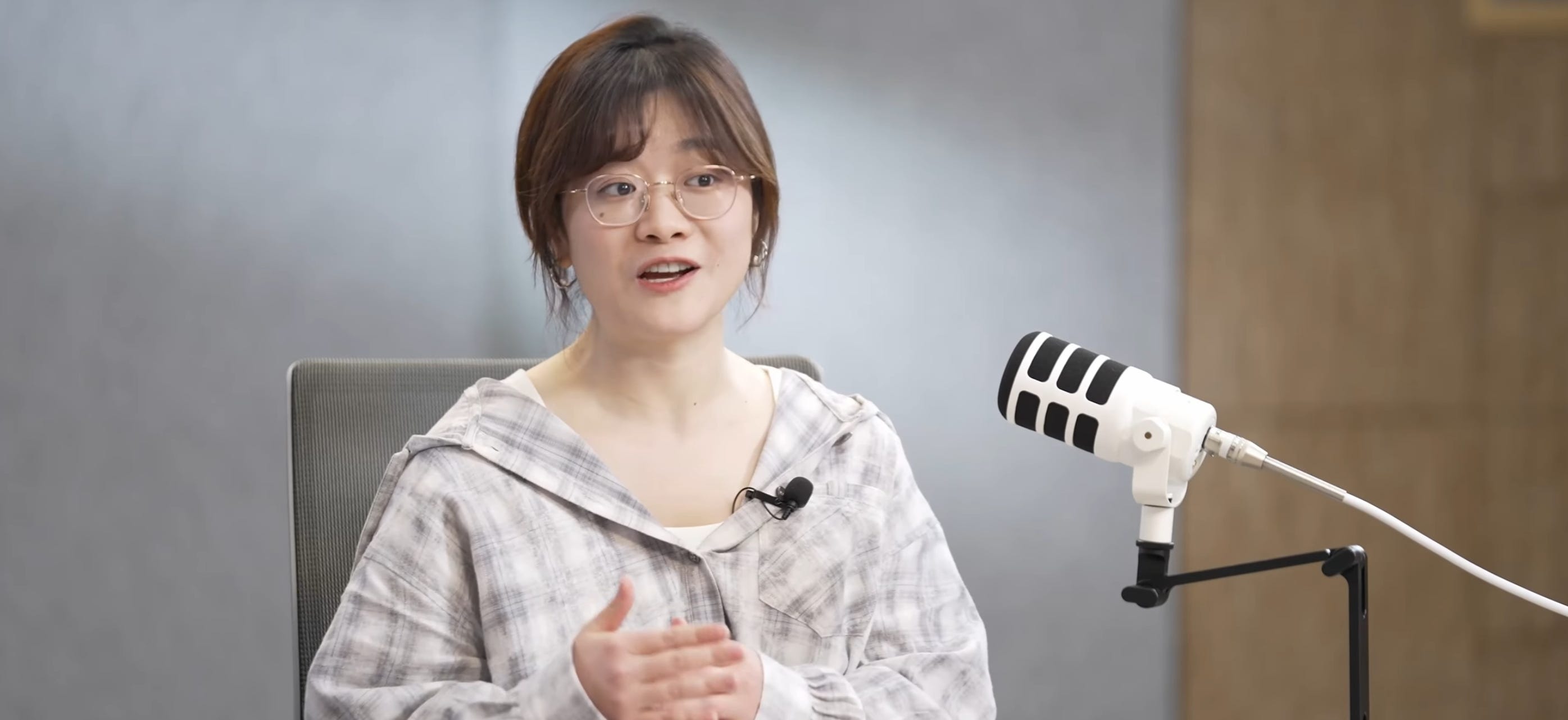
She once said she had started from almost zero in computer science. By the time she joined Xiaomi in 2025, five years after finishing her master’s degree, she had worked at Alibaba’s DAMO Academy and High-Flyer Quant and contributed to DeepSeek-V2 and V3. She had experience training models with 600 billion to 700 billion parameters.
Luo wanted MiMo’s next model to reach 1 trillion parameters. In a later interview, she said she “would not want to train the same model again.” A peer said that most leaders would first train the smaller model, review the results and only then decide whether to go bigger. Luo wanted to do both at once. One trillion parameters was near the limit of what MiMo’s existing computing power could attempt.
She had room to make that call. Lei Jun received a MiMo update about every two weeks, but usually did not intervene in technical choices. What models to build and how to build them were largely left to Luo and her team.
Once training began, problems appeared one after another. Loss rose, activation values became unusually large, and work was suddenly distributed unevenly across expert modules. The team first suspected faulty GPUs and checked every card, without finding the cause. Luo later joked that, after enough debugging, they might wonder whether it was “revenge from sunspots.”
She decided to stop training and solve the problem. One researcher compared the process to rebuilding a crime scene: people sat together, proposed possible causes and tested them one by one. This depended on trust, he said. If the team began by deciding which department was at fault, people would focus on avoiding blame.
The response crossed team boundaries. People who had worked on data and pretraining helped with post-training; colleagues responsible for the training framework and inference infrastructure joined as well. Luo said these changes rarely came through formal assignments. Researchers moved where their interests and the problem took them. One young researcher said joining MiMo from school felt “just like a lab.”
MiMo eventually completed both models. It did not wait for results from the smaller one before starting the 1T model, exposing the team to the uncertainty of two large training efforts at once. The work gave researchers with limited or no large-model experience a chance to help complete a trillion-parameter foundation model.
That achievement does not by itself show that MiMo’s model was better than rivals’. It showed that Xiaomi had built the organizational and technical capacity to train a trillion-parameter foundation model.
“Give Them GPUs.” Then What?
After gaining power, one of the first tests for these young technical leaders is whether they can attract talented people—and give them enough room to work.
At Kimi, one researcher recalled Yang Zhilin interviewing him by identifying several weaknesses in his earlier work with the precision of a peer reviewer. Yang then spent more time explaining his own view of where the technology was heading. For the researcher, that combination mattered: the company’s most important person was still deeply engaged with the technical questions.
Technical credibility is a recruiting tool in this field. Before founding Moonshot AI, Yang was a co-first author of XLNet and Transformer-XL. Yao Shunyu joined Tencent’s Hunyuan group after working at OpenAI on Deep Research and Operator. A Tencent recruiter said Yao’s arrival made Hunyuan more attractive to university hires. One researcher who was unsure about joining chose to do so after at least three long conversations with him.
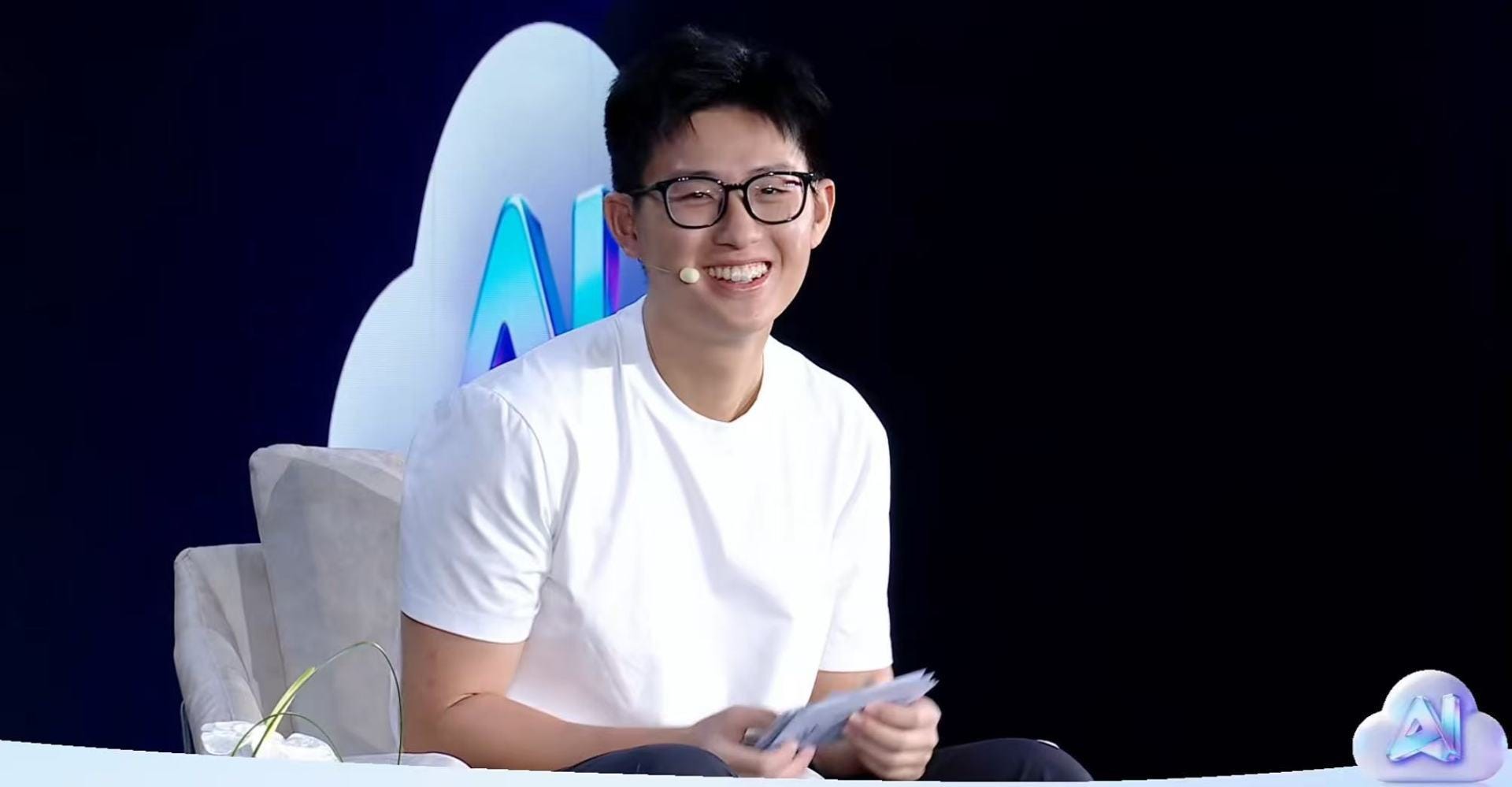
The leaders also try to make large organizations feel less distant. After joining Tencent at 28, Yao quickly became known as “Yao Ge,” or Brother Yao. Hunyuan grew to nearly 2,000 people in his first year. He holds monthly all-hands meetings and smaller lunches and discussion sessions. After the release of Hy 4 Preview, he gave the research team a week off.
Yao’s more consequential message is practical: if a tool does not work, compute is unavailable or a cross-team problem remains unresolved, researchers should go directly to the person responsible and keep escalating if necessary. At Kimi, employees call Yang “KK.” His old Feishu profile message read, “Communicate directly.” Researchers use company-wide chats, bug-report groups and API-feedback groups to complain about weak products or insufficient compute—and sometimes tease him with memes.
For young researchers deciding where to work, these details can signal whether a leader is one of them and whether an idea can move without waiting for layers of approval. A Kimi researcher said the company is small enough that it has few “walls” between departments. Another said occasional 20-hour days could still feel exhilarating.
Yang has described his management philosophy with an analogy from model training: use more reinforcement learning and less supervised fine-tuning. Leaders should set goals and give feedback on results, he argues, rather than prescribe every step. One person at Kimi said the company does not yet want to build a clear promotion ladder. Candidates who expect managers to assign work or spell out a career path may be told the company is not for them.
That approach is visible at Xiaomi’s MiMo team. A new intern expected someone to assign a project, then found that he had to find his own. For the first few days, he worried about sitting idle because nobody pressed him for updates. MiMo does not require clocking in or daily deliverables, and some researchers who arrive around noon work voluntarily into the early morning.
Luo Fuli has said MiMo has no fixed release deadline or hard pressure from the company. The team sets its own standard for what counts as a good model. A MiMo researcher said a colleague received compute for a new idea even after both the mentor and Luo doubted it could work. The researcher spent substantial time on it before concluding that it did not. Such experiments are not unusual at MiMo.
The freedom to explore, however, depends on whether a leader can protect it. One researcher at a large-model company described a team he valued as “a small safe space.” Someone, he said, has to shield researchers from pressure and unreasonable requests.
That is harder inside a large company, where technical leaders must also negotiate over structure and resources. On March 3, 2026, Lin Junyang learned that Alibaba might split up the Qwen organization he led. Under the proposal being discussed, teams that had worked together on pretraining, post-training and infrastructure would be divided, reducing his scope. Lin had argued that those functions needed to remain tightly connected. That day, he wrote in Qwen’s DingTalk group that he no longer felt able to lead the team and said he would resign.
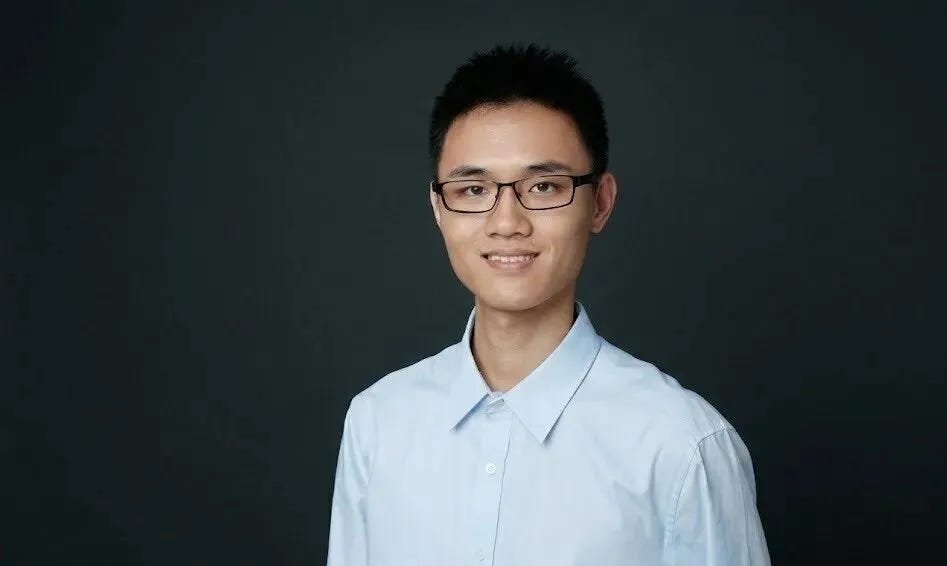
A Peking University master’s graduate, Lin joined Alibaba’s DAMO Academy in 2019 and later became a key Qwen leader. Qwen’s success gave him more authority and standing. It did not guarantee that Alibaba would organize the team around his technical judgment.
Yao has faced a different version of the same problem at Tencent. At the end of 2025, about a month after joining, he proposed moving the model application center and search-algorithm center into the business group that houses Tencent Yuanbao. Later, before Hunyuan’s own pretrained model was ready, he sent key post-training staff to help Yuanbao improve its integration with DeepSeek. Some colleagues did not understand the move. Yao’s explanation was that Yuanbao’s product experience and user base mattered to Hunyuan’s later research as well.
The decision was also a way to build support. A peer said it was striking to see several of Tencent’s core products and departments publicly back Yao when Hunyuan released a new model. In a company of Tencent’s scale, technical leaders need allies beyond their own research group if they want to preserve room for technical work.
Who Gets to Decide?
The phrase captures an ideal shared by many of these leaders: hire people who are more capable than you are, give them compute and let them pursue promising ideas. It helps explain Kimi’s loose hierarchy, MiMo’s tolerance for failed experiments and the appeal of young leaders who still speak the language of research.
But it is also incomplete. GPUs are scarce, expensive and politically contested. Someone has to win the resources, decide which researcher or project receives them, and absorb the cost when a bet fails. Someone has to defend a team from demands elsewhere in the company, or trade support with other groups to keep a model program moving.
That is the tension at the center of this generation’s rise. Their authority comes partly from technical judgment and a promise of freedom from bureaucracy. Using that authority requires organization, alliances and accountability. The question is not whether they manage. It is whether they can build organizations that protect independent research while still making hard choices about money, compute and results.
Cheng Manqi and Si Wenwen contributed reporting.