



In Michigan, Democrats and Republicans are doing something they almost never do: agreeing. On social media groups, they’re swapping strategy. At town halls, they’re standing together. The thing that united them? A common enemy: AI.
Eleven states are now weighing restrictions— or outright bans—on data center projects in their backyards. Charlie Berens, a Milwaukee-based comedian, captured the mood at a recent meeting in Juneau, Wisconsin: “This is the most bipartisan issue since beer.”
Nearly 7,000 miles away, Alibaba’s servers sit quietly at the bottom of Qiandao Lake—well, not entirely quietly—cooled year-round by 13°C water. Same ones and zeros, far less scrutiny. The team at X.PIN has been puzzling over a simple question: why do Americans hate data centers?
We can’t fly to Michigan ourselves. But comb through enough public reportings, a pattern emerges. This isn’t blind protest. It’s what happens when an AI gold rush collides with water tables, power grids, property lines, and the people who live on top of all of them. China, for all its infrastructure firepower, hasn’t yet faced the same messy reckoning between humans and machines.
See American Rage in China
Type “data center” into Google, and the anger spills out in every direction.
In Utah, a county commission and a crowd of residents collided over a proposed 9-gigawatt facility; one commissioner told the protesters to “grow up.” In Mansfield, Georgia, neighbors of a Meta data center watched the pressure in their kitchen faucets drop. In Indianapolis, a city councilor was shot after voting to approve a project.
The US coverage tends to zoom in on the individual—the angry homeowner, the parched well, the contentious meeting. Stories capture the feeling, but for a Chinese viewer, he needs to see how the system works.
Thanks to Erin Brockovich, her public AI data center tracker helped us see how data centers are built in different states in the US.
In both China and the US, data centers cluster where the money and tech jobs already are—the East Coast, Texas, the Great Lakes. Servers run hot, lakes are cold. Do the math.
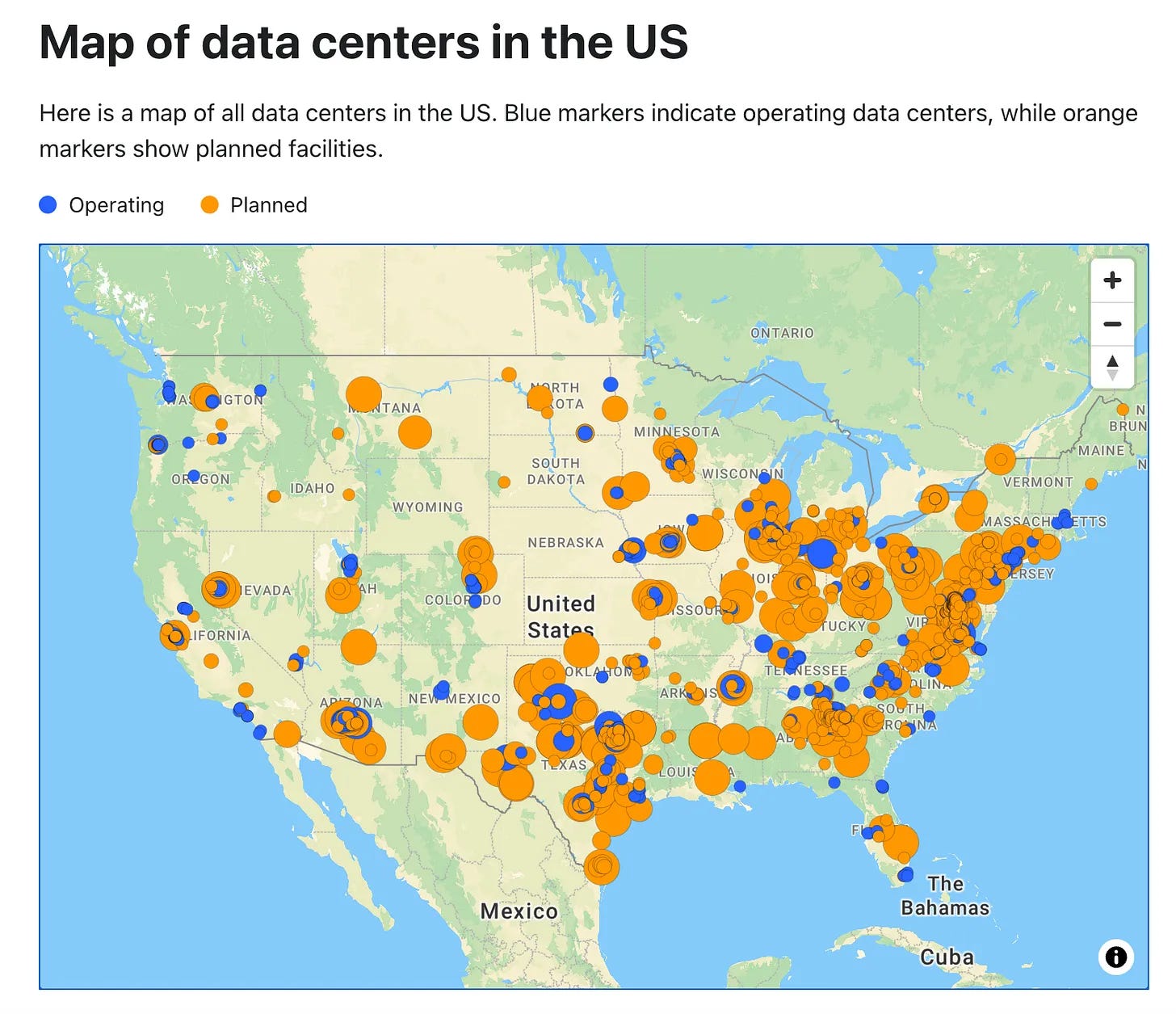
What surprised us is Ohio. A classic farm state, suddenly studded with server farms of a different kind. We laid the USDA’s 2024–2025 cropland map on top. The dots line up. Arizona is worse—server clusters overlap directly with neighborhoods in a state already running out of water.
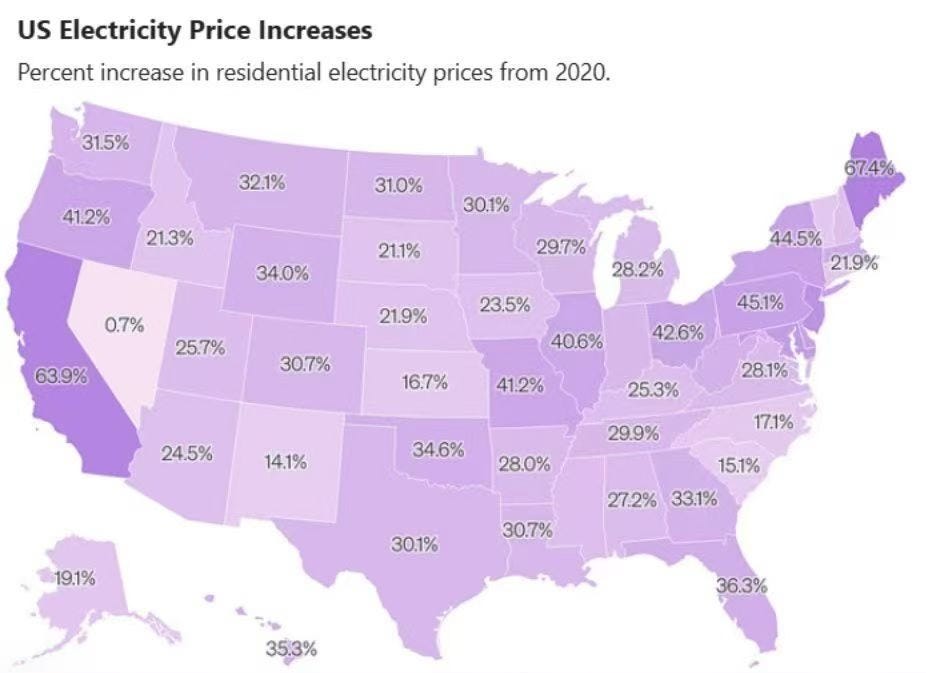
Then there’s the electric bill. In the densest cluster states, monthly power bills are 30 to 40 percent higher than five years ago. And these aren’t rich states. Oklahoma’s median household income in 2025 was around $66,000—well below the national $84,000—yet electricity rates jumped 34.6 percent. Data centers are landing where people can least afford them, and the neighbors are picking up the tab. Brian Merchant’s reporting tracks with what we’re seeing on the map.
The weather isn’t helping. NOAA’s drought monitor, laid over our overlay, shows the country’s worst drought zones starting to line up with the densest server clusters in 2026. Drought means more demand for power and water. The fight between the servers and the humans is about to get louder.
So who’s selling the dirt? In Georgia, the contested site traces back to QTS, which traces back to Blackstone. In Utah, the parcel came through investor and TV personality Kevin O’Leary, routed through the kind of shell company you’d expect. The pattern is the same: they hand over the land, and walk away from everything else.
Data centers need power and cooling. Build one from scratch on empty land and you’ll spend a fortune just getting wires to the door. QTS-style developers sidestep all of it: their parcels border neighborhoods and farms, already wired and plumbed, in towns too small to make the grid wait. The tech giants pay for the servers. The neighbors paid for everything else.
The consequences are showing up fast. In 2025, residents of Annelise Park—an affluent neighborhood in Fayetteville, Georgia—started complaining about low water pressure. The county investigated and found a nearby data center had drawn 30 million gallons from the local supply over several months, without paying a cent. In Ohio, utility AEP told regulators in March that incoming requests pointed to a 367% jump in data center electricity demand—and that’s just one utility in one state.
Meanwhile, the grid is doing what grids do when demand spikes—charging more. Utilities have no reason not to. Cash-strapped town governments and farmers take the check and ask questions later. The tech giants know this. They get the power they couldn’t get near a big city, the permits nobody fights, and a price tag the locals can’t push back on.
It’s a spiral. Power and water get more expensive. Small-town agriculture gets harder to sustain. Real estate funds buy the land through shell companies. AI data centers go up, legally and on schedule, and push utility bills higher still. Repeat.
If that’s the shape of it, the anger makes sense.
Why Hasn’t China Felt The Rage?
As a Chinese, one thing puzzles me about American data centers: why are they going up on farmland?
China has too many people and too little arable land, which is why policy here is built around the “farmland red line”—a hard national floor on cropland, set to keep the country fed. Taking farmland for anything else is a criminal matter. Approve a data center on cropland without breaking new farmland somewhere else, and the officials who signed off get pursued for it. Leaving the job doesn’t end the liability.
So where does China actually put them?
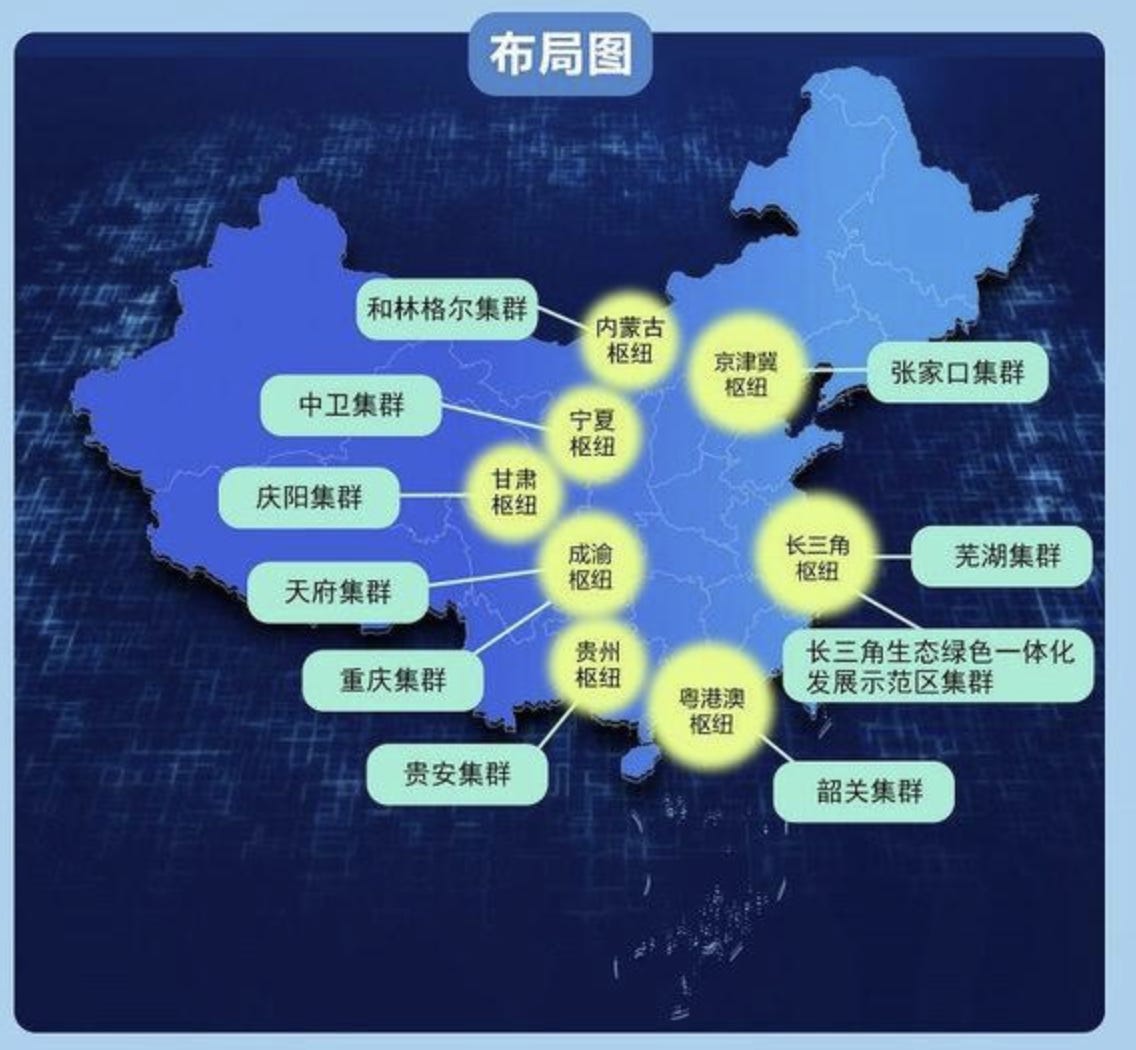
In 2022, the Global Times published a map showing where Beijing wanted its computing hubs to live: out west. Inland, lower-income provinces—Inner Mongolia, Ningxia, places where it doesn’t rain much—plus mountain regions like Guizhou. The policy has a name: “East Data, West Compute.” On paper, this looks a lot like the American setup. Move the servers to where the land is cheap and the locals don’t have leverage.
Except China’s data centers don’t get to sprawl wherever they want. In 2023, the National Development and Reform Commission—the bureaucracy that orchestrates industrial policy across the country—issued a directive making it explicit: outside the designated hubs, no city can build a hyperscale data center without special permission.
The result is concentration by decree. The official logic is that bunching the servers together makes it easier to handle cooling, power supply, and compute allocation as one system rather than a thousand local headaches. Funneling data centers into a few designated regions does something else: it forces operators to think big. Fewer sites, bigger builds.
China has always had a resource-distribution problem, and shipping things across the country to fix it is something the state knows how to do. For two decades now, electricity generated out west has been wired east to where the factories are, called West-to-East Power Transmission. Water from the south is canaled north to where the cities are thirsty, called South-to-North Water Diversion. But compute is trickier—nobody tolerates a laggy app.
So China splits the workload. Anything that doesn’t mind a delay—cold storage, video rendering, batch processing—gets pushed west. Anything that needs to respond fast stays close, routed to the nearest hub. It only works if the tech giants play along, and they do. Alibaba runs its Ulanqab data center in Inner Mongolia. ByteDance keeps servers out in Gansu.
China’s west is huge. Why these specific spots?
Maybe because it’s cold. In Zhongwei, Ningxia, the average annual temperature is 8.8°C (47.84°F). Guizhou’s limestone caves stay 5 to 10 degrees cooler than the air outside year-round—turns out caves make great server rooms.
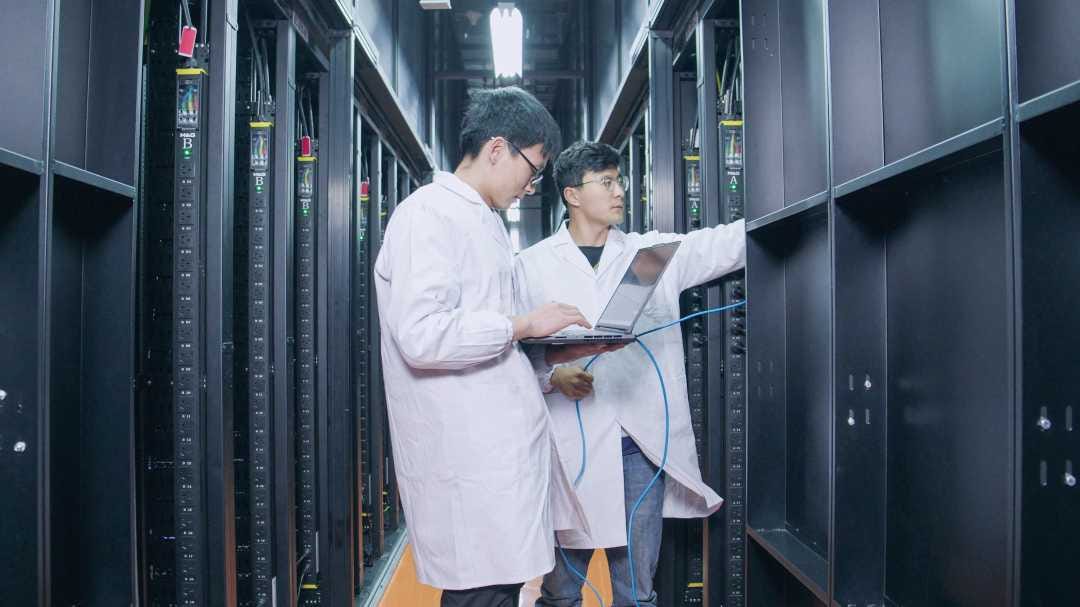
Maybe because the power is there. Inner Mongolia leads the country in renewable generation, with wind and solar in surplus. The local grid can route that power independently, which suits something as hungry as a data center. Guizhou has hydro to spare. By the end of 2025, Beijing wants more than 80 percent of the electricity in these new data centers to come from clean sources.
Water is the part China hasn’t solved. Once cooling water cycles through a data center enough times, it comes out so salty it’s useless—you can’t drink it, you can’t farm with it. And China doesn’t have water to spare. Inner Mongolia is grassland. Gansu is desert. Neither holds much water to begin with, and pumping more groundwater accelerates droughts and triggers the kind of geological problems nobody wants to inherit. In 2023, Inner Mongolia banned data centers from using groundwater for cooling outright.
The workarounds are getting creative. Some sites switched to air cooling. Some moved to even colder locations. Some collect rainwater. The more radical option is to skip water entirely: China Mobile’s facility in Qingyang, Gansu, runs on dedicated liquid coolant—fluorinated fluids or silicone oil—stuff nobody was going to drink anyway.
No Perfect Solution
But China doesn’t have a clean answer either. We’re not here to wave a flag, and from the conversations we’ve had on the ground, the real test for China’s data centers is only just beginning.
In mid-April, we attended the Open AI Infra Summit 2026 and sat in on sessions from Huawei, ByteDance, and others. The biggest AI infrastructure projects on display topped out around a few hundred megawatts. In Utah, the single facility that triggered all those protests is already a gigawatt-scale build.
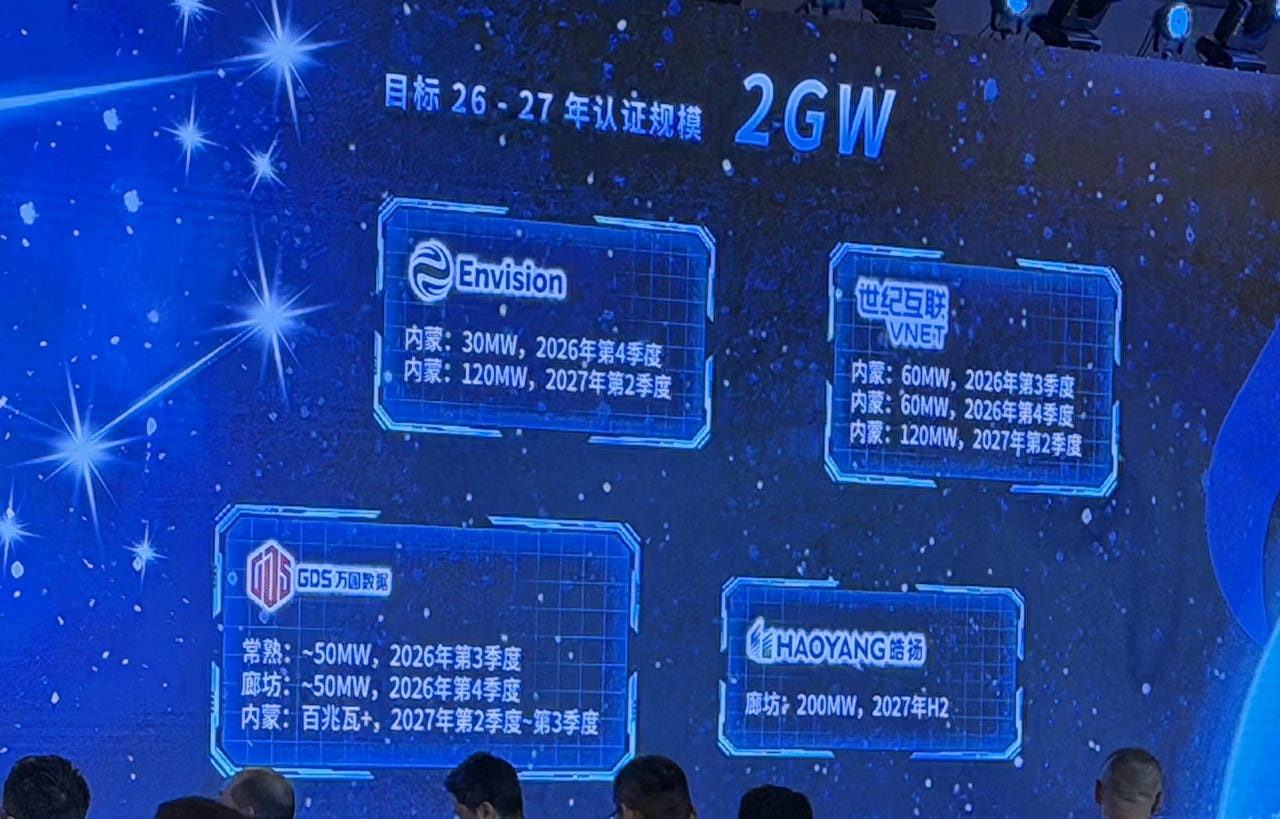
Chinese operators don’t yet have experience coordinating data centers at hyperscale—call it a one-to-two-year gap behind the U.S. The protests may not show up the same way, but the same questions about water and power are going to land on the same kind of communities.
There’s another risk worth flagging. Skipping water means using fluorinated coolants—chemicals in the PFAS family. PFAS leak into groundwater, and once they’re in, they stay. Long-term exposure has been linked to cancer, immune-system damage, and serious risks for pregnant women and children.
There is no efficient way to break PFAS down. The best current science can do is trap and concentrate them. A coolant leak in an arid region isn’t a cleanup job. It’s a permanent stain.
Then there’s the equipment problem. Beijing has been notably quieter about its Guizhou data centers lately. Part of that is political—several officials tied to the project are under corruption investigation. But part of it is physical.
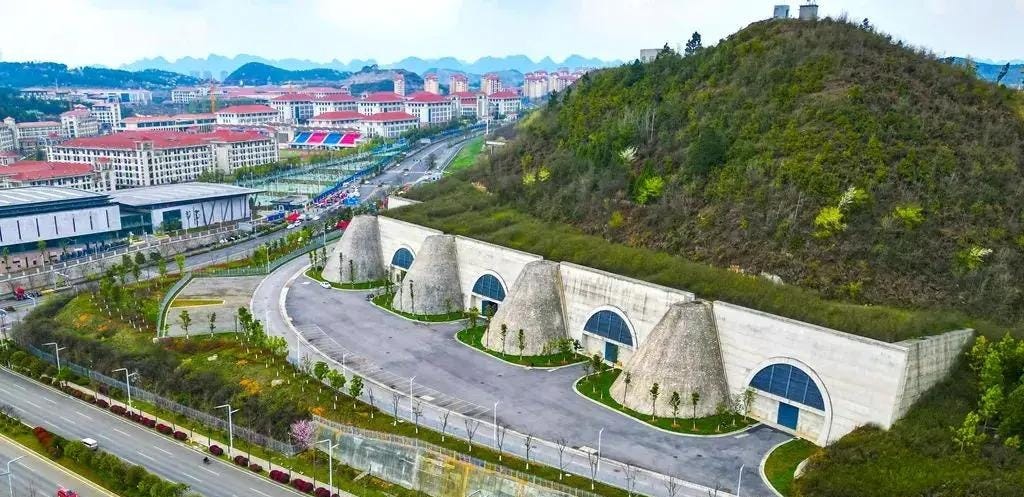
One engineer, who asked not to be named, told us that the same humid cave air that cools the servers also degrades them. Chips and components wear out faster, and the cost of replacing them eats through whatever was saved on cooling. The math that made Guizhou attractive five years ago is getting worse every quarter.
The U.S. and China share one worry about all this: data centers don’t actually create that many jobs.
China has spent decades treating big construction projects as employment engines. Data centers don’t quite fit the playbook. After the two-to-three-year build phase, a facility in Guizhou might need 150 people to keep it running.
Those jobs pay around 15,000 yuan a month (roughly $2,100)—well above the local average. But against what’s on offer in a big city, it’s a hard sell.
China’s workaround is mostly tax revenue. A data center built on a one-billion-yuan investment (about $140 million) generates roughly 50 to 150 million yuan (around $7 to $21 million) in annual taxes.
Inner Mongolia has tried something more interesting. Village-level councils there can collectively hold the land rights, and they’re putting those rights to work—buying stakes in nearby wind and solar projects, collecting annual dividends and rent.
The money then circles back into the village. In practice, that often means healthcare subsidies for the elderly. The same model, in theory, could be wrapped around a data center.
That’s seeded a bigger idea now circulating in Chinese policy circles: a “compute tax,” levied on the AI workload a data center processes or the energy it burns, redistributed as a kind of national dividend. We also have an interview about that on Substack.
This isn’t a piece about who’s winning.
I grew up in a small town in northern China, lived through the country’s housing bubble—the years when shiny new high-rises kept going up while ordinary people couldn’t begin to afford them. I have felt something close to what Americans now feel about data centers.
Chinese, American—it doesn’t matter much. Standing next to something this big, everyone is just a person.
In his old history textbook, there was a chapter on the Enclosure Movement in industrializing Britain. Aristocrats fenced off common land to graze sheep for wool. Peasants lost their fields, scattered into the cities, and eventually became the working class of the Industrial Revolution. In Chinese, we call it “the Sheep-Devouring-Men Movement.”
What’s happening now, in both China and the US, looks like a new version of the same story. It’s “data-devouring-men” now. It eats land. It eats water and power. And its appetite has no obvious stopping point.
The difference, this time, is that we might still be able to tame the animal before it finishes its meal.
This is exactly what I want to research more and write (glad I found out before going into the weeds). I really like the perspectives and totally agree that the US and China have shared problems with data centers. That being said, I think location is not the only reason. The broader environmentalist movement/concern in China is not as big as in the US, and people do not have much say over what lands can be used for what (as most lands are owned by the state). I also think that Chinese society is much more acceptable about big construction work.
China will be able to reverse engineer ASML technology by 2031. Until China has compute parity, it's not a real race.
First inning two outs is 2026. The real race starts about 2035.