



For all their rivalry, the US and China share an unsolved problem: how to regulate AI in any systematic way.
Not “haven’t finished.” Don’t have. Between them, China and the U.S. have not produced a single nationwide law telling AI what it can and can’t do. Everyone obsesses over the chips and the power bills. The thing quietly going missing is the rulebook.
You could see the gap last week. Trump pulled the plug on an executive order—at the last minute—that would have handed his own government more power over AI. “I don’t want to do anything that’s going to get in the way of that lead,” he said, meaning America’s lead over China. Rules can wait. The race can’t.
China barely talks about AI regulation at all. It tends to greet new technology with open arms—right up until something breaks, and then it scrambles to patch the hole.
So: two superpowers, two opposite instincts, the same blank space where the law should be.
For American readers, China’s AI rules are hard to access. For Chinese readers, the American statutes are hard to follow. So X.PIN compiled them—five years of AI lawmaking from both countries, laid out side by side. The result shows how two different systems are taking different approaches to regulating the same technology.
Fifty States, Fifty Rulebooks, Zero Federal Law
Here’s a surprise: Trump pushed a national AI bill back in 2020, the National AI Initiative Act. But it was about building AI, not policing it—mostly telling federal agencies like the Department of Energy and NIST to coordinate. The whole thing ran on a loose, free-market faith that light rules would keep America in the lead.
Biden didn’t keep that framework. He swapped in a new watchword: safe and trustworthy.
In 2023, he signed Executive Order 14110, leaning on the most powerful AI developers to report what they were doing and pairing it with NIST’s voluntary risk framework. Lina Khan—the aggressive antitrust enforcer of the Biden years—put it plainly: AI needs to be regulated.
Keep competition fair, so big players can’t smother smaller rivals. Protect consumers from AI scams like deepfakes and voice cloning. Guard the personal data these systems hoover up. And stop AI from baking in bias that warps hiring, housing, or access to basic services.
Then Trump came back, and those orders were torn up. In their place: Executive Order 14179, “Removing Barriers to American Leadership in Artificial Intelligence.” The tone was set—keep global dominance—with a full action plan due in 180 days.
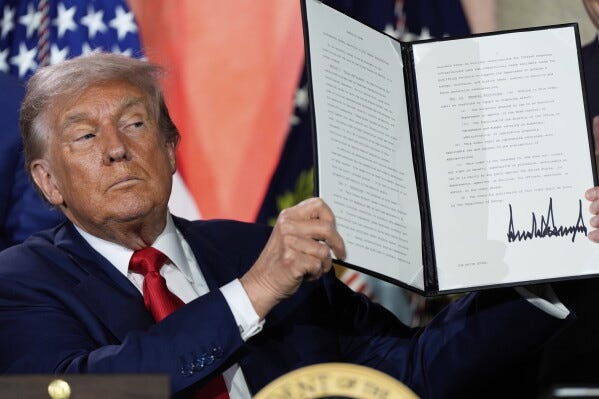
After that, all the way to the second quarter of 2026, Washington produced almost nothing on regulation.
The one exception was the TAKE IT DOWN Act. Introduced by Senators Ted Cruz and Amy Klobuchar, it sailed through the House 409 to 2 in April 2025, making it a federal crime to share non-consensual intimate images, including AI deepfakes, and giving platforms 48 hours to take them down. Beyond that, nothing—until Anthropic unveiled Mythos.
Mythos is a model that reads and reasons about code, and Anthropic says it can find and exploit security holes at a pace nobody had seen before. The company decided the risks outweighed the benefits and didn’t release it publicly. Instead, it gave tightly controlled access to a small circle of partners and critical-infrastructure agencies—through a program it calls Project Glasswing—for defensive research.
After Mythos, the mood in Washington flipped. The White House began drafting an order that would route new models through an FDA-style safety review—proven safe before release, like a drug. The signing was set for May 21. Then Trump killed it at the last minute.
With Washington stalled, the states went their own way. In 2025 alone, dozens of states introduced hundreds of AI bills. A few became law.
California’s SB 53 made it the first state to put real rules on frontier developers, requiring them to publish safety frameworks and report critical incidents. New York’s RAISE Act, signed in December 2025, followed suit with 72-hour incident reporting and a new oversight office—though it won’t take effect until 2027. Colorado’s AI Act targeted algorithmic discrimination in hiring and lending, but its rollout slipped to mid-2026. Texas took a different tack, banning specific deliberate misuses and setting up a 36-month testing sandbox.
For an AI company, this is a nightmare. A hiring-software startup crossing state lines might need a transparency report for California, a discrimination assessment for New York, and a bias file for Colorado—all for one product.
Nvidia CEO Jensen Huang had a name for it: “50 sets of rules.”
One Agency to Rule Them All
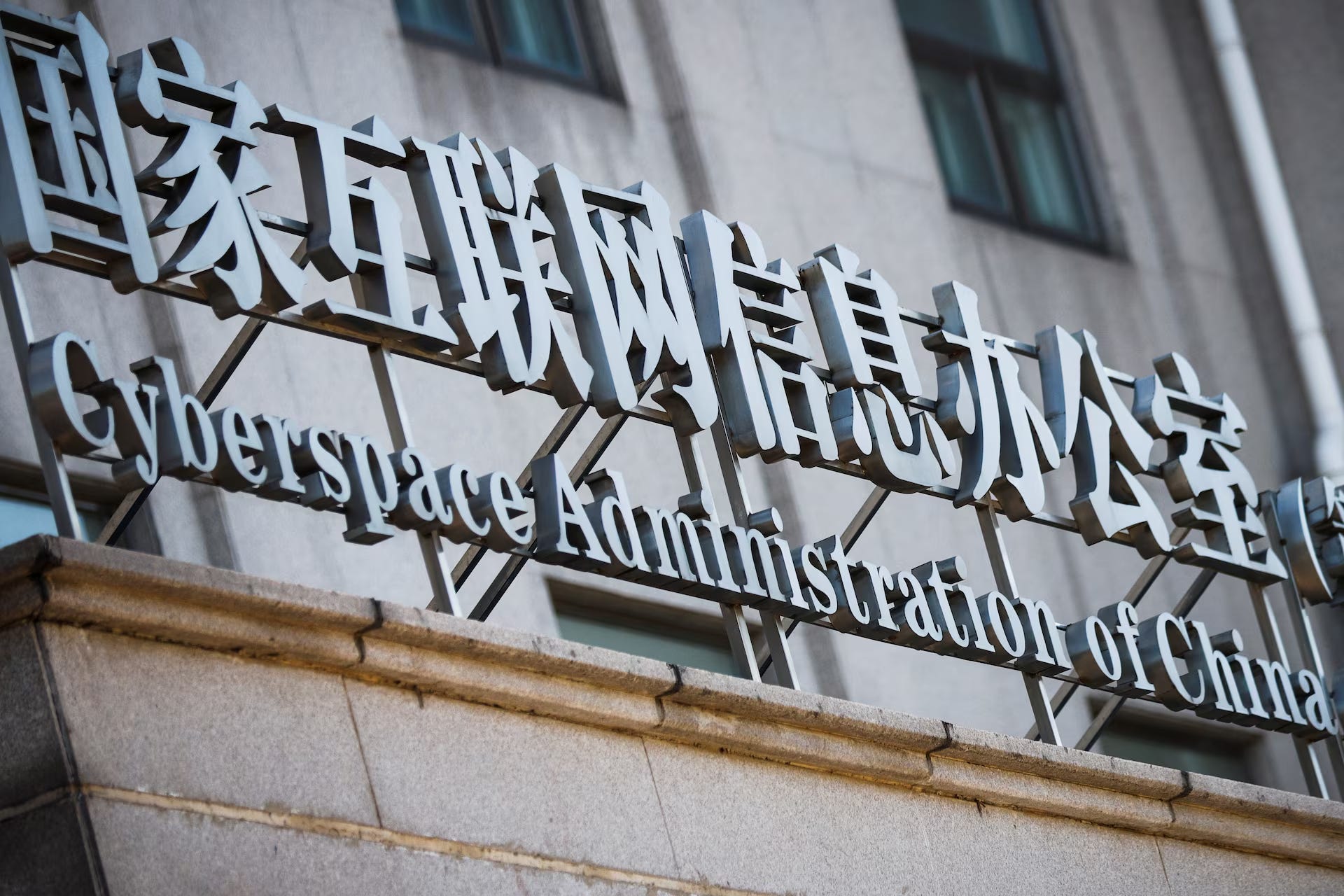
For China, the framework is almost simple. The body that polices online content is the Cyberspace Administration of China, or CAC. In Chinese law, AI questions fall under a single heading: “content generated by AI and spread on the internet.” That neatly puts the CAC in charge of the core jobs—registering algorithms, running security reviews, and enforcing the rules.
When AI touches other areas, the CAC pulls in partners. Technical standards go to the Ministry of Industry and Information Technology. Crackdowns and security assessments go to the Ministry of Public Security. Recommendation algorithms—which China treats as a consumer and antitrust matter—go to the State Administration for Market Regulation. And to handle data itself, China stood up a brand-new agency, the National Data Administration.
The usual pattern is the “joint action”: several agencies moving together, the CAC in the lead. That’s why China refreshes its AI rules almost every year.
There’s a term for it in Chinese officialdom—”small steps, fast pace“(小步快跑)—meaning you change a little each time but iterate quickly. It’s the phrase you reach for when you’re reforming something enormous.
The actual run of legislation is dense. A 2021 provision on recommendation algorithms—China’s first nationwide AI-specific rules—built the algorithm-registration system. A 2022 rule took aim at deepfakes, requiring visible and hidden labels on synthetic content. The 2023 Interim Measures for Generative AI Services—one of the world’s first laws written specifically for generative AI—was led by the CAC and co-signed by seven agencies. A 2023 ethics rule covered “ethically sensitive” research.
A 2025 rule required every piece of AI-generated text, image, audio, and video to carry both visible and hidden marks. And a new rule taking effect in July 2026 targets “ongoing emotional-interaction services that mimic a real person.” In plain English: AI companions and chatbots.
Notice the pattern. Fast iteration usually signals a government that hasn’t figured everything out yet—it doesn’t have the whole picture. So the law targets AI’s use cases: the problems that show up after people start using the tools.
A short-video app’s algorithm has to register and can’t quietly manipulate users. AI-generated images have to be labeled. AI companions—”digital humans,” as they’re called in China—get anti-addiction limits slapped on them. Pile up enough of these, and they might one day fuse into a single comprehensive law.
It’s not that China never tried to lay down one big statute. An “AI Law (draft)” was once slated for review in the State Council’s 2024 legislative plan—but the 2025 plan dropped it, swapping in the phrase “advancing legislative work for the healthy development of AI.” Translation: legislate the priority areas first, think about a master law later.
Then, at the end of 2025, something shifted. AI regulation entered a law passed by the National People’s Congress for the first time—a revision to the Cybersecurity Law, declaring that the state supports key AI research while strengthening risk monitoring.
The signal is unmistakable: China is pulling AI lawmaking up into its core legislative body rather than leaving it to subordinate agencies. This May, a spokesperson for the National Development and Reform Commission (NDRC) — China’s top economic planning agency, which sets national strategy and coordinates major policy across industries — Li Chao, said the agency is now studying AI legislation and steering the technology toward what he called beneficial, safe, and fair development.
The Law Is Whoever’s in the Room
Listing statutes is boring. But line them up against each other, and you can see the logic underneath.
In China, the body with the most sway over AI is the CAC. Critics like to cast it as the Ministry of Truth from Orwell’s 1984—a monstrous censorship machine vetting every word online.
But anyone who understands how Chinese politics actually works will recognize it as something else: a reluctant choice.
In official documents, the internet is framed as a kind of “virtual territory“—land where citizens live. The CAC, in that framing, is the government’s shadow cast across that virtual ground.
And a Chinese-style government is not comfortable letting its “virtual territory” turn into some cowboy frontier. Even frontier land, in Chinese culture, gets settled by organizing the collective to break the soil.
So whenever a new problem crops up there, China hands it to the CAC. The instinct is simple: don’t let new technology cause problems. If problems are coming, prevent them early. And if one has already happened, at least know exactly where it broke.
You can see this blend of licensing and pre-approval in robotaxis. WeRide, Pony.ai, and Baidu all won licenses to run driverless cabs. But after Baidu’s taxis racked up a string of accidents, word spread that China had paused new licenses and ordered companies to “strengthen self-inspection.” Which usually means: operations suspended.
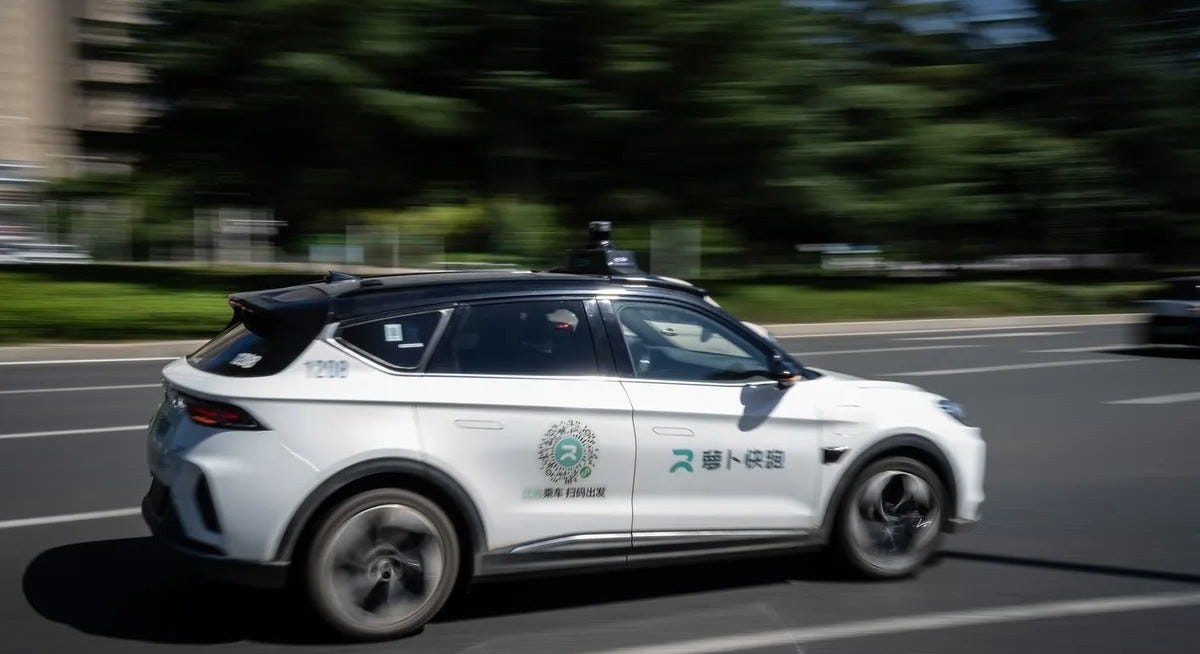
If everything’s safe, nobody gets bothered. If something goes wrong, the CAC reacts fast—sometimes too fast. In China, drawing the line between promoting a technology and protecting the public is genuinely hard to get right.
In the U.S., the people who shape the law are an entirely different cast.
Washington can’t produce a nationwide AI law anytime soon, and the reason splits between the White House and Congress. Congress has passed little in two years; even with senators like Ted Cruz pushing to give federal rules priority over state ones, that priority is buried in compromise.
So presidents reach for executive orders instead. Which means national AI decisions get bent by a handful of individuals.
For Biden, the strongest pull came from Lina Khan, the former FTC chair relentless on antitrust against giants like Amazon and Meta. For Trump, the voices in his ear are figures like Susie Wiles, Ron DeSantis, David Sacks, and Elon Musk. Wiles and DeSantis might lean toward a more conservative regulatory order; Sacks and Musk lean laissez-faire. Trump, clearly, prefers the latter.
It was a last-minute phone call from Sacks—warning the draft order amounted to an FDA-style approval process that could hand the race to China—that helped convince Trump to pull it.
As for the explosion of state-level laws, that looks like a stress response to federal hands-off-ness. State legislators can pass bills that tap into local voters’ anxieties about AI—bias, disinformation, job losses, privacy—and turn that worry into votes.
Whatever power the federal government drops, the states scramble to grab. The result is an ever-wider scatter of standards. But to federal policymakers and industry, that diversity reads as inefficient, expensive, and a roadblock to the national goal of “winning the AI race.”
One Beast, Two Leashes
In the U.S., laws aimed at “AI” tend to come bundled with a pile of social problems. Defamation churned out by a language model triggers online mobs. AI-generated images bleed into child sexual abuse material and identity theft. AI screening drives hiring discrimination and election fraud.
Most state and federal bills are reverse-engineered from a social harm—start with the damage, work backward to the law.
Which raises a question: why not just use the laws you already have? Conjuring a brand-new statute out of thin air can amount to copy-paste—it doesn’t meaningfully rein in AI, but it does pile on fresh compliance burdens. That’s the critique often aimed at Lina Khan.
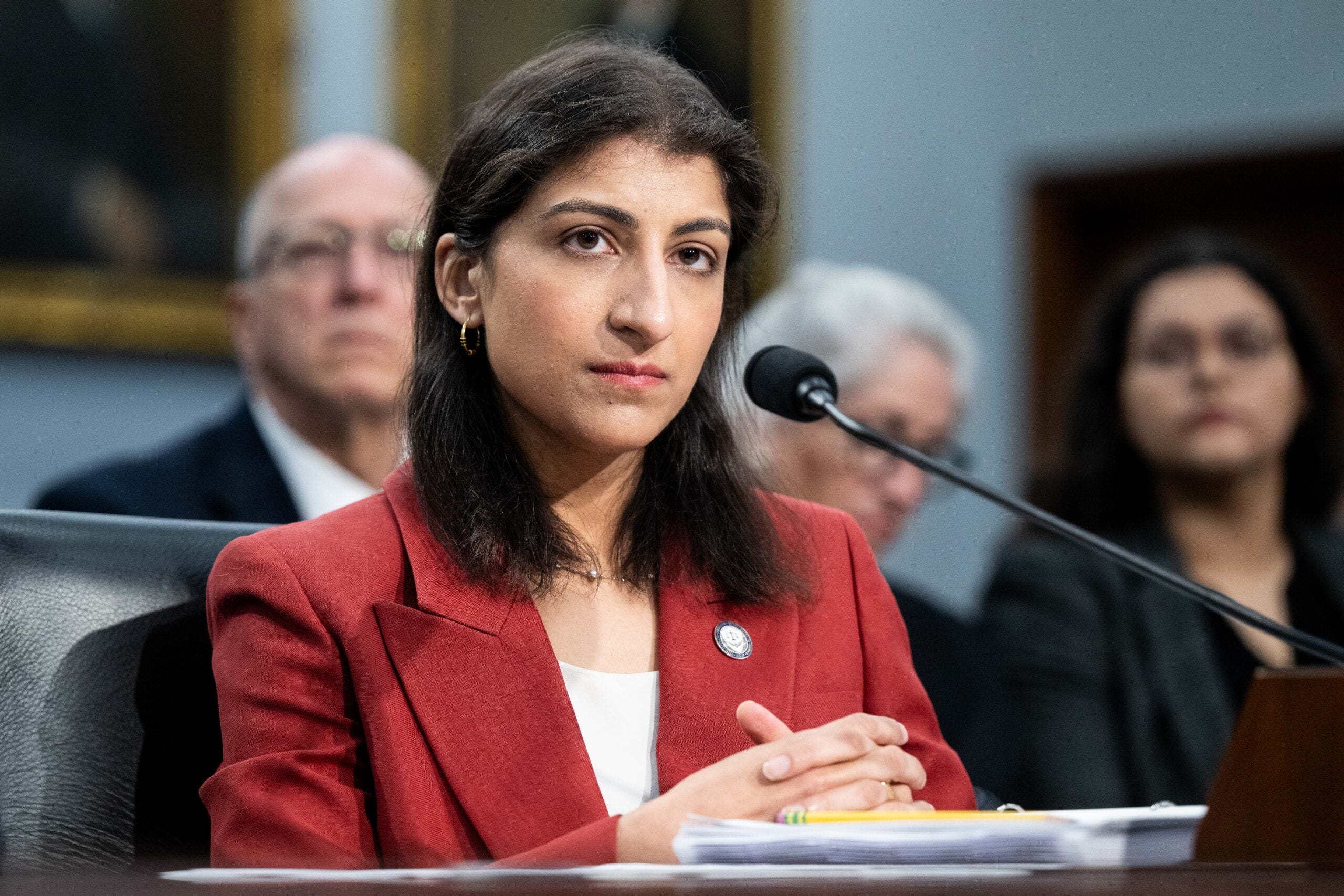
Khan is brilliant on platform antitrust—a hot topic in China too. But she seems a little addicted to it. At the FTC, she argued for using existing competition and consumer-protection law to corral the AI giants; she’s the face of the “regulate AI with the laws we’ve got” school.
After she left, the states—responding to public anxiety about AI creeping into daily life—abstracted every AI problem into a consumer-protection or antitrust issue. And that does nothing to defend against the kind of security threat a model like Mythos represents.
In China, there’s a classic line: clamp down and it dies, let go and it descends into chaos. Regulate too harshly and the industry goes lifeless; too loosely and it falls into disorder, maybe even disaster.
Chinese AI workers have always worried that overly strict regulation will choke the flow of technology—out of step with the globalized, meritocratic vision they grew up believing in.
China’s rules target specific situations, but they say very little about protecting the individual after the fact. Regulators can fine companies directly, sure. But for an ordinary person, there’s no real roadmap for using the rules to defend your own rights. And the grinding length of a lawsuit pushes individuals to quietly give up—which, in a roundabout way, may encourage big companies and AI to keep creeping into private life.
There’s another wrinkle. China’s antitrust enforcement has often lagged behind its legislation, and the same gap shows up in AI: strict laws, selectively enforced. Regulators tend to see this as protecting business—but that protection also strips rights away from those companies’ own employees and customers.
For now, neither China nor the U.S. has touched the edges of AI. How to keep a rein on this enormous creature remains a genuinely hard problem.