



Hi friends,
Hope you had a good week.
Something has been changing beneath China’s AI boom.
The headlines are still about models, chips, and robots. But this week, a different story started to emerge: the race is becoming less about who can build the most impressive technology, and more about who can finance it long enough to win.
DeepSeek was not born from a traditional venture capital playbook. Its founder used profits from a quantitative trading fund to build a frontier AI lab, creating one of the most unusual funding stories in the AI race.
CXMT took the opposite path. Its rise came from a decade-long coalition of government funds, local industrial policy, employees, and strategic investors willing to support a chip company long before the market knew whether the bet would work.
None of these stories are really about technology. They are about capital: who has it, who’s willing to risk it for a decade with no guarantee of return, and who ends up holding the bill when the bet doesn’t pay off.
Anyway, let’s take a look.
This Week Features…
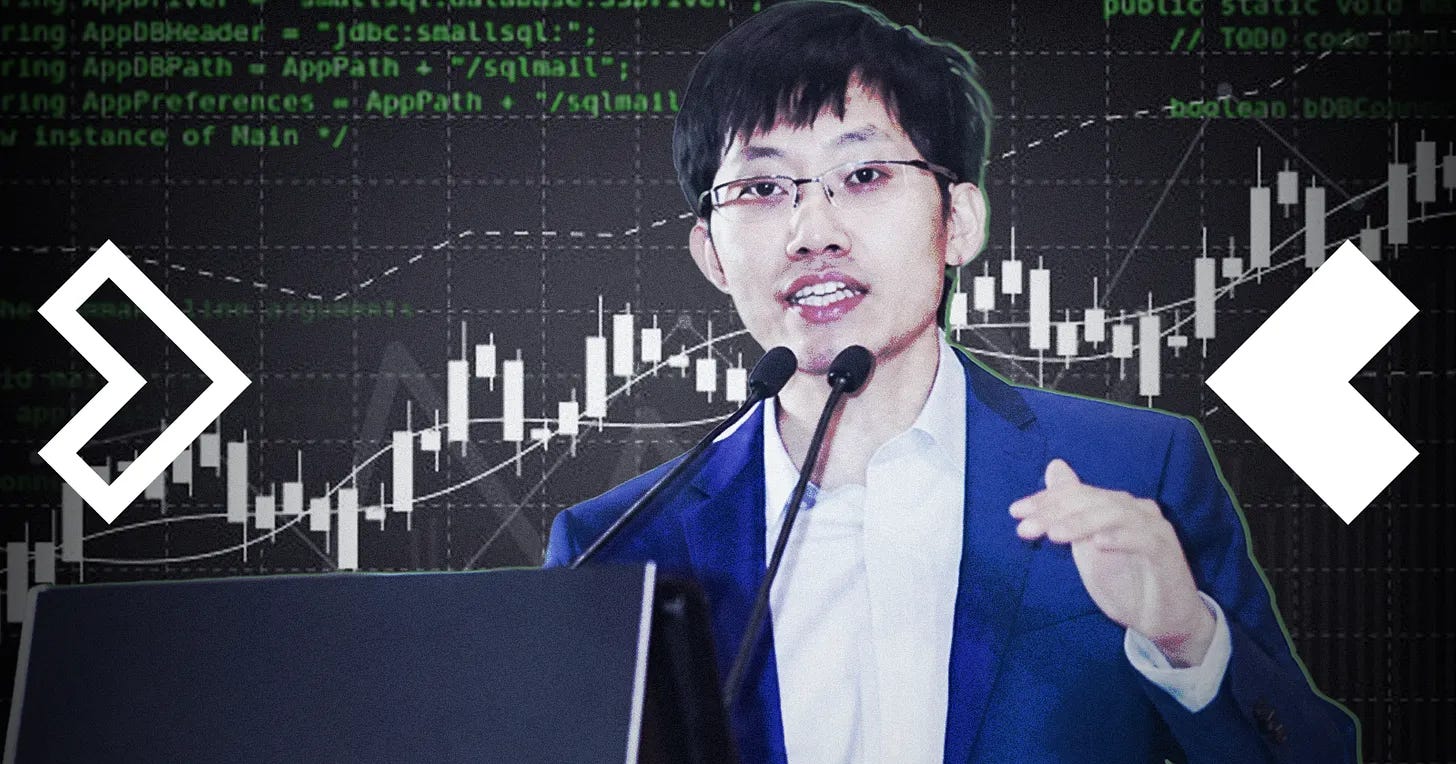
The DeepSeek Founder Story Silicon Valley Doesn’t See
To Silicon Valley, Liang Wenfeng is the founder who built a frontier AI lab for a fraction of what OpenAI or Anthropic spend. To a large slice of Chinese retail investors, he’s something else entirely: the face of a quant trading fund many believe has spent years profiting off predictable retail behavior.
Both stories are true, and neither cancels the other out. High-Flyer, the trading firm that funded DeepSeek for years before its first outside round, has posted eye-popping annualized returns while the ordinary investors on the other side of those trades have, on average, lost money. And the timing could not be more pointed: a senior regulator who helped build the market structure quant funds thrive in is now under investigation, just as Liang has become one of the wealthiest AI founders in the world.
This week’s piece goes inside that tension: how the same person can be, at once, a national symbol of technological self-sufficiency and a lightning rod for financial resentment, and why that contradiction doesn’t need to be resolved for the story to make sense.
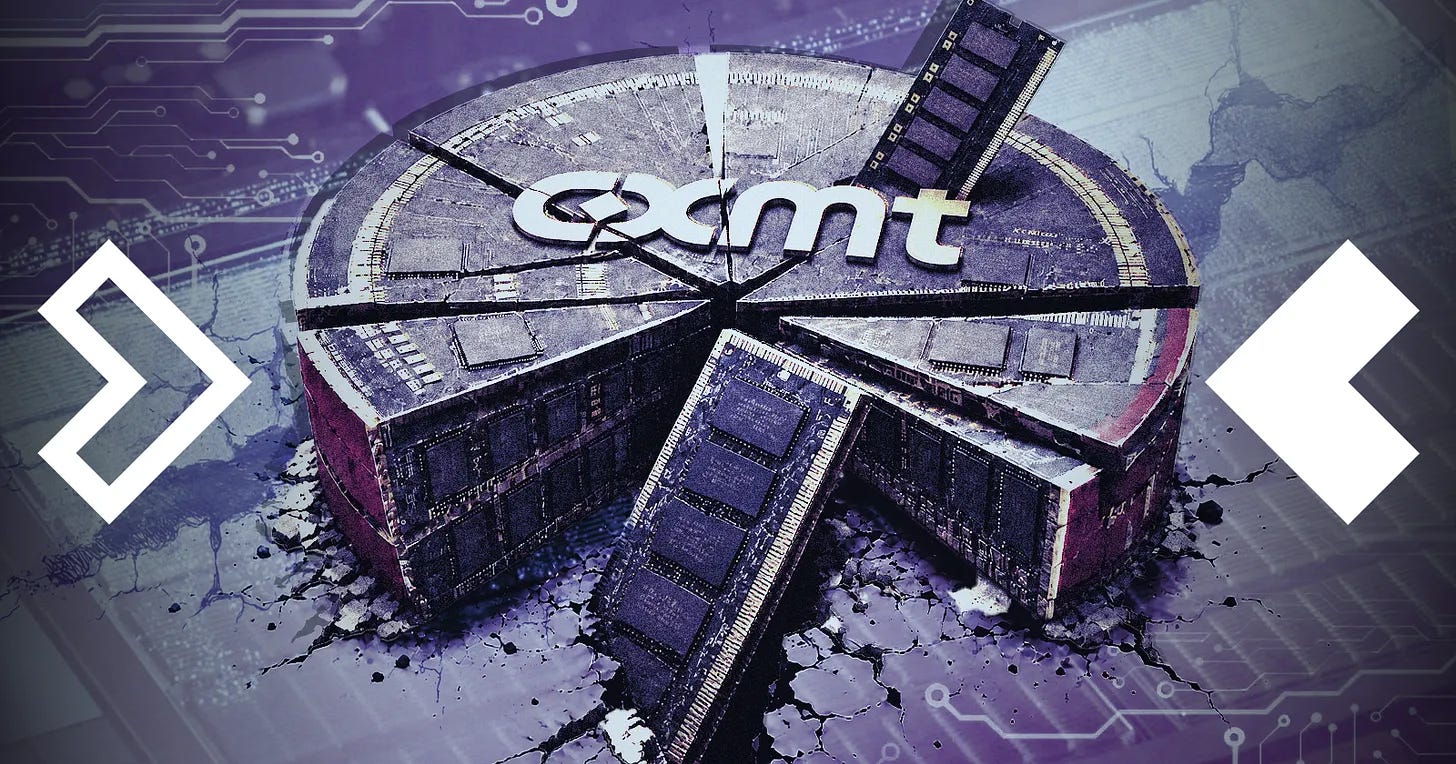
Inside CXMT IPO: China’s $485 Billion Chip Gamble
On July 27, CXMT went public on Shanghai’s STAR Market, and by the close of its first trading day it was worth more than $485 billion, enough to overtake ICBC as the most valuable company listed in mainland China. The headline framing writes itself: chip self-sufficiency, export controls, a new challenger to Samsung and SK hynix.
But the more interesting question is who actually built this. The answer isn’t one founder or one VC. It’s a coalition: the Hefei city government, Anhui’s provincial fund, China’s national Big Fund, an employee stock plan with a decade-long vesting schedule, and strategic stakes from Alibaba, Tencent, Xiaomi, and even BYD’s own founder. Nobody controls CXMT. That’s not an accident. It’s the model.
This week’s piece traces how Hefei turned a repeatable playbook: countercyclical government investment, an anchor company, an industrial cluster, into China’s most valuable IPO, and asks a harder question: what happens when cities try to run the same playbook on industries, like robotics or spaceflight, where the market outcome isn’t nearly as certain.
The News…
(i) DeepSeek Quietly Ships an Agent Upgrade, And Prices It to Undercut Everyone
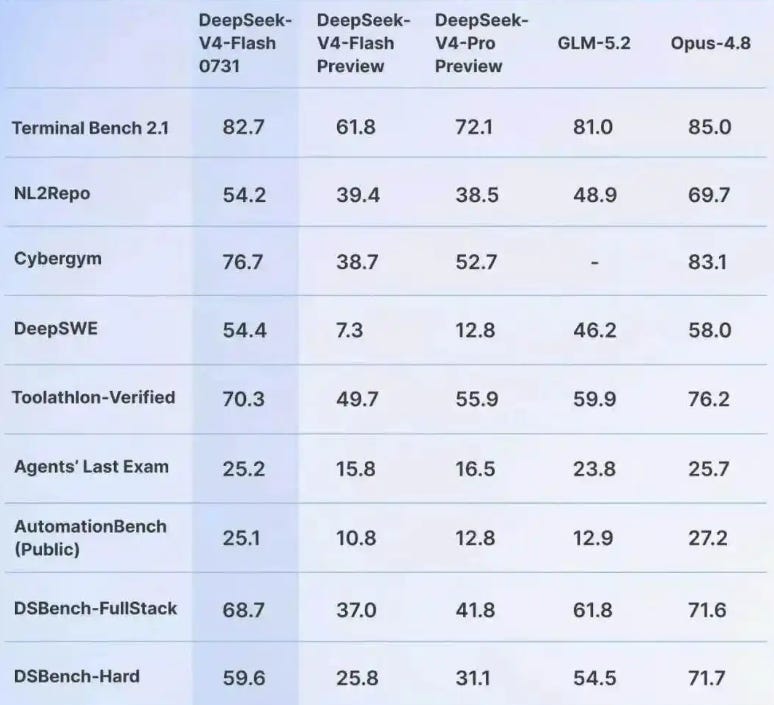
DeepSeek released the API version of DeepSeek-V4-Flash this week, and the headline change is agentic: better tool use, software environment control, and multi-step task completion. On several agent and coding benchmarks, V4-Flash is closing in on frontier-model performance.
The pricing is the part worth sitting with: ¥1 per million input tokens, ¥2 per million output tokens, and as low as ¥0.02 per million input tokens (about $0.003) for cached, repeated agent workflows. V4-Flash also now supports an OpenAI-compatible Responses API, meaning developers can call it directly through Codex CLI, ChatGPT desktop, and VS Code plugins, a level of ecosystem integration that goes out of its way to make switching costs disappear.
The rollout is narrow for now: only V4-Flash gets Responses API support, V4-Pro users wait until early August, and the app and web interface are unchanged. But the strategy is clear. DeepSeek isn’t trying to win the “best model” argument this week. It’s trying to make itself the cheapest place to run an agent.
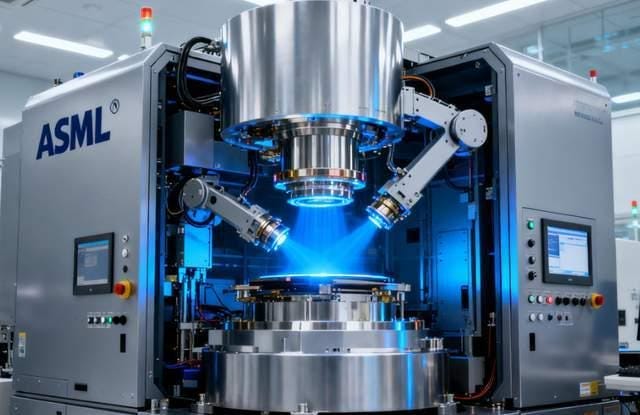
(ii) ASML Lost $30 Billion on a Rumor. That’s the Real Story.
ASML shed roughly $30 billion in market value on Monday after The Information reported that a state-backed Shanghai firm had begun small-batch production of immersion DUV lithography machines, with plans to supply China’s biggest chipmakers including SMIC, CXMT, and Hua Hong.
The actual numbers barely justify the reaction: about five machines this year, twenty by 2027, against the 131 ASML shipped last year alone. Analysts have called the selloff disproportionate, and it’s hard to argue otherwise. An unverified report about an anonymous company’s tiny production run is not, on its own, a near-term threat to ASML’s business.
What it does confirm is how jumpy the market has become. ASML is increasingly trading as a barometer for anxiety over Chinese chip self-sufficiency rather than as a company with its own fundamentals, and right now, rumors are moving it almost as much as facts do.
(iii) Running an Open Model Isn’t Cheap. Kimi’s Community Just Did the Math.
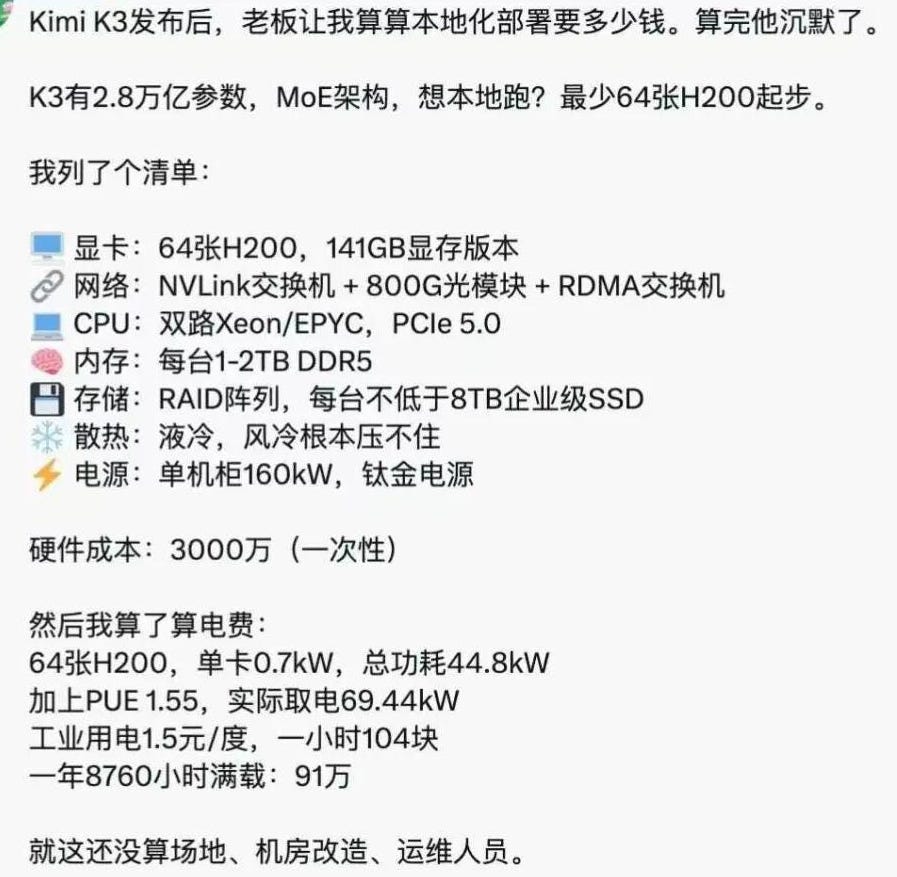
Everyone’s celebrating open-sourcing as the great equalizer. Fewer people are pricing out what it actually takes to run the thing yourself. According to estimates shared in Kimi’s own community, deploying Kimi locally in China could require 64 Nvidia H200 GPUs, 8TB of enterprise SSD storage, liquid cooling, power infrastructure, and dedicated engineering staff, north of $4.2 million in total cost, and that only covers a limited number of users.
The timing is notable: Moonshot is reportedly seeking a $50 billion pre-IPO valuation, even as the market starts asking harder questions about whether Anthropic-style subscription economics can actually hold up.
Open weights lower the barrier to access. They don’t lower the barrier to scale. Those are two very different problems, and the industry is only starting to talk about the second one.
(iv) China’s Next ¥4 Trillion AI Bet: Building the Pipes Behind the Models
China is preparing a new wave of investment aimed squarely at AI infrastructure, data centers and computing networks, worth an estimated ¥4 trillion ($560 billion), according to NDRC spokesperson Jiang Yi, as part of the country’s upcoming five-year plan.
The structure is the interesting part. Unlike past state-led infrastructure pushes, most of this capital is expected to come from companies, not government coffers directly, with Beijing positioning itself to coordinate resources and policy rather than write the checks itself.
It’s the clearest signal yet of where China thinks the next bottleneck actually sits: not in model quality, but in the physical capacity to serve those models at scale, echoing exactly the strain that hit Moonshot’s Kimi K3 launch just weeks ago.
(v) Washington’s AI Concerns Are Moving From Models to Machines
The FCC has added humanoid robots, quadrupeds, and connected power inverters to its covered list, citing national security concerns around data collection, remote control, and grid infrastructure.
It’s a quiet expansion of scope, but a telling one. Model capability was the first front of US scrutiny. Now the physical hardware carrying AI into homes, warehouses, and the power grid is getting the same treatment.
The message: the US government’s concern about China’s AI rise was never really about chatbots. It’s about what AI plugs into next.
(vi) Unitree Is Betting Its IPO Money on Volume
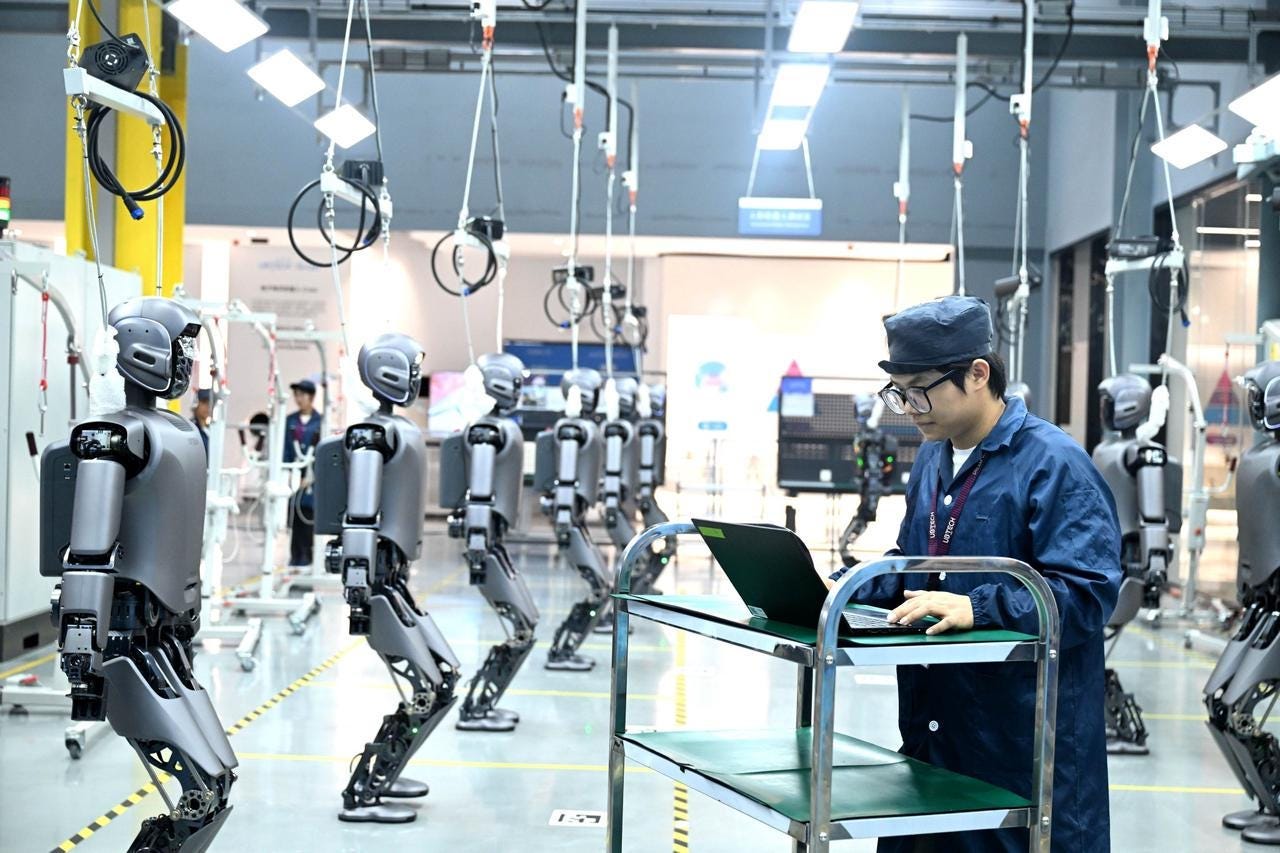
Unitree Robotics plans to at least double shipments in 2026 from the 6,500-plus robots it delivered in 2025, according to Asia-Pacific director Irving Chen, with annual capacity potentially climbing to 30,000 units. A new factory, funded through Unitree’s Shanghai STAR Market IPO, is central to that expansion, and overseas assembly is now on the table.
The company’s 2025 revenue hit ¥1.71 billion ($240 million), more than four times 2024’s figure, with overseas markets, North America chief among them, contributing roughly half of sales.
Unitree isn’t just building robots faster. It’s building the case that humanoid and quadruped robotics can scale the way China scaled solar panels and EVs: high volume, falling costs, exports doing much of the heavy lifting.
(vii) BYD’s Founder Quietly Bet on CXMT Six Years Early
As more details about CXMT’s shareholder base surface after its blockbuster IPO, one name stands out: BYD founder Wang Chuanfu owns a 0.014% stake in CXMT, now worth roughly $64 million at the company’s $458 billion closing valuation.
The stake traces back six years, when BYD invested during CXMT’s first funding round at a $2.9 billion valuation, a moment when the chipmaker was still losing money and its path to scale was far from guaranteed.
It’s a small holding in percentage terms, but a useful data point for the bigger CXMT story we’ve been telling this week: this wasn’t a company built by one investor’s conviction. It was built by dozens of them, placing early, patient, and often quiet bets years before anyone else believed the payoff was coming. We’ll have a deeper look at CXMT’s full shareholder structure soon.
(viii) MiniMax Joins the Multimodal Race With H3
MiniMax released H3 this week, a multimodal generative model built to handle text, image, video, and audio in a single unified context, including native stereo audio and up to 15-second, 2K-resolution video generation using the base model itself rather than upscaling.
The pitch is squarely commercial: advertising, e-commerce, branding, product design, UI/UX, and gaming, with support for controllable multimodal editing like video-to-video motion transfer. The model can ingest up to 100K input tokens while compressing outputs to roughly 4K.
Model weights are coming soon, another entrant in the growing list of Chinese labs betting that generative video and audio, not just text, will be where the next wave of enterprise demand shows up.
