



Hi friends,
Hope you’re doing well, wherever you’re reading this from.
Something interesting is happening across China’s next generation of technology industries.
The race is no longer just about who builds the better technology. Increasingly, it is about everything around the technology: who can finance it, regulate it, manufacture it, insure it, and turn an impressive prototype into an actual industry.
You can see the contrast in robotics. Unitree’s robots are real, but its IPO has become a pricing mechanism for an entire industry, pushing private valuations far beyond what current fundamentals can support.
Brain-computer interfaces tell almost the opposite story. China has not necessarily out-engineered Neuralink, but it has built a faster path from experimental device to regulatory approval, insurance coverage, and commercial use.
Both stories point to the same question: what happens when the machinery of commercialization starts moving faster than the underlying technology?
Meanwhile, Xiaomi is doubling down on domestic chips and AI, Alibaba is building its own silicon, Nvidia is cautiously returning to China, and Chinese AI companies are increasingly showing that domestic hardware can support models at global scale.
The technology is only part of the story now.
Anyway, let’s take a look.
This Week Features...
Unitree’s Robots Are Real. China’s Robotics Valuations Are the Problem.
On August 25, Unitree’s stock was trading 45% below its post-IPO high, and the internet had already found its villain: some users were comparing founder Wang Xingxing to Evergrande’s Hui Ka Yan, accusing him of building a fraud on a similar scale. That comparison says more about the mood than the math. Unitree makes real robots, turns a real profit, and still, even after the crash, trades at roughly 300% above what its fundamentals can justify.
The reason isn’t Unitree. It’s that the STAR Market’s own rules, thin free float, no daily price limit for the first five days, a narrow pool of eligible investors, turned the company into an accidental pricing anchor for an entire industry that hasn’t IPO’d yet. Somewhere between 30 and 50 private Chinese robot makers are watching Unitree’s stock price to figure out what they’re worth.

China Didn’t Out-Engineer Neuralink. It Out-Paperworked It.
In March, China’s regulator approved the world’s first commercially sold invasive brain-computer interface. Neuralink, after two years and roughly 20 implants, still doesn’t have the FDA clearance to sell anything. The easy headline writes itself: China beat Neuralink.
The real story is less flattering to the “China leapfrogs the US” narrative, and more interesting. The device that won, NEO, has 8 electrodes to the N1’s 1,024, and got there not by being more advanced but by moving through a compressed, fast-tracked regulatory pipeline China built for it in under two years, the same playbook that took EVs from a five-year-plan bullet point to a global export industry. The hard part, this piece argues, was never really the engineering.

The News…
(I) Xiaomi Bets Its Phone Business on a Chip It Designed Itself
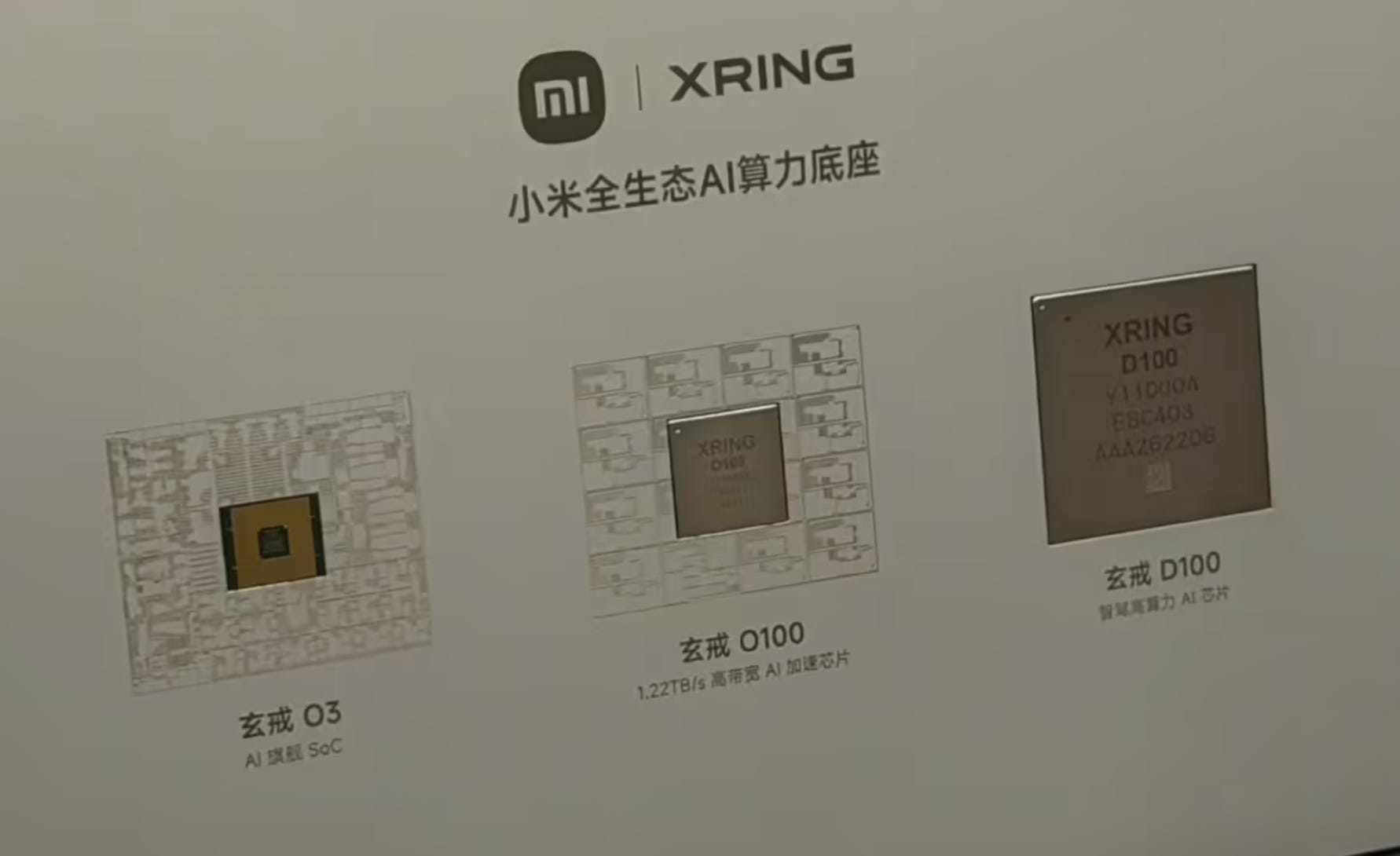
Xiaomi unveiled the Xuanjie O3 on August 24, reportedly built on TSMC’s 3nm process, alongside the O100 and D100 chips for on-device AI and automotive, and a mini-PC called AI Cube “Prototype” for running local LLMs. The O3 will power the Xiaomi 18 Fold (an estimated 200,000 to 300,000 units) and is paired with CXMT’s LPDDR6, the first Chinese-made LPDDR6 memory to ship in a flagship phone.
None of these numbers are huge on their own. What’s notable is that Xiaomi now has a chip strategy that reaches ten years out, and a domestic memory supplier sitting right next to that chip. The self-sufficiency story usually gets told one company at a time. This is what it looks like when two of them start showing up in the same phone.
(II) ByteDance Is Putting All Its AI Software Under One Roof
ByteDance is consolidating two of its biggest AI software experiments, TRAE and Coze, into the Doubao ecosystem.
TRAE started as an AI coding environment, while Coze focused on agents. Both eventually expanded into broader AI workflows, but ByteDance now appears to be drawing a much clearer organizational line: coding tools will continue under the Doubao brand, with product and operations teams reporting to Doubao chief Zhao Qi.
The move also brings ByteDance’s office-AI strategy closer together. With Feishu already folded into the wider Doubao effort, the company is effectively betting that one AI platform can serve as the common layer across coding, productivity software, agents, and workplace applications. It has now launched Doubao Work as a standalone product.
That puts ByteDance into a more direct race with Alibaba’s Qwen Office and Tencent’s WorkBuddy, which already recorded more than 20 million monthly PC visits in June.
(III) Thomson Reuters Chose Alibaba’s Model. That Says Something About Open AI Economics.
Thomson Reuters launched its first LLM, called Thomson, built on top of Alibaba’s Qwen3.5-397B and retrained with Imperial College London for safety and neutrality before further training on Thomson Reuters’ own content. Total R&D ran to roughly $40 million (the $450,000 figure that circulated online only covers the final training run). It scores 0.823 on Stanford’s LegalBench, behind Gemini 3.1 Pro and GPT-5.5, and comes close to Opus 4.8 on Harvey’s Legal Agent Benchmark, though with an asterisk: Thomson used inference-time scaling and GPT-5.5 didn’t.
The company’s stated reason for skipping OpenAI and Anthropic is blunt: cost and customizability. A closed frontier model is expensive to run at scale and hard to shape around a single, narrow task like document review. That calculation, a legacy Western institution choosing a Chinese open model as its foundation, is exactly the kind of quiet shift that doesn’t make headlines the way a chip ban does.
(IV) China's Next AI Chip IPO Is About to Test the "Four Tigers"
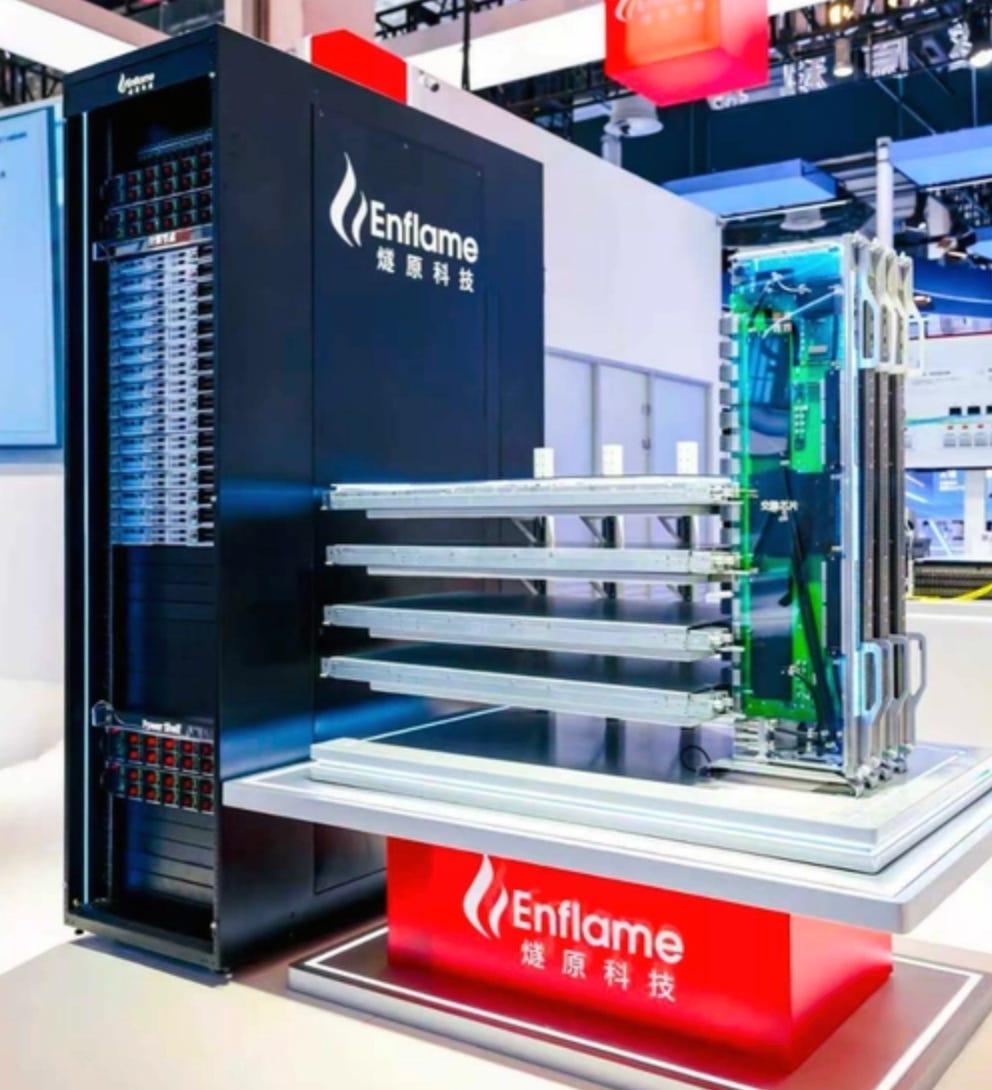
Suiyuan Technology (commercially known as Enflame), one of China’s four major domestic AI chipmakers alongside Moore Threads, MetaX, and Biren, is moving toward a STAR Market IPO. The company plans to issue 43 million shares, 10% of its post-IPO total, aiming to raise around CNY 6 billion ($840 million) for its next two chip generations. Inquiry begins August 28.
Suiyuan is still loss-making, which is worth sitting with given this week’s other STAR Market story. If Unitree, a profitable company, is trading at roughly triple what its fundamentals support, it’s worth watching what happens to a loss-making chipmaker’s valuation once it goes through the same thin-float, no-price-limit first week.
(V) Shein Is Taking Its Global Supply-Chain Playbook to the Hong Kong Market
Shein launched its Hong Kong IPO on August 24, offering nearly 280 million shares to raise around HK$13.1 billion ($1.7 billion), backed by Boyu, Tiger Global, General Atlantic, Tencent, and UBS Asset Management. The company serves roughly 273 million active customers across 160 markets, and revenue grew from $32.1 billion in 2023 to $41.8 billion in 2025, with $2.06 billion in net profit last year.
Shein plans to put 40% of the proceeds into technology and another 40% into global brand building, doubling down on the small-batch, real-time-data production model that got it here in the first place. It’s not an AI story, but it’s a reminder that China’s IPO wave this year isn’t limited to chips and robots.

(VI) Huawei Just Found Another Way Into an American Supply Chain
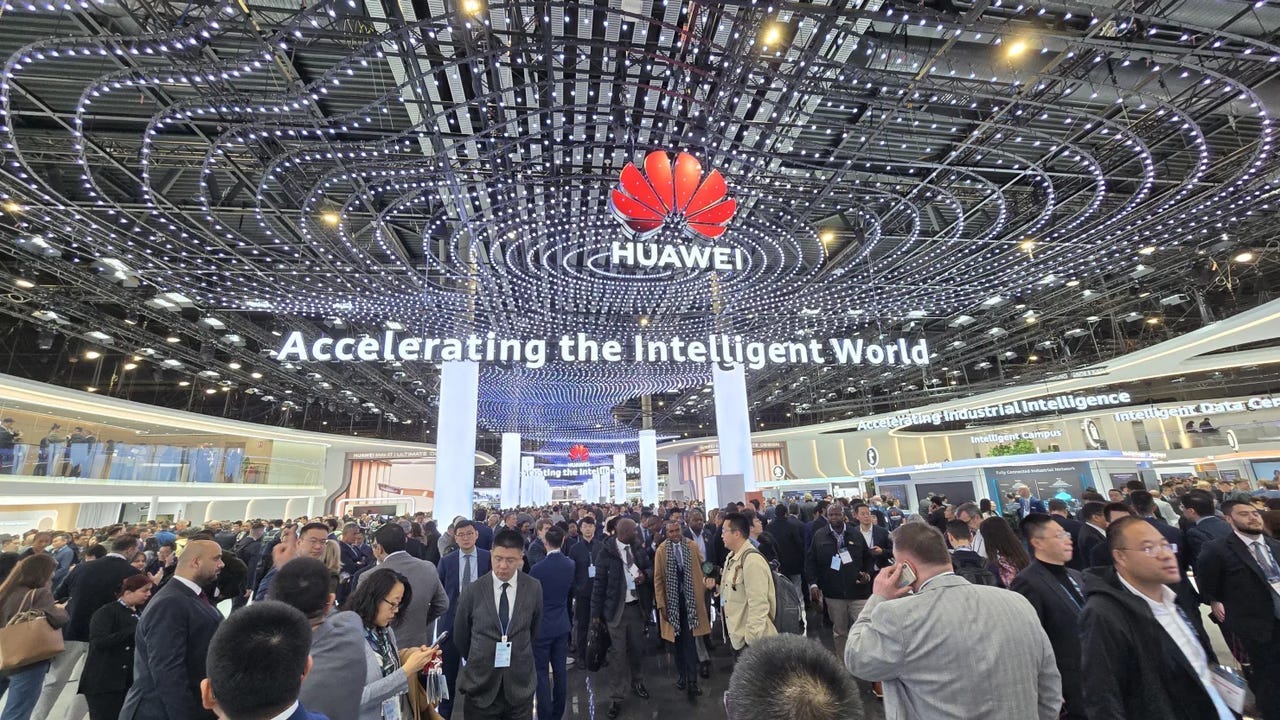
HP and Huawei signed a multi-year global agreement covering Wi-Fi patents, with reciprocal rights for Huawei, bringing Huawei technology into a major US company’s products despite Washington’s 2019 blacklist. It follows last fall’s settlement giving HP access to a 2,000-patent Wi-Fi 6 pool co-founded by Huawei.
Export controls are built to choke off supply chains. They were never designed to touch intellectual property licensing, and this deal is a clean example of why that gap matters: the parts of a company’s business built on patents can keep crossing borders that its hardware can’t.
(VII) China’s Open-Weight Models Are Now Running on China’s Own Chips
Zhipu open-sourced GLM-5.3-Flash on August 26, the GLM-5 series’ first native multimodal model, with its online traffic running entirely on 100,000 domestic chips. Before launch, an anonymous model nicknamed “Ox Alpha” quietly processed 62 trillion tokens on OpenRouter and OpenCode, reportedly also running on Chinese hardware from suppliers that may include Huawei, Hygon, and Moore Threads.
GLM-5.3-Flash scored 57 on Artificial Analysis, tying Claude Opus 4.8, at roughly one-tenth the cost of GLM-5.3. Put together with this week’s Xiaomi and Suiyuan stories, the full stack, open model, domestic memory, domestic compute, is starting to show up in the same sentence more often than not.
(VIII) Why China’s Next AI Battleground Is a City You’ve Probably Never Heard Of
Ulanqab, a city in Inner Mongolia, has quietly become one of the fastest-moving sites in China’s AI buildout: three of the country’s top four data center operators are running gigawatt-scale projects there, alongside ByteDance, Kuaishou, UCloud, Alibaba, and DeepSeek. Direct-linked wind and solar power keeps electricity, 60-70% of a data center’s operating cost, 30-40% cheaper than eastern China, while a 4.3°C average temperature cuts cooling costs and network latency to Beijing stays at just 4.2 milliseconds.
That mix of cheap green power, favorable grid terms, and the “East Data, West Compute” policy push is exactly what the US is struggling to replicate, where an aging grid, PJM prices up 76% year over year, and local pushback keep slowing construction. The AI race’s real bottleneck may be shifting from chips to whoever builds the power and land underneath them fastest.
(IX) CXMT’s LPDDR6 Just Went From Rumor to Mass Production
On August 29, CXMT confirmed that its LPDDR6 memory has entered mass production, with the first units shipping inside the Xiaomi 18 Fold, expected to launch in September. It’s the world’s first LPDDR6 product to reach commercial mass production, hitting a peak speed of 12,800 Mbps and a maximum capacity of 16GB, and the company says it’s already sampling the chip to other key customers.
The launch confirms months of rumors that Xiaomi’s Xuanjie O3, the first chip anywhere to support LPDDR6, was sourced from CXMT, a link so telegraphed that CXMT’s Weibo account followed Xiaomi’s the moment it went live. For a memory maker that spent years playing catch-up to Samsung, SK Hynix, and Micron, setting the pace on a brand-new high-end standard, rather than following it, is a different kind of milestone.
real profit is the generous read on unitree right now. underlying profit fell 19% last quarter, revenue grew 49%. that's the gap the 300% multiple is supposed to be pricing in, and it just moved the wrong way.