

Hi friends,
Hope things have been going well on your end.
Something worth watching in China’s AI race is how much of the battle happens outside the models themselves. We spend a lot of time comparing benchmark scores, but there is another question worth watching: what happens when a company decides it no longer wants to depend on someone else’s technology?
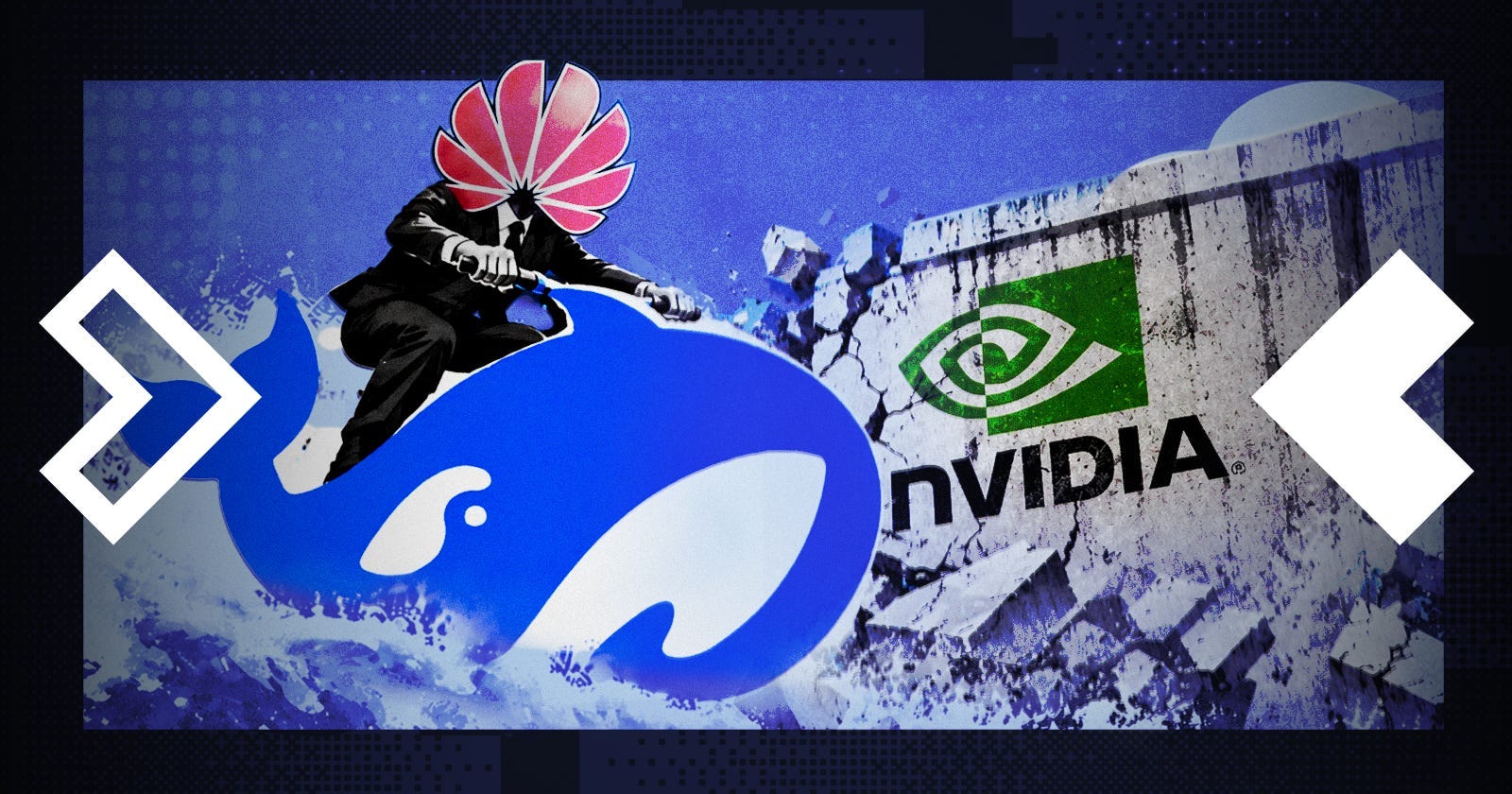
DeepSeek is working with Huawei to make its chips easier to use, taking an early step toward an alternative to the software ecosystem that has long given Nvidia its advantage. ByteDance, meanwhile, is exploring custom AI processors of its own as China’s biggest tech companies scramble to secure more computing power.
Elsewhere, Chinese AI is finding new ways to reach users. Apple is preparing to bring Alibaba’s Qwen models into Apple Intelligence in China, while DeepSeek is opening up its search capabilities to developers through paid APIs.
Anyway, let’s take a look.
Weekly News...
(I) Apple Intelligence Is Coming to China With Alibaba's Qwen
Apple CEO Tim Cook said on October 15 that Apple Intelligence and Alibaba’s Qwen model had received approval in China, with beta versions expected later this month. The first wave is expected to include live translation, writing tools, and photo cleanup, but not the AI powered Siri upgrade.
According to people familiar with the matter, Qwen models will support text and image understanding and content generation across iOS, iPadOS, macOS, and visionOS. The partnership gives Alibaba a route into Apple’s installed base, while Apple gains a local AI partner for a market where its usual services and partnerships face different constraints.
The bigger story is that Chinese AI models may reach users through global technology platforms, rather than having to build an entire consumer ecosystem of their own.
(II) DeepSeek Opens Its Search Engine to Developers
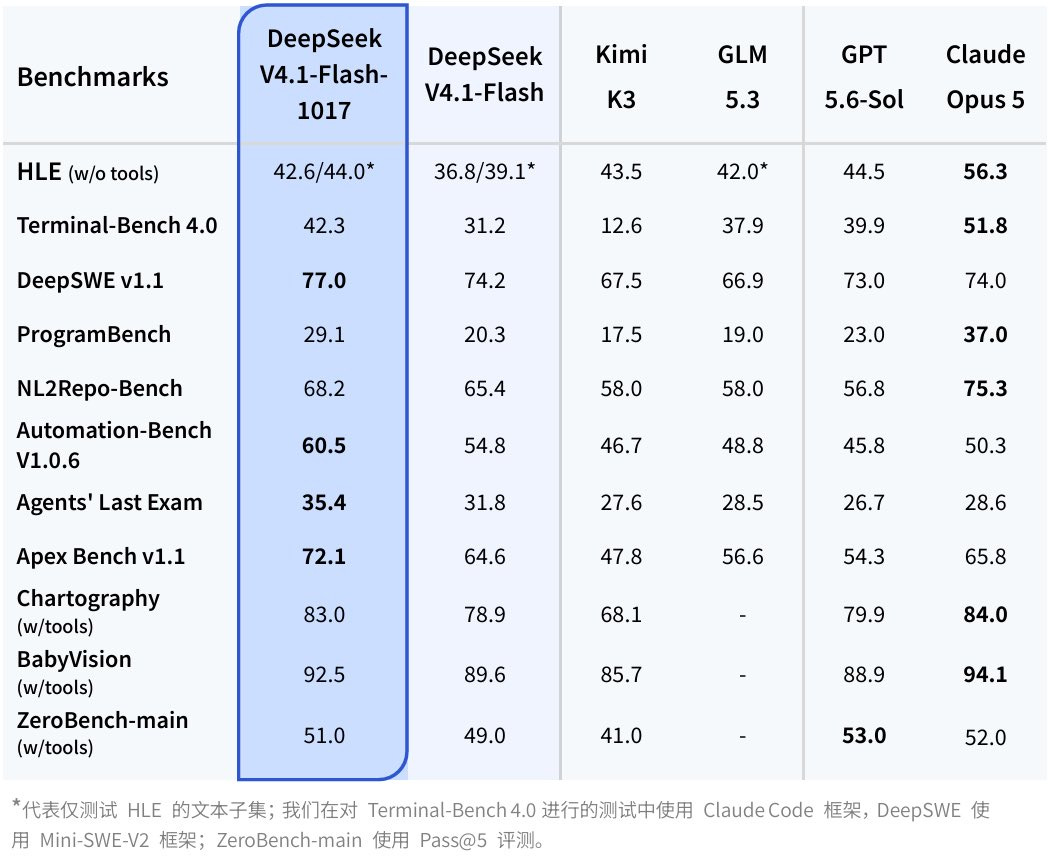
DeepSeek is opening the search engine behind its app to developers through new Search and Fetch APIs, priced at RMB 5 (about $0.70) per 1,000 calls. The service filters out SEO spam and low quality AI generated content. DeepSeek has also updated V4.1 Flash, promising faster and cheaper runs while making the model’s weights available.
The search APIs give developers another way to build applications on top of DeepSeek’s infrastructure, beyond simply accessing its language models. They also show how AI companies are beginning to package useful capabilities as services that other developers can integrate into their own products.
(III) DeepSeek's Next Funding Round Could Reach $14 Billion
DeepSeek is reportedly nearing a second funding round of around $14 billion, double its original target of $7 billion. Its pre money valuation is expected to remain around $70 billion, with new and existing investors contributing roughly equal amounts. Geely is reportedly joining previous backers including CATL and Tencent, while CATL alone could invest $1.4 billion.
The reported raise offers a glimpse of the capital required to compete in China’s AI race. DeepSeek has built its reputation partly on efficiency, but training and serving increasingly capable models still require enormous computing resources.

(IV) Manus Is Moving Into OPPO Phones
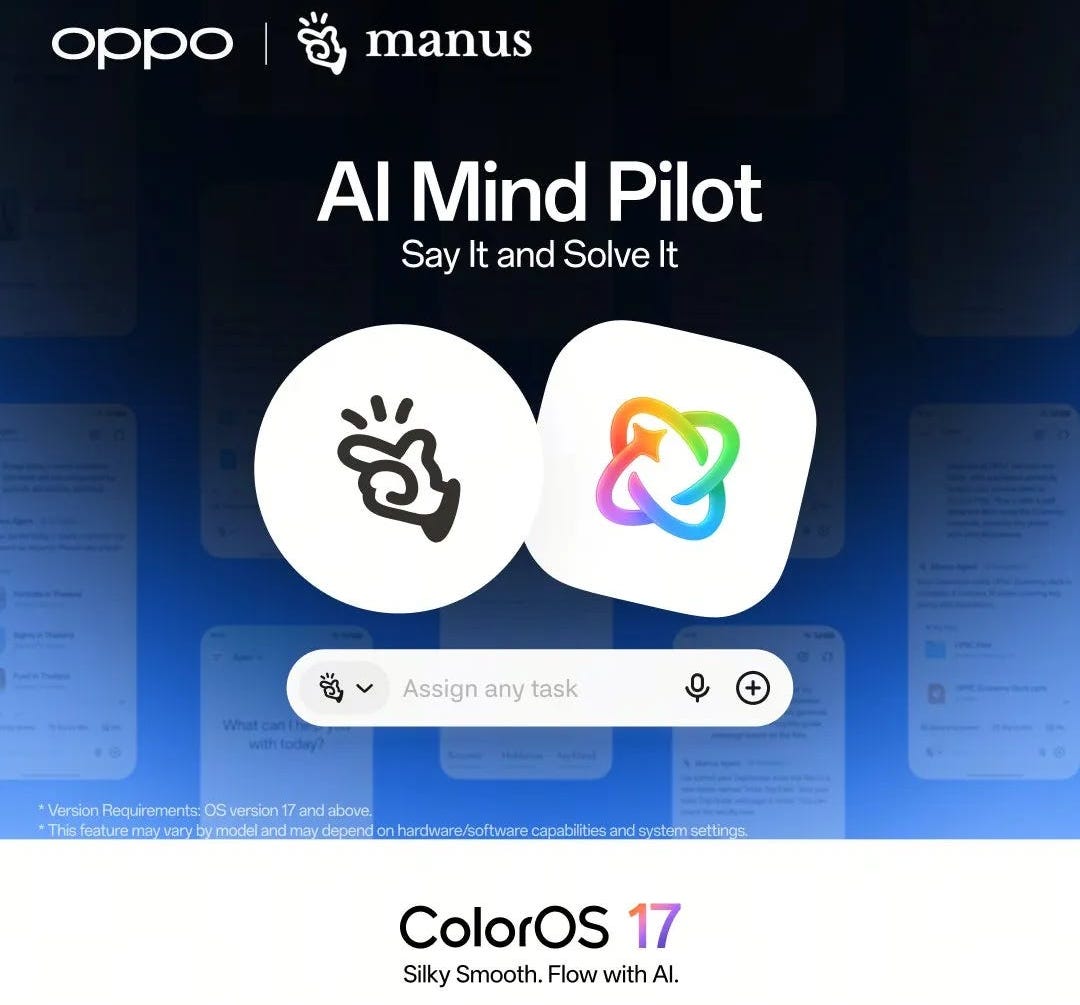
OPPO and Manus are reportedly partnering to integrate a Manus powered AI agent into ColorOS 17. The agent is expected to read information on screen and carry out tasks across apps, from generating reports and scheduling events to automating workflows.
For Manus, the partnership would give its agent a route into an established hardware ecosystem as the company rebuilds its China business. For OPPO, it offers a way to make AI more useful than another standalone chatbot.
The bigger question is whether these agents can complete complicated tasks reliably enough for users to trust them with more of their digital lives.
(V) CXMT Wants to Break Into Server Memory
Chinese memory maker CXMT expects to introduce a DDR5 registered DIMM server memory product by the end of the year, according to its president Cao Kanyu. The product will use a 4F² DRAM architecture and hybrid bonding, technologies intended to increase memory density and performance.
Moving from the industry’s widely used 6F² design to 4F² could raise density by 30% to 50% within the same area. The move would also take CXMT beyond consumer memory and into the server market, where AI infrastructure is driving demand.
The announcement marks an important step, but winning customers will depend on production yields, real world performance, and qualification by server manufacturers.
(VI) Apple Adjusts Its iPhone Orders Ahead of Launch
Former Apple CEO Tim Cook met Guangdong Governor Meng Fanli, while COO Sabih Khan visited Foxconn’s Zhengzhou factory ahead of the October 18 iPhone Duo launch.
According to supply chain sources, Apple has increased iPhone Duo orders by 30% and iPhone 18 Pro Max orders by 10%, while cutting iPhone 18 Pro orders by 10%. The changes could reflect differences in preorder demand or an effort to protect margins as memory prices rise.
The reported adjustments are not official Apple figures, but they offer a reminder of how closely the company must manage product demand and component costs. Even at Apple’s scale, the right product mix can matter as much as total sales.

(VII) China's AI Jobs Plan Focuses on Adoption and Retraining
China plans to introduce a national program to promote employment and workforce skills as AI spreads, according to the State Council Information Office. The plan aims to create jobs through AI driven innovation, encourage adoption in traditional industries, and help workers develop AI skills as part of the next five year plan.
The emphasis is on getting AI into the wider economy and preparing people to work with it. But training workers for new roles is only part of the challenge. The harder question is whether those opportunities will emerge quickly enough to offset jobs displaced by automation.
Weekly Articles...
DeepSeek Is Trying to Make Nvidia Less Essential
Nvidia has spent years building an advantage that goes far beyond its chips. CUDA has become the software foundation that AI developers know how to use, with optimized libraries, familiar tools, and years of engineering work built around it. Even if a competitor makes a capable processor, convincing developers to switch is another challenge entirely.
That is what makes DeepSeek’s work with Huawei worth watching. By open sourcing software that helps developers run AI workloads on Huawei’s Ascend chips, DeepSeek is helping build something Nvidia has rarely had to face at this scale: a serious effort to make an alternative hardware platform easier to use.
Huawei’s chips still trail Nvidia in performance and ecosystem maturity. The software will not erase that gap overnight. But alternatives do not have to catch up all at once. They need to give developers a reason to start building elsewhere, one workload at a time.
For Nvidia, the long term risk is not simply that Huawei makes better chips. It is that developers begin to see CUDA as one option among several.