

Hi friends,
You wouldn’t normally expect the biggest China-related tech story of the week to involve Jensen Huang’s love life. But here we are.
The woman involved in his alleged affair has reportedly been accused of being a Chinese spy. Yes, somehow even a cheating scandal involving Nvidia’s CEO has become a China story.
At this point, it’s getting hard to tell where Silicon Valley gossip ends and the AI cold war begins. And this week’s news has plenty of examples.
Beyond the headlines, there’s a strange contradiction running through China’s tech industry right now. The country wants its AI models to travel further, its robots to become more capable, and its manufacturers to move up the global value chain. But the more ambitious these plans become, the harder it gets to separate technological progress from the business and political realities around it.
Take AI. Chinese labs are making increasingly capable open models, but they’re also starting to think harder about what happens when those models get into the wrong hands. Regulators, meanwhile, want to know which technologies are leaving the country and who will control them once they do.
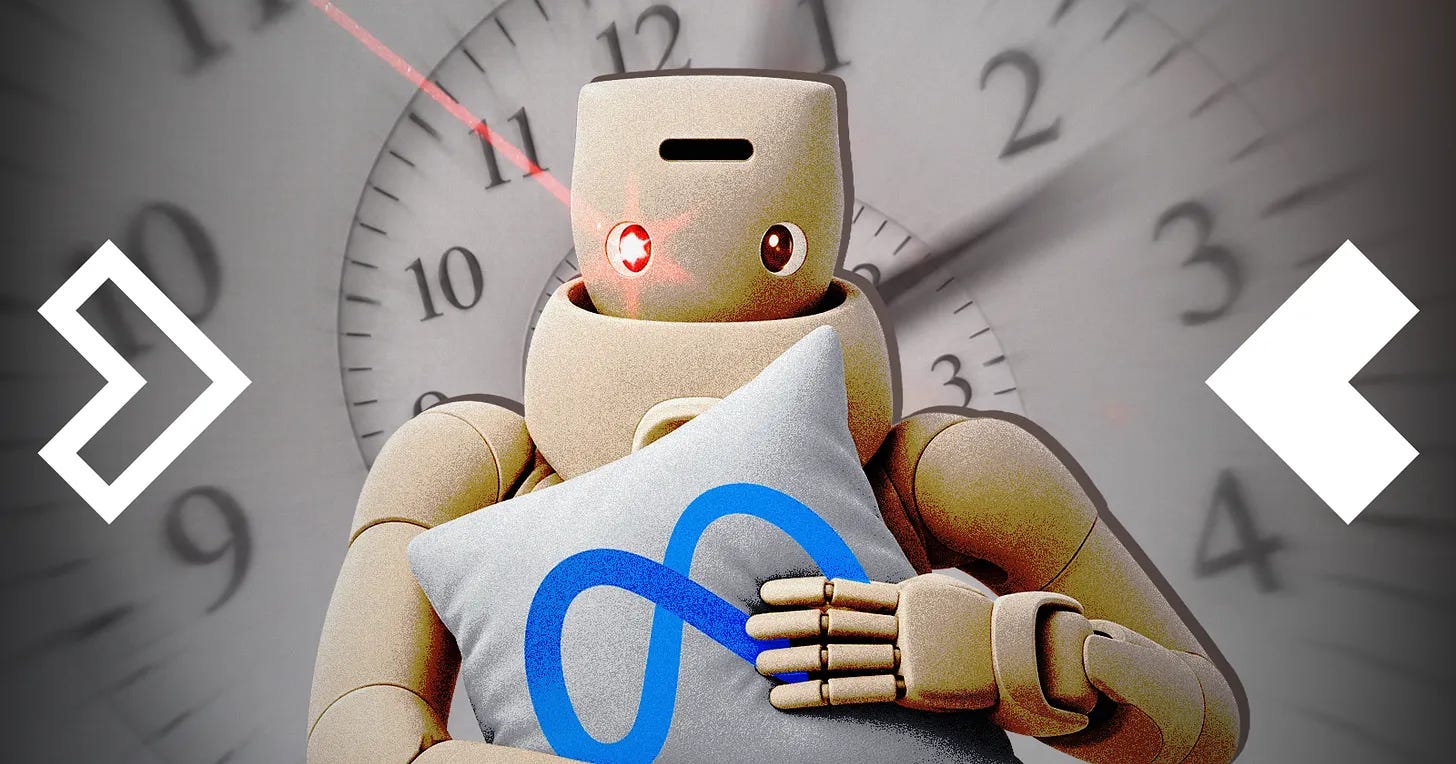
The same tension is showing up in robotics. Meta has gone all the way to Shanghai to work with a Chinese manufacturer on a humanoid robot prototype. The engineering advantages are obvious. The long-term business relationship is much less certain.
It’s a busy week for an industry that’s trying to move forward while navigating some pretty complicated constraints.
Anyway, let’s take a look.
Weekly News...
(I) The iPhone Duo Screen Crack Mystery Gets Another Suspect
The investigation into the iPhone Duo’s display failures is getting more complicated. Our recent supply-chain analysis points to the phone’s Metal Injection Molding (MIM) hinge reinforcements as a possible source of the problem.
Under physical stress or tight structural tolerances, tiny metal fragments from these components could potentially break free and puncture the OLED panel. South Korean supplier Fine M-Tec has denied that its components are responsible, while pointing to other companies in the hinge supply chain, including Amphenol, Shin Zu Shing, and several Chinese suppliers.
The important detail is that the hinge is a multi-supplier assembly. Finding the actual cause will require more than identifying one component that sits near the damaged display. For now, the MIM theory remains an engineering hypothesis, not a confirmed root cause.

(II) Apple Reports a Strong China Comeback Under Its New CEO
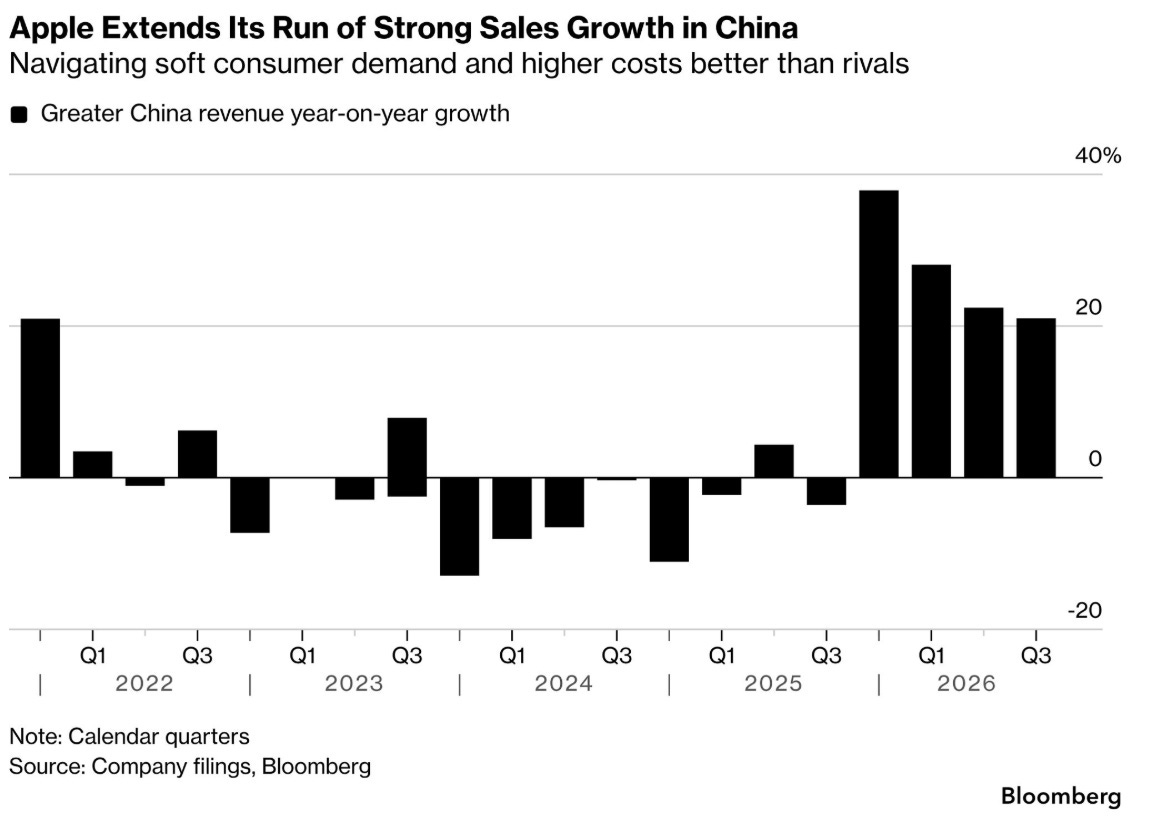
John Ternus’s first earnings call as Apple’s CEO came with a reassuring message about China: the market is doing considerably better than some analysts expected.
Apple’s Q4 revenue in China rose 21% year over year, contributing to a 28% increase for the full fiscal year. The mainland market also recorded its highest number of iPhone upgrades, despite a relatively weak consumer environment.
Demand for the new iPhone Duo remains strong, although supply constraints could limit how many devices Apple can ship. That makes the early display problems particularly awkward: Apple has a new product generating considerable interest, but it also needs to make sure the manufacturing quality can keep up.
(III) Tencent Is Spending Big on ByteDance's Seedance
Imagine Meta becoming one of the biggest customers of OpenAI’s API. Something similar is happening in China: Tencent has reportedly become one of the top three domestic customers of ByteDance’s Seedance video-generation model, measured by token spending. Bilibili has also made the global top 10.
The overseas business is growing even faster. Seedance’s international revenue has reportedly increased around fivefold in six months, with overseas markets now accounting for roughly half of total sales.
There’s something particularly interesting about Tencent paying to use a model developed by one of its biggest rivals. In the AI market, competition doesn’t necessarily stop companies from becoming customers of one another. When a model is good enough, even a rival may decide it’s cheaper to use it than build everything from scratch.
(IV) BYD Is Turning an Old Ford Factory Into a Brazilian Manufacturing Hub
Five years after Ford left manufacturing in Brazil, BYD is turning its former Camaçari site into a major production base for Latin America.
The company’s local market share reportedly jumped from 4.2% to 9.7% in a year, while sales surged 138% year over year in October. BYD is now moving beyond assembling semi-knocked-down kits and toward more complete local manufacturing, including stamping and welding.
The ambition is to challenge established players such as Fiat and Volkswagen by 2030.
This is an important step in BYD’s overseas strategy. Exporting cars can help a company enter a market quickly, but building a local manufacturing base creates deeper roots: more local jobs, closer supplier relationships, and potentially better resilience against tariffs and trade barriers. Brazil could become much more than another destination for Chinese EV exports.

(V) 600,000 Nvidia H200 Chips Are Waiting in Hong Kong
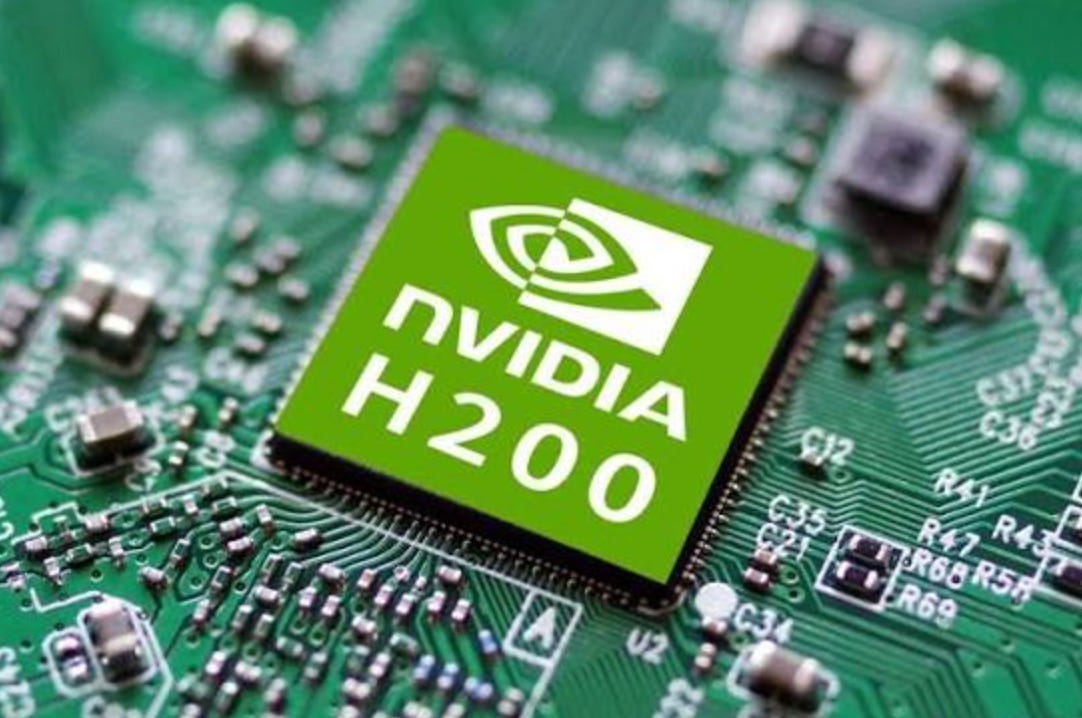
Here’s an unexpected twist in the chip war: according to Reuters, around 600,000 Nvidia H200 AI chips are sitting in warehouses in Hong Kong, waiting for approval to enter mainland China.
The bottleneck reportedly isn’t Washington this time. Although the Trump administration cleared sales to approved Chinese buyers, Beijing has been holding back large-scale import approvals. Several major Chinese technology companies have reportedly received permission for around 10,000 chips each, while the supply of authorized units remains limited.
The shortage is pushing prices higher. An eight-card H200 server was reportedly being offered for more than 6 million yuan in mainland China, roughly three times its price a year earlier.
The situation captures China’s difficult balancing act. Domestic companies still need Nvidia’s hardware, especially for training workloads where local alternatives have not fully caught up. But Beijing also wants them to build their businesses around domestic chips. For now, those two priorities are pulling in different directions.
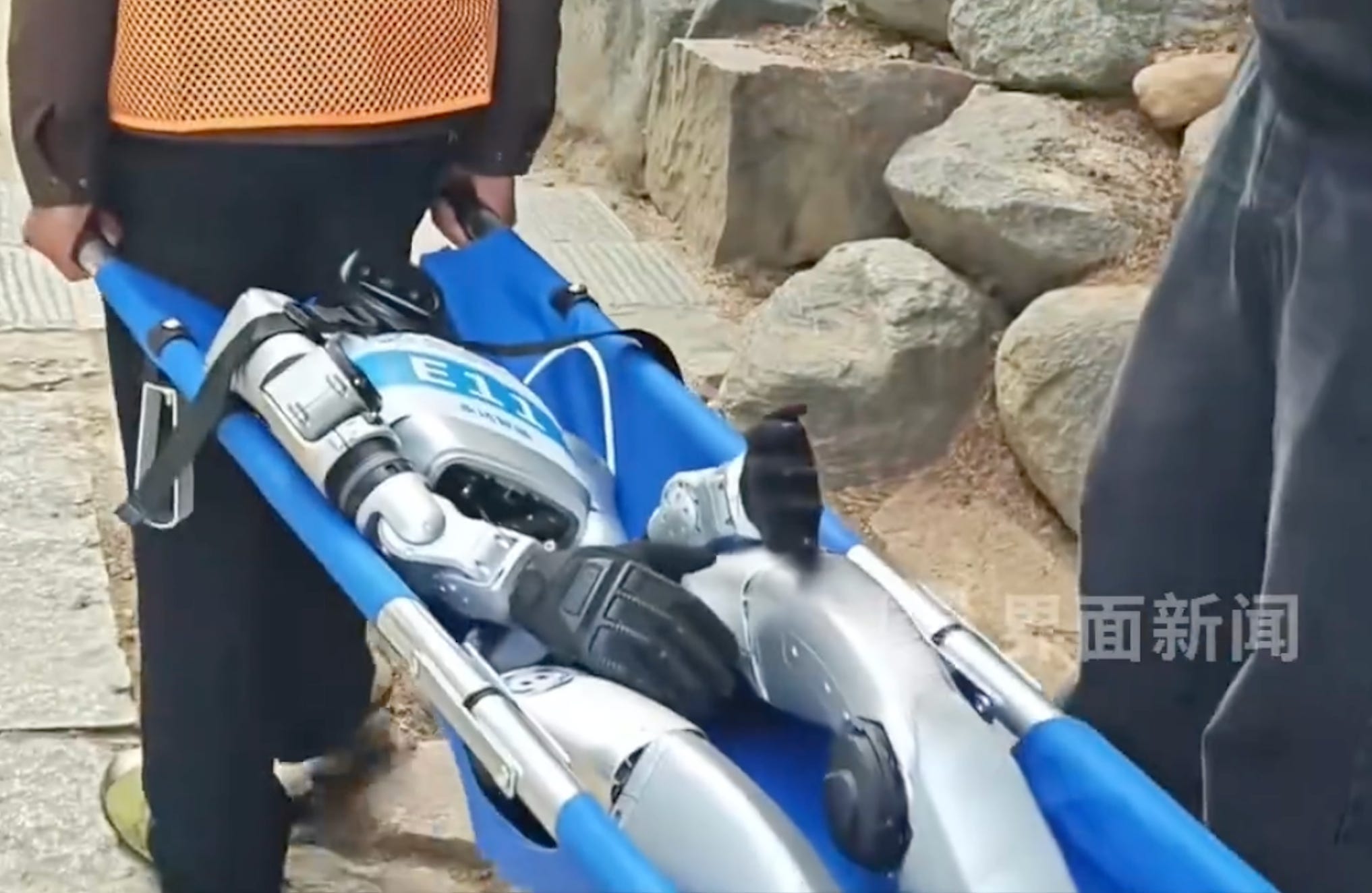
(VI) Unitree’s Robot Dog Wins the Race. Its Humanoid Needs a Stretcher.
Unitree had a mixed day at China’s Mount Tai Robot Race, where robots were challenged to climb roughly 3,100 stone steps.
Its quadruped robot won the robotic dog sprint category with a time of 43 minutes and 41 seconds. The company’s G1 humanoid, however, had a much less glamorous outing. It overheated during the climb and had to be carried off the course on a stretcher.
The contrast highlights a major engineering challenge. A robot performing a backflip on a gym mat needs only a few seconds of burst power. A humanoid walking uphill for 45 minutes needs to manage heat, energy use, balance, and mechanical stress continuously. Compact joint housings make that particularly difficult.
Robots can look astonishing in carefully controlled demonstrations. But keeping them moving reliably for long periods in the real world is a very different test, and one the industry still has to solve.
(VII) DeepSeek May Train Its Next Model on Huawei Ascend Chips
DeepSeek may be preparing to use Huawei Ascend processors to pre-train its next-generation V5 model, according to sources cited by STAR Market Daily.
Until now, Huawei’s chips had reportedly been used mainly for DeepSeek’s inference workloads and post-training of V4-Pro. Moving into pre-training would represent a much deeper level of cooperation between the two companies.
It also puts DeepSeek’s September 30 decision to open-source parts of its Ascend computing and communications stack into a new light. Tools including DeepGEMM, FlashMLA, and DeepEP could help optimize how models run across Huawei’s hardware.
If the reported V5 plan goes ahead, it would be a meaningful test of whether Chinese AI labs can build a more complete alternative to Nvidia’s hardware and software ecosystem. The key question isn’t simply whether Ascend chips can run a model. It’s whether they can support the enormous scale and efficiency demands of pre-training one.
(VIII) Tencent’s Hy4 Model Is Getting Ready to Go Open Source
Tencent says its new Hy4 model ranks among China’s leading AI models, and the company plans to release its weights as open source soon.
Built on the earlier Hy4-Preview, the upgraded model adds native vision capabilities and Deep Research functions. In independent market-chart benchmarks, Hy4 has reportedly outperformed models from DeepSeek and Zhipu AI.
Tencent is also showing off a more unusual application: the model is capable of analyzing and trading A-shares.
That last feature is worth watching. Chinese tech companies are increasingly trying to demonstrate that their models can do more than answer questions or generate content. Financial research and trading are demanding applications where models need to interpret complex information and make decisions over time. Of course, benchmark performance alone doesn’t tell us whether an AI trading system can consistently make money.

(IX) Kimi Launches a Cloud Service for Always-On AI Agents
Moonshot AI is moving Kimi beyond a chatbot with the launch of Kimi Hosted Agents, a managed cloud environment designed to keep AI agents running around the clock.
The service supports multi-agent collaboration and long-running tasks without requiring users to set up and maintain their own infrastructure. Potential applications include internal monitoring, operational response, customer support, and research workflows.
Moonshot says the environment includes isolated sandboxes, audit logs, and Inference Hook checks designed to help protect data and monitor agent activity.
This is part of a broader shift in the AI business. The next wave of products may not be models that simply answer a prompt, but agents that stay online, work through tasks, coordinate with other agents, and take action over time. Making that reliable and secure is likely to be just as important as making the underlying model smarter.
Weekly Articles...
China AI Export Rules Explained
How do you make an open AI model safer without making it less useful?
Moonshot AI tried something unusual with Kimi K3.1 Pro: it deliberately removed some cybersecurity training data before releasing the model’s weights. At the same time, Beijing is introducing new rules to track certain AI technologies before they are exported.
One approach comes from the model developer, the other from the government. Both are trying to solve the same difficult problem: once powerful AI capabilities are released into the world, how much control can anyone really retain?
This piece looks at what Kimi changed, what China’s new export rules actually mean, and why independent safety testing may matter more than either company’s promises or government paperwork.

Why Meta Went to China to Build Its Robot, and Why the Deal May Not Last
Meta wants to build a humanoid robot powered by its AI models. To get there, it sent its robotics team to Shanghai and worked with Chinese manufacturer Fourier to build a prototype called Max in just three months.
The partnership makes sense. China’s robotics supply chain offers something that is still difficult to replicate in the United States: fast access to components, low-cost engineering, and suppliers that can turn around custom parts in days.
But there’s a catch. Meta is still experimenting with what its robot might eventually become, while Fourier needs real business and revenue much sooner. A few prototype orders may be a great story for investors, but they won’t necessarily keep a robotics company alive.