



A post appeared on a Chinese tech forum in early April and was deleted within hours. It contained screenshots from a private WeChat group: a transfer station operator breaking down his monthly profit structure, account pool size, and the exact techniques used to swap models without users noticing. Someone had warned him. The post disappeared before most people could read it.
That deletion is, in miniature, a portrait of an entire industry.
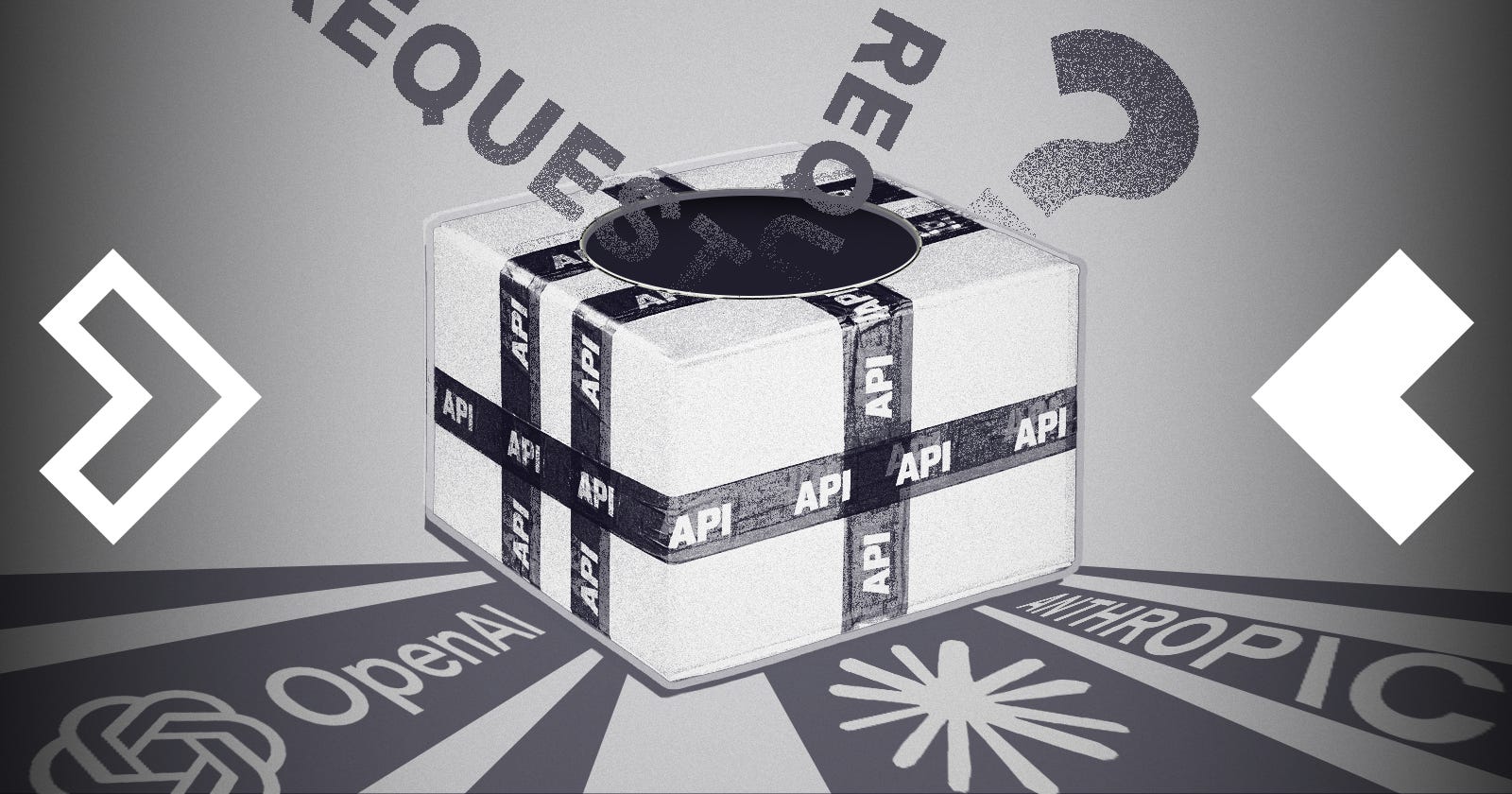
In China, the infrastructure of access is always someone’s business. Where there is demand and no official supply, a market appears. It has happened before, in other industries, with other products. When foreign social media was blocked, VPN providers quietly multiplied. Now, as the most capable AI models in the world remain technically inaccessible to most Chinese users, a new layer has appeared: the transfer station, or 中转站 (zhōngzhuǎn zhàn).”
A transfer station is, in its simplest form, a middleman server. You send your request to it; it forwards the request to Anthropic or OpenAI using accounts it controls; it returns the response to you. You pay in RMB via WeChat or Alipay. You never need a foreign credit card, an overseas phone number, or a VPN configured correctly enough to avoid Anthropic’s datacenter-proxy detection. The transfer station handles all of that. For this convenience, you pay—often a fraction of official prices.
The White House, in a memo released this past April, described this ecosystem as “industrial-scale distillation campaigns” run by Chinese frontier AI labs. Anthropic’s own reporting framed it similarly: coordinated attacks using tens of thousands of fraudulent accounts. Both framings reach for the most alarming geopolitical interpretation. Both miss the more mundane and more interesting truth.
The people inside the transfer station economy are not, for the most part, frontier AI researchers extracting model weights for strategic advantage. They are developers building productivity tools. Students running experiments. Designers using Claude to iterate on copy. A retired engineer who lined up outside Tencent’s Shenzhen headquarters for a free OpenClaw installation session. The demand is not exotic. It is the ordinary human desire to use the best available tool for the job.
The Supply Chain Has Its Own Sociology
At the top sit the account merchants—people who bulk-register Anthropic and OpenAI accounts using educational email addresses, gift card arbitrage, or, in darker corners, stolen credit card numbers. One $200 Claude Max subscription, in the hands of someone who knows how to split token quotas across multiple users, can generate $2,000 to $5,000 in revenue. The math is not complicated. The risk management is.
Below them are the operators: people who run the actual transfer station infrastructure, cycling accounts before they trigger Anthropic’s abuse detection, balancing load across account pools, writing custom code to mimic legitimate user behavior at the TCP/IP layer. Anthropic’s risk systems don’t just check User-Agent strings—they analyze MTU characteristics to identify datacenter proxies. Staying ahead of this requires genuine technical sophistication and constant adaptation. One operator described his first major account ban wave: spending three consecutive nights after midnight patching routing strategies, because his users would start working in the morning and he had promised stability.
Then there are the resellers—a much larger group, and a much less profitable one. A WeChat group of over a thousand agents, most of whom, by community accounts, earn less from monthly resales than they spend on customer service time. The economics of a mature grey market are the same everywhere: early entrants capture the margin; latecomers compete on price until there is no margin left. When the free tutorials start appearing—and they have—the window has already closed.
The Chinese internet has a term for this lifecycle. It maps onto transfer stations almost exactly: first you make money quietly, then you recruit agents, then you sell courses, then you post free guides. The Web3 crowd that once ran airdrop farms has largely migrated to this business. They brought their existing account infrastructure, their offshore payment rails, their appetite for regulatory arbitrage. For them, this is not a new kind of hustle. It is the same hustle, wearing a different hat.

But the people absorbing most of the risk in this system are not the operators or the resellers. They are the ordinary users at the bottom of the chain who just want a cheaper way to get work done.
A designer who needs Claude to iterate on copy. A developer building a side project on a tight budget. A student running experiments for a thesis. They find a transfer station through a WeChat group or a Telegram channel, top up a few hundred RMB, and start using it. Some get exactly what they paid for—access to a real model at a discount. Many do not. The model labeled “Claude Opus” in their API response may be a smaller open-source model running on a single GPU, relabeled and sold at a markup. Their token balance drains faster than it should—the station is billing 200 tokens for every 100 actually consumed. And the prompts they sent, the code they shared, the business logic they described—that data is sitting on a server somewhere, potentially packaged and sold to a model training company they will never know about.
They came looking for a cheap tool. They became the product instead.
When Demand Meets a Wall
These human details matter because they are almost entirely absent from the policy documents that frame this economy as a national security problem.
But stepping back from the politics, the transfer station economy is, at its core, a supply and demand story. And the demand side is enormous.
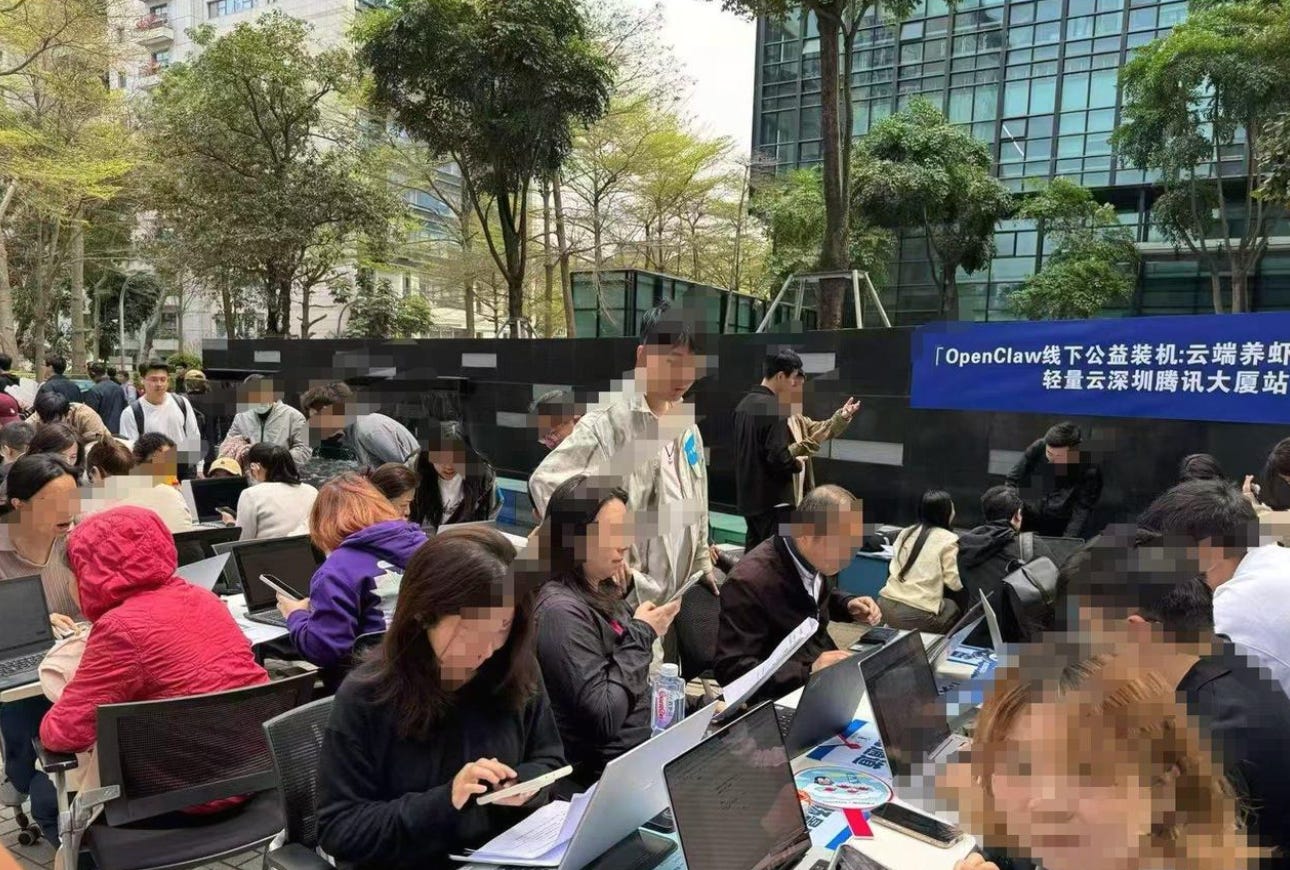
China has one of the largest concentrations of software developers in the world. It has a tech-savvy middle class that has watched AI transform how work gets done, and wants access to the best tools available. When OpenClaw swept Chinese social media earlier this year, nearly a thousand people lined up outside Tencent’s Shenzhen headquarters just to get it installed on their laptops. The hunger is not manufactured. It is real, and it is large
Against that demand sits a hard wall. Anthropic does not support China. You cannot register with a Chinese phone number. You cannot pay with a Chinese bank card. Even companies with legitimate overseas subsidiaries lost access after September 2025, when Anthropic closed the loophole that had allowed Chinese-backed entities operating abroad to keep their accounts. Then came biometric KYC in April 2026—live selfie matched against a government-issued ID—the most aggressive identity check any consumer AI platform has ever deployed.
Anthropic has every right to enforce these restrictions. It is a private company operating under real legal and regulatory pressure, and some of its largest customers are US government agencies with explicit concerns about model access by adversarial states. In this story, Anthropic is a victim—of account fraud, of distillation attacks, of coordinated abuse by actors it cannot identify or stop. The frustration behind each new layer of control is legitimate.
But here is the uncomfortable part: the controls accelerated the very thing they were trying to prevent. Each new barrier raised the value of getting around it, which made the transfer station business more profitable, which attracted more sophisticated operators, which built out more resilient infrastructure. This is not Anthropic’s fault in a moral sense. It is just how large suppressed markets behave.
China in the 1980s and 1990s offers a useful parallel. As the country began opening up, demand for foreign goods—electronics, clothing, consumer products—far outpaced what official channels could supply. Trade restrictions and import controls did not kill that demand. They created the 倒爷 (dao ye), the smugglers and middlemen who moved goods across borders through informal networks, often in legal grey zones, sometimes outright illegally. The daoye were not idealists. They were opportunists filling a gap the official economy refused to fill. When trade liberalized and supply caught up with demand, most of them disappeared or went legitimate. The ones who survived built real businesses.
The transfer station operators are the daoye of AI access. They exist because the gap between what Chinese users want and what official channels provide is enormous—and because that gap is profitable to fill.
What makes this grey market harder to contain than 1990s trade arbitrage is simple: nobody with the power to shut it down is particularly motivated to do so.
Beijing has not moved against transfer stations in any serious way. This is notable, because China’s regulatory apparatus has shown it can act decisively when it wants to. Crypto exchanges were shut down outright in 2021. VPN providers are regularly targeted. The AI services registry requires formal filing and security assessment for any AI service operating in China—a requirement that virtually every transfer station ignores without consequence.
The most plausible explanation is that transfer stations simply haven’t risen to that level of concern. There are bigger priorities: a slowing economy, record graduate unemployment, and US chip export controls pressing on domestic semiconductor ambitions. A few developers buying cheap API access through grey market channels doesn’t look like a problem worth solving.
This creates an asymmetric situation that Anthropic cannot easily resolve. Every technical control it deploys is met by a market-funded evasion infrastructure, operating in a jurisdiction where the government has limited motivation to help and significant motivation to look the other way. The arms race is not between equals.
Hi, thanks so much for reading. I'm the writer of this piece.
You're right that standard WeChat groups are capped at 500 members. In this case, the community I was referring to had expanded beyond a single group — operators in this space typically run multiple linked groups, or migrate to larger platforms like Telegram once they outgrow WeChat's limit. The 'over a thousand agents' figure reflects the broader reseller community across these connected channels, not a single WeChat group specifically.
> A WeChat group of over a thousand agents, most of whom, by community accounts, earn less from monthly resales than they spend on customer service time.
What do you mean by this? I thought that WeChat groups were capped at under 500, or am I missing something here?