



Xiaomi’s founder and CEO Lei Jun used to get compared to Steve Jobs. Now his company is taking on Tesla in Europe with premium electric vehicles so packed with technology that even Ford CEO Jim Farley has praised them on multiple occasions.
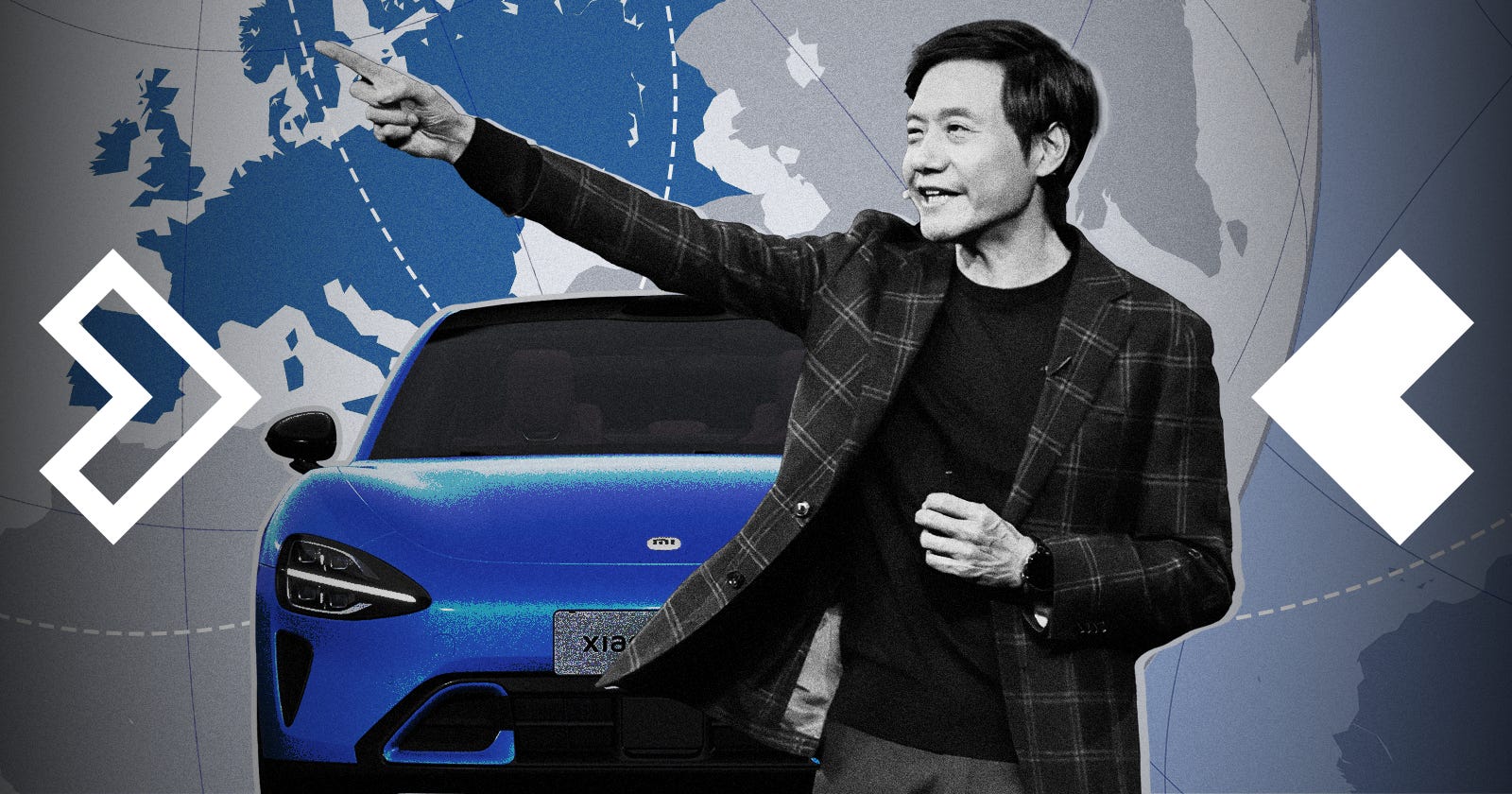
This week, Xiaomi Group President Lu Weibing said the company’s cars will go global in the second half of 2027, starting with Europe and backed by a local engineering team.
Since rolling out its first car in 2024, this Chinese smartphone giant has already delivered 650,000 electric cars, on par with the number of Tesla vehicles sold in US market last year. This comes after Xiaomi’s auto unit hit a quarterly profit in just 15 months.
A Carmaker That Came Prepared
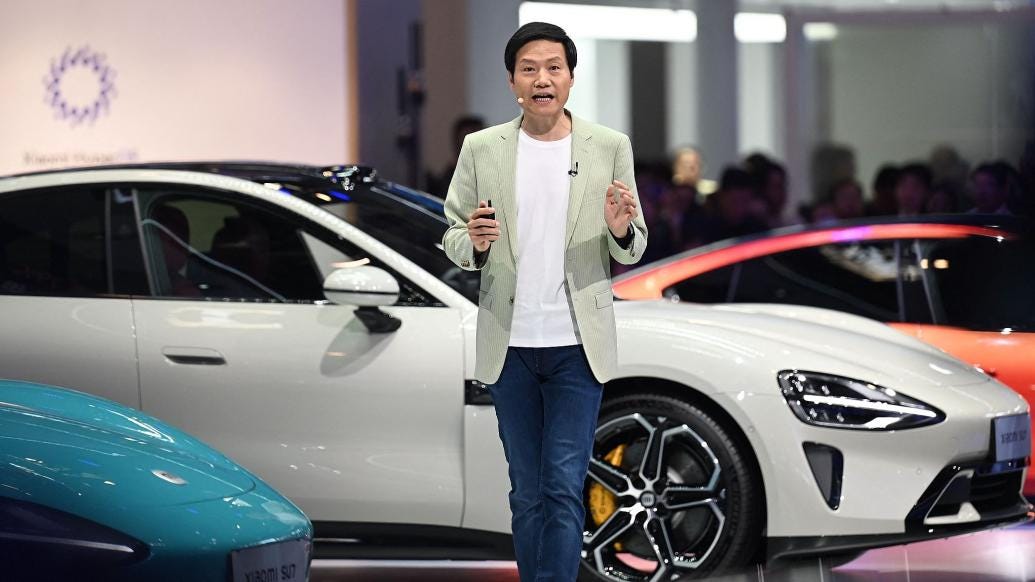
After announcing his plan to build a car in 2021, Lei has positioned Xiaomi’s vehicles as direct rivals to Tesla, while borrowing styling cues from high-end luxury marques. The SU7 sports sedan is pitched against Porsche’s Taycan but priced in line with Tesla’s Model 3, while the YU 7 SUV echoes the design of Ferrari’s Purosangue and undercuts at roughly the price of a Model Y.
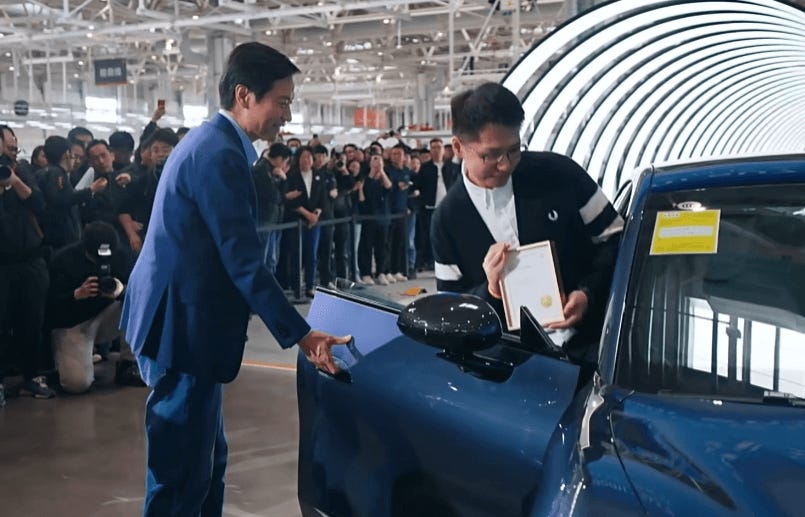
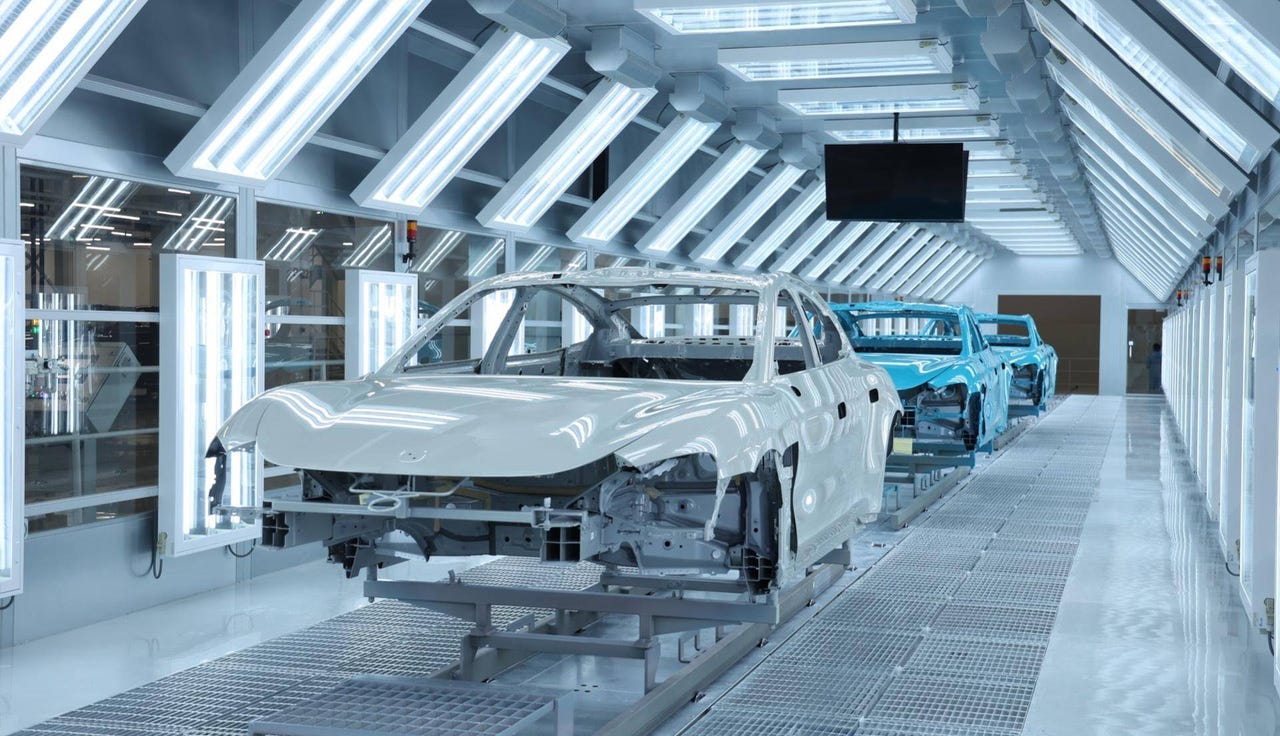
The results have been striking. The SU7 racked up 50,000 orders within 30 minutes of going on sale, while the YU7 drew 200,000 pre-orders in just three minutes after its launch last year. At a time when China’s auto industry is grappling with overcapacity and cut-throat competition, demand for Xiaomi’s EVs has overwhelmed its Beijing factory, which has produced 410,000 vehicles in 2025.
Xiaomi began preparing for its overseas auto push as early as December 2024, when its international division started recruiting sales staff for the EV business. In September 2025, the company formally opened a European research and design centre, led by Rudolf Dittrich, who previously worked on the BMW M4 GT3 race car. Its design team has been recruited from Porsche, Lamborghini, Mercedes-Benz and BMW.
At the annual Beijing auto show last Friday, Lei said the new YU7 GT model ‘could rival the standards of top-tier German cars’. The vehicle, scheduled to debut in late May, is Xiaomi’s first model developed in collaboration with its European engineering team.
“In just five years, Xiaomi has hit remarkable milestones,” the 56-year-old chief executive said. “Yet even today, many people still don’t fully understand Xiaomi’s cars, and some hold biases against them.”
Why Europe Matters
Xiaomi is not like other EV players, known as “新势力(new-force automakers)” in China. The company might not be a household name in the U.S., but it is Europe’s third most popular smartphone brand. They have experience of selling consumer electronics overseas with MiHome, a network of physical retail outlets across Europe which provides significant advantages in consumer reach.
According to a report from Securities Times, a state-run Chinese financial newspaper in September 2025. The Beijing-based company’s globalization strategy has progressed through three stages — selling products overseas, establishing brand presence, and exporting its homegrown playbook. Xiaomi wants to bring its sales network building skills to other new products. This time, it is for cars.
Still, the company cannot escape the intense price competition that has eroded profits and sales at BYD and other mass-market brands, pushing them to seek growth in overseas markets.”Xiaomi is not aiming to fight a price war,” Lu Weibing, the company’s president, said on its third-quarter earnings call in 2025.
Xiaomi’s EV business got off to a sluggish start in 2026, delivering about 79,000 units in the first quarter — less than half the 145,000-plus vehicles handed over in the final three months of 2025. To meet its full-year target of 550,000 deliveries, the company will need to average more than 52,000 cars a month for the rest of the year.
Xiaomi said launching in Europe with premium EVs will give it the experience needed to break into more affordable markets elsewhere. Speaking at the Beijing auto show, Lei said the company has picked Germany — ‘the toughest market in the world’ — as its European beachhead, calling the move a ‘pioneering push from scratch’ for Xiaomi.
“The European market really matters to us,” its chief marketing officer Xu Fei said in her first presentation of strategy to the international media ahead of the Beijing auto show. “We would like to really provide products with better quality and high performance.”
A key advantage for Xiaomi lies in its sprawling ecosystem, which the Beijing-based tech giant brands as “human, car, home” — an approach that links smartphones, vehicles and household appliances into a single connected network.
The features currently work only across Xiaomi’s own devices, though the company has said it is open to partnerships with other brands. Xiaomi has also been quick to highlight its vehicles’ deep compatibility with Apple’s iPhone and CarPlay — a pitch aimed squarely at winning over iPhone users.
The car’s menu navigation is strongly reminiscent of Tesla, but includes additional features – such as a display keyboard and a clip-on speedometer. “That’s a clever solution ,” says Jonas Thoß, a well-known YouTuber in Germany. “Especially with the ventilation and suspension control, you can tell that Xiaomi comes from the tech sector.” JP Performance, another Youtuber, is bothered by the lack of localization: “You still have some Chinese characters in the menu. That needs to be improved if the device ever officially comes to Europe.”
A Hard Road Ahead
But data shows Xiaomi’s journey of Europe will be challenging: According to Autovista24, the TOP 10 best selling BEV cars in EU haven’t seen any Chinese brands. The champion is Tesla Model Y with 150,605 vehicles with Skoda Elroq catching up in the second place. Brands like BYD, Leapmotor and MG grow fast but they are sticking to the volume market. Countries like Germany and France still have strong brand loyalty to local car giants.
Xiaomi also needs to handle tariffs carefully.In January 2026, China and the EU agreed on a ‘price undertaking’ as an alternative: Chinese exporters can skip the extra tariffs if they sell above EU-set minimum prices. The deal sets a separate price floor for every model and trim. Xiaomi’s cars currently sell for between €27,000 and €38,000 in China, but those prices are likely to climb in Europe — potentially topping €50,000, in line with mainstream premium EVs on the continent like Tesla model Y.
The company is reportedly weighing an assembly plant in Poland and has begun the overseas investment filing process, a move that could help it sidestep tariffs and undercut Tesla on price. Besides, Xiaomi, Volkswagen and French insurer BNP Paribas Cardif jointly established an insurance company in Beijing in 2026, in a move that could be linked to Xiaomi’s auto expansion into Europe.
Charging infrastructure is another headache. ACEA data shows France, the Netherlands and Germany each have more than 100,000 public chargers — far ahead of the rest of the bloc — while countries like Latvia still have fewer than 1,100. That could make charging a real challenge for Xiaomi drivers, and any push into Southern or Eastern Europe will likely require the company to make its cars compatible with local fast chargers, or help build out new ones.
“The rite of passage to enter the premium market is extremely long,” said Schmidt Automotive Research’s founder, Matthias Schmidt. “Xiaomi can still be a success in Europe, but more likely at the expense of volume carmakers rather than German premiums.”
Carwow Germany said the SU7 has the potential to spark a debate about envy — making traditional carmakers envious, because it puts them to shame in their own strengths, and making German EV owners envious.”because it shows just how cheap electric mobility could be, if only the willingness were there.”

Building a factory in Poland is indeed a great thing.